Table of Contents >> Show >> Hide
- The Headline Is Catchy, but the Real Story Is Better
- Why 3D-Printed Neighborhoods Matter Right Now
- How a 3D-Printed Neighborhood Actually Gets Built
- From Secret Latin American Project to Major Texas Development
- What Buyers and Builders Actually Get
- What the Hype Gets Wrong
- Could 3D-Printed Neighborhoods Change the Housing Market?
- The Real Meaning of “24 Hours”
- What It Might Feel Like to Walk Through a 3D-Printed Neighborhood
- Conclusion
It sounds like the kind of headline that belongs in a movie trailer narrated by a guy with a very serious voice: an entire 3D-printed neighborhood will be constructed in 24 hours. Cue the dramatic music. Cue the giant robot. Cue everyone wondering whether a suburban cul-de-sac is about to pop out of a printer like a receipt from CVS.
But here is the truth, and honestly, it is more interesting than the sci-fi version. The promise of 3D-printed housing is not that a fully finished neighborhood appears overnight with fresh sod, working dishwashers, and someone already arguing about HOA rules. The real breakthrough is that one of the slowest, most labor-intensive parts of homebuilding, the wall system, can now be produced dramatically faster with large-scale robotic printers. And when that speed is repeated across dozens of homes, it starts to change how builders think about supply, labor, design, and cost.
That is why the idea of a 3D-printed neighborhood matters. It is not really about a robot flexing. It is about whether homebuilding can become faster, more precise, more scalable, and in some cases more resilient at a moment when the United States still needs millions of additional housing units. The headline is flashy, sure. The implications are bigger.
The Headline Is Catchy, but the Real Story Is Better
When people hear “constructed in 24 hours,” they often imagine a complete neighborhood arriving in one dizzying burst of machine-made magic. In practice, that number usually refers to print time for the structural shell or wall system of an individual home. That is an important distinction. It keeps the conversation honest, and it helps separate a serious construction innovation from internet-grade exaggeration.
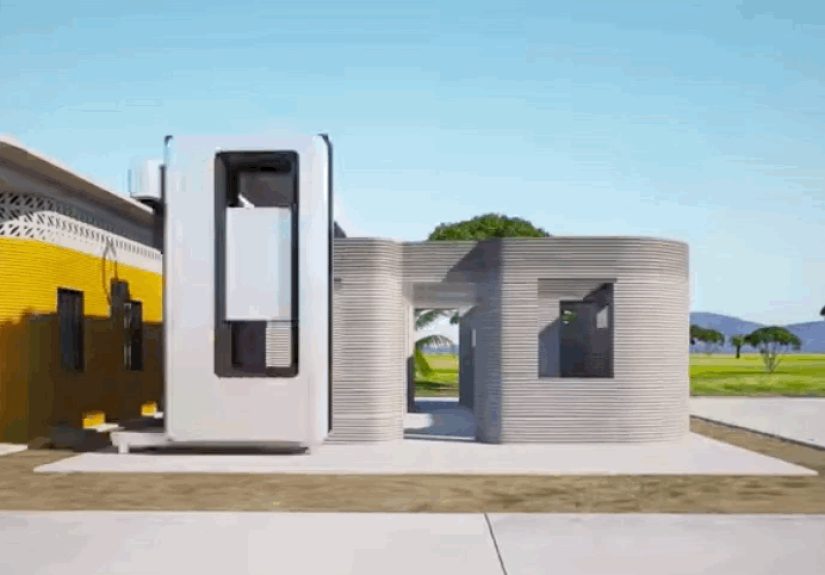
Even so, the achievement is impressive. A giant gantry-style printer follows a digital plan and extrudes a cement-like material layer by layer. The printer lays down the walls with remarkable consistency, creating the ridged, slightly corduroy look that has become the calling card of 3D-printed houses. It is construction, but it also looks a little like a bakery machine had a midlife crisis and decided to become a contractor.
The speed advantage comes from simplifying one major phase of construction. Instead of coordinating multiple crews to frame wall systems the traditional way, builders can automate that step. That does not eliminate all labor, but it does reduce the number of hands needed for one of the most repetitive and error-prone parts of the process. In a housing market squeezed by worker shortages, that is not a gimmick. That is strategy.
Why 3D-Printed Neighborhoods Matter Right Now
The excitement around 3D-printed homes is not happening in a vacuum. It is arriving during a period of long-running housing pressure, high construction costs, stubborn affordability problems, and a shortage of skilled labor. Builders are not turning to robotic printing because it looks futuristic on social media, although it certainly does. They are exploring it because the current system is slow, expensive, and hard to scale.
That is where 3D printing becomes genuinely relevant. If a builder can standardize wall production, cut some waste, reduce delays, and create more predictable schedules, the entire development process becomes easier to repeat. Repetition is what turns an experiment into a business model. A single 3D-printed showcase house is a cool story. A full neighborhood is a market test.
There is also a design advantage. Traditional construction punishes curves. Every nonstandard angle, rounded wall, or unusual geometry tends to add labor, complexity, and cost. A robotic printer, however, follows a digital path. If the design file calls for soft curves instead of sharp corners, the machine does not sigh dramatically and ask for overtime. It just prints. That opens the door to homes that feel more organic, more custom, and in some cases more durable than conventional boxy builds.
Still, the real appeal is not novelty. It is throughput. The promise is that once builders learn how to integrate printing with the rest of the construction workflow, neighborhoods could be delivered more efficiently and more consistently. Not instantly. Not magically. But meaningfully faster.
How a 3D-Printed Neighborhood Actually Gets Built
The Printer Does Not Build Everything
This is where the fantasy usually crashes into the jobsite. A 3D printer can create the wall system, but a house still needs a foundation, roof, windows, doors, wiring, plumbing, insulation details, HVAC components, finishes, fixtures, and inspections. Streets and neighborhoods need utilities, drainage, landscaping, and site work. In other words, the printer is not replacing construction. It is specializing in one very important slice of it.
That matters because it keeps expectations realistic. A builder cannot promise a complete move-in-ready community in the time it takes most people to binge a streaming series and regret all their snack choices. But a builder can compress one crucial phase enough to change the overall rhythm of a development.
The Wall System Is the Big Opportunity
Printing the walls is where the technology shines. The machine works from a digital blueprint, which improves precision and reduces the little inconsistencies that can pile up in conventional framing. Less rework means fewer headaches. Fewer headaches mean fewer budget surprises. And in construction, budget surprises are the equivalent of horror-movie footsteps in a dark hallway.
Because the printed material is laid down in layers, builders can also create forms that would be more cumbersome or expensive with standard methods. Rounded corners, curved partitions, and custom interior features become more practical. Some completed homes have even used 3D printing for elements beyond the walls, which turns the technology from a structural novelty into a design language.
The Neighborhood Scale Is the Real Test
A single printed house can prove that the machine works. A neighborhood proves whether the process can survive the messy realities of development: weather, supply chains, permits, multiple crews, utility coordination, buyer expectations, and deadlines. That is why neighborhood-scale projects matter so much. They reveal whether 3D printing can coexist with the rest of the homebuilding ecosystem rather than simply posing for photos.
From Secret Latin American Project to Major Texas Development
The modern conversation around 3D-printed neighborhoods gained momentum with the early project in Mexico involving New Story, ICON, and local partners. That effort was aimed at families living in inadequate housing, and it pushed the technology beyond the prototype stage. The homes were modest in size, but the meaning was enormous: this was not just a flashy one-off demonstration house. It was a community concept.
That early project also shaped how people talked about the now-famous “24 hours” claim. The number referred to print time for a small home, not total completion of the finished house all at once. Even so, it changed the public imagination around housing. Suddenly, large-scale printing was not just an engineering stunt. It looked like a tool that could potentially serve real families in real communities.
Then came the Texas project that brought the idea firmly into the U.S. mainstream. The Wolf Ranch development in Georgetown, near Austin, transformed 3D-printed housing from a bold concept into a visible suburban reality. Backed by ICON and Lennar, with design input connected to Bjarke Ingels Group, the project moved the conversation from “Could this work?” to “What happens when major builders take it seriously?”
That shift matters. In Texas, the homes were not positioned as emergency shelters or tiny experimental units. They were full single-family residences with multiple bedrooms, contemporary layouts, and floor plans that fit the expectations of ordinary buyers. That is a huge leap. It means 3D printing is no longer limited to the novelty shelf beside concept cars and robot coffee bars. It is entering normal housing.
What Buyers and Builders Actually Get
Design That Does Not Feel Like a Science Fair Project
One of the smartest things about recent 3D-printed neighborhoods is that they do not lean too hard into the “Look, Mom, the future!” aesthetic. Yes, the layered walls are visually distinct. Yes, the curved interiors can feel striking. But the homes still look livable, warm, and familiar. They have garages, kitchens, bedrooms, and the everyday flow people expect. The goal is not to make residents feel like they are living inside a giant experimental vase.
That balance matters for market adoption. Buyers do not want to purchase a technology demo. They want a good house. The best 3D-printed neighborhoods understand this. They use the technology to improve construction and design without forcing homeowners to become accidental astronauts.
Potential Durability and Efficiency
Concrete-based printed walls are often promoted for their resilience. Builders point to advantages such as resistance to mold, termites, moisture, and harsh weather conditions. There is also the potential for energy benefits, especially when the structure is paired with thoughtful insulation, smart orientation, and efficient systems. Some residents in newer projects have highlighted the comfortable indoor feel created by the thick walls and carefully planned layouts.
Of course, durability is not a marketing slogan you can fully judge in year one. The long-term test will take time. But compared with flimsy perceptions people may have when they first hear “printed house,” these homes are generally much more solid and substantial than the phrase suggests.
A More Repeatable Workflow
For builders, one of the most attractive benefits is process control. Traditional homebuilding requires a delicate dance among many crews, trades, and delivery schedules. When one part slips, everything slips. A digital printing system introduces more repeatability to the wall-building stage. That does not fix every construction bottleneck, but it reduces one of the more frustrating ones.
In other words, the technology is valuable not just because it is fast, but because it is consistent. In development, consistency can be almost as precious as speed.
What the Hype Gets Wrong
Let’s be fair: 3D-printed housing has earned the hype, but it has also attracted a little too much superhero mythology. The technology is promising, but it is not a one-machine cure for every housing problem from here to eternity.
First, printed does not automatically mean cheap. Large neighborhood projects still depend on land prices, infrastructure, financing, labor for all the nonprinted work, local regulations, and market demand. A printed wall system can make construction more efficient, but it does not magically erase the economics of development.
Second, printed does not mean regulation-free. Local building codes still matter, and acceptance varies by jurisdiction. Builders have to work with inspectors, engineers, and approval systems that were not originally written with giant robotic concrete printers in mind. Progress is happening, but this is still an evolving space.
Third, printed does not automatically mean green. It can reduce waste and streamline logistics, which is valuable. But cement-based materials still carry environmental costs. Anyone discussing 3D-printed neighborhoods honestly has to hold both ideas at once: this technology may improve some aspects of building efficiency, but it is not a free pass out of the construction sector’s climate challenges.
And finally, printed does not mean instant. This is the most important correction of all. The technology is exciting because it speeds up a major construction phase, not because it breaks the laws of time, physics, or municipal permitting.
Could 3D-Printed Neighborhoods Change the Housing Market?
Possibly, but not by themselves. That is the honest answer. America’s housing shortage is too large and too complicated to be solved by any single method. Zoning, land use, financing, labor, infrastructure, and affordability all shape what gets built and who can afford to live there.
What 3D printing can do is expand the toolkit. It can give builders another way to produce homes faster. It can help reduce reliance on some scarce labor inputs. It can make certain designs easier to build. And it can encourage developers to rethink the wall system as a digitally driven manufacturing process rather than a purely manual craft.
That might sound modest, but modest innovations at scale can have enormous effects. Housing does not always need a moonshot. Sometimes it needs a better method repeated thousands of times with fewer delays and fewer mistakes.
If the next generation of projects can lower costs, work within code requirements, and deliver homes that buyers actually want, 3D-printed neighborhoods could become a meaningful part of the housing mix. Not the whole answer. Not the silver bullet. But a serious part of the answer, which is much more useful than being the coolest thing on a conference stage.
The Real Meaning of “24 Hours”
So what should people take away from a headline like “An Entire 3D-Printed Neighborhood Will Be Constructed in 24 Hours”? The best interpretation is not literal. It is directional. It signals a future in which builders can dramatically compress one of the toughest phases of home construction and then repeat that efficiency across many homes.
The point is not that a neighborhood appears overnight. The point is that the bottleneck starts shrinking. And once a bottleneck shrinks, everything around it can be redesigned: labor planning, development schedules, architectural possibilities, and maybe eventually cost structures too.
That is why the headline still works, even after you remove the exaggeration. It hints at something real. Construction is becoming more digital, more automated, and more programmable. A printed neighborhood is not just a curiosity. It is an early signal of how homebuilding may evolve over the next decade.
What It Might Feel Like to Walk Through a 3D-Printed Neighborhood
Imagine turning into a quiet residential street and realizing that the future is not loud at all. It does not arrive with flashing lights or silver jumpsuits. It looks like driveways, porches, garages, and neatly planned homes under a hot sky. At first glance, you might think you are in any modern suburban development. Then you notice the walls.
They are subtly layered, almost like the house was shaped by topographic lines or carefully stacked ribbons of stone. Up close, the texture catches the sunlight in a way flat drywall never could. It is architectural, but also strangely human. The ridges make the walls feel less machine-made, not more. They look precise, but not sterile.
Walking through one of these homes would probably feel surprisingly familiar. The rooms are still rooms. The kitchen is still where someone burns toast while claiming they were “just crisping it.” The living room is still where furniture will be moved around four times before anyone is satisfied. The novelty is not in learning how to live differently. The novelty is in realizing that a house built with advanced robotics can still feel warm, grounded, and normal.
You might notice the curves next. In traditional construction, sharp corners dominate because they are simple and cheap. In a printed house, softness becomes practical. A curved hallway edge, a rounded shower wall, an arched visual transition between rooms, these details can make the interior feel calmer and more fluid. The house does not seem like it was assembled from rigid pieces. It seems like it was drawn in one continuous motion.
There is also a psychological shift that comes with knowing how the place was built. A standard neighborhood often hides its process. Framing goes up, walls get covered, finishes smooth everything out, and the construction story disappears. In a 3D-printed neighborhood, the process remains visible. The layers tell on themselves. The house quietly announces, “Yes, a robot helped with this,” without turning into a theme park attraction.
And maybe that is the most fascinating part of the experience. The future, when it works well, often feels less dramatic than we expect. It does not necessarily look alien. It looks useful. A 3D-printed neighborhood may feel memorable not because it is bizarre, but because it is ordinary in all the right ways. Kids will still race down hallways. Groceries will still be dropped on the counter. Dogs will still claim the best sunlit spot by the window. Life will continue to be delightfully un-futuristic inside an undeniably futuristic shell.
Standing on that street, you might come away with a strange conclusion: the real breakthrough is not that a machine can print a house. It is that a machine can help build a neighborhood that people genuinely want to call home. Once that happens, the technology stops being a spectacle and starts becoming part of everyday life. And that is usually when innovation gets serious.
Conclusion
An entire 3D-printed neighborhood being “constructed in 24 hours” makes for a fantastic headline, but the deeper story is more important than the slogan. What is happening in 3D-printed housing is not a magic trick. It is a reengineering of one of construction’s hardest tasks. That shift could help builders create homes faster, with more design flexibility and better process control, at a time when the country badly needs more housing options.
The technology still faces real limits. It must work within codes, economics, finishing trades, and long-term performance expectations. But it has already moved beyond pure experiment. From early community-focused projects in Mexico to large-scale suburban development in Texas, 3D-printed neighborhoods have proven that this approach is no longer just an idea on a slide deck.
So no, a complete neighborhood probably will not materialize overnight like a microwaved suburb. But if 3D printing can keep shrinking the slowest parts of homebuilding, the industry may start delivering neighborhoods in a smarter, faster, and more adaptable way. And that is not science fiction. That is construction finally catching up with the century it is building for.