Table of Contents >> Show >> Hide
- Quick Snapshot: Who Is Pope Leo XIV?
- From Chicago to Cassock: Early Life and a Not-So-Ordinary Call
- Peru Years: Where the “Global” in “Global Church” Became Personal
- Augustinian Leadership: Running an Order Without Losing Your Soul
- Bishop and Builder: Chiclayo, Latin America, and the Bridge Factor
- Rome Calls: The Dicastery for Bishops and Why That Role Is a Big Deal
- The Conclave of 2025: How Robert Prevost Became Pope Leo XIV
- Why the Name “Leo XIV” Is a Message, Not Just a Name Tag
- Early Signals: What Pope Leo XIV Seems Focused On
- Common Questions People Ask About Robert Prevost (Pope Leo XIV)
- Experiences That Make This Story Feel Real (Extra 500+ Words)
- Conclusion: Why Robert Prevost’s Story Matters Now
If you had “Chicago-born math major becomes Pope” on your 2025 bingo card, congratulationsyou either have prophetic gifts
or you’ve been sneaking looks at the Vatican’s group chat. Robert Francis Prevostan Augustinian friar, longtime missionary
and bishop in Peru, and former Vatican official in charge of helping choose bishopswas elected pope on May 8, 2025, taking
the name Pope Leo XIV. That’s not just a personal rebrand; it’s a signal flare about priorities: faith that shows
up in real life, a Church that keeps its doors open, and a serious interest in what modern “work” and human dignity mean in an
age that includes artificial intelligence and global unrest.
This article breaks down who Robert Prevost is, how his background shaped him, why his papal name matters, and what his early
signals suggest about where Pope Leo XIV might steer the Catholic Church nextwithout turning your screen into a theology textbook
that needs a nap.
Quick Snapshot: Who Is Pope Leo XIV?
- Birth name: Robert Francis Prevost
- Born: September 14, 1955, in Chicago, Illinois
- Religious order: Order of Saint Augustine (O.S.A.)
- Known for: Missionary and pastoral work in Peru; Augustinian leadership; Vatican governance
- Key Vatican role before the papacy: Prefect of the Dicastery for Bishops (helping lead the selection and oversight of bishops)
- Elected pope: May 8, 2025
- Papal name: Leo XIV (a deliberate nod to Catholic social teaching and modern labor questions)
From Chicago to Cassock: Early Life and a Not-So-Ordinary Call
Robert Prevost grew up in Chicago in a family with deep roots and an everyday Catholic rhythm. Later biographies highlight his
steady temperamentmore “calm and consistent” than “dramatic plot twist.” But the plot twist still arrived: he entered the
Augustinian Order in the late 1970s, a path that emphasizes community life, learning, and the classic Augustinian idea that
truth and love are not rivals. If you’ve ever met an Augustinian, you know the vibe: smart, pastoral, and generally allergic
to unnecessary spiritual theatrics.
Education That Actually Matters
Prevost studied at Villanova University, earning a degree in mathematics. Yes, math. And no, this does not mean the Vatican
will start issuing papal encyclicals in spreadsheetsthough some Church administrators would probably cheer. After Villanova, he
continued theological formation in Chicago and later specialized in canon law in Rome. That combinationpastoral formation plus
legal and governance expertiseturns out to be extremely useful if your future job involves leading a global Church with
centuries of tradition and about a billion moving parts.
Peru Years: Where the “Global” in “Global Church” Became Personal
Pope Leo XIV’s story doesn’t read like a résumé built in an ivory tower. It reads like a long stretch of lived ministry.
Beginning in the 1980s, Prevost spent many years in Perufirst in mission contexts and then in leadership and teaching roles.
He worked in formation (helping train future Augustinians), taught, served in Church legal roles, and took on pastoral
responsibilities in communities that weren’t exactly swimming in comfort.
This matters because popes don’t just manage doctrine; they manage human realities. Years in Peru gave Prevost the kind of
“on the ground” perspective that’s hard to counterfeit. You learn what “hope” means when it’s not a slogan but a survival
skill. You learn what “the Church” feels like when it’s a parish with limited resources, not a basilica with marble for days.
A Leadership Style Shaped by Pastoral Work
People who watched his career describe him as steady, pragmatic, and able to work across ideological linesqualities that sound
boring until you realize they’re basically superpowers in a world where everyone is arguing in all caps. His Peru experience also
helps explain why he is often described as both American and deeply connected to Latin America. It’s not just where he served;
it’s part of how he understands the Church’s future.
Augustinian Leadership: Running an Order Without Losing Your Soul
Before becoming pope, Prevost held major leadership roles within the Augustinian Order. He served as a provincial prior and then
became Prior General (the head of the Augustinians worldwide) for two consecutive terms. That job is part spiritual
leadership, part global administration, part “how do we keep a community mission-focused across cultures and continents?”
Leadership in a religious order is a unique training ground. You’re dealing with people, vows, communities, budgets, formation,
conflict resolution, and mission strategyoften across languages and cultures. In other words, it’s a smaller-scale preview of
the papacy, minus the white smoke.
Bishop and Builder: Chiclayo, Latin America, and the Bridge Factor
Prevost later served as bishop in Perumost notably connected to the Diocese of Chiclayo. That role anchored him in
pastoral leadership and local realities while also placing him in the wider Latin American Catholic landscape.
In a Church where demographic growth has been strong in the Global South, the ability to lead with cultural humility matters.
Prevost’s reputation grew not because he was loud, but because he was effective: listening, organizing, guiding, and showing up.
If Pope Francis made “field hospital” imagery famous, Prevost’s career suggested he knew exactly what the waiting room looked like.
Rome Calls: The Dicastery for Bishops and Why That Role Is a Big Deal
In January 2023, Pope Francis brought Prevost to Rome as Prefect of the Dicastery for Bishops and President of the Pontifical
Commission for Latin America. In plain English: he helped oversee how bishops are selected and supported in much of the world.
If you want long-term influence on the Church, bishops matter. A lot.
Why This Experience Matters for a Pope
Serving in that role meant Prevost met bishops from everywhere, learned which local churches were thriving or struggling, and saw
the human side of leadershipwhat works, what breaks, what heals, and what scandals do to real people. It also placed him at the
intersection of reform, accountability, and the day-to-day reality of governance.
The Conclave of 2025: How Robert Prevost Became Pope Leo XIV
After Pope Francis died on April 21, 2025, the College of Cardinals gathered for a conclave in early May. On May 8, 2025, white smoke
roseclassic Vatican “we have news” signaland Robert Francis Prevost was elected pope, taking the name Leo XIV.
His First Words Set the Tone
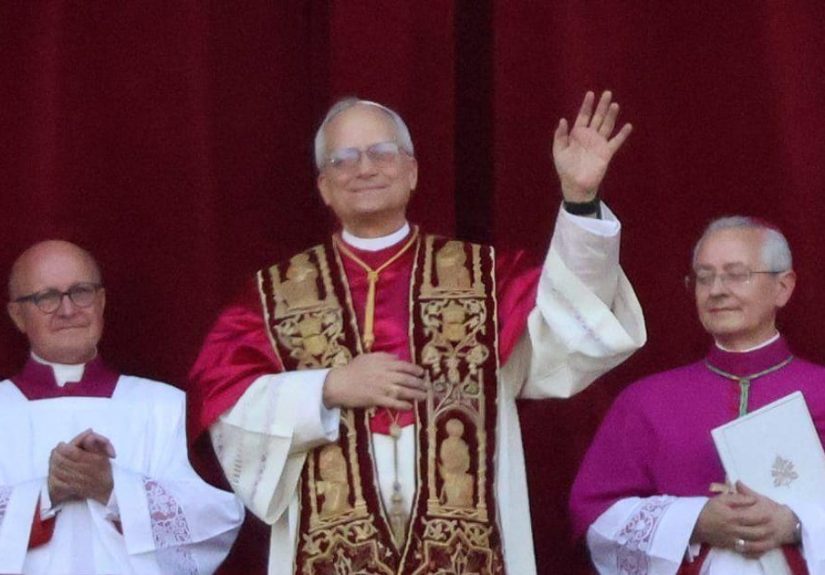
Stepping onto the balcony of St. Peter’s Basilica, Pope Leo XIV opened with “Peace be with you,” framing his early public identity
around peace, bridge-building, and a Church that stays open. He emphasized a peace that is “unarmed and disarming,” language that
echoes both spiritual conviction and social urgency.
For Catholics watching worldwide, the symbolism was immediate: the first pope born in the United States, with deep Latin American
experience, formed by an order shaped by learning and community life, and emerging from a governance role at the very center of
bishop selection. That’s a unique mix of global pastoral credibility and Vatican-level management experiencerarely combined so neatly.
Why the Name “Leo XIV” Is a Message, Not Just a Name Tag
Popes pick names for a reason. “Leo XIV” deliberately recalls Pope Leo XIII, famous for articulating modern Catholic social teaching,
especially on labor, dignity, and the social responsibilities of economic life. But Leo XIV’s context isn’t the Industrial Revolutionit’s a world
shaped by digital transformation, AI, fragile geopolitics, and new pressures on workers and communities.
Leo XIII, Labor, and the AI Era
The Vatican signaled that the name points to “the lives of men and women” and their work, including in an age marked by artificial intelligence.
That’s not a niche reference. It’s a flashing headline: human dignity first, even when technology and power move faster than ethics.
If you’re wondering what that could mean in practical terms, think about issues like:
- How work changes when automation expands
- How truth is threatened by synthetic media and misinformation
- How communities fracture when economic insecurity becomes chronic
- How peace becomes harder when fear becomes policy
Early Signals: What Pope Leo XIV Seems Focused On
1) Peace That’s More Than a Poster
In late 2025, Pope Leo XIV’s first annual peace message strongly criticized military deterrence logicespecially nuclear deterrenceand warned about
manipulating religion for political ends. This approach fits the “unarmed and disarming” language he used from the start. He’s framing peace as a
moral and spiritual commitment, not a vague wish. It’s the difference between “peace” as a slogan and peace as a plan for how human beings should
treat each other.
2) Governing with the Whole College of Cardinals
He has also signaled that he wants broad counsel in governance. Reporting indicates he summoned the world’s cardinals for a major assembly in early
January 2026, a move seen as a meaningful step in shaping his papal agenda after the Jubilee period wraps up. In other words: he’s not trying to govern
like a solo act. He’s building a listening structureat least symbolicallyand that’s a noteworthy leadership choice.
3) Leadership Renewal
Recent high-profile appointments suggest a willingness to refresh leadershipespecially within English-speaking hierarchiesand to lean into pastoral
priorities that emphasize human dignity, social concern, and care for the marginalized. No pope appoints bishops in a vacuum; each appointment sketches
a long-term blueprint.
4) A Synodal, Mission-Forward Church
In his first public address, he spoke about a Church that “builds bridges,” “always dialogues,” and stays open to “everyone.” That vocabulary strongly
aligns with the synodal emphasis of the Francis eraless “we talk at you,” more “we walk with you.” Whether that becomes the dominant style of his papacy
will depend on decisions, not adjectives, but the early tone is consistent.
Common Questions People Ask About Robert Prevost (Pope Leo XIV)
Is he really the first American pope?
Yeshe is the first pope born in the United States. His global ministry, especially in Peru, also means many Catholics see him as a bridge figure rather
than a “nation-first” symbol.
What’s an “Augustinian pope” and why does it matter?
It means he comes from the Order of Saint Augustine, known for community life, education, and a spirituality that integrates faith and reason. That background
often produces leaders who value thoughtful dialogue, pastoral realism, and strong internal formation.
Why should anyone care that he led the Dicastery for Bishops?
Because bishops shape the everyday experience of the Church for millions of people. If you’ve ever said, “I love my parish priest,” or “Why is this diocese
such a mess?”bishops are part of that story. A pope who has already lived in the bishop-selection machinery knows what leadership qualities actually play out
in real life.
Does the name Leo XIV mean he’s going to be “political”?
It means he’s likely to emphasize Catholic social teaching: human dignity, the common good, solidarity, care for the poor, and ethical responsibility in
economic and technological life. That’s not partisan politics; it’s moral and social traditionthough it can challenge every political camp depending on the issue.
Experiences That Make This Story Feel Real (Extra 500+ Words)
Big religious leadership stories can feel abstractlike they happen somewhere far away, behind velvet curtains and Latin announcements. But the election of Pope Leo XIV
has been experienced in concrete, almost cinematic ways across the world, especially in places that shaped him.
1) The Balcony Moment: A Crowd, a Greeting, and the Sound of Relief
One of the most universal “experiences” of this papal transition is something millions shared at the same time: watching the balcony of St. Peter’s Basilica.
There’s a reason people keep showing up for that moment. It’s part hope, part tradition, part human curiosity, and part “I want to see what kind of person this is.”
When Pope Leo XIV opened with “Peace be with you,” it didn’t land like a ceremonial greeting. It landed like a thesis statementshort, biblical, and pointed at a world
that’s tired of conflict. Even if you’re not Catholic, you can understand the emotion of hearing a global leader start with a word that doesn’t escalate fear.
2) Chicago’s “Wait, That’s Our Guy” Shock
In Chicago, the experience has been a mix of disbelief and civic pride. Local Catholics who grew up assuming “we’ll never have a U.S.-born pope” suddenly found themselves
explaining to friends that yes, a man born in their city is now the Bishop of Rome. Parishes and schools leaned into the moment the way communities do: prayer services,
bell ringing, extra Mass intentions, and a flood of “remember when” stories. It’s not just nationalismit’s the weirdly intimate feeling of realizing that the person on
the world stage once stood in lines, sat in classrooms, and lived ordinary rhythms in the same city blocks you know.
3) Villanova’s Campus Pride: Faith, Reason, and a Lot of Bells
At Villanova, the experience has been uniquely personal. This is not a generic “our alum made it big” story; it’s the ultimate version. Students and alumni have talked
about a renewed sense that the university’s Augustinian identity isn’t just branding. It formed someone who can hold theology, administration, and real-world pastoral
concern in the same hands. For many in the community, the moment became a living lesson: education isn’t only about getting a job; it’s about becoming the kind of person
who can serve others when the stakes are enormous.
4) Peru’s Joy: A Pope With Dirt-on-the-Shoes Credibility
In Peru, the experience has been deep pride and affectionespecially in places connected to his ministry. People remember bishops who visit, who listen, who show up
when there’s hardship, who don’t treat the poor as a photo opportunity. For Catholics who experienced Prevost as a pastor and leader, the papal election wasn’t just
historicit felt like recognition that the Church’s center of gravity is global, not confined to one continent. It’s also a reminder that language and culture matter.
A pope who has lived ministry across cultures may speak in ways that feel less like “Rome talking” and more like “the Church walking with us.”
5) How Ordinary People Are “Trying On” This Papacy
Beyond headlines, everyday Catholics tend to experience a new pope through small practices:
- Listening to early speeches to catch the repeated themes (peace, bridges, openness, the dignity of work).
- Watching appointments to see if the tone becomes policy: who is trusted with leadership, and what priorities those leaders embody.
- Revisiting Catholic social teaching because the “Leo” name practically invites people to reread what the Church says about workers, inequality,
and the common goodnow updated for a digital economy. - Paying attention to AI ethics not as sci-fi, but as a human issue: truth, labor, dignity, and the risks of dehumanizing systems.
The most interesting experience may be this: many people are realizing they want a pope who is both spiritually grounded and practically serious. Pope Leo XIV’s biography
fits that desirea leader formed by community life, sharpened by governance, and seasoned by real ministry among people who didn’t have the luxury of treating faith like
a hobby. Whether you see the papacy as sacred office, global diplomacy, or both, it’s hard to ignore that his path was built less on spotlight and more on service.
And in an era obsessed with hype, that’s a surprisingly compelling kind of power.
Conclusion: Why Robert Prevost’s Story Matters Now
Robert Francis Prevost didn’t arrive at the papacy as a celebrity figure; he arrived as a builderof communities, of formation programs, of leadership structures,
and of bridges between cultures. As Pope Leo XIV, he inherits a Church navigating polarization, global conflict, social and economic strain, and the ethical challenges
of rapidly evolving technology. The early signalspeace as a central theme, consultation as a leadership posture, and a “Leo” focus on human dignity in modern worksuggest
a papacy aiming to be both spiritually resonant and socially consequential.
If Pope Leo XIV had a one-line tagline so far, it might be: peace that disarms, truth that holds, and a Church that stays open. Not a bad start for someone who
once studied mathematicsbecause the world could use a little more clarity, and a lot more mercy.