Table of Contents >> Show >> Hide
If you have ever bought a cheap massage gun and realized it felt less like “deep tissue recovery” and more like an angry electric toothbrush, you are not alone. The massage gun market is packed with flashy promises, suspiciously huge discount stickers, and devices that look powerful until they meet an actual hamstring. That is why finding a massage gun that actually works matters.
Here is the good news: a good percussion massager can be useful. Not magic. Not a replacement for sleep, mobility work, or medical care. But useful. The best massage guns can help temporarily ease muscle tightness, make post-workout soreness feel less dramatic, and loosen up stiff areas after long hours at a desk. They can also make you feel like a person again after leg day, which is no small thing.
For this roundup, the focus is on six models that stand out for the stuff that really matters: usable power, smart ergonomics, decent battery life, enough attachment options to be helpful without becoming ridiculous, and the kind of build quality that suggests the device will still be alive in six months. In other words, these are massage guns for people who want relief, not regret.
Do Massage Guns Really Work?
Yes, but with a giant asterisk the size of a yoga mat. Percussive therapy seems to be most helpful for short-term muscle relief, flexibility, and recovery support. That means a massage gun may help you feel looser before a workout, less cranky after one, or less stiff after spending the day folded over a laptop like a human paperclip.
What a massage gun does not do is fix injuries, correct terrible sleep habits, or turn one five-minute recovery session into a sports medicine miracle. Think of it as a tool, not a wizard. If you have acute injuries, open wounds, severe inflammation, blood clot risks, nerve problems, or you are unsure whether percussion therapy is safe for you, it is smart to talk to a healthcare professional first.
The most useful way to judge whether a massage gun “works” is not by hypey marketing language. It is by whether the device can deliver enough percussion to create a meaningful sensation in tight muscle tissue while still being comfortable and easy to use. That is where design separates the real contenders from the gimmicks.
How I Chose These Massage Guns
The picks below were selected using a simple idea: a good massage gun should make sense in real life. That means it should have enough power to work on large muscle groups, enough control for smaller or more sensitive areas, and a handle design that does not require circus-level flexibility to reach your own back.
I also prioritized five practical factors:
1. Real performance
Amplitude, speed range, and stall force matter because they affect how deep and how forcefully the gun can work. If a device stalls the second you lean into a quad, that is not a recovery tool. That is a paperweight with ambitions.
2. Ergonomics
A great motor does not help much if the device is awkward to hold. Good grip design, balanced weight, and easy button placement matter more than brands love to admit.
3. Noise
You should not have to choose between muscle relief and hearing loss. Quieter motors are especially helpful if you plan to use the device in a shared home, office, or hotel room.
4. Battery life
If the battery dies every time you remember your calves exist, that is a problem. The better models can last through multiple sessions without constantly begging for a charger.
5. Value
Expensive does not automatically mean better. Some premium devices are worth the splurge. Others are basically charging you extra for sleek branding and emotional intimidation.
6 Massage Guns That Actually Work
1. Therabody Theragun Prime Best Overall
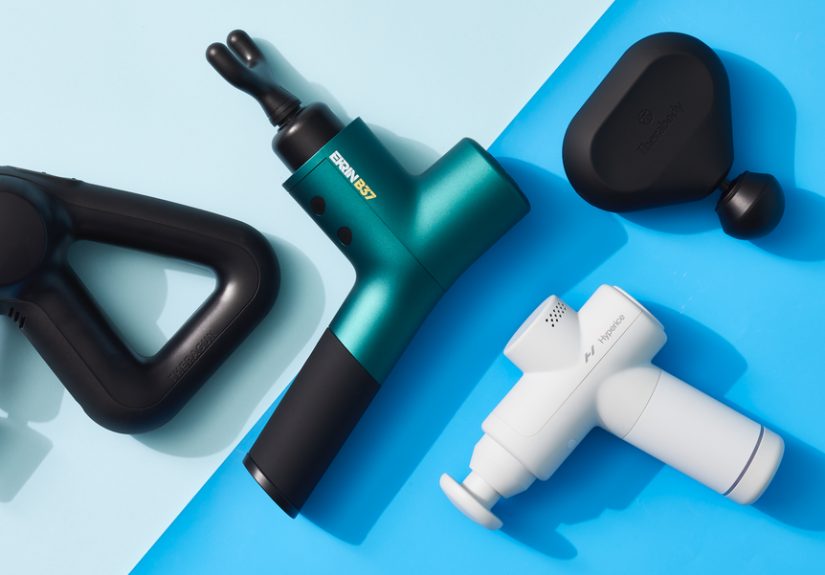
If you want one massage gun that balances power, comfort, simplicity, and brand reliability, the Theragun Prime is the easy answer. It has the kind of deep percussion that can handle tight glutes, quads, and upper back muscles without feeling like overkill for everyday users. More important, it uses Therabody’s signature triangular handle, which is still one of the smartest designs in the category.
That handle is not just a visual gimmick. It makes a real difference when you are trying to reach awkward spots without twisting yourself into a pretzel. Add in five speed settings, solid battery life, and a durable build, and you get a massage gun that works well for both active people and regular humans with desk shoulders from the modern era.
Best for: most people who want a full-size, dependable massage gun that feels premium without going fully “I spent my rent on recovery gear.”
2. Hyperice Hypervolt 2 Pro Best for Athletes
The Hypervolt 2 Pro is for people who want more muscle from their massage gun and do not mind a slightly larger device in exchange for it. This model brings strong percussion, five speed settings, a robust motor, and a good selection of attachments. It is the kind of massage gun that makes sense for frequent training, heavier legs, and users who prefer a more serious deep-tissue feel.
It also earns points for being more user-friendly than some ultra-powerful devices that seem to think recovery should feel like a bar fight. The Hypervolt line tends to be smoother and quieter than many competitors, which helps when you want a more controlled session instead of pure chaos. If you train hard and use a massage gun regularly, this is one of the most convincing premium picks on the market.
Best for: runners, lifters, cyclists, and anyone who wants a high-powered massage gun that can keep up with repeated use.
3. Bob and Brad D6 Pro Best for Deep Tissue Relief
The Bob and Brad D6 Pro is the pick for people who hear the phrase “deep tissue” and say, “Good, I want that.” This model is built around strong amplitude and serious stall force, which makes it especially appealing for dense muscle groups and users who think many massage guns feel a little too polite.
What makes the D6 Pro more than a brute-force option is that it pairs that power with flexibility. It offers multiple speed settings, several attachments, and a design that gives you more angles to work with when targeting difficult areas. That combination matters because raw power is only useful if you can direct it where you need it.
It is not the best starter choice for someone who wants a super-gentle experience, but for deep knots and post-training soreness, it is one of the most compelling options in this roundup.
Best for: athletes, heavier users, and anyone who wants stronger percussion than most mainstream models provide.
4. Hyperice Hypervolt Go 2 Best Lightweight Pick
Small massage guns can be underwhelming. The Hypervolt Go 2 is one of the better exceptions. It is compact enough to travel easily, light enough to use without hand fatigue, and still strong enough to feel like a real recovery tool instead of a novelty gadget.
This is the massage gun for people who want something they will actually keep nearby. It fits more naturally into daily life than a big, heavy model that lives in a closet until the next solar eclipse. The Go 2 is especially good for frequent, shorter sessions: calves after a walk, shoulders after work, forearms after typing, or hamstrings before a run.
It will not give you the same thump as a large premium device, but that is not really the point. Its value is portability, ease, and the fact that it performs better than many “mini” models have any right to.
Best for: travelers, commuters, office workers, and anyone who wants a massage gun they will genuinely use often.
5. Ekrin Athletics B37 Best Quiet Value
The Ekrin B37 is one of those rare products that feels thoughtfully designed instead of merely manufactured. It has a more ergonomic angled handle than the standard straight-grip design, a wide speed range, quiet operation, and strong battery life. Translation: it is easy to hold, easy to control, and less likely to sound like power tools are being tested in your living room.
The B37 is particularly appealing for people who want a capable full-size device without paying top-tier Theragun or Hyperice prices. It feels like a massage gun designed by someone who has actually tried to use one on a tired upper back. That angled handle helps more than you might expect, especially during longer sessions.
For everyday muscle maintenance, the B37 hits a sweet spot between comfort and performance. It does not scream for attention, but it gets the job done with very little drama, and that is a compliment.
Best for: shoppers who want excellent value, quieter operation, and ergonomic comfort in a full-size device.
6. Theragun Relief Best for Beginners
Not everyone wants a heavy-duty percussion machine that feels like it was designed for Olympic sprinters and comic book heroes. Some people just want a massage gun that is light, simple, and effective enough for everyday aches. That is where Theragun Relief makes sense.
This model is gentler than the brand’s more advanced options, which is exactly why it belongs here. A massage gun that actually works does not always have to be the most intense one in the room. Sometimes the best device is the one you are not afraid to use. Theragun Relief is easy to handle, easy to understand, and a smart option for people who want help with mild-to-moderate muscle tension without diving into the deep end of the recovery pool.
For beginners, the biggest win is approachability. You can pick it up, use it, and get relief without needing a tutorial, an app, or a recovery coach whispering motivational phrases into your soul.
Best for: first-time buyers, casual users, and anyone who prefers a milder, more approachable massage experience.
What to Look for Before You Buy
Amplitude and Power
If you want deeper muscle work, choose a device with meaningful amplitude and enough motor strength to avoid stalling under pressure. This matters most for larger muscle groups like quads, glutes, and hamstrings.
Weight and Grip
A lighter massage gun is easier to use on yourself, especially for the shoulders and upper back. But a device that is too light can sometimes sacrifice power. The sweet spot depends on whether you prioritize deep tissue work or frequent convenience.
Attachments
More attachments are not always better, but a few useful ones can help. A standard ball head is great for general use. A bullet head works better for targeted spots. A fork attachment can be useful around areas like the spine, though you should still avoid using percussion directly on bones or joints.
Noise Level
If you plan to use your massage gun at night, around family, or during a Netflix binge, quieter is better. Your muscles deserve relief, but your household probably does not deserve a mini jackhammer concert.
How to Use a Massage Gun Without Overdoing It
Start with light pressure. That is the rule. Let the device do the work. Hover or glide slowly over the muscle rather than jamming the gun into the tissue like you are trying to excavate buried treasure.
Aim for short sessions on each muscle group, especially when you are starting out. Use lower speeds on more sensitive areas and save higher settings for larger muscles that can tolerate more percussion. Avoid bones, joints, the front of the neck, open wounds, recent injuries, and areas of active inflammation.
Most people do well using a massage gun before workouts for a quick warm-up, after workouts for soreness support, or during the day for tight shoulders and hips from sitting too much. If it hurts in a sharp, alarming, “this was a bad idea” sort of way, stop.
What the Experience of Using a Massage Gun That Actually Works Feels Like
A good massage gun usually does not impress you because it is loud or aggressive. It impresses you because it makes the muscle change. That sounds obvious, but it is the real difference between a quality device and a disappointing one. With a good model, your quad starts out feeling dense and grumpy, and a minute later it feels warmer, looser, and less committed to ruining your stair-climbing plans.
For runners, one of the most common experiences is the “my calves were tight bricks and now they are at least cooperative” effect. A strong but controlled massage gun can be useful after long runs, hill work, or speed sessions when the lower legs feel loaded and touchy. The point is not to erase soreness entirely. It is to take the edge off so the body feels more ready to move again. That same effect shows up for cyclists with quads, lifters with glutes, and pickleball fans who suddenly discover they own hamstrings.
Desk workers often notice something slightly different. The win is not always deep tissue intensity. It is accessibility. A good massage gun can help loosen the upper traps, rear shoulders, forearms, and hips after hours of sitting, typing, scrolling, and generally becoming one with a chair. In that setting, lightweight models tend to shine because they are easy to grab for a quick five-minute session. If a device is too bulky or too annoying to hold, it usually gets ignored, and the best recovery tool is the one you will actually use.
Another real-world experience is learning that “more pressure” is not always “better results.” People often start with the idea that the hardest-hitting massage gun must be the best one. Then they use a well-designed device with better ergonomics and speed control and realize comfort matters too. A gun that lets you angle the handle correctly, switch attachments quickly, and work gradually over a tight area often feels more effective than one that simply pummels everything in sight.
Travel is another place where the experience matters. A compact massage gun can be a lifesaver after flights, long drives, or hotel-bed sleep that somehow turns your neck into a legal dispute. Small models are not always as deep or forceful as larger ones, but the good ones still provide meaningful relief. And because they fit in a backpack or carry-on, they get used in real life instead of sitting at home looking athletic on a shelf.
Then there is the beginner experience, which deserves its own paragraph because it is so common. Many first-time users assume massage guns are supposed to be intense from the first second. They crank the speed, press too hard, and end up feeling worse. A massage gun that actually works should make you want to use it again tomorrow, not file a complaint against your own shoulders. Gentler models or lower settings often create a better introduction and a more sustainable recovery habit.
The best experience, overall, is not dramatic. It is practical. Your body feels a little less stiff. Your warm-up feels faster. Your post-workout soreness feels a bit more manageable. Your neck and shoulders stop acting like they are auditioning for a stress documentary. That is what a massage gun that actually works is supposed to do. Not perform miracles. Just help your body feel more ready for the next thing.
Final Thoughts
If you want the safest all-around bet, the Theragun Prime is the strongest overall choice. If you want premium power for serious training, the Hypervolt 2 Pro is an excellent upgrade. If deep-tissue intensity is your love language, the Bob and Brad D6 Pro deserves a hard look. For portability, the Hypervolt Go 2 is the easy winner. For quieter value, the Ekrin B37 is an underrated standout. And for beginners who want something simple and effective, Theragun Relief is the friendliest place to start.
The best massage gun is not the one with the flashiest marketing or the most absurd number of attachments. It is the one that fits your body, your habits, and your tolerance for intensity. Choose wisely, use it sensibly, and your muscles may stop acting like they are personally offended by your lifestyle.