Table of Contents >> Show >> Hide
- Why Before-and-After Adoption Photos Hit So Hard
- What the “Before” Usually Tells Us
- What the “After” Really Represents
- Patterns You Notice Across All 40 Photos
- What These Photos Teach Future Adopters
- Why Collections Like This Matter Beyond the Feel-Good Factor
- The Real Heart-Melting Part
- Experiences That Make These Adoption Transformations So Relatable
- Conclusion
There are regular dog photos, and then there are before-and-after adoption dog photosthe kind that hit you right in the chest and then shamelessly ask if you have tissues nearby. One second you are casually scrolling. The next, you are staring at a once-timid rescue pup who now looks like they personally pay the mortgage, supervise the snack cabinet, and have very strong opinions about which couch cushion belongs to them.
That is exactly why collections like these spread so quickly online. They are not just cute. They are visual proof that safety changes everything. In one frame, a dog looks shut down, confused, thin, guarded, or simply exhausted. In the next, the same dog is brighter, softer, goofier, and unmistakably home. It is not magic, even if it looks suspiciously close. It is what happens when fear meets patience, when uncertainty meets routine, and when survival finally gets replaced by comfort.
This collection of 40 photos does more than serve up an emotional ambush in the best possible way. It tells a bigger story about dog adoption, rescue dog transformation, and the quiet work that happens after the adoption papers are signed. These images are heartwarming, yes, but they are also educational. They show that the “after” photo is usually built on a mountain of tiny moments: the first good meal, the first deep sleep, the first tail wag that is not cautious, the first toy that gets destroyed with enthusiasm, and the first time a dog decides, “Okay, maybe these people are my people.”
Why Before-and-After Adoption Photos Hit So Hard
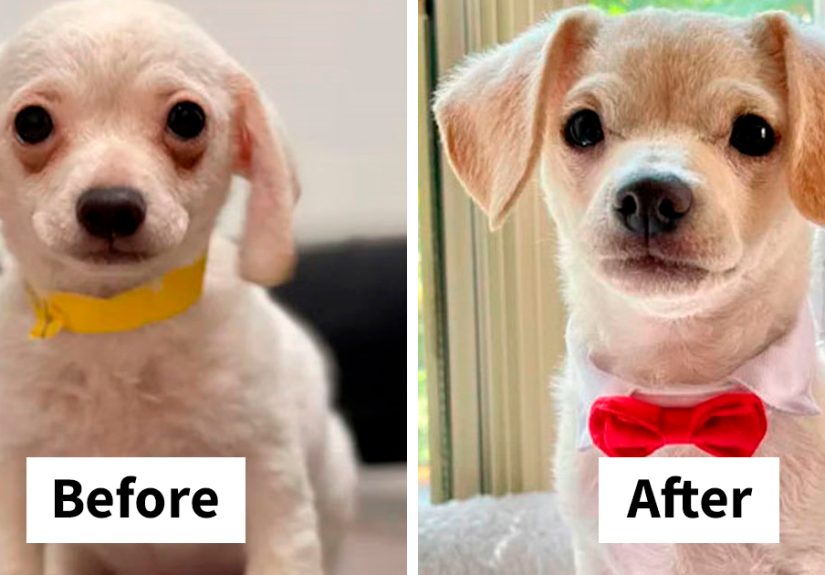
Humans are wired for stories, and these photos tell one at a glance. You do not need a long caption to understand what changed. You can often see it in the eyes first. The “before” image may show a dog that is withdrawn, overwhelmed, dirty, recovering from neglect, or simply trying to make sense of a noisy shelter or unfamiliar rescue setting. The “after” image often shows the opposite: loose muscles, open posture, a cleaner coat, healthy weight, brighter expression, and the universal canine signal for “I now believe this blanket was always mine.”
That contrast is powerful because it makes adoption feel real. It takes the idea of “saving a dog” out of slogan territory and puts it into everyday life. The difference is not abstract. It is visible. It is a body learning to relax. It is a face learning to be expressive again. It is a dog going from merely existing to fully participating in a home.
These images also work because they are humble. They are rarely polished studio portraits. Most are the opposite. A blurry kennel shot. A nervous intake photo. A sleepy dog on a thrifted couch. A muddy paw on a kitchen floor. A lopsided grin after bath number twelve. The charm comes from the honesty. Rescue is not glamorous; it is meaningful. And the photos capture that beautifully.
What the “Before” Usually Tells Us
Stress can change how a dog looks and behaves
One of the biggest lessons hidden inside these images is that a dog’s first impression is not always the full story. A frightened shelter dog may seem distant, frozen, overly alert, or emotionally flat. Some dogs appear older than they are because stress wears on them. Others look smaller, sadder, or rougher around the edges simply because they have been surviving instead of thriving.
That matters because many adopters still worry that the dog they see in a stressful environment is the dog they will live with forever. But many rescue dogs transform once they are given decompression time, consistent meals, veterinary care, gentle training, and a predictable routine. In other words, the “before” photo often documents a dog in a temporary state, not a fixed identity.
Neglect often shows up in small details
In photo after photo, the early signs are familiar: overgrown nails, patchy fur, dull eyes, underweight bodies, skin issues, timid posture, or the expression of a dog who has not yet learned that human hands can bring comfort instead of chaos. None of those details define a dog’s future, but they do tell us something about the past. And that is why the “after” can feel so satisfying. It is not just a glow-up. It is evidence of recovery.
Sometimes the changes are dramatic, and sometimes they are subtle. A dog’s coat looks shinier. Their ears sit differently. They nap belly-up instead of curling into a tight comma shape. They smile more. Yes, dogs do not technically pose for school pictures with a note that says “improved self-esteem,” but honestly, some of these photos come very close.
What the “After” Really Represents
Safety, routine, and trust
The “after” photo is rarely about appearance alone. It represents what happened between the two images. A safe place to sleep. Food that arrives on schedule. Someone who notices when the dog is itchy, limping, anxious, or afraid. Someone who learns what they love, what startles them, and what makes their tail do that full-body windshield-wiper thing.
For many dogs, the transformation is not immediate. The internet loves a dramatic reveal, but real life usually looks more like gradual softening. The first week may be quiet. The second may include some nerves. The third might bring zoomies. The first few months are often when the dog’s real personality starts stepping into the light. That is why the best after-photos do not just show a dog looking healthier; they show a dog looking known.
The power of ordinary kindness
One beautiful thing about these adoption stories is how ordinary the tools of transformation often are. You do not need cinematic music and a helicopter rescue shot. You need breakfast. Leash walks. A clean bed. A vet appointment. Patience with accidents. Calm introductions. A chew toy sacrificed to a worthy cause. Repetition. Routine. Reassurance.
That is what makes these photos so moving. The miracle is made of normal things done consistently. Love, in rescue terms, often looks less like grand speeches and more like “We are going outside after lunch, just like yesterday, and yes, that squeaky duck is still yours.”
Patterns You Notice Across All 40 Photos
Even if every dog is different, these photo collections tend to reveal the same emotional arc again and again. First comes uncertainty. Then comes stability. Then comes personality. Once that pattern clicks, the whole gallery becomes even more rewarding to view.
1. The eyes change first
Before adoption, many dogs look watchful or shut down. After adoption, their eyes often appear softer, brighter, and more engaged. It is not your imagination. Relaxed dogs simply look different. They start making expressions that feel playful, mischievous, trusting, or hilariously entitled.
2. The posture tells the truth
A scared dog may crouch, lean away, tuck their tail, or hold tension in the face and shoulders. In later photos, you see the opposite: head lifted, body stretched out, ears relaxed, paws draped dramatically over furniture like a tiny furry aristocrat. Posture is the body’s diary, and these dogs go from writing in survival mode to writing in comfort.
3. The coat and body condition improve
Many rescue dogs visibly bloom with regular food, hydration, grooming, and medical care. Their fur becomes fuller or cleaner, their skin improves, and they often settle into a healthier weight. You can practically see the words “someone is finally taking care of me” reflected in the shine of a well-loved coat.
4. Their weirdness finally clocks in
This is the best part. Once dogs feel secure, they start revealing their wonderfully odd little personalities. Suddenly the quiet dog becomes a sock thief. The nervous dog turns into a toy collector. The serious one develops a dramatic sneeze routine when dinner is late by four seconds. Adoption does not erase individuality; it gives it room to show up.
What These Photos Teach Future Adopters
Do not judge a dog by their hardest day
If these 40 photos prove anything, it is that intake photos and first impressions are not final verdicts. A shelter or rescue environment can be noisy, unfamiliar, and overwhelming. A dog that seems timid or “plain” on day one may turn into the funniest, sweetest, most loyal companion once they feel secure.
Adjustment takes time
Many adoption experts talk about a decompression period for a reason. Dogs need time to learn the new rhythm of a home, the rules of the house, the sound of the vacuum, the meaning of “good dog,” and the shocking revelation that they are now expected to live among furniture they are not plotting to escape from. Some dogs settle quickly. Others need weeks or months. Both are normal.
Love works best with structure
The internet sometimes frames adoption as a single emotional moment, but the reality is more practical. Dogs thrive on consistency. Feeding times, walk times, rest, enrichment, boundaries, and reward-based training matter. The happier “after” photo usually reflects structure as much as affection. Love opened the door; routine made the dog feel safe enough to stay emotionally.
Why Collections Like This Matter Beyond the Feel-Good Factor
Yes, these photos are adorable. Yes, they may also destroy your emotional stability before lunch. But they matter for another reason: they make rescue dogs visible in the most persuasive way possible. A single before-and-after image can challenge old assumptions about shelter dogs being “damaged,” “too much work,” or somehow less desirable than dogs acquired elsewhere.
In reality, many adopted dogs become extraordinary family companions. They hike, snore, steal sandwiches, learn commands, love children, guard the bathroom door with unnecessary seriousness, and generally become the kind of household legend that gets brought up at family dinners. Rescue dogs are not side characters in someone else’s happy ending. They are the happy ending.
These online communities help normalize that truth. They turn adoption into something visible, communal, and emotionally contagious. One person posts a transformation photo. Another person sees it and starts looking at local rescues. Another donates. Another fosters. Another finally adopts the shy dog they almost overlooked. That is how a photo gallery becomes a ripple effect.
The Real Heart-Melting Part
The most moving thing about these images is not that the dogs look better. It is that they look like they belong. That is the detail that lingers. Belonging has a look. It looks like a dog asleep with all four paws in the air. It looks like muddy paws by the back door because someone knew they would come back inside. It looks like a dog sitting in the passenger seat with the confidence of a CEO who did not technically earn that promotion but definitely owns it now.
And maybe that is why people keep sharing these posts. They remind us that transformation does not always happen through huge, dramatic moments. Sometimes it happens one dinner bowl, one walk, one blanket, one kind voice, and one ordinary Tuesday at a time. The “after” photo is just the receipt.
Experiences That Make These Adoption Transformations So Relatable
What makes a gallery like this feel so personal is that a lot of adopters recognize the emotional rhythm immediately. Even if the dogs are strangers, the experience feels familiar. The first ride home is often quiet. Sometimes the dog sits rigidly in the back seat, unsure of whether this is another temporary stop. Sometimes they stare out the window like a tiny philosopher reconsidering everything. Sometimes they climb into your lap with unreasonable trust and zero respect for traffic laws. Either way, the feeling is unforgettable: two lives meeting in a weird, hopeful in-between moment.
Then comes the part nobody turns into a glamorous montage. The cautious first steps through the front door. The water bowl inspection. The hesitant sniff of the bed. The awkward moment when the dog does not yet know where to settle, and the humans do not yet know whether they should sit nearby, back away, or pretend to be extremely interested in rearranging coasters. It is tender, slightly chaotic, and deeply human. Adoption often begins not with instant certainty, but with gentle guessing.
As the days pass, the smallest breakthroughs become headline news in the house. The first tail wag gets celebrated like a playoff win. The first time the dog chooses to nap near you feels enormous. The first playful bounce, the first stolen slipper, the first bark at absolutely nothingthose little behaviors are reassuring because they mean the dog is starting to feel safe enough to be fully themselves. Comfort does not always arrive dressed as a dramatic cuddle. Sometimes it shows up disguised as mischief.
Many adopters also talk about the strange and wonderful shift that happens when pity turns into partnership. At first, people may focus on the dog’s past. What happened to them? What were they missing? What did they survive? But over time, the relationship moves forward. The dog stops being defined by the “before.” They become the dog who insists on the sunny spot by the window, the dog who hates rain with theatrical intensity, the dog who demands bedtime on schedule, the dog who greets one family member like they returned from war after a seven-minute grocery run.
That is why these before-and-after photos resonate so strongly: they mirror what adopters actually feel. The transformation is visible, but the deeper change is relational. The dog is not just healthier. The dog is woven into the daily life of the home. There are routines now, inside jokes now, favorite toys now, and probably at least one ridiculous nickname that has nothing to do with the dog’s actual name.
For people who have never adopted, these stories can be eye-opening. For people who have, they are often validating. They confirm that patience matters, that slow trust-building matters, and that progress can look different from one dog to the next. Some dogs become affectionate quickly. Others need space first. Some explode into confidence. Others unfold like a paper flower in watergradually, quietly, beautifully. But when the change comes, it is unforgettable.
In the end, that is the experience these 40 photos capture so well. Adoption is not just about giving a dog a home. It is also about watching a home take shape around a dog. And once that happens, it becomes very hard to imagine that life was ever arranged any other way.
Conclusion
The magic of these 40 dog adoption photos is not really magic at all. It is care made visible. It is what happens when rescue dogs are given the time, structure, patience, and affection needed to settle into a life that finally feels safe. The “before” may be heartbreaking, but the “after” is not just happierit is fuller, funnier, warmer, and unmistakably alive. That is why these images melt hearts so easily: they show that second chances are not abstract. Sometimes they have four paws, a crooked grin, and a favorite corner of the couch.