Table of Contents >> Show >> Hide
- How to Design a Fall Wreath That Looks Expensive (Even If It Isn’t)
- 40 Fall Wreaths That Showcase Nature’s Bounty
- 1. Golden Wheat Harvest Wreath
- 2. Maple Leaf Ombre Wreath
- 3. Sunflower and Seed Pod Ring
- 4. Mini Pumpkin Crescent Wreath
- 5. Corn Husk and Raffia Classic
- 6. Acorn and Oak Leaf Wreath
- 7. Pomegranate and Berry Door Wreath
- 8. Dried Hydrangea Halo
- 9. Rustic Twig and Pinecone Ring
- 10. Apple Orchard Wreath
- 11. Wild Grass Prairie Wreath
- 12. Magnolia and Copper Accent Wreath
- 13. Neutral Boho Pampas Wreath
- 14. Cedar, Eucalyptus, and Wheat Blend
- 15. Foraged Woodland Wreath
- 16. Thistle and Heather Wreath
- 17. Rustic Barrel Hoop Wreath
- 18. Smoky Berry and Branch Wreath
- 19. Pinecone Monochrome Wreath
- 20. Dried Citrus and Spice Wreath
- 21. Sun-Baked Field Flower Wreath
- 22. Garden Herb Wreath
- 23. Chrysanthemum Burst Wreath
- 24. Dahlia and Millet Statement Wreath
- 25. Cotton Stem and Burlap Wreath
- 26. Wildflower Meadow Ring
- 27. Seed Pod Sculpture Wreath
- 28. Golden Fern and Leaf Wreath
- 29. Lavender-Eucalyptus Autumn Crossover
- 30. Sunflower Half-Moon Hoop
- 31. Minimalist Copper Ring Wreath
- 32. Monotone Terracotta Wreath
- 33. Green-Forward Fall Wreath
- 34. Black Door Contrast Wreath
- 35. Basket-Style Harvest Wreath
- 36. Tobacco Basket Autumn Frame
- 37. Lantern Ring Wreath Hybrid
- 38. Pumpkin Patch Micro-Wreath
- 39. Thanksgiving Table-to-Door Wreath
- 40. Late-Fall to Winter Transition Wreath
- How to Keep Fall Wreaths Looking Fresh Longer
- Common Fall Wreath Mistakes to Avoid
- Conclusion
- Experience Notes: What People Learn After a Full Season of Fall Wreath Styling (500+ Words)
There are two kinds of front doors in autumn: the ones that whisper “cozy season,” and the ones that still look like July never got the memo. A fall wreath is the fastest way to move your home from “summer leftovers” to “apple-cider confidence.” It’s easy, it’s visual, and it does a lot of heavy lifting for curb appeal without requiring a full porch makeover or a suspiciously expensive truckload of decorative pumpkins.
This guide gives you 40 fall wreath ideas inspired by natural textures, harvest colors, and practical design principles that actually work in real life (wind, sun, rain, and all). You’ll find classic, rustic, modern, and playful looks you can DIY or recreate with store-bought pieces. Along the way, you’ll get smart styling tips, longevity tricks, and common mistakes to avoidbecause nothing says “autumn disappointment” like a droopy wreath by week two.
If you’ve been searching for autumn wreath ideas, front door wreath inspiration, or DIY fall decor that feels warm but not cheesy, you’re in the right place. Let’s wreath and roll.
How to Design a Fall Wreath That Looks Expensive (Even If It Isn’t)
Before we jump into the 40 ideas, here’s the formula designers and crafty people quietly use:
- Base: Grapevine, wire, twig, hoop, or basket form
- Greenery/Foliage: Leaves, eucalyptus, magnolia, grasses
- Focal Element: Mini pumpkins, sunflowers, dried hydrangea, pinecones
- Texture Layer: Wheat, seed pods, feathers, acorns, raffia
- Finishing Touch: Ribbon, velvet bow, linen strip, twine
Use a simple 60/30/10 visual balance:
- 60% foliage foundation
- 30% texture and secondary stems
- 10% bold accents (berries, ribbon, metallic touch)
This keeps your wreath from looking flat, chaotic, or like a craft store exploded on your door.
40 Fall Wreaths That Showcase Nature’s Bounty
1. Golden Wheat Harvest Wreath
Bundle dried wheat in overlapping layers around a grapevine base for a warm, farmhouse look. Add a linen ribbon in oat or caramel for soft contrast.
2. Maple Leaf Ombre Wreath
Arrange leaves from green-to-amber-to-rust in a color gradient. This one looks stunning on dark doors and photographs beautifully in afternoon light.
3. Sunflower and Seed Pod Ring
Pair medium sunflowers with lotus pods and eucalyptus sprigs. It feels cheerful without becoming “summer-only,” especially when anchored with brown foliage.
4. Mini Pumpkin Crescent Wreath
Decorate only one side of the wreath with mini pumpkins, leaves, and berries. The negative space gives it a modern, designer finish.
5. Corn Husk and Raffia Classic
Corn husks create a feathery texture that screams harvest season. Add raffia loops and a burnt-orange bow to keep it festive and natural.
6. Acorn and Oak Leaf Wreath
Cluster acorns in small pockets around oak leaves for woodland charm. Great for traditional homes and neutral porch palettes.
7. Pomegranate and Berry Door Wreath
Use faux pomegranates with mixed berry stems for rich burgundy depth. It bridges early fall into Thanksgiving effortlessly.
8. Dried Hydrangea Halo
Hydrangea heads in muted green, blush, and tan create a soft, romantic wreath. Keep the palette restrained for an elegant, upscale feel.
9. Rustic Twig and Pinecone Ring
Layer pinecones in varying sizes over a twig base. Tuck in tiny moss pockets for texture that looks found, not forced.
10. Apple Orchard Wreath
Use faux crab apples, leaf sprays, and cinnamon-colored ribbon. It feels playful, nostalgic, and very “weekend at the cider mill.”
11. Wild Grass Prairie Wreath
Mix dried grasses, millet, and feathery plumes in asymmetrical bundles. This style is airy, earthy, and perfect for modern rustic homes.
12. Magnolia and Copper Accent Wreath
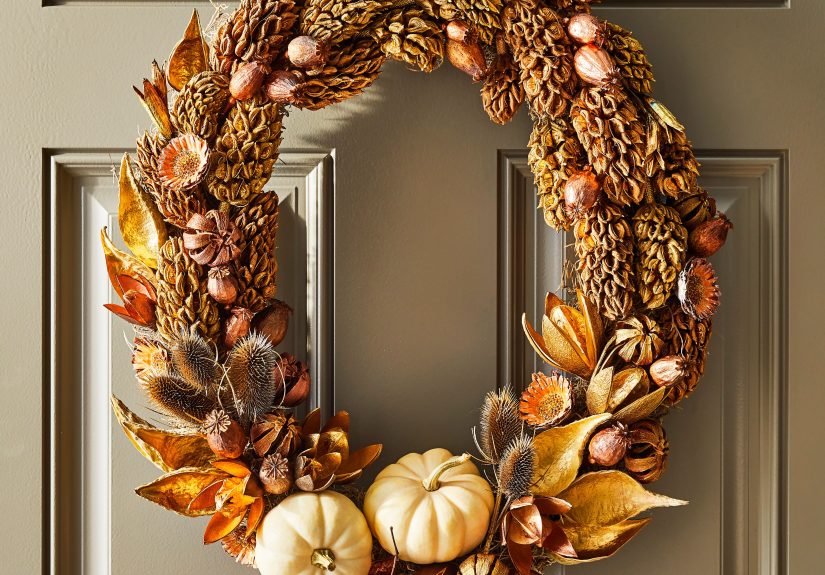
Magnolia leaves provide lush structure; copper-toned berries add subtle shine. It’s polished enough for formal entryways but still welcoming.
13. Neutral Boho Pampas Wreath
Blend pampas, bunny tails, and beige florals for a calm, textural statement. Ideal for anyone avoiding loud orange while keeping fall vibes.
14. Cedar, Eucalyptus, and Wheat Blend
Combine cool greens with warm wheat for balanced color contrast. This wreath transitions nicely from September through late November.
15. Foraged Woodland Wreath
Use twigs, dried ferns, seed heads, and mushrooms (faux is fine). It feels handcrafted and story-rich, like a walk through an autumn trail.
16. Thistle and Heather Wreath
Muted purple thistle and dusty greens give this design a moody, upscale personality. Great on white, charcoal, or navy front doors.
17. Rustic Barrel Hoop Wreath
Repurpose a wooden hoop and add leaf clusters on one quadrant. Minimal effort, maximum visual impact.
18. Smoky Berry and Branch Wreath
Dark berry sprays with bare twigs create a dramatic late-fall look. Add a blackened bronze ribbon for extra depth.
19. Pinecone Monochrome Wreath
Use only pinecones in natural tonessmall, medium, and jumbofor texture-driven style. No flowers needed, no color drama required.
20. Dried Citrus and Spice Wreath
Orange slices, star anise, and cinnamon-stick bundles bring old-world charm. Bonus: it looks cozy even when you’re still in a T-shirt.
21. Sun-Baked Field Flower Wreath
Use dried daisies, strawflower, and soft grass stems for a sun-faded countryside feel. Keep it loose for movement and softness.
22. Garden Herb Wreath
Rosemary-like foliage, sage tones, and tiny blooms create a fresh take on fall decor. Perfect for cottage or farmhouse doors.
23. Chrysanthemum Burst Wreath
Group mums in one half of the form, then balance with foliage. It’s bold but not chaotic when you stick to two or three shades.
24. Dahlia and Millet Statement Wreath
Use large dahlia blooms as focal points, then surround with millet and leaves. This one is dramatic and camera-friendly.
25. Cotton Stem and Burlap Wreath
Cotton adds softness, burlap adds structure, and eucalyptus adds movement. A great neutral option for homes with brick or stone facades.
26. Wildflower Meadow Ring
Mix tiny floral stems in amber, mustard, and rust for a natural meadow effect. Think “fresh-picked,” not “perfectly matched.”
27. Seed Pod Sculpture Wreath
Make seed pods the star and skip big flowers entirely. It feels organic, artistic, and a little museum-worthy.
28. Golden Fern and Leaf Wreath
Use fern fronds as your primary shape, then tuck in broad leaves for contrast. Lightweight and elegant for narrow doorframes.
29. Lavender-Eucalyptus Autumn Crossover
Pair muted lavender stems with dusty eucalyptus and amber accents. It’s a gentle bridge from late summer into full fall.
30. Sunflower Half-Moon Hoop
A slim metal hoop with a lower-corner floral cluster creates a clean, modern profile with plenty of seasonal personality.
31. Minimalist Copper Ring Wreath
Use a bare copper hoop, one spray of leaves, and one ribbon tail. The restraint is the styleless “craft corner,” more “design studio.”
32. Monotone Terracotta Wreath
Keep all elements in clay, rust, and cinnamon tones. The monochrome palette looks intentional and editorial.
33. Green-Forward Fall Wreath
Use evergreen, olive, and eucalyptus tones with tiny amber berries. Great for people who love fall but dislike loud orange.
34. Black Door Contrast Wreath
Build in cream leaves, white pumpkins, and tan grasses for high contrast against dark paint. Crisp, modern, and totally striking.
35. Basket-Style Harvest Wreath
Use a shallow wall basket instead of a ring and fill it with wheat, leaves, and faux pears. It’s technically not round, still very wreath-worthy.
36. Tobacco Basket Autumn Frame
Square tobacco baskets provide built-in geometry. Add foliage and gourds to one side for that curated asymmetry designers love.
37. Lantern Ring Wreath Hybrid
Wrap a slim wreath around an outdoor lantern hook display. This layered approach looks custom and upscale.
38. Pumpkin Patch Micro-Wreath
Tiny pumpkins, tiny pinecones, tiny leaveshuge charm. Best on interior doors, mudrooms, or side entries.
39. Thanksgiving Table-to-Door Wreath
Create a wreath that matches your tablescape: same ribbon, same color story, same botanical elements. Instant visual continuity.
40. Late-Fall to Winter Transition Wreath
Use magnolia, pinecones, berries, and warm neutrals to carry your wreath from October through early winter without looking out of season.
How to Keep Fall Wreaths Looking Fresh Longer
A beautiful wreath is great. A beautiful wreath that survives weather mood swings is better.
- Choose the right base: Grapevine and twig forms hold wired stems well; metal hoops are best for minimalist builds.
- Wire before glue: Floral wire does the heavy lifting; glue is reinforcement, not structure.
- Mind the doorway microclimate: Covered porch = longer life. Full sun = faster fading, especially reds and oranges.
- Rotate every 1–2 weeks: A quick quarter-turn prevents one-sided weather wear.
- Keep it dry when possible: Dried botanicals and constant rain are not best friends.
- Store smart: Use a breathable wreath bag or large box; avoid crushing by hanging or laying flat with support.
Common Fall Wreath Mistakes to Avoid
- Too many focal points: If everything is loud, nothing is special.
- Flat silhouette: Layer depth from back to front so your wreath doesn’t look printed-on.
- One-color overload: Even monochrome palettes need tonal variation.
- Skipping test hang: Always preview on the door before final wiring.
- Ignoring proportion: Standard front doors usually suit 20–24 inch wreaths.
- Forgetting season transitions: Build with swap-friendly accents so you can refresh without rebuilding.
Conclusion
Fall wreaths are one of the easiest ways to make your home feel intentional, warm, and seasonally alive. Whether you love an abundant harvest look, a moody woodland style, or a clean modern hoop, the best designs all share the same ingredients: texture, balance, and a clear color story.
Start with one of the 40 ideas above, adapt it to your home’s style, and let nature do what it does bestdeliver color, character, and comfort. Your front door is the first chapter of your home’s story this season. Make it a good one.
Experience Notes: What People Learn After a Full Season of Fall Wreath Styling (500+ Words)
Across neighborhoods, apartment hallways, suburban porches, and small-town main streets, one pattern shows up again and again: people who thought wreath-making was “just another craft” end up treating it like seasonal storytelling. At first, many begin with a store-bought wreath because it feels easier and safer. Then they tweak one thinga ribbon, a few stems, maybe a cluster of pineconesand suddenly they’re hooked. The biggest lesson from real decorating experiences is that customization creates emotional connection. A wreath stops being generic the minute it reflects your home, your color preferences, and your idea of autumn.
Another common experience is surprise at how much texture matters. Beginners usually focus on color first: orange leaves, red berries, yellow mums. But after trying a few designs, they realize texture does more visual work than color alone. Pairing smooth faux pumpkins with rough bark, papery leaves with soft grass plumes, or matte foliage with glossy berries creates depth that looks professionally styled. People often report that their “best-looking” wreath was the one with fewer colors but richer texture contrast.
Weather is the next major teacher. Many decorators discover that a wreath that looks perfect on the kitchen table behaves very differently on an exterior door. Wind shifts stems, direct sun fades bright tones, and heavy moisture can flatten delicate botanicals. Homeowners with exposed entries often learn to build sturdier designs with wired stems and denser anchor points. Apartment dwellers with covered entrances can get away with more delicate materials and softer forms. This leads to one of the most practical insights: design for your specific doorway, not for a perfect photo online.
People also notice the psychological effect of seasonal entry decor. A finished wreath becomes a signal that routines are shifting: school is in full swing, evenings are cooler, meals are heartier, and gatherings are near. Even households that don’t do full holiday decorating say a fall wreath makes home feel more grounded and welcoming. Guests comment on it. Delivery drivers notice it. Kids point at tiny pumpkins. Neighbors copy it (which is the highest form of porch flattery).
For DIY crafters, cost strategy becomes a skill over time. The first wreath often costs more than expected because supplies are bought in full bundles. By the second or third attempt, people learn to reuse bases, save leftover stems, and swap only the focal elements. A single grapevine form might carry three looks in one season: early fall (green + wheat), mid-fall (pumpkins + berries), and Thanksgiving (magnolia + ribbon + pinecones). Experienced decorators consistently say reusability matters more than chasing brand-new materials every year.
There’s also a style-confidence curve. At the beginning, many fear asymmetry and try to make wreaths perfectly balanced on both sides. After experimenting, they discover that asymmetrical clusters often look more modern and natural. People who once insisted on centered bows begin placing accents off-center, letting stems arc outward, and allowing negative space to breathe. In other words: they stop fighting the design and start letting it move.
Color confidence evolves too. Some start with classic orange-and-red harvest palettes, then branch into neutrals, moody plum tones, or green-forward arrangements. Others do the oppositemoving from minimal beige to bold sunflower statements. The takeaway from these experiences is simple: there isn’t one “correct” fall palette. The most successful wreaths are the ones that match the home’s exterior and the mood the homeowner wants to create.
Finally, experienced decorators emphasize one unexpected truth: done is better than perfect. The wreath people love most is rarely the most expensive or technically flawless one. It’s usually the one they actually finished, hung up, and enjoyed all season. So if your bow is a little crooked or your berries are slightly rebellious, congratulationsyou’ve made something real. Autumn is a textured season. Your wreath should be too.