Table of Contents >> Show >> Hide
- Why Height Conversion Matters
- The Exact Basics You Need First
- Method 1: Divide Centimeters by 30.48
- Method 2: Convert Centimeters to Inches First, Then Split Into Feet and Inches
- Method 3: Use a Quick Reference Chart for Common Heights
- Method 4: Use a Calculator, Spreadsheet, or Simple Formula
- Which Method Is Best?
- Common Mistakes to Avoid When Converting Height
- Practical Examples of Height Conversion
- Tips for Remembering Height Conversion More Easily
- Why Feet-and-Inches Format Is Often Better for Human Height
- Final Thoughts
- Real-Life Experiences Related to Converting Human Height in Centimeters to Feet
- SEO Tags
If you have ever stared at a form asking for your height in feet and inches while your brain only speaks centimeters, welcome to the club. This happens all the time: on medical forms, sports profiles, visa paperwork, dating apps, clothing size charts, and those gym calculators that somehow expect you to know everything about yourself before breakfast. The good news is that converting human height from centimeters to feet is not hard. The even better news is that you do not need to memorize a mysterious math spell from middle school.
Once you know the basic relationship between centimeters, inches, and feet, the process becomes surprisingly painless. In fact, there are several easy ways to do it depending on whether you want a quick estimate, a precise answer, or a format that looks natural in the United States, such as 5 feet 9 inches instead of 175 cm.
In this guide, you will learn 4 ways to convert human height in centimeters to feet, plus practical examples, a cheat sheet, and common mistakes to avoid. Let’s turn metric confusion into a clean, confident answer.
Why Height Conversion Matters
In much of the world, height is recorded in centimeters. In the United States, however, people usually describe height in feet and inches. That means a perfectly normal metric measurement like 170 cm often needs to be translated into something like 5 feet 7 inches.
This matters more than you might think. Height is often used for health calculations, growth tracking, fitness apps, and clothing recommendations. It also shows up in everyday life, from doctor’s appointments to online shopping. If you know how to convert centimeters to feet correctly, you save time and avoid entering the wrong number on forms that definitely do not care about your unit-conversion drama.
The Exact Basics You Need First
Before jumping into the four methods, remember these simple conversion facts:
- 1 inch = 2.54 centimeters
- 1 foot = 12 inches
- 1 foot = 30.48 centimeters
Those three facts do all the heavy lifting. Everything else is just deciding which route feels easiest for you.
Method 1: Divide Centimeters by 30.48
The fastest way to convert centimeters to feet is to divide the centimeter value by 30.48. This gives you the height in decimal feet.
Formula
Height in feet = Height in centimeters ÷ 30.48
Example
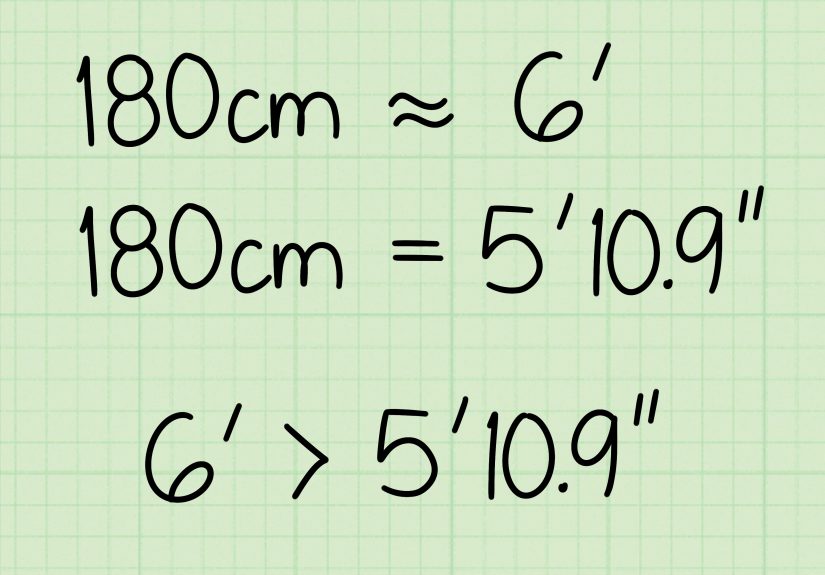
Let’s convert 180 cm to feet:
180 ÷ 30.48 = 5.9055 feet
So, 180 cm = 5.91 feet if you round to two decimal places.
When to Use This Method
This is great when you need a quick number in decimal form, especially for spreadsheets, calculators, or data entry. It is simple, fast, and accurate.
The Catch
Decimal feet are not the same as the everyday American way of stating height. For example, 5.91 feet does not mean 5 feet 91 inches. That would be chaos, and frankly, a very unusual body plan.
If you want the more natural format people actually use, such as 5 feet 11 inches, move to Method 2.
Method 2: Convert Centimeters to Inches First, Then Split Into Feet and Inches
This is the most useful method for human height conversion because it gives you the result the way people usually say it out loud.
Step 1: Convert Centimeters to Inches
Height in inches = Height in centimeters ÷ 2.54
Step 2: Convert Inches to Feet and Inches
Take the total inches, divide by 12, and separate the whole feet from the remaining inches.
Example: 170 cm
170 ÷ 2.54 = 66.93 inches
Now divide by 12:
66.93 ÷ 12 = 5 feet with 6.93 inches left over
Rounded to the nearest inch, that becomes 5 feet 7 inches.
Another Example: 165 cm
165 ÷ 2.54 = 64.96 inches
That equals 5 feet 4.96 inches, which rounds to 5 feet 5 inches.
Why This Method Works Best
If someone asks, “How tall is 175 cm in feet?” they usually do not want to hear 5.74 feet. They want the answer in the familiar feet-and-inches format, such as 5 feet 9 inches. This method gets you there cleanly.
Method 3: Use a Quick Reference Chart for Common Heights
If you convert height often, a quick chart is your best friend. It removes the math and gives you a fast answer at a glance. This is especially helpful for parents, coaches, fitness professionals, online sellers, or anyone who works with size information regularly.
Common Human Height Conversions
| Height in Centimeters | Height in Feet and Inches | Height in Decimal Feet |
|---|---|---|
| 150 cm | 4 ft 11 in | 4.92 ft |
| 155 cm | 5 ft 1 in | 5.09 ft |
| 160 cm | 5 ft 3 in | 5.25 ft |
| 165 cm | 5 ft 5 in | 5.41 ft |
| 170 cm | 5 ft 7 in | 5.58 ft |
| 175 cm | 5 ft 9 in | 5.74 ft |
| 180 cm | 5 ft 11 in | 5.91 ft |
| 183 cm | 6 ft 0 in | 6.00 ft |
| 185 cm | 6 ft 1 in | 6.07 ft |
| 190 cm | 6 ft 3 in | 6.23 ft |
A chart like this makes repeated conversion much easier. It is also handy for content creators, healthcare sites, and education resources that want to improve readability for both metric and U.S. audiences.
Method 4: Use a Calculator, Spreadsheet, or Simple Formula
Sometimes the smartest method is to let technology do the work. If you are converting many heights at once, such as a class list, team roster, or customer data sheet, a calculator or spreadsheet is the easiest route.
Simple Calculator Formula
To get decimal feet:
cm ÷ 30.48
To get feet and inches:
- Divide centimeters by 2.54 to get total inches
- Divide total inches by 12 to get whole feet
- Use the leftover inches as the inch value
Spreadsheet-Friendly Idea
If one cell contains the height in centimeters, you can calculate decimal feet and rounded inches automatically. This is useful for HR records, school data, fitness logs, or any content project that needs consistent formatting.
Technology is not cheating. It is just math with better posture.
Which Method Is Best?
The answer depends on what you need:
- Need speed? Use Method 1.
- Need natural feet-and-inches format? Use Method 2.
- Need frequent reference? Use Method 3.
- Need to convert lots of numbers? Use Method 4.
For most people, Method 2 is the most practical because human height is usually spoken and written in feet and inches, not decimal feet.
Common Mistakes to Avoid When Converting Height
1. Confusing Decimal Feet With Feet and Inches
This is the big one. If someone is 175 cm, that is about 5.74 feet, but it should be expressed as about 5 feet 9 inches, not 5 feet 74 inches.
2. Rounding Too Early
If you round in the middle of the calculation, your final result can be off. Keep the decimals until the end, then round the inches if needed.
3. Forgetting That Human Height Is Usually Given in Feet and Inches
Decimal feet may be fine for a spreadsheet, but everyday conversation usually calls for the classic format: 5’4″, 5’9″, or 6’0″.
4. Mixing Up Inches and Centimeters
Centimeters are smaller units than inches. If you swap them accidentally, your results will look wildly wrong. A person who is 170 inches tall would have a strong chance of playing center for a very unusual basketball league.
Practical Examples of Height Conversion
Example 1: 160 cm to Feet
160 ÷ 2.54 = 62.99 inches
62.99 inches = 5 feet 2.99 inches
Rounded result: 5 feet 3 inches
Example 2: 183 cm to Feet
183 ÷ 2.54 = 72.05 inches
72.05 inches = 6 feet 0.05 inches
Rounded result: 6 feet 0 inches
Example 3: 150 cm to Feet
150 ÷ 2.54 = 59.06 inches
59.06 inches = 4 feet 11.06 inches
Rounded result: 4 feet 11 inches
Tips for Remembering Height Conversion More Easily
- Remember 30.48 if you want decimal feet.
- Remember 2.54 if you want inches first.
- Remember 12 inches = 1 foot to split the result properly.
- Remember common anchor heights like 160 cm ≈ 5’3″, 170 cm ≈ 5’7″, and 180 cm ≈ 5’11”.
Those anchors make mental estimates easier when you do not want to pull out a calculator every single time.
Why Feet-and-Inches Format Is Often Better for Human Height
When people talk about furniture, road distances, or room size, decimal feet might be fine. But with human height, people usually prefer feet and inches because it feels more natural and familiar in American English.
For example:
- 172 cm sounds clinical
- 5 feet 8 inches sounds conversational
If your audience is in the United States, writing height in feet and inches often improves clarity, readability, and user experience. That is especially important for health articles, profile pages, e-commerce fit guides, and educational content.
Final Thoughts
Converting human height in centimeters to feet is easy once you know which method fits your goal. If you want the fastest answer, divide by 30.48. If you want the most natural result for everyday use, convert centimeters to inches first and then split the number into feet and inches. If you do this often, keep a chart nearby or automate the process in a calculator or spreadsheet.
The most important thing is to know the difference between decimal feet and feet-and-inches notation. Once that clicks, the rest becomes simple. No stress, no guesswork, and no accidentally claiming to be seven feet tall on an online form unless that is genuinely your thing.
Real-Life Experiences Related to Converting Human Height in Centimeters to Feet
One reason this topic stays surprisingly popular is that height conversion shows up in real life more often than people expect. A traveler might grow up using centimeters, land in the United States, and suddenly find that every gym sign-up form, clinic intake sheet, and clothing size guide wants height in feet and inches. That can be oddly stressful in the moment. You know how tall you are, of course, but now you have to translate it into a format that feels unfamiliar while someone waits for your answer.
Parents run into this all the time too. A child’s height may be recorded in centimeters at one appointment and then casually discussed in feet and inches somewhere else. That small switch in units can make a normal growth update feel more confusing than it needs to be. A parent sees 128 cm on one record and hears 4 feet 2 inches in conversation, then spends a minute mentally checking whether those numbers are really describing the same child. Spoiler alert: they are.
Sports and fitness add another layer. Coaches, trainers, and athletes often move between metric and U.S. measurements depending on the app, website, or league profile they are using. A basketball roster may list players in feet and inches, while a performance chart may use centimeters. People who track body data, calories, or BMI also notice that some tools ask for inches, others ask for centimeters, and all of them quietly assume you are in a great mood about unit conversion. You may not be, but a reliable method makes it much less annoying.
Online shopping is another place where height conversion becomes unexpectedly important. Clothing brands, especially global ones, often provide model heights in centimeters on one page and feet and inches on another. Shoppers want to know whether pants will hit at the ankle, whether a coat will run long, or whether a dress will fall above or below the knee. If you cannot quickly convert 175 cm to 5 feet 9 inches, shopping can turn into a guessing game starring disappointment and return labels.
Then there is the social side. People talk about height casually all the time, especially on dating profiles, social media, and group chats where someone inevitably asks, “Wait, how tall is 182 cm in feet?” That question has launched approximately one million calculator sessions and at least several heated comments. Having a quick answer helps you avoid the awkward pause where everyone stares at the one friend who “is good at math,” who, tragically, is just trying to enjoy lunch.
Even work and school settings can bring this up. International forms, ID applications, medical records, uniforms, and wellness screenings may all use different systems. In those moments, knowing how to convert height accurately is less about showing off and more about being efficient. It saves time, reduces mistakes, and helps you feel more confident when moving between metric and U.S. measurement systems.
That is why a simple skill like converting centimeters to feet remains useful. It sits at the intersection of health, travel, shopping, parenting, sports, and everyday conversation. Not exactly glamorous, but definitely practical. And honestly, any life skill that helps you fill out forms correctly while protecting your dignity deserves a little respect.