Table of Contents >> Show >> Hide
- What This Humble Thread Is Really About
- The Funniest Answers Work Because They Feel True
- Niche Expertise Is Still Real Expertise
- The Thread Also Understands Humility Better Than a Lot of “Thought Leadership” Does
- What the 32 Answers Reveal About Modern Identity
- Why Readers Love This Kind of Thread
- The Best Lesson Hidden Inside the Humor
- Extended Reflections: What This Topic Feels Like in Real Life
- SEO Metadata
There are two kinds of confidence on the internet. The first kind says, “I am a visionary, a disruptor, and possibly the main character of the modern age.” The second kind says, “I can untangle Christmas lights faster than any mortal alive.” The second kind is funnier, more believable, and somehow way more lovable.
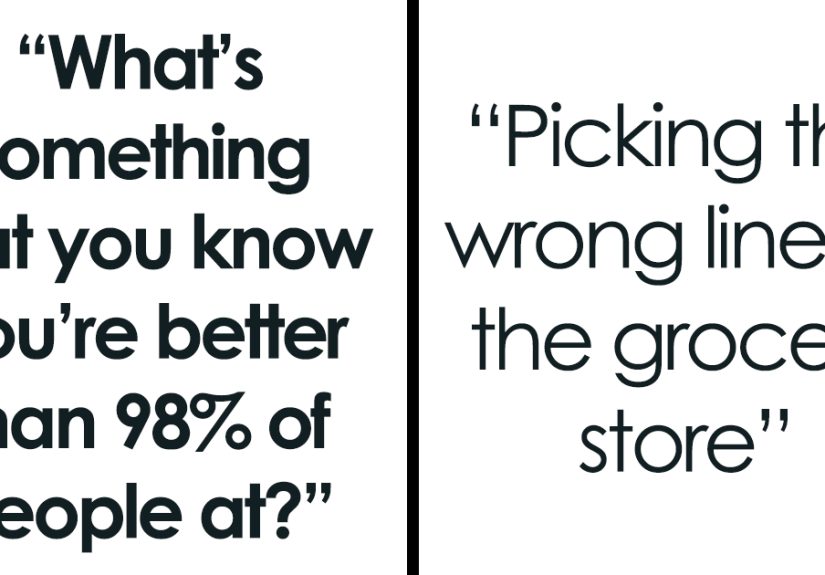
That is exactly why this wonderfully odd “humble thread” took off. Built around the idea of naming something you are better at than 98% of people, the conversation became a parade of niche brilliance, accidental talents, weird flexes, and gloriously specific forms of self-awareness. Some answers sounded impressive in the traditional sense, like flying airplanes, practicing American Indian law, or driving trains. Others were so absurdly relatable they felt like folk poetry for the overcaffeinated age: choosing the wrong grocery line, overthinking, procrastinating, and inventing fake scenarios in your head just to hurt your own feelings.
And that is what makes this topic so irresistibly clickable. These 32 answers are not just jokes. They reveal how people actually think about excellence, identity, and self-worth. They show that being “the best in the world” does not always look like a gold medal, a TED Talk, or a glossy LinkedIn post. Sometimes it looks like being a phenomenal hugger. Sometimes it looks like typing 140 words per minute. Sometimes it looks like keeping secrets, staying calm in chaos, or giving painless injections that make patients blink and say, “Wait, that was it?”
What This Humble Thread Is Really About
On the surface, this thread is a comedy buffet. But underneath the jokes, it is really about how people measure themselves. Not against billionaires, movie stars, or Olympic phenoms, but against ordinary life. That shift matters. It turns excellence from something abstract into something human-sized.
In this thread, greatness is not reserved for glamorous skills. It belongs to the person who can be alone without being lonely. It belongs to the grammar hawk who never confuses their, they’re, and there. It belongs to the blacksmith, the knot-untangler, the plane mechanic, the card grader, the pilot, the Tetris wizard, and the person who can make coyotes bark back with a bizarre throat squeak that sounds like a side quest in a desert video game.
The beauty of the thread is that it treats niche competence like the treasure it is. A lot of modern internet culture rewards scale: bigger audience, bigger following, bigger title, bigger paycheck. This thread quietly argues the opposite. It suggests that small-domain excellence can be just as satisfying, and often more interesting. Being one of the best at something strange is still being one of the best.
The Funniest Answers Work Because They Feel True
1. The anti-skills are painfully relatable
Some of the most memorable answers are not achievements at all. They are anti-trophies. Picking the wrong grocery line. Overthinking. Procrastinating. Making up imaginary disasters and then emotionally living inside them for free. These responses land because they are exaggerated versions of common modern habits. Everyone knows someone who can talk themselves into a spiral before breakfast. Everyone has watched the checkout line they did not choose suddenly turn into the Autobahn while theirs becomes a hostage negotiation over expired coupons.
That kind of humor works because it is honest. It pokes fun at the way we all exaggerate our flaws, often with the same dramatic flair we should probably reserve for actual emergencies. In a strange way, the self-mocking answers give the thread emotional balance. Without them, it would read like a talent show. With them, it reads like a human document.
2. The practical skills are secretly the most impressive
A lot of the strongest answers are intensely practical. One person described giving subcutaneous injections so gently that patients barely feel them. Another bragged, with full justification, about losing nearly 200 pounds and keeping it off for decades. Someone else said they are exceptional at keeping secrets. Another claimed elite-level calm under pressure. Those are not silly skills. Those are life skills. In some cases, they are the kinds of abilities that make other people feel safe, cared for, and less alone.
That is part of the thread’s charm: it elevates the kinds of competence that do not always get applause. The internet usually throws confetti for spectacle. This thread gives a tiny standing ovation to steadiness, discipline, restraint, and care. Frankly, that feels refreshing.
Niche Expertise Is Still Real Expertise
Some commenters were joking, but others were clearly speaking from the rarefied air of genuinely uncommon experience. American Indian law is not exactly the kind of field you stumble into because your horoscope suggested “try something new.” Driving trains is not a casual hobby. Olympic-style fencing may not be mainstream dinner-party conversation, but it is still a serious discipline. Flying airplanes, fixing planes, blacksmithing, grading collectible cards, speed reading, advanced typing, and public speaking all require repetition, feedback, and more than a little stubbornness.
This is where the thread accidentally says something smart about mastery. Most people imagine expertise as broad and cinematic. In real life, it is usually narrow and specific. A person might not be “one of the best in the world” at sports in general, but they may be excellent at one particular sport, one particular technique, one particular role. Another may not be a universal genius, but may have a razor-sharp skill in one narrow domain that most people never even think about.
That is how real-world competence often works. It clusters around specific tasks, repeated effort, and unusual environments. The best people in any field are rarely magical. They are just deeply, almost suspiciously familiar with the terrain. They have made mistakes, corrected them, and repeated the process until the rest of us assume they were born with some mythical software update.
The Thread Also Understands Humility Better Than a Lot of “Thought Leadership” Does
One of the funniest answers in the roundup is “Being humble. Like, I’m the best at that.” It is a perfect joke because it exposes the central tension of the whole thread: how do you talk about being good at something without sounding unbearable?
The best responses solve that problem with tone. They are specific, lightly self-mocking, and grounded in reality. They do not scream, “Behold my greatness.” They say, “This is weirdly my lane, and I know how ridiculous that sounds.” That difference is everything.
Readers do not usually hate confidence. They hate performance. They hate fake modesty, inflated self-mythology, and the exhausting theater of people trying to sound humble while obviously auditioning for admiration. This thread mostly avoids that trap because the best commenters sound amused by themselves. They are in on the joke. That makes their confidence easier to trust.
In other words, the thread succeeds because it does not smell like branding. It smells like real people talking.
What the 32 Answers Reveal About Modern Identity
1. People want credit for invisible strengths
Many of the most satisfying answers are about abilities that rarely show up on resumes. Being alone without being lonely. Making people smile quickly. Staying composed during stressful situations. Minding your own business. Those are not flashy, but they shape relationships and daily life in a major way.
There is a quiet hunger in modern life to have those strengths recognized. We live in a culture that counts what is easy to count: followers, titles, trophies, salary bands, ranking lists. But much of what makes a person remarkable is not neatly quantifiable. A person who can calm a room, keep confidence, diffuse tension, or carry solitude gracefully is doing something valuable, even if no one hands them a plaque shaped like success.
2. People also love claiming their harmless weirdness
Then there are the delightfully oddball answers: making coyotes bark, predicting movie twists early, being freakishly good at Tetris, packing a shopping cart like a geometric warlord, or typing full-speed on a phone as if thumbs were invented by NASA. These responses do not just show skill. They show personality. They make the speaker vivid.
That is another reason the thread works so well. It does not flatten people into categories. It reminds us that everyone is carrying around at least one bizarre talent, hyper-specific obsession, or comically refined skill set that never gets brought up until the right question opens the floodgates.
Why Readers Love This Kind of Thread
Because it gives people permission to define excellence on their own terms.
That is powerful. In a culture flooded with comparison, a thread like this feels almost rebellious. It says you do not have to be universally admired to be genuinely exceptional. You can be excellent in a small circle, a weird corner, a practical niche, or a deeply personal category. You can be world-class at surviving your own brain, at being dependable, at solving tiny annoying problems, or at a craft so specialized that only a few thousand people on Earth even understand what “good” looks like.
It also helps that the thread makes room for contradiction. Some people overestimate themselves. Some underestimate themselves. Some are sincerely skilled. Some are just funny. Some are both. That messiness makes the conversation feel real. Human beings are not clean data sets. We are a chaotic blend of competence, insecurity, luck, repetition, ego, fear, practice, and the occasional ability to perfectly load a dishwasher because Tetris rewired our souls in childhood.
The Best Lesson Hidden Inside the Humor
If there is one takeaway from these 32 answers, it is this: excellence is more common, stranger, and more personal than we tend to think.
Not everyone is destined to become a public legend, but almost everyone develops some form of rare usefulness or memorable oddity over time. Sometimes that comes from training. Sometimes it comes from repetition. Sometimes it comes from surviving hard things. Sometimes it comes from obsession. And sometimes it comes from the universe handing you one very weird party trick and saying, “Congratulations, this is your brand now.”
The thread matters because it lets people laugh while also recognizing a simple truth: being good at something, even something tiny, is part of how people build dignity. It gives shape to identity. It gives people a story to tell about themselves. And when that story is funny, humble, or wonderfully specific, it becomes even more memorable.
So yes, the thread is entertaining. But it is also a reminder. The world is full of people who are quietly excellent at things you would never think to applaud. The person next to you might be one of the best listeners you will ever meet. The friend you barely notice in a crisis might be terrifyingly calm under pressure. The coworker who says very little might be a secret grandmaster of problem-solving, packing, pacing, or pattern recognition.
And somewhere out there, apparently, is a person who can squeak at coyotes with enough authority to get a response. Honestly, that deserves respect.
Extended Reflections: What This Topic Feels Like in Real Life
What makes this humble thread stick in your head is that it mirrors the way real life actually works. Most of us do not discover our “best in the world” thing in a dramatic cinematic montage. We discover it by accident. We become the reliable one, the calm one, the funny one, the one who remembers details, the one who can explain confusing stuff without sounding condescending, the one who packs a car trunk like a puzzle champion, or the one who notices patterns before everyone else catches up. These are the kinds of strengths that emerge in ordinary moments and then quietly become part of a person’s reputation.
You see it at work all the time. One person can take chaos and turn it into a clean checklist. Another can walk into a tense meeting and lower the temperature in two sentences. Someone else can spot the error in a spreadsheet, presentation, or argument almost instantly. None of these talents are flashy enough to trend on social media, but in the real world they are gold. People remember who makes hard things easier. They remember who can be trusted when the pressure is on. They remember who brings steadiness instead of noise.
You see it in families, too. Every family has unofficial specialists. There is the person who can calm babies, the person who can fix anything with a screw, tape, and suspicious confidence, the person who always chooses the best restaurant, the person who can keep peace during holidays, and the person who can somehow fold fitted sheets without summoning dark magic. Nobody may say, “You are among the best in the world at this,” but families build themselves around these tiny forms of expertise every day.
Friend groups work the same way. One friend is the planner. One is the secret-keeper. One is the emergency contact in human form. One gives the best pep talks. One is absurdly good at reading people. One always knows when a joke will land and when it will flop. These are not silly talents. They are social infrastructure. They shape trust. They shape belonging. They shape whether people feel supported or stranded.
That is why a thread like this feels bigger than a joke collection. It reminds people that ability is not one-size-fits-all. It can be technical, emotional, practical, social, or totally weird. It can come from training, temperament, necessity, or repetition. And once people start noticing that, they often become a little more generous with themselves. Maybe they are not the best investor, athlete, founder, or public speaker on Earth. Fine. But maybe they are truly exceptional at noticing what others miss, staying kind under stress, making strangers feel comfortable, or finishing the job nobody else had the patience to do.
That kind of recognition matters. People do better when they can name what they are good at. It gives them confidence without requiring arrogance. It gives them identity without demanding perfection. And sometimes, all it takes is one funny internet prompt to make people realize they have been carrying a rare strength all along.