Table of Contents >> Show >> Hide
- Why Thick Cardboard Can Be Tricky to Cut
- Method 1: Use a Utility Knife and Straightedge for Long, Clean Cuts
- Method 2: Try Heavy-Duty Shears for Short Cuts and Curves
- Method 3: Use a Snap-Off or Detail Knife for Precision Cuts
- Which Method Is Best for Your Project?
- How to Get Cleaner Cardboard Cuts
- Safety Tips You Should Not Skip
- of Real-World Experience With Cutting Thick Cardboard
- Final Thoughts
Cutting thick cardboard sounds simple until your blade starts wandering, the edges turn fuzzy, and the box somehow fights back like it has a personal grudge. If you have ever tried to slice through a heavy corrugated panel with dull scissors and pure optimism, you already know the struggle.
The good news is that thick cardboard is not hard to cut when you use the right method for the job. Whether you are breaking down moving boxes, making storage dividers, building a school project, or turning shipping leftovers into the next great DIY masterpiece, there are a few easy techniques that make the work cleaner, faster, and a lot less annoying.
In this guide, you will learn three easy ways to cut thick cardboard, when each method works best, and how to get cleaner edges without turning your workspace into a confetti storm. We will also cover common mistakes, smart safety habits, and some real-world experiences that can save you time when the cardboard is extra stubborn.
Why Thick Cardboard Can Be Tricky to Cut
Not all cardboard is created equal. A thin cereal box folds like a dream, but thick corrugated cardboard has layers, air channels, and a rigid structure that resists sloppy cutting. That is why one random swipe with a blade usually does not work. Instead, the cleanest cuts come from control, patience, and matching the tool to the shape you need.
Before you begin, set yourself up for success:
- Work on a flat, stable surface.
- Put scrap wood, a self-healing mat, or another protective layer underneath.
- Mark your cut line clearly with pencil or marker.
- Keep your fingers away from the cut path.
- Use a sharp blade. A dull blade is the drama queen of the toolbox.
Method 1: Use a Utility Knife and Straightedge for Long, Clean Cuts
If you only learn one technique, make it this one. A utility knife and metal straightedge is the easiest and most reliable way to cut thick cardboard, especially for long lines, panels, flaps, and box breakdown jobs.
Why this method works
A sharp utility knife scores the top layer first, then gradually slices deeper with each pass. The straightedge keeps the cut line from wandering off like it suddenly remembered another appointment. This method is ideal for neat, professional-looking results.
Best for
- Breaking down shipping boxes
- Cutting large cardboard sheets
- Making straight panels for crafts or storage projects
- Trimming edges accurately
How to do it
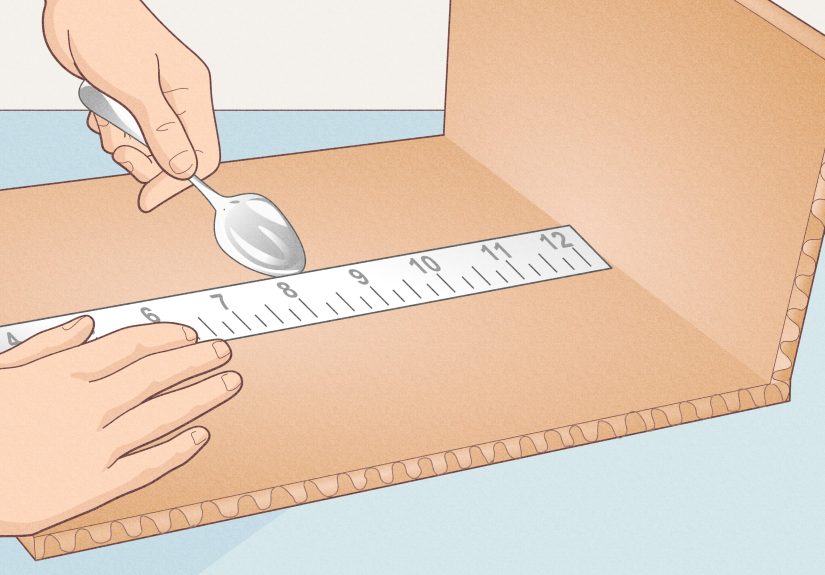
- Measure and mark your line with a ruler and pencil.
- Place a metal ruler or straightedge along the line.
- Hold the straightedge firmly with your non-cutting hand.
- Make a light first pass with the utility knife.
- Repeat with two or three more passes until the blade cuts through.
- If needed, bend the cardboard slightly along the score line and finish the last fibers from the opposite side.
Pro tips
Do not try to cut all the way through in one heroic swing. Thick cardboard usually responds better to several shallow cuts than one deep attack. This gives you more control, keeps the blade from slipping, and leaves a cleaner edge.
Also, use a metal straightedge instead of plastic. Plastic rulers have a funny habit of getting chewed up by sharp blades, which is a bad day for both the ruler and your fingers.
Common mistake to avoid
The biggest mistake is using too much force too early. If you push hard on the first pass, the blade can drift with the corrugation, tear the top layer, or leave a jagged cut. Let the blade do the work. You are guiding it, not entering a strength competition.
Method 2: Try Heavy-Duty Shears for Short Cuts and Curves
Sometimes you do not need a long straight cut. Sometimes you need to trim a corner, cut a curved shape, or quickly snip through a smaller section. That is where heavy-duty shears come in.
This is not the moment for your bargain-bin school scissors. Thick cardboard laughs at those. You want sturdy, sharp shears designed for tough materials.
Why this method works
Heavy-duty shears are simple, fast, and easy to control for shorter cuts. They are also handy when you do not want to set up a ruler and cutting surface for every little adjustment.
Best for
- Cutting curved lines
- Trimming tabs and corners
- Small DIY or craft projects
- Quick cleanup work after scoring with a knife
How to do it
- Draw your cutting line clearly.
- Start from an edge or create a starter slit with a knife if necessary.
- Open the shears wide and use long, smooth snips.
- Rotate the cardboard, not your wrist, when following a curve.
- Slow down near corners to avoid crushing the layers.
Pro tips
If the cardboard is very thick, do not force the shears through the full bite of the blade every time. Smaller, controlled snips often produce a cleaner result. For curved cuts, think of it like steering, not wrestling.
Heavy-duty shears can also be a great finishing tool. For example, if you scored a long panel with a knife but the last corner still has some messy fibers hanging on for dear life, a quick snip can tidy things up beautifully.
When not to use this method
For long cuts on thick corrugated sheets, shears can bend or crush the cardboard and leave a wavy edge. If you need precision over distance, go back to the utility knife and straightedge method.
Method 3: Use a Snap-Off or Detail Knife for Precision Cuts
When the project is more detailed than brute-force, a snap-off knife or detail craft knife can be your best friend. These tools are especially useful for smaller shapes, interior cutouts, templates, and design work where accuracy matters more than speed.
Why this method works
Precision knives offer better control in tight areas. A snap-off blade also gives you a fresh sharp edge quickly, which is helpful because thick cardboard dulls blades faster than many people expect.
Best for
- Cutting windows or openings in cardboard
- Making stencils or template pieces
- Craft projects with detailed shapes
- Touch-up cuts after rough trimming
How to do it
- Mark the shape clearly.
- For inside cuts, create a small starter hole or slit carefully.
- Score the line lightly on the first pass.
- Continue with repeated shallow passes.
- Snap off the dull blade segment when cutting starts to feel rough.
Pro tips
For cleaner detail cuts, do not rush corners. Stop, reposition your hand, and start the next direction with intention. Trying to swing around a sharp corner in one motion often tears the cardboard surface.
You can also combine this method with the first one: use a utility knife for the main panel, then switch to a detail knife for small openings or decorative cuts. That combo works especially well for costume pieces, school displays, and product mockups.
Which Method Is Best for Your Project?
Here is the simple version:
- Need a long straight cut? Use a utility knife and straightedge.
- Need a quick trim or curve? Use heavy-duty shears.
- Need detailed shapes or interior cuts? Use a snap-off or detail knife.
If you are working with very thick cardboard, such as double-wall corrugated board, the utility knife method usually gives the cleanest and most predictable result. Shears and detail knives are still useful, but they shine more in trimming and precision work than in full-sheet cuts.
How to Get Cleaner Cardboard Cuts
Even the right tool can leave messy edges if your technique is off. These simple habits make a big difference:
Use fresh blades
A sharp blade cuts. A dull blade drags, tears, and turns your neat line into fuzzy nonsense.
Score first, cut deeper second
The first pass is your guide. It tells the next passes where to go and keeps the blade from drifting.
Support the cardboard
If the cardboard flexes too much, the cut line can shift. Support both sides so the material stays flat.
Cut with patience
Fast is nice. Clean is nicer. A few extra seconds can save you from re-cutting the whole piece.
Mind the corrugation direction
Sometimes cardboard cuts more smoothly in one direction than another. If a cut feels rough, rotate the piece and test a short section again.
Safety Tips You Should Not Skip
Cardboard may seem harmless, but sharp blades absolutely are not. Keep these habits in play every time:
- Cut away from your body whenever possible.
- Keep your support hand out of the blade path.
- Retract or cover the blade when not in use.
- Do not work while distracted.
- Use gloves if you need extra protection and grip.
- Replace damaged or overly dull blades right away.
One of the least glamorous but most useful habits is simply stopping when the cut feels wrong. If the blade starts sticking, skipping, or pulling sideways, pause and reset. That tiny break can prevent a ruined project or a painful mistake.
of Real-World Experience With Cutting Thick Cardboard
In real life, thick cardboard cutting usually starts with unreasonable confidence. You look at an empty delivery box and think, “How hard could this be?” Ten minutes later, you are holding a bent ruler, a tired wrist, and a cardboard panel that looks like it lost an argument with a lawn mower. That is why experience matters so much with this material.
One of the biggest lessons people learn is that cardboard rewards calm technique. The first time I tried making storage drawer dividers from thick shipping boxes, I rushed the cuts and forced the blade through in one pass. The result was bad enough that even the cardboard seemed disappointed. Once I slowed down and started scoring first, everything improved. The cuts were straighter, the edges were cleaner, and I stopped wasting pieces.
Another common experience is discovering that cardboard has moods. Some pieces cut beautifully because they are dense and consistent. Others have extra glue, crushed corners, or hidden soft spots that make the blade drift. That is why measuring twice and testing on an offcut is so helpful. A five-second test cut can save a much larger piece from disaster.
Heavy-duty shears also surprise people. Many assume they will glide through thick cardboard like butter. Sometimes they do. Sometimes they act like they are chewing through a leather boot. In practice, they work best for shorter cuts, trimming edges, and shaping curves. When people try to use them for long straight cuts, the cardboard often bends and the line starts to wander. It is not that the tool is bad. It is just being asked to do the wrong job.
Precision work teaches its own lessons. If you are cutting windows for a model, a display board, or a homemade organizer, the small detail knife becomes incredibly useful. But detail work punishes impatience. Tight corners need separate passes. Inner cutouts need a starter opening. And the blade that felt sharp five minutes ago may suddenly feel like it is dragging through cereal and regret. Swapping to a fresh edge makes an enormous difference.
People also learn quickly that workspace setup matters more than expected. A stable table, good lighting, and a sacrificial surface underneath make the whole process smoother. Trying to cut thick cardboard on an uneven floor or a wobbly desk adds unnecessary chaos. It is a little like trying to frost a cake while riding a bicycle. Technically possible, maybe. Recommended, absolutely not.
Perhaps the most useful real-world experience is learning when to combine methods. A long cut might start with a utility knife and ruler, then finish with shears at the corner, and finally get cleaned up with a detail knife around a notch. The best cardboard projects are rarely about one magic tool. They are about choosing the easiest method for each part of the cut.
After a few projects, most people stop fighting the cardboard and start reading it. They notice grain direction, pressure points, and where the tool naturally wants to go. That is the moment cutting thick cardboard stops feeling frustrating and starts feeling oddly satisfying. Messy box becomes neat panel. Scrap becomes useful material. And suddenly that pile of shipping boxes looks less like clutter and more like free building supplies with excellent character development.
Final Thoughts
If you want the easiest way to cut thick cardboard, start with a utility knife and straightedge. It is the most dependable method for clean lines and big pieces. Add heavy-duty shears for curves and quick trims, and keep a detail knife nearby for smaller, more precise work.
The real secret is not brute force. It is using a sharp tool, making controlled passes, and letting the method match the project. Do that, and thick cardboard goes from frustrating to totally manageable.