Table of Contents >> Show >> Hide
- Who Is Chow Hon Lam?
- Why Buddy Gator Feels Different From Other Animal Comics
- What Makes These 25 Comics So Charming?
- Specific Adventures That Show Why the Series Works
- The Art Style: Clean, Expressive, and Built for the Scroll
- Why Readers Keep Coming Back
- SEO Takeaway: Why “Friendly Alligator Comics” Is Such a Click-Worthy Idea
- What These Comics Say About Humor Right Now
- A Longer Reflection: The Experience of Reading Buddy Gator
- Final Thoughts
Some comics aim for chaos. Some aim for drama. Some show up like a caffeine-fueled raccoon, knock over your emotional furniture, and leave. Then there is Buddy Gator, the sweet, big-smiled alligator created by Chow Hon Lam, who strolls into your day carrying kindness, visual wit, and the sort of wholesome energy that makes you briefly believe the internet can still be a nice place.
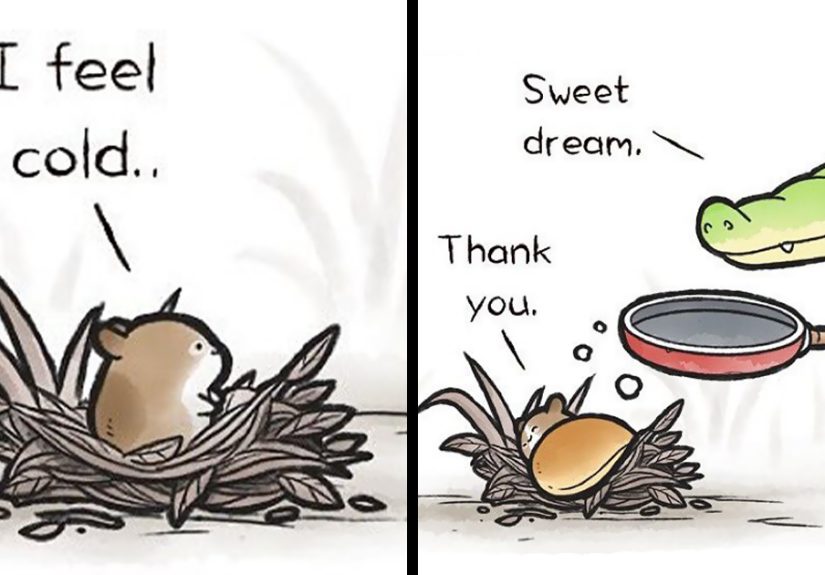
The appeal of these 25 charming comics is not just that they are cute. Plenty of things are cute. Kittens are cute. Tiny pancakes are cute. A sandwich cut into stars is aggressively cute. But Buddy Gator works because the series takes a creature people usually read as scary and turns him into the emotional opposite: gentle, helpful, creative, and quietly hilarious. That contrast is the engine of the whole project.
In these comics, Chow Hon Lam does something deceptively difficult. He creates stories that are instantly readable, emotionally warm, and funny without feeling forced. The adventures are simple on the surface, but they are built on smart visual reversals, carefully chosen animal behavior, and the universal appeal of friendship. The result is a comic universe where a friendly alligator can solve little problems, cheer up animal pals, and remind readers that warmth does not have to be loud to be memorable.
Who Is Chow Hon Lam?
Chow Hon Lam is an artist, children’s book illustrator, and comic creator known for playful character design, expressive storytelling, and a knack for turning everyday feelings into visual jokes. His broader body of work shows a longtime interest in animals, character-driven humor, and stories that can cross language barriers. That background matters, because Buddy Gator does not feel like a one-off gimmick. It feels like the natural extension of an artist who understands how to make illustrations communicate quickly and warmly.
That skill also helps explain why the comics feel polished without becoming stiff. Lam’s characters are rounded, readable, and packed with personality. He knows how to make a rabbit look anxious, a whale look delighted, and an alligator look reassuring instead of intimidating. That is not luck. That is design discipline doing its job while pretending to be effortless.
His experience in illustration also shows in the clarity of the scenes. Every panel is built for quick comprehension. You do not need a paragraph of setup. You do not need a diagram. You look, grin, and get it. In the age of scrolling, that kind of visual efficiency is not just helpful. It is a superpower.
Why Buddy Gator Feels Different From Other Animal Comics
The first reason is the obvious one: Buddy Gator flips expectation. An alligator usually enters popular culture as the teeth-first guy. In Lam’s world, he is the one bringing comfort, cooperation, and solutions. That contrast creates immediate curiosity. Readers come in expecting menace and leave with emotional support reptile energy. It is a great trade.
The second reason is that the series is built on kindness as action, not as decoration. Buddy Gator is not just “nice” in theory. He does things. He helps friends. He notices problems. He improvises. He shares. He supports. That gives the comics momentum. The warmth is not passive; it moves the story forward.
The third reason is that these comics understand a basic truth of humor: small stakes can still produce a big reaction. A perfectly timed gesture, a goofy visual twist, or a clever solution to a tiny problem can be funnier than a giant dramatic setup. Buddy Gator does not need explosions. He has fruit, friends, and excellent vibes.
What Makes These 25 Comics So Charming?
1. The jokes are soft, but they are not bland
Wholesome comedy often gets treated like it has to be extra safe and a little sleepy. Buddy Gator avoids that trap. The punchlines are gentle, but they are still constructed like real jokes. Lam uses surprise, reversal, visual misdirection, and character-based humor. One comic may turn a snack into a shared activity. Another may transform an ordinary problem into an imaginative fix. The tone stays tender, but the mechanics are sharp.
That is why the comics feel charming instead of sugary. They are sweet, yes, but they are also clever. There is craft behind the smile.
2. Friendship is the real plot
Across these 25 comics, the recurring adventure is not “Can the hero defeat the villain?” It is “How does one friend make another friend’s day a little better?” That sounds modest, but it is exactly why the series lands. Readers recognize those emotional rhythms. Helping someone carry a burden, making them laugh, giving them confidence, or solving a small inconvenience can feel surprisingly meaningful.
Buddy Gator’s friendships create a world that feels supportive without becoming preachy. The comics never stop to lecture the audience about kindness. They just show it in action. That is often more persuasive than a thousand inspirational quotes floating through social media in a cloud of decorative pastel nonsense.
3. The animal choices make every scene funnier
Lam understands that animals are not just cute stand-ins for people. They bring built-in visual possibilities. A rabbit burrow, a whale’s size, a shark’s shape, a giraffe’s height, or an alligator’s famously intimidating mouth can all become part of the joke. In Buddy Gator, those traits are not random details; they are storytelling tools.
That is why the comics feel so visually alive. The humor often comes from combining real animal characteristics with human-style emotions and situations. It is a reliable comic engine because the images do double duty: they are adorable and they help deliver the joke.
4. The world is optimistic without being naive
There is a difference between pretending life is perfect and choosing to focus on generosity. Buddy Gator belongs firmly in the second category. The comics do not deny problems; they shrink them to a size that can be met with creativity and care. That is part of their emotional appeal. Readers are not being told the world is easy. They are being reminded that kindness still counts.
In a timeline crowded with outrage, doomscrolling, and algorithmic weirdness, that kind of creative optimism feels refreshing. Not revolutionary in a fireworks-and-megaphones way. More like opening a window in a stuffy room.
Specific Adventures That Show Why the Series Works
Part of the fun of these 25 comics is the variety of mini-scenarios. Some center on food, some on play, some on problem-solving, and some on the ordinary comedy of being a creature with very specific physical traits. A comic showing Buddy Gator helping a friend share watermelon turns a snack into a scene of warmth and teamwork. Another, in which donuts become flotation fun, captures the series at its best: sweet idea, funny image, zero cruelty, maximum charm.
Other strips lean into invention. A rabbit gets help with mobility and play. Animal friends gather for events that are made funnier by their habitats and body types. A treasure-hunting setup gets an extra laugh through species-specific payoff. Even cleanup and daily chores can become comic material when they are filtered through Buddy Gator’s helpful personality.
These examples matter because they reveal Lam’s storytelling philosophy. He is not mining humor from humiliation. He is finding it in cooperation, surprise, and visual creativity. That makes the comics feel comfortable to revisit. You are not laughing at a character getting emotionally flattened by life. You are laughing because the world briefly became kinder and sillier at the same time.
The Art Style: Clean, Expressive, and Built for the Scroll
Buddy Gator’s visual style deserves more credit than it usually gets. At first glance, it looks simple. But simple is one of the hardest looks to pull off. Lam uses color, shape, spacing, and facial expression with impressive control. The panels are uncluttered, which means the eye goes exactly where it should. That helps each joke land fast.
His characters also have instant silhouette recognition. You can tell who is who in a moment. That is a major strength in webcomics, where readers are often glancing at a post between messages, tabs, and a questionable number of open browser windows. A comic that can communicate clearly in seconds has a real advantage.
There is also a picture-book quality to the staging. Lam knows how to use body language to carry emotion. A tilt of the head, a rounded posture, a bright-eyed look of anticipation, or a tiny expression of concern does a lot of narrative heavy lifting. Even when the premise is light, the acting is precise.
That visual readability is one reason Buddy Gator travels so well online. Modern digital comics thrive when they can be understood panel by panel and also appreciated as a whole. Lam’s work is a good match for that environment because it is compact, expressive, and friendly to mobile readers.
Why Readers Keep Coming Back
Plenty of comics can make people laugh once. Fewer can create repeat affection. Buddy Gator does the second thing. Readers come back because the series offers reliability without becoming repetitive. You know you will get warmth, humor, and a polished visual payoff, but you do not know exactly how each scenario will unfold.
That balance is crucial. Too much predictability and a comic becomes wallpaper. Too much randomness and it loses emotional identity. Buddy Gator sits in a very pleasing middle zone. It surprises, but never in a way that betrays its tone.
There is also something deeply appealing about a comic character whose defining trait is being useful in a loving way. Buddy Gator is not cynical. He is not trying to win a sarcasm contest. He is not performing detachment. He simply shows up and helps. In modern comedy, that feels almost radical. Imagine that: a protagonist whose brand is not chaos, but considerate problem-solving. Someone give the alligator a tiny crown.
SEO Takeaway: Why “Friendly Alligator Comics” Is Such a Click-Worthy Idea
From a content perspective, the success of Buddy Gator also makes perfect sense. The premise is instantly intriguing. “Friendly alligator” is already a contradiction that sparks curiosity. Add “charming comics,” “fun adventures,” and an artist with a recognizable style, and you have a strong topic for search readers looking for wholesome comics, cute webcomics, animal humor, or uplifting art.
That is part of why this series performs so well as an article topic. It combines visual comedy, shareable internet culture, and emotional comfort. Readers are not just looking for “funny comics.” They are often looking for specific kinds of funny: gentle funny, clever funny, comforting funny, send-this-to-a-friend funny. Buddy Gator checks all of those boxes.
What These Comics Say About Humor Right Now
The popularity of Buddy Gator says something interesting about today’s comic audience. People still love edgy humor, absurd humor, and chaotic meme energy, sure. But there is also a big appetite for warmth, simplicity, and visual storytelling that feels generous instead of mean. Readers want comics that entertain them without draining them.
That does not mean Buddy Gator is “important” because it is nice. It is better than that. It is memorable because it proves niceness can be artistically effective. Kindness can structure a joke. Empathy can drive a visual gag. A supportive friendship can be the whole plot and still hold attention. That is not lesser storytelling. It is just storytelling without the usual amount of yelling.
A Longer Reflection: The Experience of Reading Buddy Gator
Reading these 25 charming comics feels a little like finding a quiet bench in a crowded park. You are still in the same world. Nothing magical has happened to your to-do list. Your emails are still lurking. The laundry is still plotting against you. But for a few minutes, everything softens. That is part of the emotional experience Buddy Gator creates.
One of the most enjoyable things about the series is how quickly it lowers your guard. Because the drawings are cute and the situations are playful, you do not brace yourself. You are not waiting for a dark twist, a cruel punchline, or some giant ironic swerve. You just step into the comic and let it do its work. That trust matters. It changes the rhythm of reading.
There is also a childlike pleasure in the way the comics use image-based logic. A watermelon is not just a watermelon; it is a setup for sharing, shape, color, and possibility. A donut is not just a pastry; it is suddenly part snack, part flotation device, part visual punchline. A cave is not just a cave; it becomes a stage for species-specific humor. That imaginative flexibility is one reason the comics feel so satisfying. They encourage readers to think playfully.
For adults, that can be surprisingly restorative. Grown-up life often trains people to interpret everything for efficiency. What is the point? What is the outcome? What is the fastest way through this? Buddy Gator does not operate on that frequency. It invites you to notice delight. It rewards observation. It asks, in a quiet cartoon voice, whether a problem might be solved with a little creativity and a lot less panic. Honestly, the alligator may be onto something.
The series also creates a strong sense of emotional safety. That may sound dramatic for a comic strip about animal pals, but it is true. The world of Buddy Gator is built on support. Friends do not compete for coolness. They do not weaponize sarcasm. They do not turn every interaction into a performance of superiority. They help. They care. They celebrate small wins. For readers who are tired of online spaces built around outrage or mockery, that tone can feel almost luxurious.
Another part of the experience is the pleasure of recognition. Even though the characters are animals, the situations often reflect deeply human feelings: wanting to belong, wanting to be useful, wanting to make someone smile, wanting help without having to ask for it five hundred times. Buddy Gator taps into those emotions in a format that stays light enough to be fun. You feel seen, but not interrogated. Comforted, but not lectured.
There is something memorable, too, about Lam’s refusal to overcomplicate the series. The stories are compact. The emotions are clear. The humor lands fast. That simplicity is not shallow. It is disciplined. The comics understand that a reader can feel a lot from a small scene if the scene is well observed. A look, a gesture, a helpful act, a visual twist, and suddenly a one-minute comic has done more emotional good than a dozen motivational posts yelling at you to “choose joy.” Buddy Gator simply demonstrates it.
In that sense, these comics are not just charming because they are adorable. They are charming because they respect the reader’s time and intelligence. They know exactly what kind of feeling they want to create, and they create it with confidence. That is why the adventures of this friendly alligator linger after the scroll ends. They are funny, yes. But more than that, they are kind in a way that feels crafted, intentional, and strangely durable.
Final Thoughts
Chow Hon Lam’s Buddy Gator comics succeed because they understand a beautiful little truth: humor does not have to be harsh to be memorable. Across these 25 charming comics, the series delivers visual wit, lovable character work, and the kind of upbeat emotional clarity that makes readers want to keep scrolling. Buddy Gator is funny because he is inventive. He is lovable because he is helpful. And he stands out because he turns an unlikely animal into a symbol of friendship instead of fear.
That is the magic here. The comics are charming on the surface, but they stick because they are built on solid storytelling choices. They use contrast well. They use animals intelligently. They keep the stakes small and the feelings real. And most importantly, they leave readers a little lighter than they were before. For a webcomic, that is not just cute. That is a genuine achievement.