Table of Contents >> Show >> Hide
- 15 Quick Facts About Fast Times at Ridgemont High
- 1. The movie hit theaters on August 13, 1982
- 2. It was based on Cameron Crowe’s nonfiction book
- 3. Cameron Crowe was astonishingly young when he wrote it
- 4. It was Amy Heckerling’s feature directorial debut
- 5. The movie mixes comedy with surprisingly serious themes
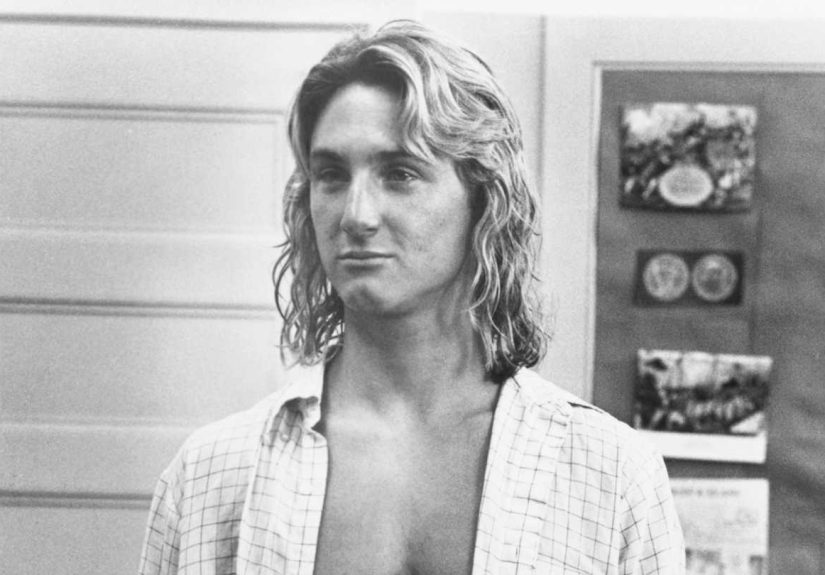
- 6. Jeff Spicoli became the movie’s breakout phenomenon
- 7. The studio wasn’t exactly overflowing with confidence
- 8. Its box office run was modest at first, then impressive in context
- 9. It helped launch a ridiculous amount of talent
- 10. Nicolas Cage appears before he was Nicolas Cage
- 11. Mr. Hand and Spicoli are one of teen cinema’s great duos
- 12. The soundtrack became part of the film’s legend
- 13. Its most famous scene became a pop-culture reference machine
- 14. The film’s reputation improved over time
- 15. It is now officially part of American film history
- Why Fast Times at Ridgemont High Still Works
- Extra Reflection: The Experience of Watching Fast Times at Ridgemont High Then and Now
- Conclusion
- SEO Tags
Fast Times at Ridgemont High is one of those movies that somehow manages to be scruffy, funny, awkward, sweet, and deeply influential all at once. On the surface, it looks like a classic early-1980s teen comedy packed with surfer slang, mall energy, pizza-in-classroom chaos, and enough questionable decision-making to make every guidance counselor nervous. But underneath the laughs, the film is sharper than it first appears. It captures the rhythms of teenage life with an honesty that still feels fresh decades later.
Released in 1982, the movie helped define what a modern high school comedy could be. It gave audiences an iconic slacker in Jeff Spicoli, introduced or boosted the careers of several future stars, and proved that a teen movie could be rowdy without being empty. It also did something many imitators never quite pulled off: it treated adolescence as messy, funny, and sometimes painful, instead of turning it into a cartoon. That balance is a huge reason the movie still matters.
So, in honor of this endlessly quotable coming-of-age favorite, here are 15 quick facts about Fast Times at Ridgemont High that make it even more interesting than the red bikini scene people never stop talking about.
15 Quick Facts About Fast Times at Ridgemont High
1. The movie hit theaters on August 13, 1982
Yes, this high school classic arrived in the heat of summer, which feels exactly right for a movie soaked in Southern California sunshine, beach culture, and teenage restlessness. Its release date matters because it places the film right at the start of the decade that would later become famous for teen movies. Before the flood of mall bangs, varsity jackets, and detention-room soul-searching took over Hollywood, Fast Times was already sketching the blueprint.
2. It was based on Cameron Crowe’s nonfiction book
One reason the movie feels more grounded than many teen comedies is that it came from reported material. Cameron Crowe first wrote Fast Times at Ridgemont High: A True Story, published in 1981, after going undercover as a student at a Southern California high school. That journalistic origin gives the film an observational quality. The dialogue, the social hierarchies, the work shifts, the clumsy romance, and the hallway politics all feel less invented than overheard.
3. Cameron Crowe was astonishingly young when he wrote it
Crowe was just 22 when he wrote the script, which is frankly rude if you have ever stared at a blank document and felt proud for typing one decent sentence before lunch. His youth helped the screenplay avoid that fake “hello, fellow kids” tone that sinks so many teen stories. He was close enough to the world he was writing about to capture it with immediacy, but mature enough to shape it into a real movie.
4. It was Amy Heckerling’s feature directorial debut
This was the first feature film directed by Amy Heckerling, who would later give audiences Clueless. That connection makes perfect sense in hindsight. Heckerling has a gift for hearing the music in teen speech, spotting the absurdity in everyday behavior, and finding humanity inside characters who could have been reduced to stereotypes. Her direction is a huge reason Fast Times feels loose and alive instead of mechanical.
5. The movie mixes comedy with surprisingly serious themes
Plenty of people remember the movie for Spicoli’s one-liners and the general hormone-fueled chaos, but Fast Times at Ridgemont High has more emotional range than it gets credit for. It deals with part-time jobs, heartbreak, peer pressure, sexual inexperience, pregnancy, and abortion in a way that feels unusually candid for a mainstream teen comedy of its era. That tonal blend is part of what keeps the film from aging into a disposable joke machine.
6. Jeff Spicoli became the movie’s breakout phenomenon
Sean Penn’s performance as Jeff Spicoli turned a supporting character into a pop-culture landmark. Spicoli is a surfer-stoner slacker, sure, but Penn plays him with such commitment that he becomes more than a punch line. He is ridiculous, bizarrely confident, and strangely pure in his own chaotic way. According to later retrospectives, the character was a major factor in the film’s word-of-mouth success. Audiences came for the teen movie and left remembering the guy who treated classroom discipline like an optional side quest.
7. The studio wasn’t exactly overflowing with confidence
Today, the film is treated like a foundational teen classic. Back then, not everybody in Hollywood saw it that way. Retrospectives have noted that Universal had doubts about the film and did not throw enormous enthusiasm behind it at first. That uncertainty now feels almost funny, because the movie would go on to become a major cultural touchstone. Hollywood being wrong about teenagers is one of the most reliable traditions in American entertainment.
8. Its box office run was modest at first, then impressive in context
Fast Times at Ridgemont High opened in 498 theaters and eventually expanded to 713, finishing with a domestic gross of $27,092,880. Those numbers may not sound superhero-sized by modern standards, but for a youth-oriented comedy with no giant marquee names at the time, that was a strong result. More important, the movie’s afterlife on home video and television helped turn it from a theatrical hit into a long-term cultural fixture.
9. It helped launch a ridiculous amount of talent
The cast is one of the film’s great magic tricks. Sean Penn, Jennifer Jason Leigh, Judge Reinhold, Phoebe Cates, Brian Backer, Robert Romanus, and Ray Walston all make strong impressions, but the deeper you look, the more future stars you find lurking around Ridgemont. Forest Whitaker appears as Charles Jefferson, and Nicolas Cage shows up in his first movie role, credited then as Nicolas Coppola. Watching the film now can feel like opening a time capsule and finding a future awards season inside it.
10. Nicolas Cage appears before he was Nicolas Cage
This is one of those trivia nuggets movie fans love because it sounds made up, but it is not. Cage appears briefly in the film as one of Brad’s buddies and is credited as Nicolas Coppola. It is a tiny role, yet it gives the movie one more “wait, was that really him?” moment. Few high school comedies can casually say they contain the first film role of a future Oscar winner who would later build one of Hollywood’s most gloriously unpredictable careers.
11. Mr. Hand and Spicoli are one of teen cinema’s great duos
Ray Walston’s Mr. Hand is the perfect opponent for Spicoli. He is stern, exhausted, and entirely unimpressed by nonsense, which naturally means he has wandered into the wrong movie. Their classroom battle gives Fast Times some of its funniest scenes, but it also gives the story shape. The conflict between structure and chaos, adulthood and adolescence, is right there in every stare-down. It is the kind of comic pairing that becomes immortal because both sides take it seriously.
12. The soundtrack became part of the film’s legend
You cannot talk about Fast Times at Ridgemont High without talking about the music. The soundtrack helped define the film’s mood, with songs like Jackson Browne’s “Somebody’s Baby” and The Cars’ “Moving in Stereo” becoming permanently linked to key scenes. This is not just a case of a movie having good background music. It is a case of a movie welding songs to memory so effectively that hearing a few opening notes can send viewers straight back to Ridgemont High.
13. Its most famous scene became a pop-culture reference machine
Let us address the red bikini in the room. The Phoebe Cates pool scene became one of the most talked-about images in 1980s movie culture, and it has been referenced, parodied, and recycled for decades. But what is interesting is that the moment endured not just because it was provocative. It endured because the film understood fantasy, embarrassment, and teenage point of view so well. The scene is iconic because it is about adolescent imagination as much as it is about visual shock value.
14. The film’s reputation improved over time
Initial critical reactions were mixed. Roger Ebert, for example, gave the movie a notably harsh review upon release. But the film’s long-term reputation grew stronger as audiences and critics reevaluated it. Later assessments have praised how accurately it captures the details of school, work, and teenage life. That arc from mixed reception to enduring respect is often a sign that a movie was doing something more interesting than its first reviewers realized.
15. It is now officially part of American film history
In 2005, the Library of Congress selected Fast Times at Ridgemont High for the National Film Registry, recognizing it as culturally, historically, or aesthetically significant. It has also been honored by the American Film Institute, landing on AFI’s 100 Years…100 Laughs list. In other words, the movie graduated from raunchy teen comedy to canon. Not bad for a film once treated like a risky little youth movie with too much sex, too much slang, and not enough adult supervision.
Why Fast Times at Ridgemont High Still Works
What keeps the movie alive is not just nostalgia, though nostalgia certainly helps. It is the texture. The mall jobs feel real. The awkward dates feel real. The petty humiliations, the overconfidence, the bad advice from friends who absolutely should not be advising anyone, all of that feels real. Even the comedy works because it grows from personality instead of pure setup. Spicoli is funny because he is fully himself. Brad is funny because his confidence keeps getting shredded by ordinary life. Stacy is compelling because her story is treated like a real story, not a disposable subplot.
The film also refuses to make every teenager either saintly or idiotic. Its characters are confused, selfish, sweet, shallow, scared, funny, and trying their best in wildly inconsistent ways. That is adolescence in a nutshell. It is one of the reasons the movie stands taller than many of the teen comedies that followed it. Plenty copied the jokes. Fewer copied the empathy.
Extra Reflection: The Experience of Watching Fast Times at Ridgemont High Then and Now
Watching Fast Times at Ridgemont High today is an interesting experience because the movie operates on two levels at once. First, it works as a period piece. The clothes, the hair, the mall-centered social life, the fast-food uniforms, the cassette-era soundtrack, and the whole Southern California vibe instantly transport viewers to the early 1980s. Even people who were not alive then can feel the texture of that world. The movie does not explain the culture with a giant neon sign. It just drops you into it and lets you breathe the air.
Second, the movie still feels emotionally familiar. Teenagers may no longer hang out in exactly the same spaces, and the logistics of romance have obviously changed in the age of smartphones, but the emotional mechanics remain basically the same. People still want to seem cooler than they are. They still take bad advice from friends. They still misread signals, overshare, panic, brag, recover, and repeat. That is why the film still lands. The setting may be vintage, but the feelings are evergreen.
There is also something especially memorable about the movie’s treatment of work. A lot of high school films focus only on school or romance, but Fast Times understands that teenage identity is often shaped by jobs too. Brad’s humiliations at work are not glamorous, but they are deeply relatable. Anyone who has ever worn a ridiculous uniform, dealt with an impossible manager, or tried to maintain dignity while being paid barely enough for fries has probably looked at Brad and thought, “Yes, that is unfortunately art.” The movie understands that being young often means switching between classrooms, crushes, and cash registers with no time to process any of it.
For many viewers, the film also becomes more interesting with age. When people first see it young, they often focus on the outrageous stuff: Spicoli, the fantasy scenes, the soundtrack, the quotable dialogue. When they revisit it later, they notice the sadness tucked inside the comedy. They see how lonely some of the characters are, how badly they want approval, and how often they are improvising adulthood without a clue. That shift in perspective is one of the marks of a movie with real staying power. It does not change, but you do, and suddenly different scenes hit harder.
The experience of watching Fast Times at Ridgemont High is also shaped by how influential it became. Modern viewers bring decades of teen movies with them, whether they realize it or not. So when they watch Fast Times, they are not just seeing one comedy; they are seeing the DNA of many later ones. The film’s blend of irreverence and sincerity, its affection for youth culture, and its refusal to flatten teenagers into clichés all echo through later classics. It still feels funny, but it also feels foundational.
That may be the movie’s greatest trick. It captures a very specific moment in American youth culture while also speaking to broader experiences of growing up, messing up, and trying to survive the embarrassing spectacle of being a teenager. It is nostalgic without being soft, hilarious without being hollow, and honest enough to remain relevant. That is a rare combination. And yes, it still makes classroom pizza delivery feel like a revolutionary act.
Conclusion
Fast Times at Ridgemont High is more than an 80s teen comedy with a famous soundtrack and a surfer dude who refuses to respect classroom norms. It is a smart, funny, occasionally painful snapshot of adolescence that has only become more important with time. From Cameron Crowe’s undercover reporting to Amy Heckerling’s sharp direction, from Sean Penn’s breakout performance to the film’s eventual recognition by the National Film Registry, nearly every part of its story is worth revisiting.
If you came here for quick facts, hopefully you got them. If you came here wondering why the movie still matters, the answer is simple: because it understood teenagers as people, not props. That sounds obvious, but in Hollywood, it is practically a superpower.