Table of Contents >> Show >> Hide
- Why Relaxing After a Long Day Matters
- 1. Take a 10-Minute Decompression Walk
- 2. Do a Two-Minute Breathing Reset
- 3. Stretch the Places Where Stress Likes to Hide
- 4. Take a Warm Shower or Bath
- 5. Put On Music That Lowers the Temperature of Your Brain
- 6. Create a Screen-Free Buffer Before Bed
- 7. Journal the Mental Clutter
- 8. Sip Something Decaf and Hydrate
- 9. Read Something That Does Not Raise Your Blood Pressure
- 10. Do a Low-Stakes Hobby With Your Hands
- 11. Talk to Someone Who Feels Like an Exhale
- 12. Build a Simple Bedtime Routine You Can Actually Keep
- How to Choose the Best Relaxation Technique for You
- Final Thoughts on How to Relax After a Long Day
- Real-Life Experiences: What Relaxing After a Long Day Actually Looks Like
Some days feel less like a normal schedule and more like a boss battle with email, traffic, dishes, deadlines, and that one person who types “per my last message” like it’s a personality trait. By the time evening rolls around, your body is home, but your brain is still doing overtime in a tiny necktie.
If that sounds familiar, you are not alone. Learning how to relax after a long day is not a luxury reserved for people with candle collections and suspiciously tidy living rooms. It is a practical, healthy skill. A good evening reset can help lower stress, improve your mood, and make it easier to sleep instead of staring at the ceiling while replaying a conversation from 2019.
This guide covers 12 realistic ways to unwind at night. No complicated wellness rituals. No need to move to a mountain cabin. Just simple, effective ideas you can actually use on a Tuesday when your energy is somewhere between “meh” and “please do not perceive me.”
Why Relaxing After a Long Day Matters
When you stay mentally “on” all day, your body does not always get the memo that work is over. Stress can linger in your shoulders, your breathing, your attention span, and your sleep quality. That is why a solid evening routine matters. The goal is not to become a blissed-out cloud of lavender and inner peace. The goal is to give your nervous system a clear signal: the hard part is done, and now we are shifting gears.
The best relaxation techniques are usually simple, repeatable, and a little boring in the best possible way. They calm your body, quiet mental noise, and help you stop bringing the whole day into bed with you.
1. Take a 10-Minute Decompression Walk
If your day was spent sitting, staring, typing, or pretending not to sigh during meetings, a short walk can work wonders. A gentle evening walk helps release physical tension, gives your mind something else to focus on, and creates a clean break between “work mode” and “real life mode.”
You do not need to turn it into a fitness challenge. This is not the time to become a heroic speed-walker with dramatic arm swings. Just walk around the block, through a nearby park, or even up and down your street. Notice the air, the light, the sounds, and the fact that no one is asking you for an updated spreadsheet.
2. Do a Two-Minute Breathing Reset
When stress builds up, your breathing often gets shallow without you noticing. A short breathing exercise is one of the fastest ways to calm your mind and body. It is portable, free, and unlike most modern conveniences, does not require a password reset.
Try this: inhale through your nose for four counts, pause briefly, then exhale slowly for five or six counts. Repeat for two minutes. Slow breathing can help you feel steadier, less reactive, and more grounded. If your thoughts still bounce around like popcorn, that is fine. The goal is not perfect silence. The goal is to turn down the volume.
3. Stretch the Places Where Stress Likes to Hide
Stress has favorite hiding spots, and they are usually your neck, shoulders, jaw, lower back, and hips. Gentle stretching in the evening can help loosen the parts of your body that spent all day bracing for nonsense.
Keep it easy. Roll your shoulders, stretch your neck side to side, do a seated forward fold, or try a few simple yoga poses. This is about release, not athletic glory. If you pull a hamstring trying to “relax,” your evening has taken a deeply ironic turn. Move slowly, breathe normally, and let your body unclench one area at a time.
4. Take a Warm Shower or Bath
A warm shower can feel like pressing the reset button on the day. It soothes tired muscles, creates a transition into evening, and gives you a few uninterrupted minutes where nobody can ask you to “circle back.” A warm bath works too, especially if your day left you feeling physically wound up.
This works even better when you treat it like a mini ritual instead of a basic rinse-and-run situation. Dim the lights, slow down, and let the warmth do its thing. For many people, a warm shower or bath before bed helps the body relax and makes the next step of the evening feel calmer and more intentional.
5. Put On Music That Lowers the Temperature of Your Brain
Music can shift your mood faster than a motivational quote ever could. The key is choosing songs that actually calm you instead of accidentally launching an emotional karaoke spiral. If your “relaxing playlist” ends with you dramatically reliving your sophomore year heartbreak, that may be a different genre of healing.
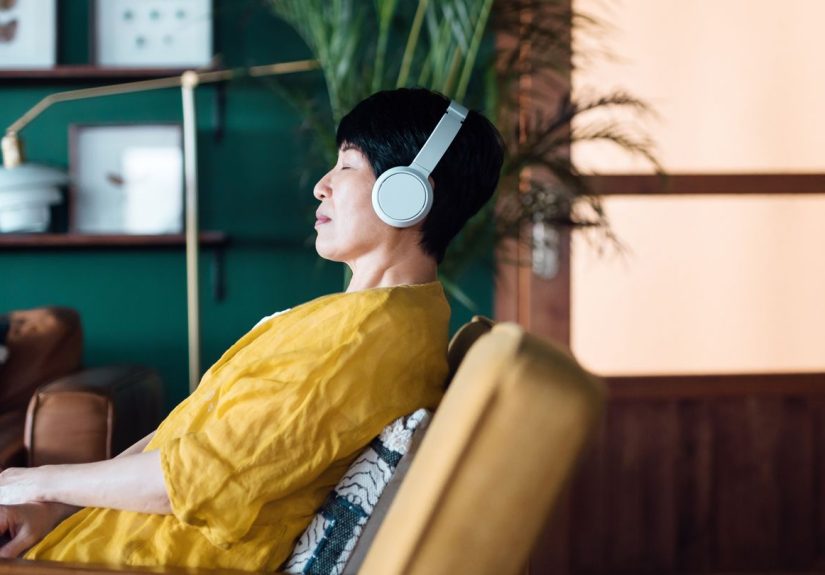
Instrumental music, soft acoustic tracks, jazz, lo-fi beats, nature sounds, or slow favorites can help create a peaceful environment. You can listen while cooking, stretching, showering, or simply lying on the couch like a Victorian person recovering from society. Let music fill the room so your thoughts do not have to.
6. Create a Screen-Free Buffer Before Bed
If your evenings currently involve going from laptop to phone to TV to one last phone check to “just quickly look something up,” your brain may never get a clear signal that the day is winding down. A short screen-free buffer helps your mind stop chasing stimulation and gives your body a better chance to settle.
You do not need to become a digital monk. Start with 20 to 30 minutes before bed. Put your phone down, turn off bright screens, and do something quieter instead. The internet will still be there tomorrow, full of opinions, notifications, and people being confidently wrong. Tonight, you are off duty.
7. Journal the Mental Clutter
Sometimes the reason you cannot relax is not that you need more energy. It is that your brain has 47 tabs open and one of them is playing mystery music. Journaling can help clear that mental clutter. You do not need to write a profound memoir. A few honest lines are enough.
Try one of these prompts: What felt heavy today? What is still bothering me? What can wait until tomorrow? What went well? You can also write a simple to-do list for the next day so your brain stops reminding you at 11:48 p.m. like an overly eager intern. Getting thoughts onto paper often makes them feel more manageable.
8. Sip Something Decaf and Hydrate
Sometimes relaxation starts with something as simple as a warm mug in your hands. Herbal tea, warm water with lemon, or another caffeine-free drink can create a comforting pause in the evening. It is less about the beverage being magical and more about the ritual telling your body that the rush is over.
Just keep it sensible. Late-night caffeine can make it harder to wind down, and alcohol, while tempting after a rough day, often makes sleep worse later in the night. If your goal is real rest, choose something gentle, hydrating, and unlikely to make 2 a.m. feel like a bad plot twist.
9. Read Something That Does Not Raise Your Blood Pressure
Reading is one of the most underrated ways to relax at night. It gives your brain a focus point that is calmer than doomscrolling and more soothing than checking email “just in case.” The trick is choosing the right material. This is not the ideal moment for a thriller so intense that you hear every floorboard in your house.
Try essays, light fiction, comforting nonfiction, or anything that feels absorbing without being agitating. Even ten or fifteen minutes can help slow your thoughts and ease the transition into sleep. In other words, pick a book that feels like a blanket, not a caffeine shot.
10. Do a Low-Stakes Hobby With Your Hands
Hands-on hobbies are excellent for unwinding because they gently occupy your attention without demanding peak performance. Cooking, coloring, knitting, sketching, baking, puzzles, gardening, or building a tiny model that will absolutely test your patience in a new and exciting way can all help.
The point is not productivity. You do not need to monetize your relaxation or emerge with a side hustle by 9 p.m. Choose an activity that feels pleasant, repetitive, and a little absorbing. Hobbies give your brain a break from problem-solving while still keeping you engaged. That is often exactly what stress relief needs.
11. Talk to Someone Who Feels Like an Exhale
Human connection can be a powerful reset. A short conversation with the right person can soften the edges of a hard day, help you feel less alone, and remind you that life is bigger than whatever made you want to fake your own disappearance before dinner.
This does not have to be a deep emotional summit meeting. It can be a quick call to your sister, a check-in with your partner, a voice note to a friend, or ten quiet minutes on the couch with someone who makes you feel safe and understood. The right company helps your nervous system settle in ways productivity apps simply cannot.
12. Build a Simple Bedtime Routine You Can Actually Keep
The best way to relax after a long day is not to reinvent your evening every night. It is to create a simple bedtime routine that becomes familiar. Familiar routines reduce decision fatigue and make winding down easier because your mind starts to recognize the pattern.
Your routine can be basic: dim the lights, wash up, make tea, stretch for five minutes, read for ten, then go to bed at a consistent time. That is enough. The magic is in repetition. The more often you follow the same calming sequence, the easier it becomes for your body to believe you when you say, “We are done for today.”
How to Choose the Best Relaxation Technique for You
Not every method works for every person, and that is perfectly normal. Some people relax best by moving. Others need quiet. Some need a bath. Some need a walk. Some need to stare into the middle distance with a cup of tea and zero demands for fifteen blessed minutes.
Start by noticing what kind of tired you are. If you feel physically tense, try stretching, walking, or a warm shower. If you feel mentally overloaded, try journaling, breathing, music, or reading. If you feel emotionally wrung out, human connection and a comforting routine may help most. The best evening routine is the one you will actually do when your brain is tired and your patience is on airplane mode.
Final Thoughts on How to Relax After a Long Day
You do not need a perfect life to have a better evening. You just need a few reliable ways to unwind after work, settle your mind, and give your body a chance to recover. Small habits add up. A short walk here, a screen-free buffer there, a bit of journaling, a calmer bedtime routine, and suddenly your nights feel less like an extension of your stress and more like a place to land.
Try one or two of these ideas first. Keep them simple. Keep them realistic. The goal is not to win relaxation. The goal is to end the day feeling a little more human and a lot less like a browser with too many tabs open.
Real-Life Experiences: What Relaxing After a Long Day Actually Looks Like
In real life, relaxation rarely arrives with spa music and perfect lighting. More often, it shows up in small, slightly unglamorous moments that still work beautifully. It is the teacher who gets home after talking for eight straight hours and takes a silent walk around the block before speaking to anyone else. It is the office worker who shuts the laptop, changes into comfortable clothes, and stands in a warm shower long enough to feel their shoulders drop two inches. It is the parent who finally gets the house quiet, makes a cup of herbal tea, and reads three pages of a book before realizing those three pages were the first non-urgent thing they did all day.
For some people, the biggest shift comes from reducing stimulation. One person might notice that they feel instantly less edgy when they stop scrolling after dinner. Another might realize that background music while cooking keeps them from mentally replaying every awkward interaction of the day. Someone else may discover that writing tomorrow’s to-do list on paper helps them stop negotiating with their own brain at midnight. None of these habits are dramatic, but that is exactly why they work. They fit into ordinary evenings.
There is also something important about trial and error. Many people assume they are “bad at relaxing” because meditation did not immediately turn them into a serene woodland creature. In reality, relaxation is personal. One person feels calm after yoga. Another feels calm after watering plants, folding laundry slowly, or sitting on the porch doing absolutely nothing except looking at the sky like it owes them answers. The method matters less than the effect: less tension, slower thoughts, easier breathing, and a smoother path into sleep.
Over time, these small experiences build trust with yourself. You learn that you do not have to carry the whole day forever. You can set some of it down. You can leave work at work, even if work tried very hard to follow you home in your head. You can create a few evening cues that tell your body, “We are safe enough to rest now.” That message is powerful.
The people who seem best at unwinding are not necessarily less busy or less stressed. They often just have a few dependable rituals. They know their version of relief. Maybe it is stretching in dim light. Maybe it is tea and a novel. Maybe it is texting a friend who always replies with exactly the right amount of empathy and gossip. Whatever the routine is, it becomes a bridge between the chaos of the day and the quiet of the night. And that bridge, even when it is built from simple habits, can change how life feels.