Table of Contents >> Show >> Hide
- What Zoë Kravitz Actually Said About Friends
- Why Friends Is Still Such a Big Target
- The Difference Between Laughing With and Laughing At
- So Why Did People Bring Up The Office?
- But The Office Has Not Escaped Criticism Either
- Why ’90s Humor Feels So Different Now
- Nostalgia Is Not a Free Pass
- Why This Debate Keeps Coming Back
- What Modern Comedy Can Learn From the Friends Debate
- The Real Reason Kravitz’s Comment Hit a Nerve
- Experiences Related to Rewatching ’90s Humor Today
- Conclusion
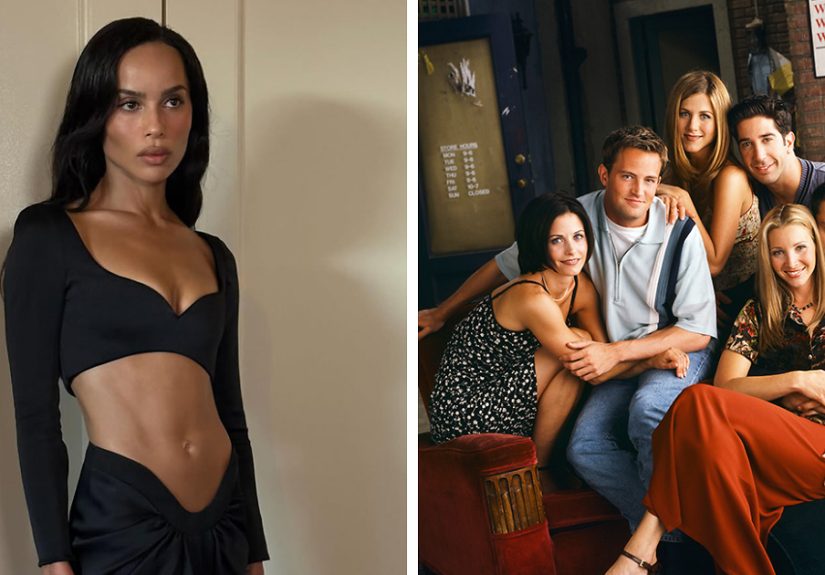
Zoë Kravitz has never been the type to politely smile at a cultural sacred cow just because it comes with a laugh track and a Central Perk mug. While promoting Caught Stealing, the Darren Aronofsky crime film set in 1998 New York City, Kravitz reflected on the 1990s with a mix of affection and raised eyebrows. She liked the fashion, the grunge, the energy, and the pre-smartphone weirdness. But when it came to mainstream sitcom humor, especially the kind found in Friends, she was much less nostalgic.
Her point was simple: some jokes from the era have aged like milk left in a Manhattan apartment with no air conditioning. Kravitz specifically called out “super homophobic jokes” on mainstream television and used Friends as an example of a beloved show where certain punchlines now land differently. Austin Butler, her co-star in Caught Stealing, seemed surprised that even Friends would fall into that category. Kravitz’s response made the internet do what the internet does best: argue, quote, overreact, and immediately drag The Office into the room wearing a “World’s Best Boss” mug.
The viral reaction“I guess she didn’t watch The Office”gets at the heart of the debate. Why does one beloved comedy get criticized for aging poorly while another gets defended as satire? Is Friends uniquely dated, or is this just what happens when any comedy survives long enough to be judged by a new generation? The answer is more interesting than a simple “cancel it” or “stop being sensitive.” It is really a conversation about nostalgia, intent, representation, and how comedy changes when the audience changes.
What Zoë Kravitz Actually Said About Friends
Kravitz was not saying the entire decade should be tossed into a giant dumpster behind a Blockbuster. In fact, she praised many parts of the ’90s. The setting of Caught Stealing gave her a reason to talk about New York City in 1998, an era filled with analog texture: answering machines, VHS tapes, Nintendo 64, street fashion, and a general sense that nobody was filming every awkward moment for social media.
But when asked what should stay in the past, Kravitz pointed to the casual homophobia that appeared in mainstream entertainment. Her criticism of Friends focused on how the show sometimes treated identity, masculinity, queerness, and gender nonconformity as punchlines. Her argument was not that viewers must erase the sitcom from memory. It was that some of its jokes reveal the assumptions of the time, and those assumptions can look uncomfortable now.
That distinction matters. Enjoying an old show and noticing its flaws are not opposites. You can love a sitcom and still admit that some episodes now feel like opening a time capsule and finding a joke that should have stayed buried next to dial-up internet.
Why Friends Is Still Such a Big Target
Friends is not just another sitcom. It aired from 1994 to 2004, became one of NBC’s defining comedies, and remains one of the most rewatched shows in streaming and syndication culture. Its finale drew a massive audience, and the series still has a global fan base decades later. That level of popularity means the show is not frozen in the 1990s. It keeps meeting new viewers in new cultural conditions.
That is why criticism follows it around like Janice popping through the door with perfect timing. Friends is still visible. It is still recommended. It still shapes how people imagine young adulthood, friendship, dating, apartments they definitely could not afford, and the idea that six attractive people can spend half their lives on a couch drinking coffee without anyone asking about deadlines.
Because the show is still alive in pop culture, its blind spots are still up for discussion. That includes the lack of racial diversity in its version of New York City, the way some jokes rely on panic about men seeming gay, and the handling of Chandler Bing’s transgender parent, Helena. Marta Kauffman, one of the show’s co-creators, has since expressed regret about aspects of representation, including misgendering Helena and not doing more to create a diverse world around the central characters.
The Difference Between Laughing With and Laughing At
The main issue with many older sitcom jokes is not simply that they mention LGBTQ+ people or gender identity. Comedy can absolutely explore identity, awkwardness, dating, family tension, and social change. The problem is often the direction of the joke. Who is the audience being invited to laugh at?
In some Friends scenes, the punchline depends on discomfort around queerness or femininity in men. Chandler is often teased because other characters think he seems gay. Ross panics over masculinity in ways that are played for laughs. Helena’s identity becomes a source of awkward comedy rather than a fully human part of the character’s life. For viewers watching today, especially younger viewers who grew up with more open conversations about LGBTQ+ representation, the humor can feel less like harmless teasing and more like a reminder of how casually mainstream TV once turned identity into a gag.
This does not mean the show had no progressive moments. Friends included Carol and Susan’s wedding at a time when same-sex marriage was nowhere near legal recognition across the United States. That mattered. But a show can be ahead in one area and behind in another. Culture is messy like that. So are sitcom writers’ rooms. So are all of us, unfortunately, before coffee.
So Why Did People Bring Up The Office?
The phrase “I guess she didn’t watch The Office” became a handy comeback because The Office also contains jokes about race, gender, sexuality, disability, religion, body image, and workplace harassment that can feel shocking today. Michael Scott, played by Steve Carell, is often wildly inappropriate. He says things that would get a real manager fired, sued, retrained, and possibly turned into a cautionary HR slideshow titled “Please Do Not Be This Man.”
But fans often defend The Office by pointing to its satirical structure. The joke is usually that Michael is ignorant, not that his targets deserve mockery. The camera lingers on the discomfort of his employees. Jim looks into the lens like he wants the documentary crew to call an adult. Pam freezes. Stanley radiates silent judgment. Oscar, often the smartest person in the room, is not the joke as much as Michael’s cluelessness is.
That is a major difference in comedic framing. In The Office, offensive comments are often presented as evidence that a character is socially inept. In Friends, some dated jokes are built more directly into the group’s shared worldview. The audience is not always clearly positioned against the bias. Sometimes the laugh track simply arrives, and the viewer is expected to follow.
But The Office Has Not Escaped Criticism Either
The defense of The Office only goes so far. Many viewers and even people connected to the show have acknowledged that certain jokes are uncomfortable now. Some episodes have been edited or discussed because of material that modern audiences find offensive. Rainn Wilson, who played Dwight Schrute, has publicly reflected on the show’s insensitive jokes, noting that while much of the comedy satirized bad behavior, not everything would work the same way today.
That means the “what about The Office?” response is fair only if it leads to a broader conversation. Yes, The Office can be problematic. Yes, Friends can be problematic. Yes, both can still be funny. And yes, viewers are allowed to laugh at a joke in one scene and wince at another. Cultural criticism is not a courtroom where every sitcom receives one final sentence. It is more like a group chat with better vocabulary and fewer reaction GIFs.
Why ’90s Humor Feels So Different Now
The 1990s were not a simple golden age of comedy where everyone was relaxed and nothing mattered. They were also a time when network TV had enormous cultural power. A popular sitcom could shape millions of viewers’ ideas about what was normal, funny, embarrassing, desirable, or shameful. When a joke appeared on Thursday night television, it did not vanish after one airing. It traveled through reruns, DVDs, streaming platforms, memes, and family living rooms.
Back then, many mainstream comedies leaned on anxiety about masculinity, queerness, weight, race, accents, and gender roles. The jokes were often considered ordinary. Today, audiences are more likely to ask who the joke harms, whether the writing punches down, and whether the character being mocked has enough agency to be more than a punchline.
That shift does not mean people lost their sense of humor. It means the audience got better at hearing the machinery behind the joke. A laugh can still be a laugh, but now viewers may also notice the cost of getting it.
Nostalgia Is Not a Free Pass
Nostalgia is powerful because it edits the past like a flattering Instagram filter. It remembers the couch, the theme song, the haircuts, the outfits, the catchphrases, and the feeling of watching a show before life got complicated. It conveniently forgets the jokes that made some people feel invisible or disposable.
Kravitz’s comments challenge that filter. She is not asking viewers to abandon every old favorite. She is asking them to recognize that loving the vibe of an era does not require defending everything that came with it. You can miss VHS tapes without missing casual homophobia. You can appreciate ’90s fashion without pretending every joke in a network sitcom was secretly brilliant social commentary.
That is a healthier form of nostalgia. It lets people keep the good parts without turning the past into a museum where nothing can be questioned.
Why This Debate Keeps Coming Back
Every few months, another classic show becomes the subject of an “it didn’t age well” debate. Sometimes the conversation is thoughtful. Sometimes it becomes a shouting match between people who think criticism equals censorship and people who think affection equals approval. The truth is somewhere in the middle, where most useful conversations live and where fewer people are yelling in all caps.
Old sitcoms are especially vulnerable because comedy depends on timing, social rules, and shared assumptions. When those assumptions change, the joke changes. A dramatic scene from 1998 may still work because sadness, fear, and love are fairly durable. But a joke about identity can expire quickly if the culture stops accepting the premise behind it.
That is why Friends keeps coming up. It is still loved, still watched, and still influential. Criticizing it does not erase its charm. It simply makes room for a more honest reading.
What Modern Comedy Can Learn From the Friends Debate
Modern writers do not need to make comedy soft or cautious to avoid aging badly. They need sharper targets. The best comedy does not avoid discomfort; it understands it. It can make fun of prejudice, ego, ignorance, hypocrisy, and social awkwardness without making marginalized people the disposable center of the joke.
That is why shows with uncomfortable humor can still work when the framing is clear. If the audience understands that the joke is on the bigot, the clueless boss, the arrogant friend, or the absurd social rule, the humor has a stronger foundation. If the joke simply says, “This person is different, therefore laugh,” it becomes weaker over time.
The lesson is not “never offend anyone.” Comedy will always offend someone. The lesson is to be precise. A lazy joke ages poorly because it depends on assumptions that culture eventually outgrows. A smart joke ages better because it exposes those assumptions instead of relying on them.
The Real Reason Kravitz’s Comment Hit a Nerve
Kravitz’s criticism went viral because Friends is not just a show. For many viewers, it is emotional furniture. It played in the background during childhood, college, breakups, sick days, and lonely apartments. When someone criticizes it, fans may feel like their memories are being judged.
But Kravitz was not attacking anyone’s comfort show. She was pointing out that comfort can look different depending on who is watching. A joke that felt harmless to one viewer might have made another viewer feel small. Both experiences can be true. The mature response is not to panic. It is to make space for more than one reaction.
That is what makes the debate useful. It reminds audiences that pop culture is not static. Shows keep changing because we keep changing. The same episode can feel cozy, funny, awkward, and dated all at once. That is not a contradiction. That is how media ages.
Experiences Related to Rewatching ’90s Humor Today
Anyone who has rewatched an old favorite with a younger sibling, a friend, or a partner knows the strange feeling of laughing one minute and reaching for the remote the next. You remember a show as warm and harmless, then suddenly a joke appears that makes the room go quiet. Not dramatic quiet. More like, “Should we address that, or should we pretend the pizza just arrived?” quiet.
That experience is common because many people first watched shows like Friends when they were too young to notice the cultural assumptions underneath the punchlines. As kids or teens, viewers often absorbed the rhythm: setup, joke, laugh track, next scene. Years later, the same viewers recognize patterns they missed. The joke about a man seeming feminine is not just random. The joke about someone’s identity is not just silly. The joke about a character being different may reflect a bigger social habit that once passed as normal.
Rewatching can therefore become a small personal audit of taste. You ask yourself: Did I laugh because it was clever, or because the show told me to? Did the character have dignity, or were they only there to make the main cast look normal? Would this joke work if the target had more power? Would I feel comfortable watching this scene with someone personally affected by the joke?
These questions do not ruin comedy. They deepen it. In fact, they can make the genuinely good parts stand out more. Friends still has strong physical comedy, memorable character rhythms, and episodes built around relatable friendship chaos. Chandler’s timing, Phoebe’s oddball confidence, Monica’s intensity, Joey’s sweetness, Rachel’s growth, and Ross’s operatic panic all still explain why the show became a phenomenon. The funny parts that survive do so because they are rooted in character, not cheap targeting.
The same applies to The Office. Many viewers still love it because its best scenes are not simply offensive for shock value. They are built around workplace absurdity, social discomfort, and the gap between how people see themselves and how everyone else sees them. Michael Scott is funny because he desperately wants to be loved while constantly proving he should not be in charge of anything more dangerous than a stapler. Still, even The Office has moments that modern viewers may find clumsy or unnecessarily harsh.
The best experience, then, is not to rewatch older comedy with a clipboard and a permanent frown. It is to watch honestly. Laugh when the writing earns it. Cringe when the writing deserves it. Talk about why a joke feels different now. Let beloved shows be human-made things: funny, flawed, influential, and sometimes very much products of their time.
Zoë Kravitz’s comments landed because they expressed something many viewers already feel. The ’90s can be stylish, charming, and creatively exciting without being morally perfect. A sitcom can be iconic and still dated. A joke can be famous and still weak. And a viewer can enjoy the coffeehouse, the friendships, and the theme song while saying, quite reasonably, “That part can stay in the past.”
Conclusion
Zoë Kravitz’s criticism of Friends is not really about destroying a beloved sitcom. It is about recognizing that humor has a shelf life when it depends on outdated ideas about identity and difference. The backlash involving The Office shows that audiences are still figuring out how to separate satire from lazy punchlines, affection from denial, and nostalgia from critical thinking.
The smartest way to watch older comedy is not with blind loyalty or instant outrage. It is with curiosity. Why did this joke work then? Why does it feel strange now? Who was centered, and who was reduced to a punchline? Those questions do not make TV less fun. They make us better viewers. And honestly, if a sitcom can survive decades of reruns, streaming debates, fan theories, reunion specials, and internet arguments, it can probably survive a thoughtful critique from Zoë Kravitz.