Table of Contents >> Show >> Hide
- Table of Contents
- What Makes Mango Flan “Silky”?
- The 5 Ingredients (and Why They Work)
- Fresh vs. Canned Mango Pulp: Which Should You Use?
- Recipe: 5-Ingredient Silky Mango Flans
- Pro Tips for a Smooth, Bubble-Free Mango Flan
- Troubleshooting (Because Caramel Has Opinions)
- Serving + Make-Ahead
- FAQ
- Conclusion
- Extra: Real-World Mango Flan Experiences ()
If your dessert vibe is “tropical vacation” but your grocery budget is “gas station receipt,” meet your new favorite flex:
silky mango flan made with five ingredients. Not “five plus a pinch of twelve other things.”
Not “five if you don’t count the stuff you already own.” Just five. And yes, it still comes out glossy, jiggly, and
dramatically photogeniclike it has a publicist.
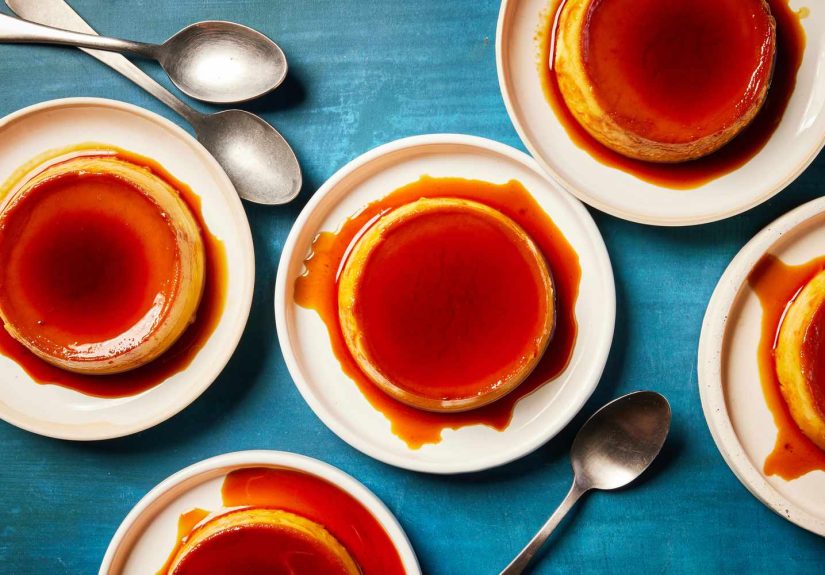
This is a 5-ingredient mango flan recipe that leans on classic flan science (gentle heat + a water bath)
and mango’s naturally velvety texture. The result is a custard that slices cleanly, melts fast, and makes people ask,
“Wait… you made this?” (Say nothing. Let the flan speak.)
What Makes Mango Flan “Silky”?
“Silky” isn’t just a complimentit’s a cooking outcome. Flan gets its texture from eggs gently setting into a custard.
Treat those eggs nicely, and you get a smooth, plush custard. Bully them with high heat, and they seize up, making
a texture that screams, “I was rushed.”
1) Gentle heat is the whole game
Flan wants to cook slowly, evenly, and with zero drama. That’s why most great flan recipes use a
bain-marie (water bath). Think of it as a spa day for custard: warm, steamy, steady. The water buffers
the oven’s heat so the custard sets without curdling or turning rubbery.
2) Straining = instant luxury
Even if you whisk carefully, tiny eggy bits or mango fibers can sneak in. Passing the mixture through a fine-mesh
strainer is the easiest “restaurant trick” you can do without wearing a chef coat you don’t deserve.
3) Less air = fewer bubbles
Air bubbles are the enemy of “silky.” They expand in the oven and leave little holesaka the dreaded “Swiss cheese”
look. So whisk smoothly (don’t whip), and if you blend, keep it short and gentle.
The 5 Ingredients (and Why They Work)
This is the core lineup for silky mango flans. No filler, no fluffjust the five that pull all the weight.
- Granulated sugar (for caramel): melts into that amber sauce that makes flan… flan.
- Eggs: the structure. They set the custard, creating that sliceable, creamy texture.
- Sweetened condensed milk: sweetness + body. It’s thick, rich, and basically dessert in a can.
-
Evaporated milk: creamy dairy flavor without extra sugar. It balances the condensed milk so the custard
tastes rich, not cloying. - Mango pulp/purée: the star. Adds fruit flavor, color, and a naturally lush mouthfeel.
Notice what’s missing? Flour, cornstarch, gelatinnone needed for a classic baked flan structure. The eggs do the setting,
the milk does the creaminess, and mango does the “Why is this so good?” part.
Fresh vs. Canned Mango Pulp: Which Should You Use?
You can absolutely use fresh mango. You can also use canned mango pulp. Both workjust in slightly different ways.
Fresh mango (best when perfectly ripe)
Fresh mango gives you bright, fragrant flavor. The key is ripeness: you want mango that smells strongly of mango and yields
when pressed. If it’s underripe, the flan can taste flat or slightly “green.” Blend the flesh until totally smooth, then
strain to remove fibers for the silkiest finish.
Canned mango pulp (best for consistency)
Canned mango pulp is convenient and consistentgreat when mango season is not cooperating. Some versions are sweetened, which
can be helpful because this recipe keeps the ingredient list tight (no extra sugar in the custard). If your pulp is already
sweetened, you’re basically playing on easy mode.
Either way: the smoother your mango base, the more “silk robe” your flan will feel.
Recipe: 5-Ingredient Silky Mango Flans
Quick Stats
- Yield: 6 small flans (6–8 oz ramekins) or 1 medium flan (8-inch round pan)
- Prep time: 20 minutes
- Bake time: 40–60 minutes (ramekins) or 60–80 minutes (larger pan)
- Chill time: 4 hours minimum (overnight is even better)
Equipment
- 6 ramekins (or one 8-inch round cake pan)
- Roasting pan (for the water bath)
- Saucepan (for caramel)
- Whisk or blender
- Fine-mesh strainer
- Kettle or pot of hot water
Ingredients (5 total)
- 1 cup granulated sugar (for caramel)
- 6 large eggs (room temperature helps)
- 1 (14 oz) can sweetened condensed milk
- 1 (12 oz) can evaporated milk
- 1 1/4 cups mango pulp or very smooth mango purée
Instructions
- Preheat the oven: Set to 325°F. Arrange ramekins in a roasting pan.
-
Make the caramel: Add sugar to a clean, dry saucepan over medium heat. Let it melt without stirring at first.
Swirl the pan occasionally as it turns golden, then amber. Once it’s a deep honey color, immediately pour a little into each
ramekin and swirl to coat the bottom. (Work carefullycaramel is basically edible lava.) -
Mix the custard: In a bowl, whisk eggs until combined (not foamy). Whisk in condensed milk, evaporated milk,
and mango pulp until smooth. If using a blender, blend briefly on lowjust enough to combine. -
Strain for silk: Pour the mixture through a fine-mesh strainer into a large measuring cup (or bowl), then
divide into ramekins. -
Water bath (bain-marie): Place the roasting pan on the oven rack. Carefully pour hot water into the pan until
it reaches about halfway up the sides of the ramekins. -
Bake gently: Bake until edges are set and centers still jiggle slightly like gelatin. Start checking at
40 minutes for ramekins. Larger flan pans can take 60–80 minutes. -
Cool slowly: Turn off the oven, crack the door, and let the flans rest in the water bath for 10–15 minutes.
Then remove ramekins and cool to room temp. - Chill: Refrigerate at least 4 hours (overnight is ideal).
-
Unmold: Run a thin knife around the edge. Place a plate over the ramekin, flip confidently, and lift.
(Confidence helps. The flan can sense fear.)
Pro Tips for a Smooth, Bubble-Free Mango Flan
Use the water bath like you mean it
The water bath should reach halfway up the ramekins. Hot water helps the oven environment stay steady from the start.
If you skip the water bath, the custard cooks too aggressively at the edges and you’ll risk bubbles or curdling.
Don’t chase “no jiggle”
Flan continues to set as it cools. If you bake until the center is totally firm, you’ve overshot the landing.
Pull it when the edges are set and the center still has a gentle wobble.
Caramel color matters
Aim for a medium to deep amberlike a shiny penny that’s been living its best life. Too pale and it tastes like sugar syrup.
Too dark and it turns bitter. Once it hits the color, pour immediately; caramel waits for no one.
Strain every time (yes, every time)
If you only adopt one habit from this whole post, make it this one. Straining is a low-effort, high-reward move that upgrades
texture instantly.
Want extra insurance? Cover loosely
Some bakers cover the water bath pan loosely with foil to soften the oven’s heat and prevent skin formation. If you do, don’t
seal it airtightsteam should circulate.
Troubleshooting (Because Caramel Has Opinions)
“My flan has holes / bubbles!”
- Cause: Too much air in the custard or oven temp too high / baked too long.
- Fix next time: Whisk gently, strain, bake at 325°F in a proper water bath, and pull while slightly jiggly.
“It looks curdled or grainy.”
- Cause: Overbaking (eggs tightened too much).
- Fix next time: Start checking earlier, keep the water bath deep enough, and avoid high heat.
“Caramel hardened before I could coat the ramekins.”
- Cause: Caramel sets fast once off heat.
- Fix next time: Have ramekins ready and pour immediately. Move briskly and carefully.
“My flan won’t release!”
- Cause: Not chilled long enough or caramel too pale/thin.
- Fix: Warm the ramekin bottom in a shallow bowl of warm water for 10–15 seconds, then flip again.
Serving + Make-Ahead
Make-ahead friendly (your future self will thank you)
Mango flan is better after chilling overnight. The flavor settles, the texture tightens to that perfect “silky but sliceable”
sweet spot, and the caramel loosens into a sauce that looks like you planned your life.
Serving ideas (optional, not part of the 5 ingredients)
- Fresh mango slices on top for extra drama
- Toasted coconut flakes for crunch
- A squeeze of lime for brightness
- Whipped cream if you’re feeling fancy (or simply alive)
Storage
Keep covered in the fridge for up to 3–4 days. For best texture, unmold close to serving time so the caramel stays glossy.
Freezing isn’t idealthe custard can weep and lose that silky vibe.
FAQ
Can I make this as one big flan instead of ramekins?
Absolutely. Use an 8-inch round pan, keep the water bath, and expect a longer bake. Check for set edges and a center that
still jiggles slightly.
Do I have to use evaporated milk?
For the classic flan texture with this ingredient list, evaporated milk is the best partner to condensed milk. It adds creamy
dairy flavor without extra sugar, helping the mango shine.
Can I steam it instead of baking?
Steaming is a legit method for flan in many traditions. The big idea is the same: gentle, moist heat. If steaming is your
comfort zone, go for itjust keep the custard at a gentle set, not a hard boil.
Is this gluten-free?
Yesclassic flan is naturally gluten-free (just confirm your canned products if you’re highly sensitive).
Conclusion
A good mango flan is proof that dessert doesn’t need a long ingredient list to feel special. With just
sugar, eggs, condensed milk, evaporated milk, and mango, you get a custard that’s creamy, glossy, and
confidently tropical. Treat it gently (water bath!), strain it like you’re on a cooking show, and pull it while it still
has a little jiggle. The rest is chill timeand bragging rights.
Extra: Real-World Mango Flan Experiences ()
Making silky mango flans has a funny way of turning rational adults into courtroom lawyers. The caramel is
Exhibit A. You’ll stand at the stove, staring at plain sugar like it personally owes you money, waiting for it to melt.
For a while, nothing happens. Then it starts to clump. Then it melts. Thensuddenlyit’s amber and you’re sprinting (carefully)
toward the ramekins like you’re carrying a tiny saucepan of molten glass. This is normal. This is the process. This is why
flan feels impressive: it has just enough suspense to make you feel heroic.
The second “ohhhh” moment usually happens when you learn what gentle heat actually means. Plenty of people
bake cakes at high heat and call it a daycustard is different. The first time you use a water bath, it clicks that the oven
is not one uniform temperature. It’s a weather system. The water bath is your flan’s personal climate control, keeping things
mild and steady so the eggs set into that plush texture instead of tightening into something that looks like it trained for a
marathon.
Then there’s the psychological growth that comes from accepting the jiggle. New flan-makers often panic because
the center moves when they nudge the pan. The urge is to keep baking “just five more minutes.” That’s the trap. Flan is like a
good nap: it finishes the job while resting. Pull it when the edges are set and the center trembles slightly, and it will
reward you after chilling with the kind of smooth slice that makes you want to applaud yourself.
Mango adds its own personality to the journey. Fresh mango purée smells amazing, but it can also be fibrous depending on the
variety and ripeness. That’s why the fine-mesh strainer feels like a cheat code: you pour in “pretty smooth,”
and out comes “wow, that’s luxurious.” People are often surprised that straining doesn’t feel like extra work once you see the
payoffespecially when you unmold and the surface looks glossy and clean.
Unmolding itself is a tiny adrenaline sport. You run a knife around the edge, put a plate on top, and flip. There’s always a
half-second of silence where you wonder if you’ve just invented “mango flan soup.” And then it releases with a soft plop, the
caramel floods the plate, and suddenly you’re a person who makes flan on purpose. If you serve these at a gathering, expect a
very specific compliment pattern: first people say “That’s pretty,” then they take a bite and say “Oh wow,” and thenwithout
failsomeone asks how many ingredients it took. When you say “five,” they will not believe you. Enjoy that moment. It’s the
whole point.