Table of Contents >> Show >> Hide
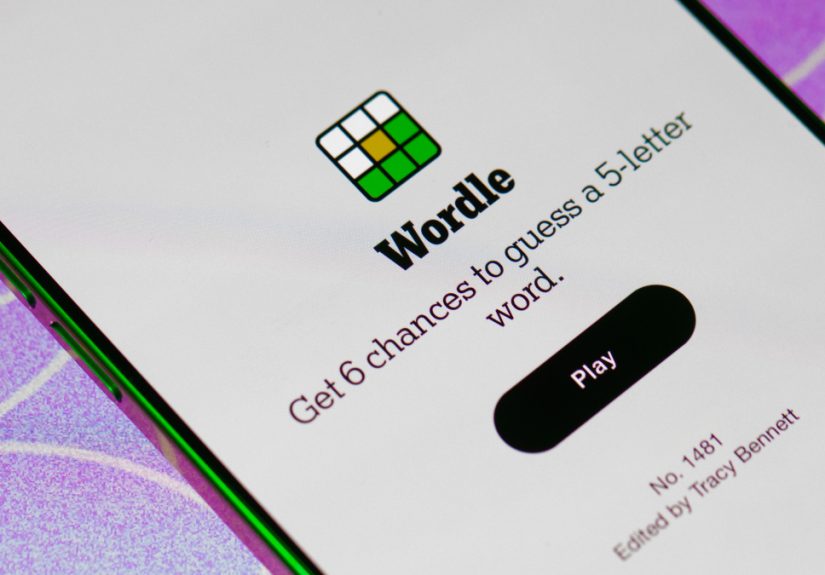
If you came here because Wordle had you staring at your screen like it personally insulted your family, welcome. The answer for Wordle #1615 on November 20, 2025, is GRAVE. There, the spoiler bandage has been ripped off cleanly and with minimal emotional damage.
But a good Wordle article should do more than blurt out the answer and run away. It should explain why the puzzle worked, how the clues narrowed the field, and what this particular word says about the way Wordle keeps players hooked day after day. That is especially true for a word like GRAVE, which looks simple on the surface but sneaks in a few layers of mischief. It is a common word, yes, but it also carries multiple meanings, a familiar letter pattern, and just enough “I know this, but why can’t I see it?” energy to make solvers mutter into their coffee.
In this guide, we will break down the answer, explain the clue path, look at the word itself, and share some practical Wordle strategy you can use the next time the puzzle decides to get dramatic. Because let’s be honest: sometimes solving Wordle feels less like “five cheerful letters” and more like “a tiny daily duel against your own overconfidence.”
Today’s Wordle Answer: November 20, 2025
The answer is: GRAVE
If you want the fast facts before the deep dive, here they are:
- Puzzle number: #1615
- Date: Thursday, November 20, 2025
- Answer: GRAVE
- Starts with: G
- Ends with: E
- Vowels: 2
- Repeated letters: None
On paper, that does not sound too terrifying. No doubled letters, no weird spelling, no rogue Z hiding in the bushes. And yet this is exactly the kind of Wordle that can eat three guesses before you realize the obvious answer was standing in front of you the whole time wearing a trench coat.
Why GRAVE Was a Good Wordle Answer
GRAVE is a strong Wordle answer because it checks several boxes that make the puzzle satisfying. First, it is a very familiar five-letter English word. Second, it is easy to define but not instantly obvious from limited letter data. Third, it has more than one meaning, which gives hint writers some wiggle room and gives solvers just enough room to overthink things. Wordle loves that sweet spot.
Most people recognize grave as a noun meaning a burial place. That is the definition most players would land on once the answer appears. But grave is also an adjective meaning serious, solemn, or weighty. That double meaning gives the word a little extra personality. It is not just a common noun; it is one of those everyday English words that can sound eerie in one sentence and formal in another.
That matters in Wordle. The best answers are often not obscure dictionary fossils. They are words you know well enough to guess, but not always quickly enough to feel smug about it. GRAVE fits that formula beautifully.
Breaking Down the Hints
One reason this puzzle landed so nicely is that the clue trail pointed toward the answer without giving the whole game away. If you were reading hint-based coverage instead of jumping straight to the solution, you likely saw clues along these lines:
- There are two vowels.
- The word begins with a consonant.
- There are no double letters.
- Synonyms could include “tomb” or “crypt.”
- A thematic clue suggested “final repose.”
That is good hint architecture. The early clues are technical and narrow the field logically. The final semantic clues steer you toward meaning. If you had already identified a pattern like G _ A _ E or _ R A _ E, those hints would have pushed you much closer to the finish line.
The trick, of course, is that Wordle players rarely reach that stage with calm and grace. Usually it goes more like this: “Great, I have four letters. Why are there still seven possible answers? Why is language like this?”
The Letter Pattern Advantage
Part of what made GRAVE feel natural is its opening pattern. Letter-pair analysis of Wordle answers has shown that some starting combinations appear more often than others, and GR is one of the more familiar openings. That means players are used to seeing words that begin that way, which helps the answer feel fair. At the same time, familiar patterns can create traps, because your brain starts generating neighbors instead of solutions.
With a structure like G R A _ E, a solver might bounce through nearby possibilities before landing correctly. That is the sneaky beauty of this puzzle. It is not built around rare letters. It is built around a recognizable shape that can lead you just close enough to become confidently wrong.
No Repeated Letters, No Cheap Tricks
Some of the hardest Wordles involve repeated letters, because players often delay testing doubles. This one did not use that trick. That made the puzzle feel more elegant than cruel. If you missed it, it probably was not because the game pulled a stunt. It was because the answer hid in plain sight, which is honestly the most Wordle thing imaginable.
What Does GRAVE Mean?
In its most familiar form, grave means a place where a body is buried. That is the straightforward sense, and it matches the clue language around “tomb” and “crypt.” In everyday writing, that is the definition most readers picture first.
But grave also works as an adjective. A grave expression is serious. A grave matter is important, even urgent. That second meaning gives the word extra texture. It is one of those neat English terms that can move from literal to emotional without changing a letter.
That is part of why it feels like such a satisfying Wordle answer. It is accessible, but not flat. Familiar, but not boring. You know it, you use it, and if the puzzle catches you off guard with it, you cannot even claim the word was unfair. Annoying? Maybe. Unfair? Not really.
How to Solve a Word Like GRAVE
If this puzzle slowed you down, there is a useful lesson hiding inside it. GRAVE rewards balanced play. It is not the kind of answer you crack by randomly throwing vowels at the wall and hoping one sticks. It responds better to a clean, structured strategy.
1. Start with a strong opener
High-quality starting words still matter. Words like SLATE, TRACE, CRATE, CRANE, and DEALT remain popular because they test common vowels and frequent consonants efficiently. A solid opener gives you information instead of drama, and information is what wins Wordle.
2. Don’t chase only vowels
Yes, vowels matter. But many players waste early guesses trying to “collect” all of them. That is not always the fastest route. A word like GRAVE contains two vowels, but its backbone is really the consonant pattern. The G, R, and V do a lot of the heavy lifting. If you focus only on vowels, you may end up circling the answer rather than hitting it.
3. Use meaning when the letters stall
Once you have a partial frame, think semantically. Ask yourself what common five-letter words fit both the shape and a likely Wordle answer style. This is where many players either shine or spiral. The best move is usually to pause, look at the pattern, and think of normal words a human editor would actually pick.
4. Respect ordinary words
One of the most common Wordle mistakes is assuming the answer must be exotic because you have not solved it yet. Usually the opposite is true. The answer is often something ordinary, and your brain has just sprinted past it in search of something flashier. GRAVE is a perfect example. It is not obscure. It is just sitting there quietly while you invent nonsense in your head.
Why Wordle Still Works So Well
By late 2025, Wordle was no longer the shiny new toy of the internet. And yet people were still checking in every day, still protecting streaks, still sharing little grids of triumph and suffering. That staying power is not an accident.
The game was originally created by Josh Wardle for his partner, then quickly exploded in popularity before being acquired by The New York Times. Its design remains incredibly clean: one puzzle a day, six guesses, clear feedback, and no fluff. That restraint is part of its magic. In a world where everything wants more of your time, Wordle basically says, “Here is your five-minute puzzle. Go live your life.” That is weirdly charming.
Its social format also helps. The score-sharing grid lets people compare outcomes without spoiling the answer. That tiny design choice turned a solo word game into a daily communal ritual. It is low-pressure, lightly competitive, and easy to fold into ordinary routines. Morning coffee, afternoon break, bedtime brain warm-up, lunch-table bragging rights: Wordle fits wherever people need a quick mental detour.
And that is why an answer like GRAVE matters more than it might seem. The specific word is temporary. The ritual is the real product. Every day you show up, test your instincts, get humbled by a five-letter noun, and move on. Beautiful stuff, really.
November 20, 2025: A Good Puzzle Day
Looking back, GRAVE was the kind of Wordle answer that feels fair in hindsight and maddening in the moment. Those are usually the best ones. It had a clear definition, a tidy structure, no gimmicky repeated letters, and clue language that walked the line between helpful and spoiler-heavy.
If you solved it in two or three guesses, congratulations on your giant galaxy brain. If it took five or six, welcome to the club. A word can be common and still be slippery. In fact, that is often what makes Wordle fun. The puzzle does not beat you with rarity; it beats you with familiarity.
So yes, the answer for Wordle on November 20, 2025, was GRAVE. A little spooky. A little serious. A little smug. Honestly, a very on-brand choice for a game that has made millions of people yell at a five-square grid before breakfast.
Experience: What Solving Wordle #1615 Felt Like
There is a specific kind of tension that only Wordle can create, and puzzle #1615 had it in abundance. You open the game thinking this will be a quick little brain snack. One neat five-letter word, maybe three guesses, maybe four if your first coffee has not kicked in yet. Then suddenly you are on guess number three, staring at a pattern that looks familiar, and your confidence has packed a suitcase and left the building.
That is what a word like GRAVE does. It does not scream difficulty the way a weird letter combo does. It is worse than that. It acts normal. It stands there in a sensible outfit pretending to be approachable while your mind sprints through twenty nearby words and somehow misses the correct one. It is the puzzle equivalent of losing your phone while holding your phone.
For many players, the experience probably began with a reliable starter, something like SLATE or CRANE. A few letters lit up, hope bloomed, and then the trap quietly formed. Maybe the R landed. Maybe the A was already in place. Maybe the ending E popped up and made everything look solvable. That is the moment Wordle becomes theater. You are no longer just guessing; you are performing deduction under emotional pressure created entirely by colored squares.
And then the second-guessing begins. Is this one of those days when the answer is a plain noun? Is it something more abstract? Is there a repeated letter? Did I already eliminate the obvious answer and forget that I eliminated it? Why do I suddenly know nothing about the English language I have been using my whole life?
When the answer turns out to be GRAVE, the reaction can go in one of two directions. Either you feel brilliant because you got there efficiently, or you laugh at yourself because of course it was GRAVE. Of course it was the simple, meaningful, perfectly valid word you somehow danced around for two full guesses while testing alternatives like a detective with a dramatic monologue and no evidence.
That is why this puzzle is memorable. It captures the exact reason Wordle has stayed popular: the emotional swing is tiny, but real. One minute you feel sharp. The next minute a five-letter word about burial sites is humbling you in public, and now you are sending your little grid to friends as if it were a weather report from the front lines.
There is also something oddly satisfying about the mood of the word itself. GRAVE sounds weighty. It feels substantial in the mouth. It is not silly, not trendy, not gimmicky. It has that classic Wordle quality of being both ordinary and dramatic. You know it immediately once you see it, and that instant recognition makes the whole puzzle click into place. Even if it took you longer than expected, the answer feels earned.
So the experience of November 20, 2025 was probably this: mild optimism, growing suspicion, one unnecessary detour, a moment of revelation, and then either triumph or mock outrage. In other words, a very good day in Wordle land.
Final Thoughts
Wordle Answer for Today, November 20, 2025, was GRAVE, and it was exactly the kind of answer that keeps the game fresh. Clear meaning, smart clue potential, no cheap gimmicks, and just enough ambiguity to make people sweat a little. That is the formula.
If you missed it, no worries. Tomorrow is another five-letter chance to rebuild your dignity. If you nailed it, enjoy the victory lap. And if this puzzle taught you anything, let it be this: sometimes the answer is not exotic, obscure, or impossible. Sometimes it is just a perfectly ordinary word waiting for you to stop overcomplicating things.