Table of Contents >> Show >> Hide
- Why Starlink Is a Big Deal (Even If You’ve Never Logged In)
- How Satellites “Pollute” the Sky Without Emitting Smoke
- Why Vera C. Rubin Observatory Is Often Mentioned in the Same Breath as Starlink
- Space Telescopes Aren’t Immune, Either
- What SpaceX Has Done (And Why Astronomers Still Aren’t Relaxing)
- It’s Not Only Optical Astronomy: The “Dark and Quiet Skies” Problem
- So What Do Astronomers Want, Exactly?
- Why the Fight Feels Like It’s Slipping Away
- Can Astronomy Adapt? Yes. Will It Be Free? Absolutely Not.
- What a “Win” Could Look Like
- Conclusion: A Sky Worth Sharing
- Experiences From the Front Lines: What This Looks Like in Real Life
Once upon a time, the night sky was the universe’s quiet living room: dim, dramatic, and mostly free of surprise
guests. Then we started inviting thousands of shiny objects to orbit Earthon purposeand astronomers began
realizing they were no longer just competing with clouds and city lights. They were competing with
commerce in motion.
SpaceX’s Starlink has changed what “looking up” means for science, culture, and anyone who’s ever tried to take a
long-exposure photo without accidentally capturing what looks like a glowing zipper across Orion. Starlink also
delivers something undeniably valuable: internet access that reaches rural homes, ships, disaster zones, and
places where fiber will never be dug. That’s the tension at the heart of this storybroadband for Earth, while
astronomers try to keep a clear window to the cosmos.
Why Starlink Is a Big Deal (Even If You’ve Never Logged In)
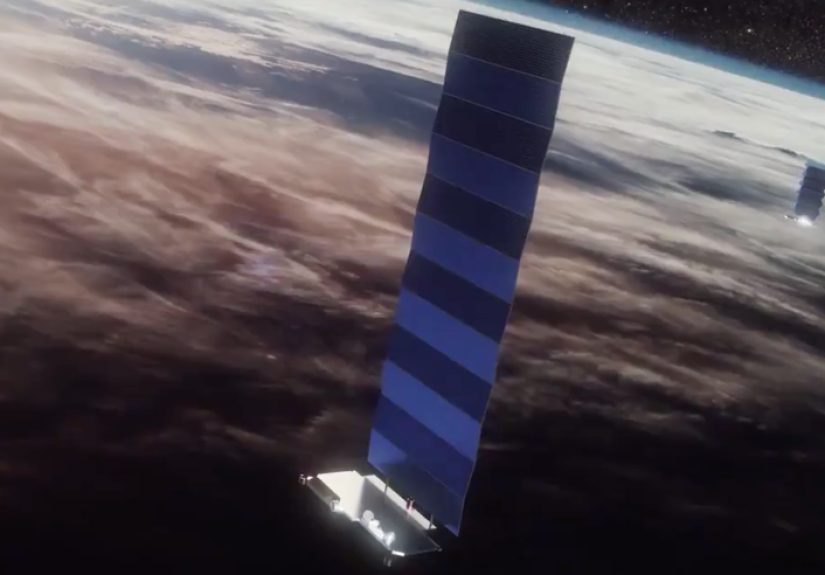
Starlink is a “megaconstellation”: a large fleet of satellites in low Earth orbit (LEO) designed to provide
global broadband. LEO satellites move fast across the sky compared with traditional geostationary satellites,
and they can appear surprisingly bright, especially shortly after launch or when sunlight hits reflective
surfaces at just the wrong angle.
From “One Satellite” to “A Whole Traffic System”
Astronomers aren’t reacting to a single streak here or there. The concern is scale: the sky is not an infinite
canvas when you’re doing precision surveys, hunting faint asteroids, or measuring the brightness of distant
galaxies. Even a small fraction of contaminated images becomes a big problem when your telescope takes millions
of exposures over years.
And this isn’t only a ground-based issue. Recent research is also raising alarms that a crowded LEO environment
could increasingly contaminate images taken by space telescopes that operate within or near the same orbital
neighborhood as these satellites.
How Satellites “Pollute” the Sky Without Emitting Smoke
Traditional light pollution comes from the ground: streetlights, billboards, stadiums, and the neighbor who
treats their backyard like an airport runway. Satellite light pollution is different. It’s primarily sunlight
reflecting off spacecraft surfacesmeaning the satellite can be visible even when your local sky is otherwise
dark.
Satellite Trails: The Photobomb You Can’t Ask to Leave
In long-exposure images, satellites often appear as bright lines. For professional observatories, those lines
don’t just “ruin the vibe”they can ruin data. Automated pipelines can sometimes mask trails, but masking means
losing information. If you’re surveying the sky for faint objects or subtle patterns, losing pixels isn’t a
harmless cosmetic fix. It’s missing evidence.
Public images from observatories have shown what this looks like in practice: multiple parallel streaks crossing
a single frame, especially soon after launches when satellites travel in close formation. Those dramatic images
are a visual shorthand for a deeper technical problem: the more satellites there are, the more often an exposure
will be intersected by something bright and moving.
Brightness Matters: A “Magnitude” Goal With Huge Consequences
Astronomers use magnitude to describe brightness. The community has pushed for satellites to be made faint
enough that they’re difficult to see with the naked eyeoften expressed as a target around 7th magnitude for
operational satellites. That number isn’t arbitrary; it’s tied to the needs of wide-field surveys and the
reality that even moderately bright trails can cause outsized harm when the same region of sky is observed
repeatedly.
Why Vera C. Rubin Observatory Is Often Mentioned in the Same Breath as Starlink
If modern astronomy had a “most likely to be affected by streaks” yearbook award, the Vera C. Rubin Observatory
would be a finalistnot because it’s fragile, but because it’s ambitious. Rubin’s Legacy Survey of Space and
Time (LSST) is designed to image huge swaths of the sky again and again, building a time-lapse map of the
universe to study dark matter, exploding stars, near-Earth asteroids, and more.
Wide Field + Many Exposures = More Chances for Trails
Rubin’s camera sees a very large patch of sky at once, and it will take an enormous number of exposures over its
survey lifetime. That combination raises the odds that a satellite will cross the field of view during an
exposure. Even if only a modest percentage of images are affected, the absolute number can be significant.
It’s Not Just the Bright LineIt’s the Side Effects
One reason Rubin appears in so many discussions is that the impact can go beyond the visible streak. Some
detectors can produce additional artifacts (such as electronic cross-talk effects) that create fainter echoes of
a bright trail, spreading the contamination beyond the single line you’d expect. In other words: one bright
satellite can be messier than it looks.
Space Telescopes Aren’t Immune, Either
It’s tempting to assume space telescopes are safe because they’re “above the atmosphere.” But if a telescope is
operating in or near LEO, it’s sharing space with the same growing satellite population. Recent analyses suggest
that if megaconstellation plans expand dramatically, a significant fraction of images from certain space
telescopes could include satellite trailssometimes at very high rates for wide-field instruments.
That matters because space telescopes are often built to answer questions you can’t tackle from the ground:
infrared surveys, ultraviolet observations, and stable, high-precision measurements. If satellite trails become
routine, it’s not only a nuisance; it’s a structural change in how effectively we can use some of humanity’s
most expensive scientific tools.
What SpaceX Has Done (And Why Astronomers Still Aren’t Relaxing)
SpaceX didn’t ignore astronomers. The company tested and deployed changes specifically aimed at reducing
visibilitymost famously, efforts such as darkening treatments and sun visors designed to limit sunlight
reflection toward Earth.
Mitigations: Dark Coatings, Visors, and Design Tweaks
Early mitigation attempts included experimenting with darker surfaces to reduce reflectivity. Later approaches
emphasized visors and geometryblocking sunlight from hitting the most reflective parts of the satellite in ways
that would be visible to observers on the ground. SpaceX has also described “best practices” and continuing
design iterations for newer generations of satellites.
These steps appear to help, but astronomers’ worry isn’t only “Are satellites a bit dimmer?” It’s also:
How many satellites will there be? Even dim satellites can be numerous enough to create a
meaningful impact. Plus, brightness is not perfectly consistentorientation changes, reflective angles, and
occasional “flares” can produce brief but intense brightening.
The Hard Truth: Mitigation Doesn’t Scale as Fast as Launches
Astronomers fear they’re stuck in an uneven race: satellites can be launched quickly, while scientific
mitigationsoftware updates, observation planning, detector calibration, policy frameworkstakes time. A single
company can add thousands of spacecraft faster than global scientific institutions can adapt shared standards
and regulatory systems.
It’s Not Only Optical Astronomy: The “Dark and Quiet Skies” Problem
Preserving the night sky isn’t just about what you see. Radio astronomy depends on extremely sensitive
instruments that can detect faint signals from space. Satellite communications introduce concerns about radio
interference, spectral management, and coordinationespecially as more systems operate and bandwidth demands
grow.
Regulators have acknowledged these concerns in licensing and review processes, and scientists have urged that
satellite operations consider both visible and radio impacts. The phrase “dark and quiet skies” captures the
bigger picture: the sky should be dark enough for optical work and quiet enough for radio science.
So What Do Astronomers Want, Exactly?
Contrary to the most dramatic takes, astronomers aren’t asking to turn off the internet and return to carrier
pigeons. The core requests are about limits, transparency, and coordinationrules of the road for a sky that has
become an active industrial zone.
Commonly Proposed Solutions
- Brightness standards: Make satellites faint enough during operational phases to reduce naked-eye visibility and minimize damage to sensitive surveys.
- Accurate position data: Provide precise orbital information so observatories can predict satellite passes and plan around them when possible.
- Operational coordination: Develop shared protocols between operators and astronomers for avoidance windows, special observing campaigns, and rapid communication.
- Thoughtful orbit choices: Consider altitude and orbital behavior in ways that reduce long-term visibility impacts while balancing safety and sustainability.
- Deorbit and debris responsibility: Ensure satellites reliably deorbit at end of life to reduce congestion and riskbecause collisions create long-lasting problems for everyone.
Why the Fight Feels Like It’s Slipping Away
When astronomers say they fear they’re losing, they’re reacting to momentum. Satellite deployments are moving
faster than consensus standards. Regulations vary by country, while the sky is shared by all countries. And
satellite fleets compete in a market where speed can be an advantagemeaning “wait for global policy alignment”
is not a strategy any one company is incentivized to choose.
The Cultural Angle: The Night Sky Is More Than Data
There’s also a human side that doesn’t fit neatly into technical charts. The night sky is part of cultural
heritage. It’s navigation history, storytelling, art, and identity. For many communitiesincluding Indigenous
peoplesthe sky is not just scenery; it’s a living map of meaning. When the sky changes, it changes something we
all share, whether or not we can quantify it in magnitudes.
Can Astronomy Adapt? Yes. Will It Be Free? Absolutely Not.
Astronomers are not helpless. They’re adapting in real time: improving trail-detection algorithms, designing
observation schedules that reduce exposure during high-risk twilight periods, and building data pipelines that
can flag and mask trails more effectively. Researchers have modeled how satellite trails affect different types
of telescopes and exposures, and observatories are incorporating that knowledge into operational planning.
But adaptation comes with costs: lost observing time, more complicated pipelines, reduced data quality, and extra
work for scientists who already spend plenty of nights fighting clouds, instrument quirks, and funding cycles.
The fear is not that astronomy ends. The fear is that the “tax” on astronomy keeps risingand the bill is paid in
missed discoveries.
What a “Win” Could Look Like
A realistic win is not “no satellites.” It’s a future where connectivity and curiosity coexist without one
quietly kneecapping the other. That means:
- Stronger, widely adopted brightness targets for operational satellites, backed by measurement and accountability.
- Reliable coordination infrastructure between operators and observatories, so prediction and mitigation are routine rather than improvised.
- Policy frameworks that treat LEO as a shared environment, not a first-come, first-served billboard space.
- Ongoing engineering improvements that reduce reflectivity without creating new risks (like overheating or operational instability).
If that sounds complicated, it is. But so is building a planet-spanning internet system in orbit. We’re already
doing hard things. The question is whether we’ll do the hard things that protect science and the night sky at
the same time.
Conclusion: A Sky Worth Sharing
Starlink is an engineering achievement and, for many users, a lifeline. It’s also a reminder that the night sky
is no longer purely “nature.” It’s becoming infrastructurebright, busy, and increasingly privatized in practice,
even if it remains public in principle.
Astronomers aren’t fighting progress. They’re fighting for balance: a future where the sky can support both the
practical needs of life on Earth and the scientific need to study what lies beyond it. Preserving the night sky
doesn’t mean freezing technology in place. It means designing, regulating, and operating that technology with
the humility to remember that the cosmos is still the main eventand our hardware should not be the loudest
thing in the room.
Experiences From the Front Lines: What This Looks Like in Real Life
Talk to astronomers and you’ll notice something: the frustration isn’t abstract. It shows up in the small,
stubborn moments when science meets an unexpected bright line.
One observatory engineer described the new normal as “planning the night twice.” First you plan the observing
program the classic waytargets, weather, moon phase, instrument setup. Then you plan it again with a mental map
of satellite traffic, especially around twilight. Some nights it feels manageable; other nights it feels like
trying to photograph birds while someone keeps tossing streamers through your frame. You can still get a great
picture, but you’ll spend more time cleaning up than creating.
For survey teams, the experience is less dramatic but more relentless. A graduate student working on automated
data processing might start the evening excited about a clean dataset and end it writing code to detect, flag,
and mask trails. That sounds like a simple “software fix,” until you realize masking is a trade: you preserve the
rest of the image, but you lose information where the trail passes. Over thousands of images, that loss can
create subtle biasesespecially when you’re measuring faint galaxies, searching for dim moving objects, or
comparing brightness across time. In the lab, it becomes a constant question: “Is this signal astrophysics, or
is it a leftover artifact from something that wasn’t supposed to be in the picture?”
Amateur astrophotographers have their own version of the story. You finally get a clear night, drive away from
city lights, carefully polar-align your mount, and start a long exposure on a nebula you’ve wanted for months.
When you review the frame, the target is therebut it’s decorated with a bright diagonal line that looks like a
cosmic scratch. The first time it happens, it’s almost funny (“Congrats, you captured modernity!”). The fifth
time, it becomes a mood. People swap tips: shorten exposures, stack more frames, reject contaminated images, or
shoot at times when satellites are less visible. The hobby adapts, but the magicthe feeling of a clean, ancient
skytakes a hit.
Perhaps the most striking experiences come from public star parties. Astronomers and educators love showing
people Saturn’s rings or Jupiter’s moonsthose moments where a kid gasps and an adult suddenly remembers they
live on a planet in a universe. Now, it’s not uncommon for someone to point at a moving chain of lights and ask,
“What’s that?” The educator gives an honest answer: “Satellites.” Sometimes the crowd is impressed. Sometimes
they’re annoyed. Almost always, the conversation shifts from the wonder of deep time to the mechanics of modern
systems. That’s not inherently badspace technology is fascinating. But it’s revealing: the night sky is becoming
less like a wilderness and more like a roadway.
These experiences don’t prove catastrophe. They prove change. And that’s exactly why astronomers are pushing so
hard for standards and cooperation nowbecause once a new normal is established in orbit, it’s very difficult to
roll back. The goal isn’t to “win” against Starlink. It’s to ensure the night sky remains usablefor science, for
culture, and for anyone who wants to look up and feel small in the best possible way.