Table of Contents >> Show >> Hide
- What Counts as Wind Damage?
- Key Wind Damage Statistics for 2025
- Why Wind Damage Costs Keep Rising
- 2025 Wind Damage by Storm Type
- States and Regions Most Exposed to Wind Damage
- What Homeowners Should Learn from 2025
- Business and Community Impacts
- Practical Wind Damage Prevention Checklist
- Experience Notes: What Wind Damage Looks Like in Real Life
- Conclusion
If 2025 taught homeowners anything, it is this: wind does not need a dramatic movie soundtrack to become expensive. A thunderstorm line, a downburst, a derecho, a tornado, or a hurricane-adjacent squall can turn patio furniture into airborne confetti and shingles into neighborhood souvenirs. Wind damage statistics in 2025 show that the United States continued to face a costly, widespread, and surprisingly ordinary threat from severe convective storms, especially thunderstorms that produce damaging straight-line winds, hail, and tornadoes.
The big picture is simple but not exactly comforting. Severe convective storms were among the most expensive natural catastrophe drivers in the United States in 2025. According to insurance-industry catastrophe data summarized by the Insurance Information Institute and Aon, severe convective storms caused 52 U.S. catastrophe events, 138 fatalities, about $67.9 billion in economic losses, and about $52.3 billion in insured losses during 2025. That means wind-related storm systems were not a footnote in the year’s disaster ledger. They were one of the main characters, and they did not ask politely before entering the scene.
What Counts as Wind Damage?
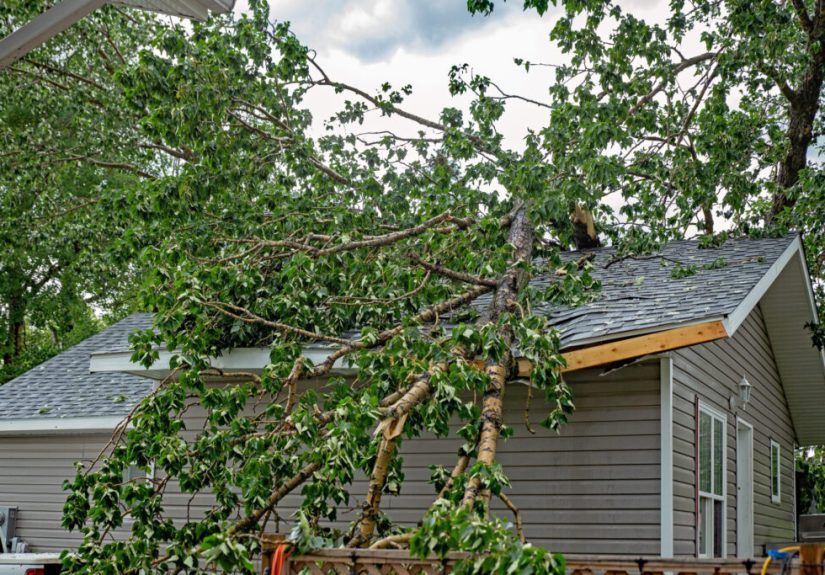
Wind damage usually refers to physical damage caused by strong air movement during thunderstorms, tornadoes, tropical cyclones, winter storms, derechos, or non-thunderstorm wind events. For homeowners, it often appears as missing shingles, torn flashing, damaged siding, broken windows, cracked fences, crushed vehicles, downed trees, ruined gutters, and garage doors that suddenly look like they lost an argument with a freight train.
The National Weather Service considers a thunderstorm “severe” when it produces wind gusts of 58 mph or greater, hail of at least one inch in diameter under modern national criteria, or a tornado. Wind gusts from 58 to 74 mph can cause minor structural damage, gusts from 75 to 91 mph can cause moderate damage, and violent gusts above 92 mph can cause major damage. In practical terms, that means a storm does not need to reach hurricane status to peel roofs, snap trees, and knock out power.
Key Wind Damage Statistics for 2025
1. Severe Convective Storms Were a Major U.S. Loss Driver
In 2025, severe convective storms were responsible for more than $67 billion in U.S. economic losses and over $52 billion in insured losses. These storms include damaging wind, tornadoes, hail, and intense thunderstorm activity. The category matters because many people still imagine “big disaster” as a hurricane with a name. In 2025, many of the most repeated losses came from storms that arrived with no celebrity branding at all.
Globally, Swiss Re reported that severe convective storms generated roughly $51 billion in insured losses in 2025, marking another year in which these storms remained above the $50 billion level. The United States carried a large share of that burden because of high property values, widespread insurance coverage, dense development, and plenty of roofs sitting in storm-prone areas like expensive targets at a county fair.
2. Wind and Hail Remained the Biggest Homeowners Insurance Claim Category
Wind and hail have long dominated homeowners insurance claims, and 2025 fit into that larger trend. Insurance Information Institute data for 2019 through 2023 shows that wind and hail accounted for the largest share of homeowners insurance losses. In 2023, wind and hail represented 42.5% of homeowners insurance losses by cause. For the 2019–2023 period, wind and hail had a claim frequency of 2.8 claims per 100 insured house-years and an average claim severity of $14,747.
That number is especially useful because it turns “storm risk” into something less abstract. A missing roof section, interior water intrusion, a shattered skylight, or a fallen tree can easily turn into a five-figure repair. The storm may last 20 minutes; the claim paperwork can have the emotional lifespan of a small Victorian novel.
3. Straight-Line Winds Often Cause More Reports Than Tornadoes
Tornadoes attract the headlines, and understandably so. They are violent, visually terrifying, and often catastrophic. But straight-line thunderstorm winds are also a major source of damage. The National Weather Service notes that in most years there are far more damage reports from straight-line thunderstorm winds than from tornadoes. Downbursts, microbursts, and derechos can all produce destructive winds without tornado rotation.
A derecho is a long-lived, damaging thunderstorm wind event with a damage swath extending more than 240 miles and wind gusts of at least 58 mph along much of its path. In July 2025, a derecho swept across parts of the Upper Plains and Midwest, with reported gusts reaching 99 mph in Iowa. That is not “a little breezy.” That is “your trampoline has started a new life in another county.”
4. 2025 Was Another Expensive Year Even Without a Major U.S. Hurricane Landfall
One of the more striking facts about 2025 is that U.S. hurricane landfalls were not the main reason insured catastrophe losses stayed elevated. Severe thunderstorms, tornadoes, hail, wildfires, and flooding carried much of the financial weight. This is important for homeowners far from the coast. Wind damage is not only a Florida, Louisiana, or Texas coastline problem. The Midwest, Great Plains, Southeast, Ohio Valley, and parts of the Northeast all deal with damaging wind events.
That shift in awareness matters. A homeowner in Missouri, Iowa, Arkansas, Tennessee, Georgia, Illinois, or Ohio may never board up windows for a Category 3 hurricane, but that does not mean their home is safe from 70 mph thunderstorm winds, falling trees, or roof uplift during a severe spring outbreak.
Why Wind Damage Costs Keep Rising
More Homes Are in Harm’s Way
Wind damage statistics are not only about weather. They are also about exposure. More homes, larger homes, higher property values, and expanding suburbs all increase the total cost when storms hit. A thunderstorm crossing empty prairie produces weather data. A thunderstorm crossing a metro area produces insurance claims, traffic lights dangling like earrings, and group chats full of “Is your power out too?”
Repair Costs Are Higher
Construction inflation has made every damaged roof, broken window, and crushed fence more expensive to fix. Labor shortages, material costs, supply-chain delays, and local demand surges after storms can raise repair bills quickly. When thousands of homes in the same region need roofing crews at the same time, prices rarely become friendlier. They become “please sit down before reading this estimate” friendly.
Roofs Are the Front Line
The roof is usually the first and most important battlefield in a wind event. Once shingles fail, water can enter through the roof deck, attic, insulation, drywall, and electrical systems. A small opening can become a large interior claim if rain follows the wind. That is why roof condition, installation quality, decking attachment, flashing, sealed roof decks, and roof-to-wall connections are central to wind mitigation.
Garage Doors and Openings Matter
Large openings are another weak point. FEMA-style mitigation guidance often focuses on windows, doors, garage doors, roof systems, and windborne debris protection. A failed garage door can let wind pressurize the interior of a home, increasing stress on the roof and walls. In storm-prone regions, a wind-rated garage door may not be glamorous, but neither is watching your roof try to become a convertible.
2025 Wind Damage by Storm Type
Thunderstorm Wind
Thunderstorm wind damage includes downbursts, microbursts, gust fronts, and squall-line winds. These events can topple trees, damage roofs, flip high-profile vehicles, destroy sheds, and cause widespread power outages. The National Weather Service estimates that roughly 100,000 thunderstorms occur in the United States each year, with about 10% becoming severe. In 2025, the most damaging thunderstorm systems were often part of broader severe convective storm outbreaks.
Tornado Wind
Tornadoes are narrower than many straight-line wind events, but their wind speeds can be far more intense. In 2025, a rare EF5 tornado struck North Dakota, ending a long U.S. gap without the highest Enhanced Fujita rating. The event was a reminder that the strongest tornadoes remain rare, but not extinct. Tornado damage can erase structures, debark trees, throw vehicles, and leave damage patterns that require detailed forensic surveys to classify.
Derechos
Derechos are especially dangerous because they can travel hundreds of miles and affect multiple states in one event. They often bring widespread tree damage, power outages, crop losses, and building damage. The July 2025 derecho across the Upper Plains and Midwest showed how a single windstorm complex can create hurricane-force gusts far from any ocean.
Tropical Cyclone Wind
Although 2025 did not produce the same kind of major U.S. hurricane-loss story seen in some previous years, tropical cyclone wind remained part of the national risk picture. Even weaker tropical systems can produce damaging gusts, tornadoes, and wind-driven rain. Coastal homeowners still need hurricane-rated protection, but inland homeowners should not assume tropical remnants are harmless once the storm loses its famous name.
States and Regions Most Exposed to Wind Damage
Wind damage risk is not distributed evenly. The Great Plains and Midwest face frequent severe thunderstorm winds, hail, derechos, and tornadoes. The Southeast sees tornadoes, squall lines, tropical remnants, and tree-related wind losses. The Gulf and Atlantic coasts face hurricane and tropical-storm wind. The Mountain West and High Plains can experience strong non-thunderstorm winds. The Northeast may see fewer classic Plains-style outbreaks, but dense tree cover and older infrastructure can make even moderate wind events disruptive.
Texas often appears near the top of severe convective storm risk discussions because it combines large population centers, high property exposure, hail-prone geography, tornado risk, and thunderstorm wind. But 2025 also reinforced that the wind-loss map is broad. Iowa, South Dakota, Minnesota, Arkansas, Missouri, Tennessee, Georgia, North Carolina, Ohio, and Illinois all sit in regions where wind can become a serious property threat.
What Homeowners Should Learn from 2025
Insurance Should Be Reviewed Before Storm Season
Wind damage claims can be complicated by deductibles, exclusions, roof age restrictions, cosmetic damage rules, matching limitations, and separate hurricane or windstorm deductibles in some states. Homeowners should review dwelling limits, other structures coverage, personal property coverage, loss-of-use coverage, and deductibles before severe weather season. Reading your policy after the tree is already in the living room is technically possible, but emotionally inefficient.
Maintenance Reduces Losses
Not every wind loss can be prevented, but many small failures can be reduced. Trim dead branches, inspect shingles, seal roof penetrations, clear gutters, secure loose siding, check fence posts, anchor sheds, and bring patio furniture inside before severe storms. A $40 prevention task can sometimes prevent a $4,000 headache.
Fortified Construction Works
IBHS research and state insurance studies continue to show that stronger construction standards can reduce storm claims. In a 2025 review involving Hurricane Sally performance, homes with a FORTIFIED designation were more than 70% less likely to file a claim, and when claims occurred, damage was less severe. This supports a simple lesson: better roofs, stronger connections, sealed decks, and verified installation standards can materially change outcomes.
Business and Community Impacts
Wind damage is not only a household problem. Businesses lose inventory, signage, roof systems, equipment, and operating time. Schools and municipal buildings may need emergency repairs. Utilities face downed poles, damaged substations, and blocked access roads. Agricultural operations can lose barns, grain bins, irrigation systems, fencing, and crops. In 2025, severe convective storms again showed that wind damage is both a property issue and a community resilience issue.
Power outages are one of the most common secondary impacts. When wind knocks down trees and power lines, homes lose refrigeration, medical equipment support, internet access, air conditioning, and sometimes water service. For businesses, even a short outage can disrupt payments, production, scheduling, and customer service. In other words, wind damage statistics undercount the annoyance factor. The spreadsheet says “property loss.” The homeowner says, “I just threw away everything in my freezer.”
Practical Wind Damage Prevention Checklist
- Inspect your roof at least once a year and after major storms.
- Replace missing, curled, or cracked shingles promptly.
- Consider a sealed roof deck when replacing your roof.
- Upgrade to wind-rated garage doors in high-risk areas.
- Install impact-rated windows, shutters, or pre-cut plywood protection where appropriate.
- Trim weak or overhanging tree limbs before storm season.
- Secure outdoor furniture, grills, trash cans, and play equipment.
- Photograph your home and belongings for insurance documentation.
- Keep emergency tarps, basic tools, batteries, and a weather radio available.
- Know your safe room or interior shelter location before warnings are issued.
Experience Notes: What Wind Damage Looks Like in Real Life
The numbers are useful, but wind damage becomes real when you stand in a yard the morning after a storm. The first thing people often notice is not the roof. It is the silence, followed by the chainsaws. Branches are everywhere. A fence panel is leaning like it has had a long week. The neighbor’s recycling bin has migrated two blocks away and is now legally part of another household. Then someone looks up and sees shingles missing from the roof ridge.
One common experience after damaging wind is confusion. From the ground, a roof may look “mostly fine,” but wind can lift shingles, loosen flashing, or open small pathways for water. The ceiling stain may not appear until the next rain. That delay causes many homeowners to underestimate the damage. The lesson is straightforward: after a severe wind event, do not rely only on what you can see from the driveway. A professional inspection may reveal damage that is invisible from below.
Another real-world pattern is tree damage. Many wind claims begin with trees, but not always in obvious ways. A tree does not have to fall through the roof to create problems. Large limbs can scrape shingles, dent gutters, crack siding, pull service lines, or block drainage. Older trees, diseased trees, shallow-rooted trees, and saturated soil increase the risk. Homeowners often learn too late that tree maintenance is part of wind mitigation, not just landscaping. The prettiest oak in the yard can still become a 6,000-pound physics demonstration.
Power loss is another experience that statistics do not fully capture. After a major windstorm, the damage may be moderate, but the outage can make daily life difficult. Refrigerators warm up. Cell phones die. Garage doors stop working. Home offices become decorative. Families with medical equipment, infants, elderly relatives, or heat-sensitive conditions face greater risks. That is why a wind-prepared home is not only a stronger structure; it is also a home with backup charging, flashlights, medication plans, and a communication strategy.
Insurance claims bring their own lessons. The best claims usually start with documentation: photos before cleanup, videos of damaged areas, receipts for temporary repairs, and notes about when the storm occurred. Homeowners should prevent further damage when safe, such as covering broken windows or tarping roof openings, but they should avoid making permanent repairs before the insurer has inspected the loss unless emergency safety requires it. Clear documentation can make the difference between a smooth claim and a long argument conducted entirely through email attachments.
For contractors, 2025 reinforced the importance of prioritizing emergency stabilization. After widespread wind events, roofers, tree crews, restoration companies, and adjusters can become overloaded. Homeowners may wait days or weeks for repairs. This is when scams appear, too. A person knocking on the door after a storm may be a legitimate contractoror may be a clipboard with shoes. Verify licenses, insurance, local references, written estimates, and payment terms before signing anything.
The strongest experience-based lesson is that wind preparation feels boring until it is not. Nobody throws a party because they upgraded roof fasteners, reinforced a garage door, or trimmed a dead limb. But after a severe storm, those boring decisions can be the reason a home has minor repairs instead of major structural damage. Wind damage statistics from 2025 are not just numbers for insurers and meteorologists. They are a reminder that preparation is cheaper, calmer, and far less soggy than recovery.
Conclusion
Wind damage statistics for 2025 show a clear pattern: severe wind is a national property risk, not a rare coastal inconvenience. Severe convective storms generated tens of billions of dollars in U.S. losses, wind and hail remained the leading homeowners insurance loss category, and damaging straight-line winds continued to produce widespread impacts beyond tornado zones. The smartest response is not panic. It is practical preparation: stronger roofs, better openings, smarter insurance reviews, good maintenance, and faster documentation after storms.
In 2025, the wind reminded America that it does not care whether a storm has a name, a cone graphic, or a dramatic TV countdown. If the gusts are strong enough, your roof, trees, windows, garage door, and wallet are all invited to the meeting. The good news is that many losses can be reduced with planning. The best time to prepare is before the forecast says “damaging winds likely.” The second-best time is today.