Table of Contents >> Show >> Hide
- This Is Not a Regular Rock. It Is a Rare Space Rock.
- Why the Price Gets So High
- So, Is It Worth $400,000 Because It Has Gold in It?
- The Science Behind the Hype
- Can You Legally Own a Rock Like This?
- Why People Keep Paying These Prices
- But Is It Actually “Worth” $400,000?
- The Experience of Encountering a $400,000 Rock
- Final Thoughts
- SEO Tags
Most rocks are not exactly known for their star power. They sit in driveways, clog garden beds, and occasionally become the reason someone says, “Ow, my toe.” But every now and then, one rock strolls into the room with the confidence of a celebrity and a price tag big enough to make everyone spit out their coffee. That is the case here.
The “rock” behind headlines like this is not just a pretty chunk of geology. It is usually a rare meteorite, and in the most famous version of this story, a lunar meteorite: a piece of the Moon that got blasted into space by an impact, wandered through the solar system, crashed onto Earth, and later ended up on the auction block. Suddenly, that lump of stone is not yard clutter. It is a passport stamp from outer space.
So why would anyone pay about $400,000 for a rock? The answer is part science, part scarcity, part history, part luxury collecting, and part plain old human fascination. In other words, it is not just a rock. It is a cosmic survivor with a backstory better than most movie characters.
This Is Not a Regular Rock. It Is a Rare Space Rock.
First things first: expensive meteorites are not valuable because they are merely old. Earth is full of old things. Your aunt’s casserole dish might be old. A rock in the backyard might be old. That alone does not make them worth six figures.
What makes a meteorite different is origin. A meteorite is a piece of material from space that survives its fiery trip through Earth’s atmosphere and lands on the ground. Most meteorites come from asteroids, which is already cool enough to ruin normal rocks forever. But the truly elite specimens come from the Moon or Mars. These are the meteorite-world equivalent of front-row concert tickets, signed vinyl, and a backstage pass rolled into one.
In the case of a roughly $400,000 specimen, the value often comes from the fact that it is lunar. That means it originated on the Moon, was blasted off by an impact, drifted through space, and eventually landed on Earth as a natural delivery from the cosmos. NASA is not mailing moon rocks to private buyers, so meteorites are one of the few legal ways for collectors to own a piece of another world.
Why the Price Gets So High
1. Extreme rarity
Scarcity is a major driver of value. Common meteorites exist, and many are affordable by collector standards. Some basic chondrites can sell for modest prices, especially if they are small, weathered, or not visually dramatic. But lunar and Martian meteorites are a different story. They make up only a tiny fraction of known meteorites.
That scarcity matters because supply is naturally limited. Nobody is manufacturing fresh moon rocks in a warehouse outside Cleveland. If a meteorite from the Moon appears on the market, especially a large and well-preserved one, collectors know they are bidding on something they may not see again anytime soon.
2. Size matters
Yes, this is one of those situations where bigger really is better. A tiny flake of extraterrestrial material can be valuable, but a larger piece commands attention and serious money. Large specimens are rarer because meteorites often break apart during atmospheric entry or after impact. So if a big chunk survives in recognizable, display-worthy condition, the price can launch accordingly.
A substantial lunar meteorite is especially impressive because most space rocks from the Moon found on Earth are not exactly boulder-sized showboats. A larger specimen offers more surface area, more visual drama, and more opportunities for both scientific study and display. That combination is catnip for wealthy collectors and museums.
3. Provenance and authentication
In the meteorite market, “trust me, bro” is not a valid certification method. A rock becomes valuable only when experts can confirm what it is. That means classification, testing, documentation, and a chain of ownership that makes buyers feel confident they are not buying a very expensive driveway souvenir.
Provenance matters because the market rewards certainty. If a specimen is identified by respected specialists, tied to a known find location, and properly documented, its value climbs. If its story is fuzzy, the price falls faster than a bargain-bin lava lamp.
4. Scientific importance
Here is where things get especially interesting: the price is not just about collector hype. Meteorites matter to science. They preserve evidence from the early solar system and can help researchers understand how planets formed, how asteroids evolved, and what the surfaces of other worlds are like.
Lunar meteorites are valuable because they are actual material from the Moon. They offer information about lunar crust, impacts, and geological history. Martian meteorites are even more dramatic in the public imagination because, well, Mars. The Red Planet has a permanent reservation in the human imagination, and owning a piece of it sounds like the kind of thing a billionaire says at dinner parties while everyone else quietly reevaluates their life choices.
That said, scientific value and market value are not always identical. A meteorite with excellent geological context in a research collection may be more useful to scientists than a flashy auction specimen. Still, a rare, well-documented rock from the Moon or Mars can hold real scientific importance, which boosts its cultural and financial appeal.
5. Beauty and display value
Some meteorites are valuable because they are visually stunning. Pallasites, for example, can reveal glowing green olivine crystals when cut and polished. Iron meteorites can show striking metallic patterns. Lunar meteorites tend to be subtler, but rarity plus story often outweigh pure beauty.
Collectors are not only buying chemistry. They are buying conversation. A meteorite displayed in a private library, gallery, office, or museum lobby has a kind of instant drama that a normal decorative rock simply cannot match. One says, “I shop at the garden center.” The other says, “I own part of the Moon.” Different energy entirely.
So, Is It Worth $400,000 Because It Has Gold in It?
Not necessarily. This is one of the biggest misconceptions about expensive rocks. A meteorite does not have to contain precious metals in the jewelry-store sense to be valuable. In many cases, the price has less to do with raw mineral content and more to do with rarity, origin, condition, and demand.
Think of it this way: a handwritten note from a famous astronaut could be worth more than a box of printer paper, even though both are made from paper. The material is not the point. The story is the point.
That story becomes more compelling when the rock can be traced to the Moon, Mars, or a witnessed fall. A meteorite seen streaking through the sky and quickly recovered often sells for more because its origin story is vivid and immediate. Humans love a good narrative, and the market does too.
The Science Behind the Hype
Meteorites are not just expensive souvenirs from space. They are records of deep time. Many preserve material from the earliest chapter of the solar system, making them useful to scientists studying planetary formation. Some contain minerals and chemistry that help researchers reconstruct the environments of their parent bodies. Others have offered clues about water, volcanic activity, and organic chemistry beyond Earth.
That is part of why people care so much. A meteorite can be collectible, yes, but it can also be evidence. It is a natural sample returned to Earth without a billion-dollar mission budget. Space agencies launch spacecraft to gather tiny amounts of material from distant worlds. Then a meteorite falls into a desert and basically says, “You’re welcome.”
Of course, researchers often prefer samples collected with precise geological context. A rock gathered directly during a mission comes with location data and environmental clues. Meteorites arrive with more mystery. Even so, they remain immensely important, especially when material from another world is otherwise hard or impossible to obtain.
Can You Legally Own a Rock Like This?
Usually, yes, but the answer depends on where it was found and who had rights to the land. In the United States, meteorites found on private property generally belong to the landowner. On certain public lands, casual collecting may be allowed under specific rules, but that does not mean you can roll in with heavy equipment and start acting like an interplanetary pirate.
Legal ownership matters a great deal in the high-end market. A wealthy buyer paying six figures wants more than a cool object. They want clean paperwork, legitimacy, and a specimen that will not become the star of an awkward court case.
This legal side also adds tension to the meteorite trade. Scientists often want rare specimens preserved for research, while collectors want to own, display, and invest in them. Auction houses, dealers, museums, and researchers all meet in the same strange little ecosystem where geology and economics shake hands and immediately start negotiating.
Why People Keep Paying These Prices
At a certain level, a $400,000 meteorite makes perfect sense because people do not buy luxury objects for practical reasons alone. Nobody needs a moon rock. Nobody needs a vintage race car or a first-edition comic book either. Value grows where rarity, status, beauty, and emotional pull intersect.
A rare meteorite checks every one of those boxes. It is scarce. It is scientifically meaningful. It has bragging rights built in. It can sit in a case and silently dominate a room. It appeals to collectors of natural history, luxury objects, science memorabilia, and one-of-a-kind curiosities. That means multiple buyer pools can chase the same item, which is exactly how prices get spicy.
Also, let us be honest: people love owning impossible things. A meteorite from the Moon feels impossible right up until someone slaps a paddle number in the air and buys one. Wealthy collectors are often chasing that feeling as much as the object itself.
But Is It Actually “Worth” $400,000?
That depends on how you define worth. If you mean practical use, probably not. It will not mow the lawn, lower your taxes, or make your inbox less terrifying. If you mean scientific, historic, cultural, and collector value combined, then yes, it absolutely can be.
Markets are built on what humans agree is meaningful. We pay high prices for paintings, rare books, watches, fossils, and sports memorabilia because they carry stories people want to possess. Meteorites do the same thing, except their story begins long before Earth had oceans, forests, or bad reality television.
That is the magic. You are not paying for a rock in the ordinary sense. You are paying for rarity you can touch, history older than civilization, science you can display, and the thrill of owning a literal fragment of another world.
The Experience of Encountering a $400,000 Rock
There is also something hard to quantify about the experience itself, and this is where the topic gets even more fascinating. A person can read the auction estimate, nod politely, and still think, “Sure, but it is a rock.” Then they stand in front of a genuine lunar or Martian meteorite, and their brain quietly changes teams.
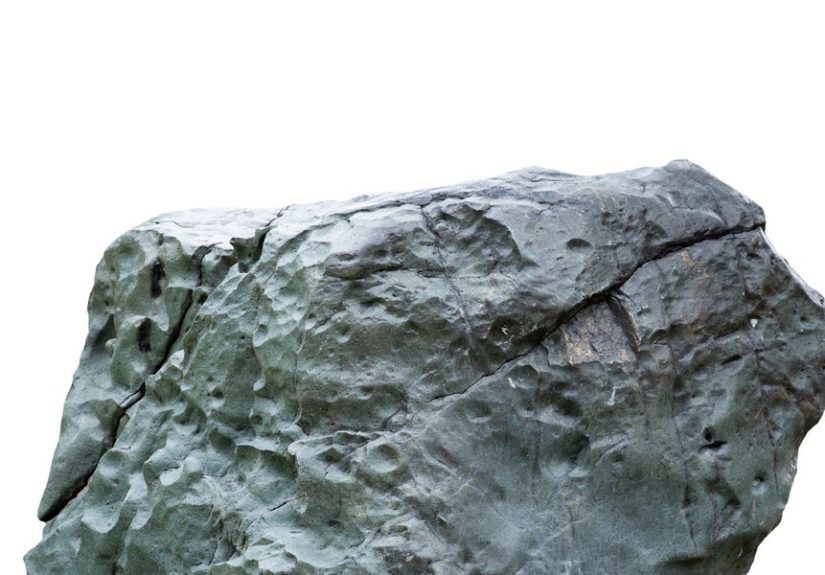
Part of that experience is scale. People expect exotic objects to be huge, shiny, or obviously dramatic. But a rare meteorite can look modest at first glance. It may seem dark, rough, even plain. Then someone explains what it is, where it came from, and what had to happen for it to land here at all. Suddenly the object expands in your mind. It stops being a stone and becomes a timeline.
Collectors often describe a sense of disbelief when handling or viewing such specimens. You are looking at something that formed in space, survived violent impact history, endured atmospheric entry, and outlasted nearly everything humans have ever built. That perspective creates a strange emotional cocktail: awe, curiosity, tiny existential panic, and the immediate urge to say, “Okay, this is actually incredible.”
Museum visitors experience something similar. Children usually get there first. They do not need a lecture on scarcity curves or auction psychology. Tell them, “This came from the Moon,” and they are sold. Adults pretend to be more sophisticated, but not for long. Before you know it, everyone is leaning in toward the display case like the rock might suddenly whisper secrets about the universe.
Scientists, of course, experience these rocks differently. For them, a valuable meteorite is not just a wonder-object. It is a source of data. Texture, mineralogy, chemistry, shock features, and weathering all tell part of the story. A single specimen can open questions about lunar crust, asteroid collisions, or the transport of material through space. In that setting, the thrill is not only emotional. It is intellectual. The rock is a puzzle that has traveled billions of miles to be solved.
Then there is the auction-room experience, which is its own brand of theater. The room is calm on the surface, but underneath it is full of adrenaline. One bidder sees science. Another sees prestige. Another sees a long-term collectible. Another simply wants the coolest object any dinner guest has ever seen on a bookshelf. The rock just sits there, completely unbothered, while humans assign it escalating numbers and increasingly dramatic levels of desire.
That gap between appearance and meaning is what makes the experience memorable. A diamond looks expensive. A meteorite often does not. It earns its price through story, rarity, and context. Once you understand that, the number stops sounding ridiculous and starts sounding almost inevitable.
So the experience of a $400,000 rock is not really about staring at a lump of stone. It is about feeling the distance between everyday life and cosmic history collapse into one object. It is about realizing that something can look humble and still be extraordinary. And honestly, that may be the most valuable lesson the rock has to offer.
Final Thoughts
Why is this rock worth $400,000? Because it is not selling as landscaping material. It is selling as rarity, science, history, provenance, and wonder in one compact package. The rock is valuable because it traveled farther than any luxury item in your neighborhood, carries a more dramatic backstory than most antiques, and represents a world humans dream about visiting.
Put simply, the price is not for the rock alone. It is for the fact that this rock should not even be here in the first place. And yet, here it is, sitting on Earth, making ordinary geology look painfully underqualified.