Table of Contents >> Show >> Hide
- Why “…” Feels So Loud in Texts
- The Main Keyword Question: What Does … Mean in a Text from a Girl?
- 1) She’s Pausing (Thinking, Processing, Choosing Words)
- 2) She’s Softening the Message (Trying Not to Sound Harsh)
- 3) She’s Hinting at Subtext (The “You Can Connect the Dots” Dots)
- 4) She’s Annoyed (But Not Ready to Start World War III)
- 5) She’s Disengaging (Low Energy, Low Investment, or Low Bandwidth)
- 6) She Texts Like That (It’s a Habit, a Style, or a Generational Thing)
- How to Tell Which Interpretation Is Right
- What to Reply When You Get “…” (Quick Scripts)
- Common Mistakes to Avoid
- Conclusion
- Extra: of Real-Life Experience With “…” (So You Don’t Lose Your Mind)
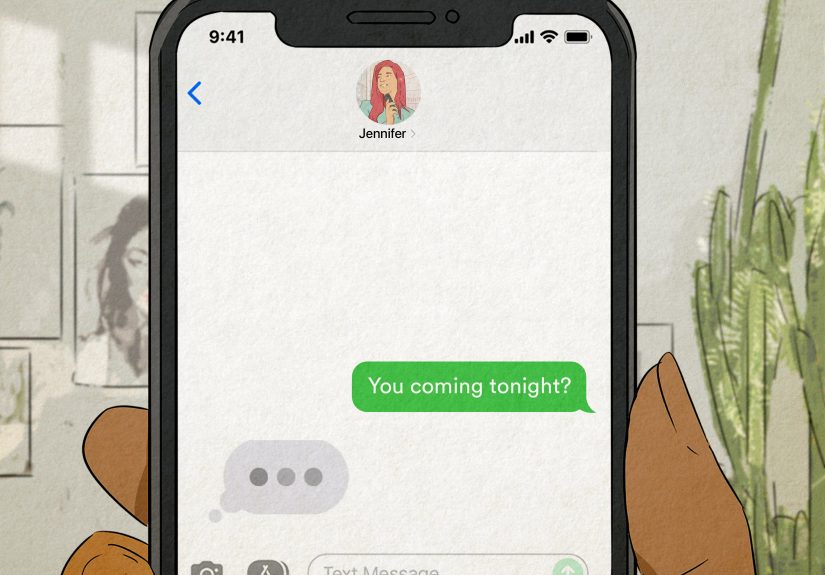
Three tiny dots. One giant spiral. If you’ve ever gotten a text from a girl that ends with
“…”, congratulationsyou’ve just received the modern-day equivalent of a raised eyebrow.
In formal writing, an ellipsis is supposed to show an omission or a trailing thought. In texting, though,
punctuation becomes tone. Researchers and linguists have noted that people use punctuation to replace
facial expressions and vocal cues, and that the “same” message can feel warmer or colder depending on what’s
at the end of it. That’s why a period can read as abrupt, and why an ellipsis can feel like a long pause you
can hear through the screen.
So what does “…” mean in a text from a girl? It can mean several thingsand context is the boss
of this whole operation. Below are six common interpretations, how to tell which one you’re dealing with,
and what to do next (without panicking, over-apologizing, or writing a 14-paragraph TED Talk response).
Why “…” Feels So Loud in Texts
Texting is basically conversation with the sound removed. To make up for missing tone, people use emojis,
spacing, capitalization, and punctuation as emotional “subtitles.” Studies on digital communication suggest
that punctuation can signal sincerity, enthusiasm, or abruptnessand that even tiny marks can change how a
message is perceived. That’s why “Sure.” can feel different than “Sure,” and why “Thanks…” can make your
stomach do a little backflip.
Add in generational habits (some people learned ellipses as a friendly “and so on,” while others read it as
ominous suspense), and you’ve got a perfect recipe for misinterpretation. In other words: sometimes the dots
are deep. Sometimes the dots are just dots.
The Main Keyword Question: What Does … Mean in a Text from a Girl?
Here are the six most common meanings of ellipses in textingespecially in dating, flirting, and
relationship-ish situationsplus specific examples and the safest next move.
1) She’s Pausing (Thinking, Processing, Choosing Words)
What it usually means
The ellipsis can be a digital pauselike she’s thinking in real time, or she’s not ready to fully land the
sentence yet. This is the “I’m processing” interpretation, not the “I’m mad” interpretation.
How to spot it
- Her text is reflective, emotional, or careful.
- She follows up with another message soon after.
- The conversation topic is serious or personal.
Examples
Her: “I don’t know… I’ve just had a weird week…”
Her: “I’m not sure how I feel about that…”
Her: “Let me think about it…” (translation: brain buffering)
Best response
Give space without disappearing. Try: “Take your timeno pressure. I’m here.” Simple, supportive, and not
weirdly intense.
2) She’s Softening the Message (Trying Not to Sound Harsh)
What it usually means
Ellipses can act like a verbal cushion. Instead of sounding blunt, she’s adding a softer landinglike
conversational padding. In texting etiquette terms, it can be a way to keep things open-ended rather than
slamming a door with a period.
How to spot it
- She’s disagreeing, rejecting, or setting a boundarybut gently.
- She uses polite language (e.g., “I think,” “maybe,” “kinda”).
- She’s not attacking; she’s de-escalating.
Examples
Her: “I’m probably going to stay in tonight…”
Her: “That’s sweet, but I don’t think I can…”
Her: “I’m not really into that…” (a boundary with a blanket on it)
Best response
Respect it. “Totally fairthanks for telling me.” No guilt-tripping, no interrogations, no “But whyyy?”
karaoke.
3) She’s Hinting at Subtext (The “You Can Connect the Dots” Dots)
What it usually means
Sometimes “…” signals that there’s something unsaid. It can be playful (“I’m implying something
flirty”) or pointed (“I’m implying something obvious”). Linguists have noted that ellipses can function like
“you know what I mean,” where the reader fills in the missing part.
How to spot it
- The message is teasing, suggestive, or loaded with context.
- There’s an inside joke or a recent event behind it.
- She’s inviting you to pick up the vibe.
Examples
Her: “So are you always this smooth…”
Her: “I mean… you did say you were going to call…”
Her: “Well that’s one way to ask me out…” (and now it’s your move)
Best response
If it feels flirty, be flirty back (lightly). If it feels like a nudge, address it directly: “You’re rightI
dropped the ball. Calling now?”
4) She’s Annoyed (But Not Ready to Start World War III)
What it usually means
Yes, sometimes the dots are the texting equivalent of a long stare. Some readers interpret ellipses as
passive-aggressive or ominousespecially in short messagesbecause it can feel like judgment plus silence.
It’s not always anger, but it can be irritation, disappointment, or “Seriously?”
How to spot it
- The message is short.
- There’s a recent trigger (you were late, forgot something, said something dumb).
- Her tone shifted compared to earlier texts.
Examples
You: “I’ll be there at 7.”
Her: “Okay…”
You: “I didn’t mean it like that.”
Her: “Sure…”
You: “Can we talk?”
Her: “I guess…” (this is not a celebratory ellipsis)
Best response
Don’t match passive-aggressive with passive-aggressive. Go calm and clear: “I’m sensing you’re annoyed.
Did I miss something?” If you did mess up, own it quickly and specifically.
5) She’s Disengaging (Low Energy, Low Investment, or Low Bandwidth)
What it usually means
Sometimes “…” is the textual version of slowly backing out of a room while maintaining eye contact.
Not because she hates youbecause she’s tired, busy, overwhelmed, or not feeling the conversation. In some
studies and commentary about digital tone, low-effort signals (short replies, vague punctuation) can be read
as reduced enthusiasm or reduced engagement.
How to spot it
- Her replies are getting shorter over time.
- She stops asking questions back.
- The ellipsis appears in “filler” responses.
Examples
Her: “Yeah…”
Her: “Not sure…”
Her: “Maybe later…”
Her: “We’ll see…” (translation: could be “I’m busy,” could be “I’m not into this,” could be both)
Best response
Make it easy for her to step away without drama: “All goodhit me when you’re free.” Then actually give her
space. No triple-texting. No “???” interrogation. No emotional hostage negotiation.
6) She Texts Like That (It’s a Habit, a Style, or a Generational Thing)
What it usually means
Sometimes the most accurate interpretation is: she uses ellipses the way other people use commas, emojis, or
breathing. Some people learned that “…” simply means “continuing,” “etc.,” or “friendly trailing off,” and
they don’t realize it can read as ominous to others. Cultural and generational differences in punctuation
norms are real, and they cause a shocking amount of unnecessary stress.
How to spot it
- She uses ellipses in happy messages too.
- Her tone feels normal when you see her in person.
- She dots everything, including “LOL…” and “Good morning…”
Examples
Her: “Omg that’s amazing…”
Her: “I’m excited…”
Her: “Okay sounds good…” (she’s not mad; she’s just dotted)
Best response
Don’t overread it. If you’re dating and it genuinely throws you off, you can tease it gently: “I have to ask
are the dots happy dots or mysterious dots?” If she laughs, you’re fine.
How to Tell Which Interpretation Is Right
Use the “3C” Method: Context, Consistency, Change
- Context: What are you talking about? Serious topics invite pauses.
- Consistency: Does she always text like this? Habit beats hidden meaning.
- Change: Did her style suddenly shift? Sudden shift often signals emotion.
Look at the whole message, not just the dots
“Okay…” after you forgot her birthday is not the same as “Okay…” after you asked what kind of pizza she
wants. (If you forgot her birthday, the dots are the least of your problems.)
When in doubt, choose clarity over mind-reading
If the ellipsis is paired with confusion, distance, or tension, ask a simple, non-accusatory question. Tone
problems are usually solved by gentleness and specificity, not by detective corkboards.
What to Reply When You Get “…” (Quick Scripts)
- If it seems thoughtful: “No rushwhat’s on your mind?”
- If it seems annoyed: “I’m picking up some frustrationdid I mess something up?”
- If it seems flirty: “Careful… you’re going to make me blush.”
- If it seems disengaged: “All goodtalk later when you’re free.”
- If it seems like her style: “Noted: you speak fluent dots 😂”
Common Mistakes to Avoid
1) Don’t write a novel in response to three dots
If she sends “…” and you send “I just want to say I’m sorry for everything I’ve ever done including the
time I didn’t recycle,” you may accidentally create a bigger emotional event than she intended.
2) Don’t reply with “???” or “What’s wrong?” instantly
That can feel like pressure. Try curiosity with calm instead.
3) Don’t assume gender equals a single meaning
The phrase “from a girl” matters mostly because you’re reading it in a dating or relationship contextbut
communication style varies wildly. Two people can use the same punctuation for completely different reasons.
Conclusion
So, what does “…” mean in a text from a girl? It can be a pause, a softener, a hint, annoyance,
disengagement, or just her personal texting dialect. The secret isn’t decoding dots like they’re ancient runes.
The secret is reading the moment: what you were talking about, how she usually texts, and whether her style
has changed. When you respond with calm clarityand a tiny bit of humor when appropriateyou turn punctuation
anxiety into actual communication. Which is, frankly, a better love story than “I panicked and sent 11 texts.”
Extra: of Real-Life Experience With “…” (So You Don’t Lose Your Mind)
Let’s be honest: the three dots are the unofficial mascot of modern overthinking. If you’ve dated in the era
of smartphones, you’ve probably lived at least one of these moments:
The “Goodnight…” Situation
You text: “Goodnight 😊” and she replies: “Goodnight…” Now you’re lying in bed staring at the ceiling like
it’s going to explain her punctuation. Here’s the truth: sometimes she’s tired and her thumbs went with the
first predictive punctuation option. Sometimes she’s half-asleep and the dots are just a sleepy fade-out. But
if “Goodnight…” shows up right after a tense conversation, it can mean “I’m done talking for tonight, and I
need space.” The way out is simple: don’t escalate at midnight. Respond warmly and let morning be the reset.
The “Fine…” Trap
If she says “Fine…” you are not in a grammar lessonyou are in a relationship moment. The dots here often
mean “I’m fine-ish, but I’m not fine-fine.” The rookie move is to argue: “Why are you mad?” The pro move is
to invite clarity: “I want to understandwhat’s bothering you?” Then listen without prepping your defense like
you’re in court. In practice, “Fine…” is often a request for emotional labor that feels safer than direct
confrontation.
The “Sure…” vs “Sure!” Parallel Universe
“Sure!” feels enthusiastic. “Sure.” can feel clipped. “Sure…” can feel like she’s agreeing while also
expressing doubt, hesitation, or mild disappointment. A helpful trick: look for follow-up behavior. If she
agrees with “Sure…” and then actively participates (picks a time, asks questions, shows up), the dots were
probably just tone. If she agrees with “Sure…” and then disappears like a magician finishing a trick, the
dots were your foreshadowing.
The “…” as Flirtation (Yes, Really)
Not all ellipses are ominous. Sometimes they’re playful suspenselike she’s leaving a beat for you to respond.
Example: you say, “I make a great breakfast.” She replies, “Oh yeah…?” That’s not anger; that’s an opening.
The easiest win here is to match the vibe: “Dangerously great. I should come with a warning label.”
The Best Lesson: Ask Like a Normal Human
If you’re consistently confused by her punctuation, the fix is not a 47-tab research project on “ellipsis
meaning in texting.” The fix is a light, human check-in. Something like: “I always read ‘…’ as suspense.
Is that how you mean it?” This does two magical things: it reduces miscommunication, and it shows emotional
maturity. Which is surprisingly attractiveway more attractive than silently spiraling and then sending “k.”