Table of Contents >> Show >> Hide
- What Is the W202 Halo Pendant Light?
- Key Specs: The “Yes, I Read the Details” Section
- Light Quality: Why This Pendant Feels Different
- Where the W202 Halo Works Best
- Choosing the Right Size: s2 vs s3 vs s4
- Hanging Height and Spacing (So It Looks Great and Nobody Bonks Their Head)
- Dimming and Controls: Phase-Cut vs DALI (Choose Your Adventure)
- Installation Notes for U.S. Homes
- Care and Longevity
- Styling Ideas: Making It Look Like It Belongs There
- Is the W202 Halo Worth It?
- Conclusion
- Real-World Experiences With the W202 Halo Pendant Light ()
“Halo” usually implies angels, saints, or at least someone who remembers to water their plants. In this case, it’s a pendant light that
looks like a classic bulb decided to glow up (literally), put on a crisp opal outfit, and float above your table like it owns the place.
The W202 Halo pendant light is all about that quiet flex: iconic light-bulb symbolism, refined into a modern, built-in LED fixture
that’s warm, calm, and way less likely to shatter your vibe than a harsh overhead glare.
If you’re shopping for a designer pendant light that feels sculptural in daylight and cozy at nightwith real specs to back up the moodthis guide
breaks down the W202 Halo’s sizes, lighting quality, dimming options, styling ideas, and practical “will this work in my home?” considerations.
What Is the W202 Halo Pendant Light?
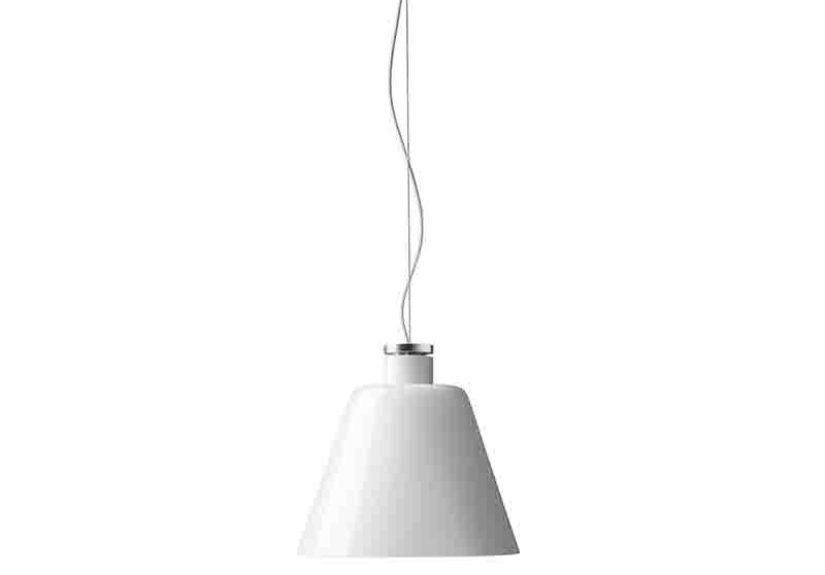
The W202 Halo is a ceiling-suspended pendant from Wästberg that pays tribute to the archetypal light bulbexcept it’s not a bulb you screw in.
It’s a complete luminaire with a built-in COB LED, wrapped in mouth-blown opal glass. The result is a piece that reads as
simultaneously familiar and slightly magical: a bulb-shaped glow nested under a conical “halo” shade.
Design That’s Quietly Clever (and Very Photogenic)
The charm is in the two-part glass composition. The “bulb” and the shade are both opal glass, so you get a soft, luminous body plus a shade that
directs light downward without turning the room into an interrogation scene. It’s the kind of light that says, “Dinner is ready,” not
“State your name and occupation.”
Materials and Finish
- Shade + bulb: mouth-blown white opal glass
- Heat sink + top plate: aluminum
- Canopy: polycarbonate
- Look: clean white, modern-classic, minimal but not cold
Key Specs: The “Yes, I Read the Details” Section
The W202 Halo is designed to be comfortable and warm, not a stadium floodlight. That’s important: it’s gorgeous as a focal point and strong at ambiance,
but most rooms still benefit from layered lighting (more on that in a minute).
At-a-Glance Technical Highlights
- Color temperature: 2700K (warm white)
- CRI: ≥ 95 (high color accuracy)
- Color consistency: 3-step MacAdam (tighter color variation across fixtures)
- LED life: L80 / 50,000 hours (long-life performance metric)
- IP rating: IP20 (indoor, dry locations)
- Protection class: Class II (double insulated)
- Light control options: phase-cut dim or DALI dim (depending on version)
Sizes and Output (s2, s3, s4)
W202 Halo comes in three shade sizes. The output is in the same neighborhood for all three; what changes most is scale, presence, and how the light
“reads” visually in the room.
| Version | CCT | Luminous Flux | System Power | Best For |
|---|---|---|---|---|
| w202 Halo s2 | 2700K | 449 lm | 7.8 W | Small tables, bedside, tight nooks, single-point glow |
| w202 Halo s3 | 2700K | 475 lm | 7.8 W | Dining tables, kitchen islands, medium rooms |
| w202 Halo s4 | 2700K | 478 lm | 7.8 W | Large tables, high ceilings, statement installations |
Light Quality: Why This Pendant Feels Different
Two lighting terms matter here more than the marketing photos: 2700K and CRI ≥ 95.
Warm white at 2700K tends to flatter skin tones, wood finishes, and dinner food (yes, even takeout). And a high CRI means colors look more like
themselvesgreens stay green, not “sad gray salad.”
CRI in Plain English
CRI is a measure of how accurately a light source renders colors compared to a reference. Higher CRI generally means more natural-looking colors.
With a CRI of 95+, the W202 Halo is positioned as a “color-friendly” pendanthelpful in dining areas, kitchens, and anywhere you care about how materials
actually look (paint colors, textiles, wood grain, and yes… your face on video calls).
About “Full-Spectrum” Claims
Wästberg describes the Halo as using a “full-spectrum” approach intended to recreate a richer color experience than standard LEDs.
Practically, what you’ll notice is the combo of warm tone + high color quality: fewer weird color shifts and a more comfortable ambience at night.
Where the W202 Halo Works Best
This is a pendant that behaves nicely in “human” spacesplaces where you sit, talk, snack, read, and live. Its downward light helps define a zone,
while the glowing opal form contributes ambient light so the fixture doesn’t disappear into darkness.
Dining Table
Over a dining table, the Halo’s shape feels appropriate (classic bulb symbolism) while the glow keeps things warm. If you want a “centerpiece” that
doesn’t look like it’s trying too hard, the s3 or s4 sizes can anchor the whole dining setup.
Kitchen Island
Over an island, the Halo reads crisp and modernespecially in white kitchens, Scandinavian interiors, or spaces with light oak and stone.
For real meal-prep task lighting, pair it with under-cabinet lights or recessed spots; let the Halo handle the vibe and the visual rhythm.
Bedroom and Bedside Corners
In bedrooms, warm dimming is your friend. The Halo’s soft diffusion can feel calmer than a bare-bulb pendant, and the form adds sculpture without
demanding you redecorate the entire room around it (we all have limits).
Using Multiple Halos
Two or three Halos in a row can create a beautiful “floating constellation” effectespecially over long islands or rectangular tables.
Keep the spacing even, and choose a size that doesn’t overwhelm the sightlines.
Choosing the Right Size: s2 vs s3 vs s4
Rule of Thumb: Match Scale to the Surface
For a single pendant over a table, many designers aim for a fixture diameter that visually balances the tabletopoften somewhere around one-third to one-half
of the table’s width (exact “rules” vary, but your eyes usually know when it’s too tiny or too enormous).
Example Setups
- Small round café table (2 seats): s2 keeps it intimate and doesn’t crowd the view.
- Standard dining table (6 seats): s3 feels proportionate; s4 if you want a stronger statement.
- Long kitchen island: two s2/s3 pendants or three s2 pendants can create rhythm without visual clutter.
- High ceilings (9–11 ft): s4 helps the pendant “hold its own” in vertical space.
Hanging Height and Spacing (So It Looks Great and Nobody Bonks Their Head)
The most common pendant mistake is hanging it at “forehead level.” It’s a bold design move… for about 12 minutes, until someone walks into it.
Here are practical guidelines that work well in many U.S. homes.
Over a Dining Table
- Typical range: roughly 30–36 inches above the tabletop (adjust for fixture size and ceiling height).
- Rule of comfort: you want faces visible across the table and the fixture not blocking conversation.
Over a Kitchen Island or Counter
- Typical range: often about 30–36 inches above the counter surface.
- If using multiple pendants: keep them evenly spaced and centered to the work zones.
Spacing Multiple Pendants
If you’re installing two or three Halos over an island, the goal is “even rhythm,” not “airport runway.” A common approach is to space fixtures so each pendant
has breathing room, with enough distance to avoid overlapping glare and to keep the arrangement visually calm.
Dimming and Controls: Phase-Cut vs DALI (Choose Your Adventure)
The W202 Halo is designed to be dimmed, which is a big deal for warm ambience. But dimming is also where “beautiful lighting” can turn into “why is it flickering?”
if the controls aren’t compatible.
Phase-Cut Dimming (Common in Homes)
Phase-cut dimming is widely used in residential settings. There are different types (often described as leading-edge/forward-phase and trailing-edge/reverse-phase),
and LED drivers can be picky about which one they like. The practical takeaway: use a high-quality dimmer and confirm compatibility to reduce flicker,
dead travel, or weird buzzing.
DALI Dimming (More Common in System-Level Lighting Plans)
DALI is a digital lighting control standard used for individually addressable fixtures and flexible groupingoften seen in more advanced residential systems and commercial spaces.
If you’re planning whole-home scenes (“Dinner,” “Movie,” “Pretend I’m Organized”), DALI can be a great fitwhen designed properly.
Installation Notes for U.S. Homes
This is the part where we keep everyone safe and happy (and keep inspectors from making the “disappointed face”).
The W202 Halo is a high-end fixture, so confirm the right electrical configuration for your region and project.
Voltage and Product Version
Published technical specs for the W202 Halo commonly list a 220–240V configuration. Many design brands provide regional versions, but don’t assumeverify.
If you’re in the United States (typically 120V residential), confirm that your chosen configuration is appropriate for your electrical system.
Listing, Labeling, and Following Instructions
In U.S. projects, electricians and inspectors often look for fixtures that are listed/labeled by a recognized testing lab (for example, UL or ETL),
and installed according to the manufacturer’s instructions. That’s not just bureaucracyit’s about safety, performance, and doing the job once.
Bottom line: have a licensed professional install it, confirm compatibility (voltage and dimming), and keep the paperwork handy.
Your future self will thank you, especially if the ceiling box is older or the dimmer is part of a multi-way circuit.
Care and Longevity
Opal glass is forgivingfingerprints don’t scream as loudly as they do on glossy metalbut it still benefits from gentle cleaning.
- Turn power off before cleaning (always).
- Use a soft microfiber cloth; avoid abrasive pads.
- If needed, use a mild cleaner on the cloth (not sprayed directly on the fixture).
- Because the LED is integrated, repairs/replacement should be handled by a professional if service is ever needed.
With a long-life LED expectancy (often stated as L80 at 50,000 hours), you’re looking at years of normal residential use before meaningful output drop-off.
Styling Ideas: Making It Look Like It Belongs There
The W202 Halo’s superpower is neutrality without being boring. It plays well with lots of interiors because it’s essentially “white glass + good proportions.”
Here are a few ways it tends to shine:
Scandinavian / Japandi
Pair it with pale oak, warm whites, linen textures, and simple silhouettes. Let the Halo be the “soft focal point” above a wood table.
Modern Farmhouse (Without the Barn Cosplay)
Use it to modernize the look: combine with natural stone, matte hardware, and fewer distressed finishes. The Halo keeps things clean and bright without going sterile.
Contemporary Minimal
In a minimal space, the Halo becomes sculpture. Keep the ceiling canopy tidy, align with architectural lines, and consider a single larger size to avoid visual noise.
“Gallery at Home” Mood
If you have art on the walls, high color quality lighting helps colors feel true. Use the Halo for warmth and ambience, and add targeted accent lighting for artwork.
Is the W202 Halo Worth It?
The W202 Halo pendant light is for people who care about the intersection of design and light quality.
You’re not just buying a “thing that hangs from the ceiling.” You’re buying a specific glow, a refined shape, and a fixture that feels intentionally designed from the glass outward.
You’ll love it if…
- You want a warm, comfortable pendant that looks beautiful both on and off.
- You appreciate high color rendering and a calmer, more natural-looking light.
- You like sculptural lighting that doesn’t shout.
You may want to rethink it if…
- You need a single fixture to provide all the task lighting in a kitchen (layered lighting will still be your best friend).
- You want ultra-bright output directly onto a work surface without supplemental lights.
- Your project can’t accommodate the needed dimming/driver compatibility checks.
Conclusion
The W202 Halo pendant light takes an object we all recognizethe classic bulband turns it into a modern lighting piece that’s softer, smarter, and built for real rooms.
With mouth-blown opal glass, warm 2700K output, high CRI, and dimming options, it’s designed to make everyday spaces feel better: calmer dinners, gentler mornings,
and lighting that doesn’t pick fights with your paint colors.
Choose the size for proportion, hang it at a comfortable height, and treat dimming as part of the plan (not a last-minute “we’ll figure it out”).
Do that, and the Halo earns its name: a steady, flattering glow that makes your room feel like it’s got its life together.
Real-World Experiences With the W202 Halo Pendant Light ()
People who live with a W202 Halo often describe the experience less like “turning on a ceiling light” and more like “setting a mood.” In practice,
that shows up in the moments you don’t plan for: the quick breakfast at the counter, the late-night glass of water, the impromptu conversation that
stretches longer because the room feels comfortable. The Halo’s opal glass doesn’t blast light in one direction; it creates a gentle glow that makes
the room feel inhabited rather than illuminated.
Over a dining table, the most common “aha” moment is how flattering it is. Warm white at night can be forgiving in the best wayskin tones look healthier,
food looks more appetizing, and the table reads as a warm center instead of a bright hotspot. If you dim it down for dinner, the pendant tends to become
the visual anchor of the meal, while the rest of the room falls back into softer background light. That’s why many owners pair it with subtle perimeter
lighting (a floor lamp in the corner, a couple of wall sconces, or gentle recessed lights). The Halo becomes the star, and everything else becomes the supporting cast.
In kitchens, real-life experience usually includes one practical lesson: the Halo is brilliant for ambience and aesthetics, but most cooks still want dedicated task lighting.
If you rely on it alone, you may notice shadows on cutting boards or uneven brightness on the islandespecially if the pendant is hung high for sightlines.
People who love their kitchen setup often combine the Halo with under-cabinet lighting or a few well-placed recessed fixtures. That pairing gives you the best of both worlds:
the Halo for warmth and design, and the supplemental lights for “I can actually see what I’m chopping.”
Another lived-in detail is maintenance. Opal glass is surprisingly forgiving, but it still collects the evidence of everyday life: dust on top surfaces, a fingerprint
from someone “just checking,” maybe a faint cooking film if it lives near a busy range. Owners tend to find the cleanup easysoft cloth, gentle wipebut they also learn
that the pendant looks its best when it’s cleaned occasionally rather than “once every eclipse.”
Finally, there’s the emotional side, which is real even if it sounds dramatic: good lighting changes how people use a room. A pendant like the W202 Halo can make a dining
table feel more inviting, encourage lingering, and make the space feel “finished.” It’s not magicjust thoughtful design and comfortable lightbut in day-to-day living,
that can feel pretty close to magic.