Table of Contents >> Show >> Hide
- The Viral Hook: Why This Idea Works So Well Online
- What Is Actually Happening in the “iPad X-Ray” Tattoo Effect?
- Why an iPad Cannot Function Like a Real X-Ray Machine
- Why Tattoos Are Perfect for This Illusion
- How Photographers Create the Digital X-Ray Tattoo Look
- The Internet Loves a Good Fake-Tech Moment
- Privacy, Consent, and Why the Joke Needs Boundaries
- Can You Recreate the Effect Yourself?
- Experiences Related to “Using iPad As An X-Ray To Reveal Tattoos Under Clothes”
- Conclusion
At first glance, the idea sounds like pure sci-fi mischief: hold up an iPad, point it toward a person, and suddenly their hidden tattoo appears through a shirt or jacket like some futuristic X-ray scanner. It is the kind of image that makes people stop scrolling, squint suspiciously, and then forward it to a friend with the digital equivalent of, “Okay, what is this sorcery?”
But here is the truth behind the viral intrigue: using an iPad as an X-ray to reveal tattoos under clothes is not a breakthrough in consumer tech. It is a creative photography illusion. A clever one, yes. A visually satisfying one, absolutely. A real X-ray machine disguised as a tablet? Not even a little.
That distinction matters, especially if this content is going to live on the web and rank for readers who are genuinely curious. Searchers are not just looking for a flashy headline. They want to know whether the trick is real, how it works, why it looks believable, and whether there is any actual technology behind it. The answer is part photography, part digital staging, part tattoo culture, and part internet magic show.
So let’s peel back the curtain. This article explains what the “iPad X-ray tattoo” effect really is, why a tablet cannot actually see through clothing, how photographers create the illusion, and why the whole concept became such a sticky piece of viral visual storytelling. Spoiler alert: the iPad is not a medical scanner. It is more like a very expensive prop with excellent screen brightness.
The Viral Hook: Why This Idea Works So Well Online
The phrase “using iPad as an X-ray to reveal tattoos under clothes” has everything the internet loves. It mixes a familiar object, a taboo-adjacent reveal, tattoo artistry, and a tiny dose of “Wait, is that even legal?” That combination is catnip for clicks.
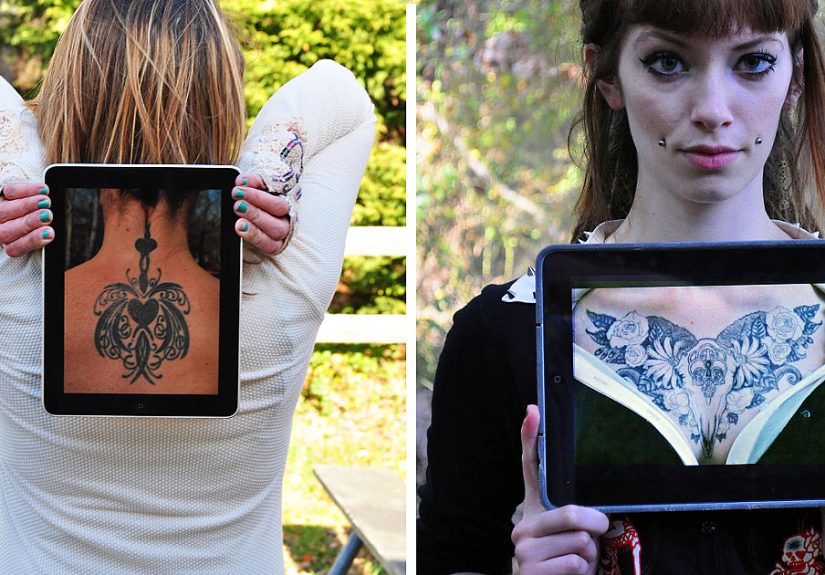
Visually, the illusion is irresistible. A person stands there fully dressed. An iPad is positioned over part of the body. On the screen, instead of fabric, you “see” the tattoo underneath. The image feels immediate and impossible at the same time. It borrows the language of medical imaging, but dresses it in street photography and body art. That tension is what makes people stare.
It also helps that tattoos are intensely personal and visually bold. Unlike subtle skin details, tattoos are graphic, colorful, and instantly recognizable. When one appears to materialize through clothing, the result feels dramatic. The screen becomes a digital window, and the viewer gets the little thrill of a reveal without the image becoming overtly explicit.
In other words, the concept works because it looks like technology doing something forbidden, when it is really photography doing something clever.
What Is Actually Happening in the “iPad X-Ray” Tattoo Effect?
It is a staged digital image, not a live body scan
The trick is simple in concept, even if it takes patience to pull off well. First, the tattoo is photographed normally on bare skin. That image is then transferred to the iPad. Next, the photographer scales, rotates, and aligns the tattoo image on the tablet screen so it matches the position where the tattoo would sit beneath the subject’s clothing. Then the subject is photographed again while dressed, with the iPad placed over the body area.
The result is a composite-like illusion created in camera. The iPad is not discovering the tattoo in real time. It is displaying a previously captured image of the tattoo and using perspective to make it look like the device is revealing what lies beneath the shirt.
Think of it less like radiology and more like a visual sleight of hand. It is the photographic cousin of holding your phone in front of the moon until the moon “fits” on your screen. Alignment is doing the heavy lifting.
Why the image feels convincing
The best versions of this effect work because they are disciplined about scale, body angle, and lighting. If the tattoo image on the iPad is too large, too small, too bright, or tilted wrong, the illusion falls apart faster than a cheap Halloween cape. But when the framing is right, the viewer’s brain does the rest.
The screen creates a sharp boundary between the clothed body and the “revealed” tattoo. That boundary gives the illusion authority. Viewers unconsciously read the glowing rectangle as a scanning surface, even though all it is really doing is displaying a photograph. A bright tablet screen, a neutral shirt, and a strong tattoo design are the secret sauce.
Why an iPad Cannot Function Like a Real X-Ray Machine
Real X-rays use ionizing radiation
Actual X-ray imaging is a medical process that relies on ionizing radiation. In healthcare settings, X-ray systems use specialized hardware to send X-ray beams through the body toward a detector. Different tissues absorb those beams differently, which is why bones, soft tissue, and metal show up in distinct ways on the resulting image.
An iPad does not produce that kind of radiation. It is a consumer tablet with a display, processors, cameras, sensors, wireless connectivity, and software. Useful? Extremely. Capable of checking email, streaming movies, editing photos, and draining your battery at suspicious speed? Also yes. Capable of performing diagnostic X-ray imaging through clothing? No chance.
A tablet screen shows light; it does not penetrate the body
This is the key science point. A tablet screen emits visible light so your eyes can see images. A medical X-ray system uses much higher-energy radiation and dedicated imaging equipment. Those are not remotely the same thing.
If you are wearing a shirt, the iPad cannot “look through” it in any meaningful X-ray sense. The tablet’s camera records reflected visible light. It does not scan through layers of fabric, skin, and tissue to uncover hidden ink. Sorry to disappoint the inner spy-movie villain in all of us.
Even prank apps admit the joke
One more reality check: many so-called X-ray apps in app stores explicitly label themselves as prank or entertainment apps. That is because the illusion has always been part of the appeal. These apps simulate the look of scanning, but they do not provide true X-ray imaging. The industry itself is practically waving a tiny comedy flag.
Why Tattoos Are Perfect for This Illusion
Tattoos make this trick more effective because they already live in a visually interesting space between the body and art. Tattoo ink is deposited into the dermis, beneath the outermost layer of skin, which is why tattoos persist over time. They are part of the body’s surface story, but they also feel hidden until shown.
That makes them ideal for a fake reveal. A tattoo is not as visually chaotic as muscle or bone would be in a medical scan. It has strong lines, contrast, symbolism, and emotion. The viewer does not need to interpret it. They understand it instantly. A dragon sleeve, a floral shoulder piece, a geometric chest design, a script tattoo across ribs: all of these read quickly and dramatically on a screen.
There is also something psychologically satisfying about the contrast. Clothing suggests privacy and concealment. Tattoos suggest identity and expression. The fake X-ray effect places those two ideas in a playful collision.
How Photographers Create the Digital X-Ray Tattoo Look
Step 1: Photograph the tattoo cleanly
The original tattoo image needs to be sharp, evenly lit, and taken from an angle that can be recreated later. If the photographer captures the tattoo at a weird tilt and later tries to align it on a standing subject, the screen image will look like it belongs to a different planet. Consistency is everything.
Step 2: Match pose and perspective
Once the tattoo is on the iPad, the subject has to recreate the right body angle. This is where the process becomes unexpectedly technical. Shoulders shift. Fabric bunches. Arms rotate. Torsos lean. A small body movement can throw off the illusion, so there is often a lot of fine adjustment involved.
That is why the finished image looks effortless while the actual shoot probably involves someone saying, “Tilt the tablet left. No, your other left. Now lower your elbow. No, not that much.” Art is glamorous.
Step 3: Control the lighting
Lighting makes or breaks the effect. If the room is too bright, the screen may wash out. If it is too dark, the tablet can look like a floating neon rectangle that has nothing to do with the body. Good photographers balance ambient light so the iPad appears integrated into the scene, not pasted on top of it.
Step 4: Let the screen do the storytelling
Once the alignment works, the iPad becomes a framing device. It does not need a complicated interface or fake scanner graphics. In many cases, a simple full-screen photo of the tattoo is stronger because it lets the eye believe the reveal without extra gimmicks. Subtle sells the illusion better than cartoon science-fiction icons ever could.
The Internet Loves a Good Fake-Tech Moment
The “iPad as X-ray” concept belongs to a long tradition of digital illusions that spread because they flirt with believability. Viewers do not necessarily want raw truth right away. They want the delicious half-second of doubt. Could this be real? Is there an app for that? Why do I suddenly distrust my own tablet?
That moment of uncertainty is what makes the image memorable. It turns a simple photograph into a tiny narrative. There is a before, a reveal, and an explanation. Good viral content often works like that. It gives the viewer a miniature mystery and then invites them to solve it.
In this case, the reveal is especially sticky because it sits at the intersection of technology, identity, and body art. The image says something about self-presentation too. Clothing is what the public sees first. Tattoos are often what tell a more personal story. The iPad becomes a pretend bridge between those layers.
Privacy, Consent, and Why the Joke Needs Boundaries
Let’s also address the obvious ethical wrinkle. Any concept framed as “revealing tattoos under clothes” can sound invasive if handled badly. That is why context and consent matter. The effect should be presented clearly as a staged art or photography concept involving willing participants, not as a creepy “gotcha” gadget that can scan strangers.
That distinction protects both the audience and the subject. It keeps the work playful instead of predatory. A creative illusion can be fun. Implying that consumer tech can secretly see through people’s clothes is not fun. It is misinformation wearing a fake mustache.
The best versions of this concept treat the subject’s tattoo as part of a collaborative portrait. The device is a storytelling prop, not a surveillance fantasy.
Can You Recreate the Effect Yourself?
Yes, but only as a photography or design project. If you want to make your own version, treat it like a controlled visual illusion. Photograph the tattoo first. Transfer the image to a tablet. Match size and angle carefully. Use clean lighting. Keep the composition simple. Most important, make sure the subject is fully in on the concept.
What you should not do is present the result as proof that your iPad has unlocked medical superpowers. It has not. It is still just a tablet. A very polished, very capable, very smug tablet, perhaps, but a tablet all the same.
Experiences Related to “Using iPad As An X-Ray To Reveal Tattoos Under Clothes”
What makes this concept memorable is not just the technical trick. It is the experience around it. For the person seeing the image for the first time, there is usually a split-second reaction of disbelief. The brain reads the iPad like a scanning window and then scrambles to catch up. That tiny pause is the entire magic act. You know tablets are not medical imaging devices, but the image is framed so neatly that your eyes want to believe before your logic interrupts.
For the tattooed subject, the experience can feel strangely personal. A tattoo is often intimate, even when it is visible in daily life. Seeing it appear on a glowing screen over clothing changes the mood completely. It can make the tattoo feel cinematic, almost like a secret biography being projected outward. A floral shoulder piece that looks ordinary in a tank top suddenly feels dramatic when it “appears” through a jacket. A chest tattoo becomes a reveal. A sleeve becomes a storyline.
For the photographer, the experience is usually less “wow, futuristic technology” and more “please hold still for ten more seconds.” The illusion depends on patience. Tiny pose changes matter. The tablet has to line up with body contours. The subject may laugh, shift, breathe, or glance away just enough to ruin the alignment. There is a lot of micro-correction involved, and that is part of the hidden charm. The final image looks spontaneous, but the shoot itself is often a game of millimeters.
There is also a social experience to it. Once the image is made, people tend to gather around the screen and react in layers. First comes confusion. Then comes curiosity. Then comes the explanation, followed by the classic “Ohhh, okay,” usually delivered with equal parts relief and admiration. People enjoy being fooled when the trick is clever and harmless. That is why these images tend to travel well online. They create conversation, not just attention.
For tattoo lovers, the experience can be even deeper. Tattoos already carry stories about memory, identity, rebellion, grief, humor, heritage, or transformation. A fake X-ray reveal can add another storytelling frame to that meaning. It says, in a playful way, that tattoos are not just decorations sitting on top of the body. They feel embedded in who a person is. That is emotionally resonant, even if the image itself is technically a trick.
And then there is the internet experience, which is its own strange ecosystem. A viewer sees the image, assumes a new app exists, briefly questions reality, checks the comments, finds out it is staged, and somehow likes it more because of the creativity involved. That arc is very modern. The pleasure is not only in being amazed, but in learning how the amazement was built.
In that sense, the “iPad X-ray tattoo” idea works because it gives people two experiences for the price of one: the thrill of impossible technology and the satisfaction of understanding the illusion behind it. It is part visual joke, part portrait concept, part tribute to tattoo art, and part reminder that with the right screen, the right angle, and the right imagination, a photograph can still make people do the most old-fashioned thing in the world: look twice.
Conclusion
Using an iPad as an X-ray to reveal tattoos under clothes is a brilliant visual illusion, but it is still an illusion. The iPad is not scanning beneath fabric, skin, or muscle. It is displaying a pre-made image in a way that tricks the eye into reading the screen as a reveal device. Real X-rays require ionizing radiation, specialized machinery, and regulated medical equipment. A consumer tablet is not built for that job.
Still, that does not make the idea any less interesting. In fact, it might make it better. The appeal comes from creativity, not hidden hardware. It is a smart mix of tattoo photography, screen-based storytelling, and internet-ready spectacle. Done well, it celebrates body art, sparks curiosity, and reminds us that a convincing image does not need to be scientifically real to be artistically effective.
So the next time you see an iPad apparently revealing ink beneath a T-shirt, enjoy the trick. Admire the setup. Appreciate the tattoo. Just do not book your next radiology appointment at the Apple Store.