Table of Contents >> Show >> Hide
- Why This Amazon Tiny House Is Getting So Much Attention
- What You Actually Get With a Two-Level Tiny House
- Why the Second Story Matters More Than You Think
- Who This Kind of Amazon Tiny House Is Best For
- The Fine Print Nobody Should Ignore Before Clicking “Buy Now”
- How to Make the Terrace the Star of the Show
- So, Is This Amazon Tiny House Actually a Good Idea?
- Living With a Two-Level Tiny House and Terrace: A Longer Real-World Experience
- SEO Tags
The internet loves two things very deeply: tiny houses and the idea that you can buy something absurdly life-changing while also ordering paper towels. So when a two-level Amazon tiny house with a terrace started making the rounds, people understandably stopped scrolling and started squinting at their screens like, “Wait… is that a real house or a very ambitious patio set?”
It is, in fact, a real prefab home concept that was recently spotlighted in U.S. lifestyle coverage: a customizable, double-story, expandable container-style tiny house sold through Amazon, complete with an upper terrace, a lower outdoor area, plumbing, and a layout designed to feel larger than the phrase tiny house usually suggests. In late-2025 coverage, the featured model was described as coming in under $45,000, which is exactly the kind of number that makes renters everywhere sit up straighter.
But here is the thing about Amazon tiny homes: the headline is the appetizer, not the meal. The terrace is charming, the second level is clever, and the price tag is attention-grabbing. Yet the real story is why this design works, who it is actually for, and what buyers need to understand before they fall into a fantasy spiral involving string lights, a pour-over coffee setup, and a golden retriever named Maple.
Why This Amazon Tiny House Is Getting So Much Attention
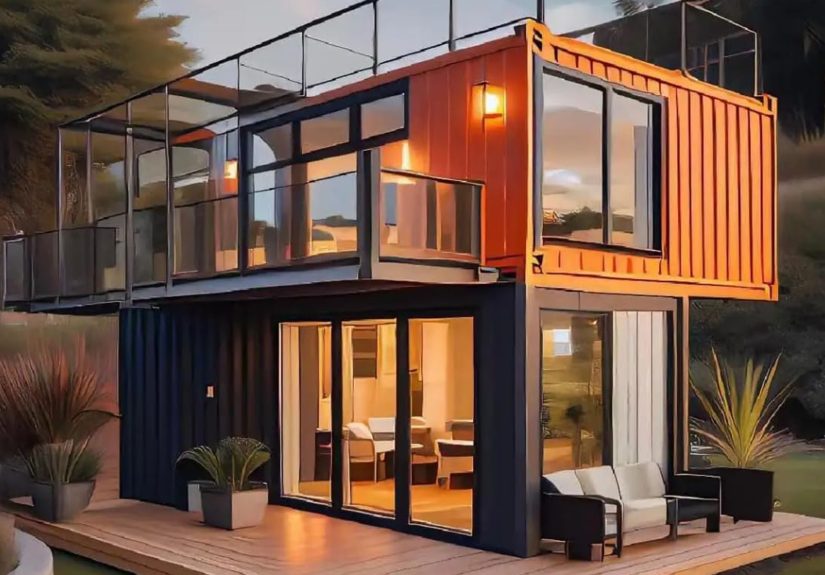
The featured home stands out because it solves one of the biggest problems in small-space living: how to make a compact footprint feel like a full home instead of a stylish compromise. Reports on the model describe it as a roughly 40-by-20-foot expandable prefab with two floors, one bathroom, an open kitchen and living area, and a terrace that adds usable outdoor square footage without bloating the structure itself.
That two-story setup is the real hook. Most tiny homes try to fake spaciousness with lofts, multipurpose furniture, and a heroic amount of optimism. This one goes in a different direction. It stacks space vertically, which creates a clearer split between public and private areas. That means the downstairs can function more like a normal home, while the upper level feels like an actual zone instead of a glorified sleeping shelf.
Coverage also described the design as customizable, with options for bedroom count, flooring, exterior color, window style, and cabinetry. In other words, the house is being sold less like a rigid box and more like a modular shell you can tailor to your needs. That matters because tiny-home buyers are rarely buying one universal dream. Some want a backyard guest house. Some want a starter residence. Some want an ADU. Some want a weekend retreat. And some, let’s be honest, want to win a family argument by saying, “See? I told you I could live with less stuff.”
What You Actually Get With a Two-Level Tiny House
A layout that feels smarter, not just smaller
Good tiny-house design is not about squeezing in the most features. It is about making daily life less annoying. That is why the two-level layout works so well here. Instead of forcing cooking, lounging, sleeping, storage, and circulation into one overworked room, the design creates separation. Even psychological separation counts. Your brain behaves differently when home has “upstairs” and “downstairs.” It feels less like camping with excellent windows and more like a compact, intentional residence.
The terrace is not just a pretty extra
The terrace is what takes this from “interesting prefab” to “wait, I kind of get it.” Outdoor space functions like borrowed square footage. In a home this small, a terrace can become a breakfast area, reading nook, evening hangout, container garden, or work-from-home escape hatch when the interior starts feeling too close for comfort. A good terrace does not merely add style. It relieves pressure from the interior.
That is especially important in tiny living, where one cluttered counter can make the entire home feel like it is losing a fight. Step outside with a coffee mug, though, and suddenly the house breathes again.
Customization makes it less cookie-cutter
One of the strongest selling points of the featured Amazon model is that it has been described as customizable. That may sound like marketing fluff, but in compact housing, customization is everything. A spare room can become a home office. A reduced bedroom count can create a larger living area. Different window choices can shift the whole personality of the structure, from modern box to soft, airy retreat.
That flexibility is why homes like this keep attracting attention. Buyers are not just looking for less square footage. They are looking for a way to make smaller living feel more personal, more useful, and less like a punishment for existing in the housing market in the year 2026.
Why the Second Story Matters More Than You Think
The phrase two levels may sound like a gimmick until you think about what it changes. First, it reduces the all-in-one-room effect that makes many tiny homes feel chaotic. Second, it improves privacy. Third, it gives the home more visual drama, which sounds superficial until you realize that enjoying your home matters. If a compact house feels special rather than cramped, you are much more likely to tolerate the trade-offs that come with small-space living.
A second level can also make better use of land. On a small lot, building up instead of out may preserve yard space, improve circulation, and create more distinct outdoor zones. That can be useful for buyers hoping to install a backyard unit without turning the entire property into one giant rectangle of “house happened here.”
And then there is the terrace. A terrace attached to an upper level creates a sense of destination. It is not just outside. It is upstairs outside. That sounds minor, but it changes how people use the space. It becomes a place you go to rather than a patch of deck you accidentally own.
Who This Kind of Amazon Tiny House Is Best For
This kind of prefab home makes the most sense for buyers who want compact living without fully embracing survival-mode minimalism. Couples could use it as a downsized primary residence in the right jurisdiction. Small families might see it as an affordable step between renting and conventional homeownership. Homeowners with extra land may look at it as a guest house, office, studio, or multigenerational setup. Investors may be tempted by the short-term rental angle, although local rules on ADUs and vacation rentals should be checked before anyone starts naming the place “Terrace & Timber Retreat.”
It is also a good fit for people who care about usable outdoor space. If the idea of a tiny home sounds romantic until you imagine spending every waking hour inside it, the terrace helps. It gives the home a sense of expansion without requiring a giant lot or a giant budget.
On the other hand, it is probably not ideal for buyers who want a plug-and-play traditional mortgage experience, a completely predictable permitting path, or zero site-prep complications. Tiny homes can be clever. Bureaucracy is often less so.
The Fine Print Nobody Should Ignore Before Clicking “Buy Now”
Zoning comes first, daydreams second
This is the part where the fantasy puts on a hard hat. Before buying a prefab ADU or tiny home, buyers need to confirm that their city or county allows that kind of structure on the property. That includes where it can go, whether it can be used as a full-time residence, whether it qualifies as an ADU, and what permits, setbacks, inspections, and occupancy rules apply.
In plain English: a beautiful tiny house is still not allowed to ignore local law just because it has nice windows.
The Amazon price is not the move-in price
The sticker price gets the attention, but setup costs write the sequel. Even when a prefab unit looks comparatively affordable, buyers still have to think about land, grading, utility hookups, site prep, transportation, foundation work if required, permits, and installation. Those extras can add thousands, and sometimes much more than that, depending on the site and the local rules.
This is where many first-time tiny-home shoppers get blindsided. A listing that feels dramatically cheaper than a conventional house may still need real infrastructure to become legally habitable and comfortably livable. The house may be “tiny,” but the logistics are not.
Financing may be trickier than the listing makes it look
Financing is another reality check. Traditional mortgages typically work best when the home is on a permanent foundation, qualifies as real property, and meets lender standards for size and classification. Some small homes instead end up financed through personal loans or chattel loans, both of which can come with higher rates, shorter terms, and less forgiving structures than a standard mortgage.
That does not make the purchase impossible. It just means buyers should treat financing as part of the search, not an afterthought. “I found it on Amazon” is not, sadly, a loan category.
Codes, labels, and compliance matter
One more important distinction: not all off-site housing is regulated the same way. Manufactured housing, modular housing, and tiny homes can fall under different code paths. In the U.S., manufactured homes are tied to HUD standards, while modular and off-site housing may be governed by the final jurisdiction’s code requirements. Tiny homes are often associated with code provisions built specifically for very small dwellings.
That means buyers should ask better questions than “Does it look nice?” They should ask what standard it was built to, what labels or certifications apply, what jurisdictional approvals are needed, and whether the unit is appropriate for the exact site where it will be installed. A structure designed for one climate or code environment may need changes before it belongs somewhere else.
How to Make the Terrace the Star of the Show
If you are going to buy the tiny house with the terrace, then use the terrace like it owes you rent. This is not the place for two lonely folding chairs and a forgotten citronella candle. A narrow bistro table, outdoor-safe storage bench, compact lounge seating, and planters can turn the upper level into the emotional center of the home.
The smartest move is to design the terrace as an extension of indoor living. Match the tones of the interior. Use warm lighting. Add vertical greenery instead of bulky décor. Keep circulation clear. In a tiny home, every exterior inch has to perform. The terrace should feel like a room with weather, not leftover architecture.
And yes, this is exactly where you put the coffee setup for your dramatic morning moment. You did not buy a two-level tiny house with a terrace to sip instant coffee while facing a blank wall.
So, Is This Amazon Tiny House Actually a Good Idea?
In the right situation, yes. The appeal is real. A two-story layout is more functional than many tiny-home designs. A terrace adds meaningful livability. The customizable features make the house more adaptable. And compared with the cost of conventional housing, the price point that drew attention to this model is undeniably compelling.
But the smart way to view it is not as a miracle shortcut to homeownership. It is a promising prefab shell that may become a great housing solution if the land, rules, utility access, financing, and installation plan all line up. That is less sexy than an impulse purchase fantasy, but it is far more useful.
The best tiny homes succeed because they are realistic. They know where space should expand, where money should be spent, and where style can pull real weight. This one earns attention because it seems to understand all three. It is not just tiny. It is layered, flexible, and surprisingly social for something that arrives in the prefab corner of the internet.
So yes, the terrace is charming. The second story is clever. And the headline practically writes itself. But the deeper reason this Amazon tiny house feels interesting is that it hints at something bigger: people do not just want smaller homes. They want smarter ones.
Living With a Two-Level Tiny House and Terrace: A Longer Real-World Experience
Spend a little time imagining daily life in a home like this, and the appeal becomes more concrete. You wake up upstairs, slide open the door, and step onto the terrace before the rest of the day starts making demands. That simple transition matters. In a conventional apartment, especially a small one, your morning often begins inside the same box where you work, eat, scroll, and wonder why you own three charging cables that all somehow disappeared. In a two-level tiny house, the vertical separation creates a stronger sense of rhythm. Upstairs can feel calmer. Downstairs can feel more active. The terrace becomes a pressure-release valve.
That is what people often underestimate about small homes: the emotional experience of moving through them. A single-level compact layout can be efficient, but it can also feel like life is happening in one continuous, overachieving room. A two-story setup changes that. You walk downstairs to start the day. You head back up to slow it down. Even if the square footage is still modest, the house feels more organized because your routines are more organized.
The terrace also changes how you entertain. In many tiny homes, having guests means everyone politely pretends not to notice that they are standing three feet from your entire personal existence. Here, you can spill outside. One person can handle snacks inside while someone else heads to the terrace with drinks. Suddenly the home works more like a social space and less like a beautifully designed storage puzzle.
Then there is the practical side. If you work remotely, that upper outdoor area can become a reset zone between meetings. If you live with a partner, the second level creates a little breathing room when one of you is in a talking mood and the other is in a “please let me stare at a plant in silence” mood. If you use the home as a guest house or rental, the terrace becomes a memorable feature that helps the place feel intentional rather than temporary.
Of course, tiny-house life still asks for discipline. Storage has to be planned. Purchases need to earn their place. Cleaning becomes easier, but clutter becomes louder. The house will not magically fix messy habits or make site-prep paperwork fun. Nothing on earth can do that, not even an upper terrace with excellent sunset potential.
But if the property is legal, the utilities are sorted, and the layout matches your real life, a home like this can feel surprisingly luxurious in the ways that matter most. Not luxury in the marble-everywhere sense. Luxury in the sense of light, airflow, function, and having an outdoor perch where your home suddenly feels twice as big. That is the secret sauce here. This Amazon tiny house is not compelling just because it is small and trendy. It is compelling because it offers a version of compact living that still leaves room for privacy, personality, and a little ceremony in everyday life.