Table of Contents >> Show >> Hide
- What Is the Nasdaq 100?
- The Early Years: From Electronic Market to Growth Icon
- The Dot-Com Boom: When Eyeballs Became a Business Plan
- The Dot-Com Bust: Reality Checks Are Rarely Polite
- The 2008 Financial Crisis: Not a Tech Bubble, Still a Big Punch
- The 2010s Boom: Smartphones, Clouds, and Mega-Cap Muscle
- The COVID Crash and Rebound: A Market Whiplash Moment
- The 2022 Bust: Inflation Meets Expensive Growth
- The AI Boom: New Era or Familiar Movie With Better Graphics?
- What Causes Nasdaq 100 Booms?
- What Causes Nasdaq 100 Busts?
- Lessons From the Nasdaq 100’s Booms and Busts
- Experiences and Practical Reflections on the Nasdaq 100: Booms & Busts
- Conclusion: The Nasdaq 100 Is a Mirror of Market Ambition
The Nasdaq 100 has never been the quiet kid in the stock market classroom. It is the student who builds a robot for the science fair, wins first prize, accidentally sets off the sprinkler system, and still gets invited back next year because everyone knows the future is probably hiding in its backpack.
Since its launch in 1985, the Nasdaq 100 has become one of the world’s most watched benchmarks for large, innovative, non-financial companies listed on the Nasdaq Stock Market. It is not a pure technology index, although technology often grabs the microphone. The index has included companies from software, semiconductors, retail, biotechnology, media, consumer services, telecommunications, and other growth-driven industries. Still, when investors talk about the Nasdaq 100, they are usually talking about the market’s appetite for innovation, risk, disruption, and occasionally, dramatic overconfidence wearing expensive sneakers.
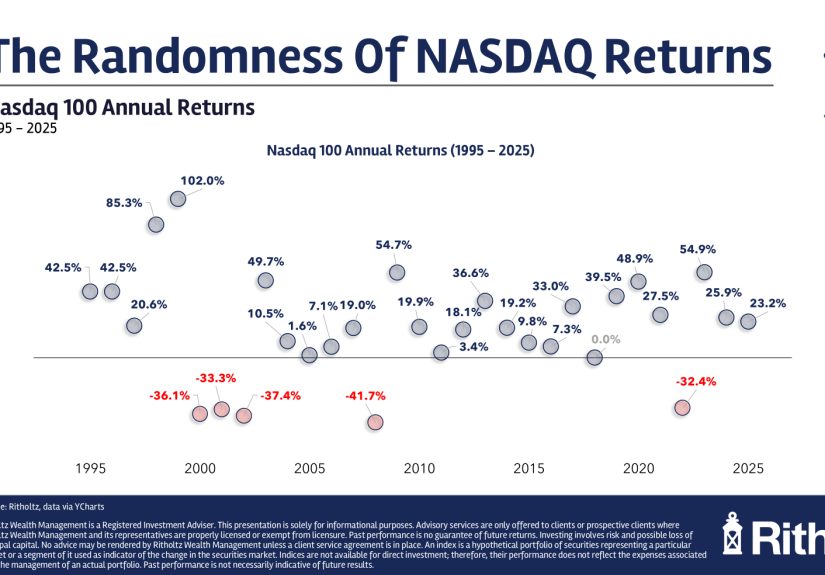
This is why the Nasdaq 100 is such a useful lens for studying market booms and busts. It has captured the dot-com mania, the 2008 financial crisis, the smartphone and cloud-computing boom, the COVID-19 crash and rebound, the 2022 inflation shock, and the artificial intelligence rally. In other words, the Nasdaq 100 is less like a boring spreadsheet and more like a financial roller coaster designed by engineers who drink too much espresso.
What Is the Nasdaq 100?
The Nasdaq 100 is an index made up of 100 of the largest non-financial companies listed on the Nasdaq Stock Market. Unlike the S&P 500, which includes companies across all major U.S. sectors and exchanges, the Nasdaq 100 focuses on Nasdaq-listed firms and excludes traditional financial companies such as banks and insurance firms.
The index is modified market-cap weighted. That means larger companies usually have greater influence, but Nasdaq uses rules to limit excessive concentration. This matters because a handful of mega-cap companies can become so large that they start steering the index like a speedboat with a rocket engine. When concentration gets too high, Nasdaq can rebalance weights to keep the index from becoming a one-company talent show.
Why Investors Watch It Closely
The Nasdaq 100 is often treated as a scoreboard for modern growth. When investors are excited about cloud computing, artificial intelligence, semiconductors, digital advertising, online retail, streaming, cybersecurity, or biotechnology, that excitement often shows up in the index. When investors suddenly remember that profits, interest rates, and valuations exist, the Nasdaq 100 can fall hard.
That combination of ambition and volatility makes the index fascinating. It reflects both real economic transformation and human behavior. The companies inside it may be building the future, but investors are still human beings with calculators, emotions, and occasionally the patience of a hungry raccoon.
The Early Years: From Electronic Market to Growth Icon
The Nasdaq Stock Market began as an electronic quotation system, and by the time the Nasdaq 100 launched in 1985, the exchange had already developed a reputation for hosting younger, faster-growing companies. During the late 1980s and early 1990s, personal computers, enterprise software, networking equipment, and semiconductor firms helped give the index its identity.
Then came the internet. At first, it looked like a technological revolution. Then it looked like an investment revolution. Then, for a while, it looked like everyone with a domain name and a slide deck could become a billionaire before lunch. The Nasdaq 100 became the stage where the dream of the “new economy” played out in full costume.
The Dot-Com Boom: When Eyeballs Became a Business Plan
The late 1990s were the Nasdaq 100’s first great boom. Investors believed the internet would reshape commerce, communication, media, and daily life. They were right about that. The problem was that many people also believed nearly every internet company would become wildly profitable. They were very, very not right about that.
During the dot-com boom, money poured into technology and internet stocks. Companies with little revenue, no profits, and business models held together by buzzwords were valued as if they already owned the future. Analysts talked about page views, clicks, and “eyeballs” as if eyeballs could pay rent. Initial public offerings exploded. Day trading became dinner-table conversation. The Nasdaq surged as investors chased anything that sounded digital.
The important lesson is not that the internet was fake. The internet was real. The mistake was pricing every internet dream as if it had already succeeded. Good technology can still become a bad investment when the price assumes perfection.
The Dot-Com Bust: Reality Checks Are Rarely Polite
In 2000, the party ended. The Nasdaq Composite peaked in March 2000 and then collapsed over the next two years. The Nasdaq 100, packed with technology and internet-related optimism, suffered brutally. Many dot-com companies disappeared. Others survived but lost enormous market value. Cisco, Amazon, Microsoft, Intel, and other major names became case studies in how even real companies can be crushed when expectations run too far ahead of earnings.
The bust showed that innovation does not cancel valuation. A company can be important, useful, and revolutionary, yet still be overpriced. Investors who bought near the peak learned that “the future” is not a magic phrase that protects a portfolio from gravity.
But the dot-com bust also revealed something else: some companies from that era eventually became giants. Amazon, for example, endured a massive collapse in its share price but later became one of the defining businesses of the digital economy. The Nasdaq 100’s history is full of this tension. Some booms are nonsense. Some booms are early. The hard part is knowing which is which before your brokerage account starts making sad violin noises.
The 2008 Financial Crisis: Not a Tech Bubble, Still a Big Punch
The 2008 financial crisis was different from the dot-com bust. It did not begin with internet-stock speculation. It grew out of excessive mortgage lending, complex financial products, leverage, weak risk controls, and a housing bubble that spread through the banking system. Since the Nasdaq 100 excludes traditional financial companies, it was not at the center of the crisis in the same way bank indexes were.
That did not make it safe. When credit markets froze and recession fears exploded, investors sold risky assets across the board. Growth stocks fell because earnings expectations weakened, liquidity dried up, and fear became the market’s unofficial chief executive officer.
The Nasdaq 100 declined sharply in 2008, but the aftermath also helped set up one of its strongest long-term advances. The Federal Reserve cut interest rates aggressively, financial conditions eventually stabilized, and the next decade favored companies with scalable digital business models. Cloud computing, smartphones, social media, online advertising, e-commerce, and subscription software became powerful growth engines.
The 2010s Boom: Smartphones, Clouds, and Mega-Cap Muscle
After the financial crisis, the Nasdaq 100 entered a long bull market. This boom looked different from the dot-com era. Many of the leading companies had real earnings, global user bases, strong balance sheets, and dominant platforms. Apple turned the iPhone into a cultural and financial phenomenon. Microsoft reinvented itself around cloud computing. Amazon expanded from online retail into cloud infrastructure. Alphabet became a digital advertising powerhouse. Nvidia grew from graphics chips into a central player in accelerated computing.
This was not simply hype. The 2010s produced genuine changes in how people shopped, worked, communicated, watched entertainment, stored data, and ran businesses. Software moved to the cloud. Mobile devices became essential. Digital advertising followed attention online. The Nasdaq 100 benefited because many of its largest companies were not just participating in these trends; they were building the roads everyone else had to drive on.
Still, success created a new issue: concentration. A small group of mega-cap stocks became increasingly important to index performance. That helped when the leaders were rising, but it also meant the index became more sensitive to the fortunes of a few powerful companies.
The COVID Crash and Rebound: A Market Whiplash Moment
In early 2020, the COVID-19 pandemic triggered one of the fastest market crashes in modern history. Investors faced a terrifying combination of public health uncertainty, economic shutdowns, collapsing travel demand, broken routines, and unknown corporate earnings. The Nasdaq 100 fell quickly with the broader market.
Then came the rebound. Central banks and governments responded with extraordinary support. Interest rates moved lower, liquidity increased, and many Nasdaq 100 companies benefited from pandemic-era behavior. Remote work boosted demand for cloud software, video conferencing, cybersecurity, chips, e-commerce, streaming, and digital services. The same crisis that crushed many traditional businesses accelerated parts of the digital economy.
This period gave the Nasdaq 100 another boom, but it also planted seeds for the next bust. Ultra-low rates made future earnings more valuable in today’s dollars, which helped growth-stock valuations expand. When inflation later surged and interest rates rose, that math went into reverse. The market discovered that discounted cash flow is not just a finance-class phrase designed to ruin a perfectly good afternoon.
The 2022 Bust: Inflation Meets Expensive Growth
In 2022, the Nasdaq 100 faced a painful reset. Inflation climbed, the Federal Reserve tightened monetary policy, bond yields rose, and investors reassessed growth-stock valuations. Companies that had soared during the pandemic suddenly looked expensive. The higher interest rates rose, the less investors were willing to pay for profits expected far in the future.
The sell-off hit technology and growth stocks hard. Even strong companies declined because valuation multiples compressed. Weaker companies, especially those with little profit and big promises, were punished more severely. The 2022 bear market reminded investors that the Nasdaq 100 is not immune to macroeconomics. Innovation is powerful, but it does not get a hall pass from inflation, interest rates, or earnings pressure.
The AI Boom: New Era or Familiar Movie With Better Graphics?
After the 2022 decline, the Nasdaq 100 came roaring back, helped by enthusiasm around artificial intelligence. Nvidia became the clearest symbol of the AI boom as demand for advanced chips surged. Microsoft, Alphabet, Amazon, Meta, Broadcom, and other large companies also became part of the AI investment story through cloud platforms, software, data centers, advertising tools, and infrastructure.
The AI boom has stronger business foundations than many dot-com fantasies. Major companies are spending real money, selling real products, and generating real earnings. Artificial intelligence is already changing software development, search, advertising, design, customer service, data analysis, and enterprise productivity.
But the same old risk remains: expectations can outrun reality. If investors price every AI-related company as if it will dominate the next decade, disappointment becomes easier. The question is not whether AI matters. It does. The question is how much future profit is already reflected in today’s prices. That question has been annoying investors since someone first traded a seashell for two slightly shinier seashells.
What Causes Nasdaq 100 Booms?
Nasdaq 100 booms usually come from a mix of innovation, earnings growth, easy financial conditions, and investor excitement. When new technologies create large markets, investors rush to identify the winners. If interest rates are low, growth stocks become more attractive because future profits are discounted less heavily. Strong earnings then reinforce optimism, and rising prices attract even more attention.
That cycle can be healthy at first. Capital flows to companies that are building useful products. Entrepreneurs get funding. New industries expand. Consumers and businesses benefit from better tools. The problem begins when the story becomes more important than the numbers. At that point, investors stop asking, “What is this company worth?” and start asking, “What if this stock never goes down?” Historically, that second question has aged about as well as milk in a parked car.
What Causes Nasdaq 100 Busts?
Busts often begin when expectations collide with tighter money, weaker earnings, regulatory pressure, competition, or simple overvaluation. Rising interest rates are especially important because many Nasdaq 100 companies are valued based on long-term growth. When rates rise, investors usually demand lower prices for those future earnings.
Another cause is concentration risk. If a few giant companies dominate the index, a reversal in those stocks can drag the whole benchmark lower. Sector exposure also matters. The Nasdaq 100 may be diversified across industries, but it is heavily tilted toward growth and innovation. That makes it exciting in bull markets and uncomfortable in risk-off environments.
Lessons From the Nasdaq 100’s Booms and Busts
1. Innovation and speculation often travel together
Many great technologies arrive surrounded by hype. The internet, smartphones, cloud computing, and AI all attracted enormous enthusiasm. Some of that enthusiasm was justified. Some of it was financial confetti. Investors need to separate the technology from the valuation.
2. Great companies can still be bad buys at the wrong price
The dot-com bust proved that even important companies can fall dramatically if investors overpay. Price matters. Revenue matters. Profit margins matter. Cash flow matters. A brilliant business can still disappoint if expectations are too high.
3. Interest rates are not background music
Low rates can lift growth-stock valuations. High rates can compress them. The Nasdaq 100’s performance is deeply connected to monetary policy, bond yields, and inflation trends. Ignoring rates while analyzing growth stocks is like checking the weather and forgetting to look outside.
4. Concentration cuts both ways
When mega-cap leaders rise, the Nasdaq 100 can look unstoppable. When they stumble, the weakness spreads quickly through the index. Concentration is not automatically bad, but it should be understood.
5. Long-term investors need emotional stamina
The Nasdaq 100 has rewarded patience over many long periods, but it has also delivered brutal drawdowns. Anyone studying this index should respect both sides of the story: the wealth creation and the volatility.
Experiences and Practical Reflections on the Nasdaq 100: Booms & Busts
Watching the Nasdaq 100 over time feels a bit like watching a very talented athlete with a flair for drama. The index can sprint faster than almost anything else in the market, but it can also trip over its own shoelaces when expectations get too fancy. One practical experience investors often share is that the Nasdaq 100 looks easiest to own after it has already gone up. That is also when risk may be quietly getting louder.
During boom periods, headlines tend to become extremely confident. A new technology appears, analysts raise price targets, social media celebrates overnight winners, and everyone suddenly knows someone who “saw it coming.” The emotional pressure is real. Nobody enjoys feeling left behind while growth stocks climb like they found a secret elevator. But history shows that buying only because everyone else is excited can lead to painful timing.
During busts, the opposite happens. The same companies that were described as unstoppable are suddenly treated like broken vending machines. Investors forget the long-term story and focus only on the latest decline. This is when patience gets tested. A falling Nasdaq 100 can make even experienced investors question their plans. The screen is red, the commentary is gloomy, and every bounce looks suspicious. It is not exactly a spa day for your nervous system.
One useful habit is to separate the index’s business story from its market price. The business story asks: Are the companies growing revenue? Are they profitable? Are they improving productivity? Are they creating products people and businesses actually use? The market-price story asks: How much are investors paying for that growth? Booms often happen when both stories are positive. Busts often happen when the business story remains decent but the price story became too optimistic.
Another experience worth remembering is that the Nasdaq 100 changes over time. Weak companies leave. Stronger companies enter. The index is not a museum; it is more like a competitive talent show with quarterly check-ins and annual reviews. This helps explain why the index can recover from major busts. The companies leading one cycle may not be the same companies leading the next.
For readers studying the Nasdaq 100, the best mindset is curiosity with caution. Admire innovation, but do not worship it. Respect momentum, but do not assume it is permanent. Understand that volatility is not a bug in the Nasdaq 100 story; it is part of the operating system. The index has delivered booms because it captures powerful growth trends. It has suffered busts because investors often pay too much for those trends too early.
The Nasdaq 100’s history is not a simple warning against growth stocks. It is a reminder that growth is wonderful, price matters, cycles repeat, and confidence should always leave room for humility. In markets, the future can be bright and still arrive late.
Conclusion: The Nasdaq 100 Is a Mirror of Market Ambition
The Nasdaq 100 tells the story of modern markets better than almost any other index. It reflects innovation, ambition, disruption, speculation, resilience, and the occasional collective decision to ignore basic math. Its booms show how transformative companies can create enormous value. Its busts show what happens when investors confuse a great idea with an unlimited price tag.
From the dot-com bubble to the AI boom, the Nasdaq 100 has repeatedly reminded investors that technology changes, but human behavior does not change nearly as fast. Greed, fear, patience, panic, discipline, and overconfidence keep showing up in different outfits.
For anyone trying to understand the Nasdaq 100, the goal is not to predict every peak and trough. The goal is to understand the forces that drive the cycle: innovation, earnings, interest rates, valuations, concentration, and sentiment. The index may continue to boom and bust, but that is exactly why it remains one of the most important benchmarks in global markets. It is not just a list of companies. It is a living record of how investors imagine the futureand how often the future sends back edits.
Note: This article is for educational market-history content only. It is not financial advice, investment advice, or a recommendation to buy or sell any security.