Table of Contents >> Show >> Hide
- Project OXYGAS: When Intelligence Met Flippers
- The Cold War Made Smart People Think Very Strange Thoughts
- What Actually Worked: The U.S. Navy’s Marine Mammal Program
- Why the “Sink Enemy Ships” Idea Fizzled
- The Ethics: This Is the Part That Stops Being Funny
- Pop Culture Helped Turn the Story Into Legend
- What This Strange Episode Really Says About the CIA
- Experiences and Reflections Related to “The CIA Once Wanted to Use Dolphins to Sink Enemy Ships”
Cold War history is packed with ideas that sound like they were brainstormed at 2:13 a.m. over burnt coffee and deep national anxiety. Exploding seashells? Sure. Spy cats? Why not. Weaponized weather? Naturally. But even by those wonderfully weird standards, the notion that intelligence officials once considered using dolphins to help sink enemy ships deserves its own glittering trophy for “most likely to make a historian rub their temples.”
And yet, this was not a movie pitch. It was a real concept buried in declassified records and tied to a very real era when U.S. agencies were willing to test almost anything that might offer an advantage beneath the surface of the sea. In that world, bottlenose dolphins looked less like cheerful aquarium celebrities and more like underwater specialists with built-in sonar, serious speed, and the kind of maneuverability engineers would love to borrow if nature ever accepted Pentagon contracts.
The result was a strange and revealing chapter in intelligence history: a moment when the CIA flirted with the idea of turning one of the ocean’s smartest animals into a covert asset. It never became the future of naval warfare. Thankfully, the world did not end up with elite dolphin sabotage squadrons lurking behind every pier. But the idea tells us a lot about Cold War thinking, the limits of military imagination, and the uncomfortable ethical line between admiring an animal’s gifts and trying to recruit it into humanity’s messiest habits.
Project OXYGAS: When Intelligence Met Flippers
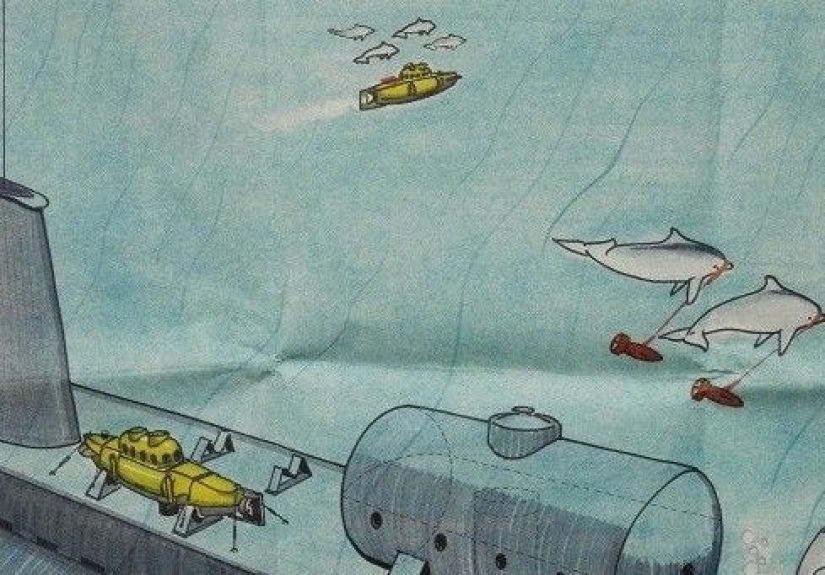
The best-known name attached to this story is Project OXYGAS, a CIA effort from the 1960s that explored whether bottlenose dolphins could be used in underwater clandestine operations. The concept was not subtle in spirit, even if secrecy wrapped every memo. According to declassified material and later reporting, the agency examined whether dolphins could be trained to carry devices, approach hostile vessels, and assist in missions that were too risky, too difficult, or too bizarre for human divers alone.
That headline-grabbing idea is the reason this story keeps resurfacing. “The CIA wanted to use dolphins to sink enemy ships” sounds like the setup to a prank article. But the underlying logic was rooted in something very simple: dolphins are extraordinarily capable in water, and military planners noticed.
At the time, the United States was deep in Cold War competition, and official thinking often blurred the line between innovation and improv comedy with a security clearance. If an animal could move quietly, navigate murky water, operate in difficult coastal zones, and respond to training, someone in government was bound to ask the dangerous question: Could this be useful?
Why Dolphins Looked So Appealing to Planners
Bottlenose dolphins are not just clever in the vague, greeting-card sense of the word. They are highly social, fast, adaptable marine mammals with strong learning capacity. They also use echolocation, which means they can interpret their surroundings through sound in ways that humans and most machines still envy. Put differently, a dolphin comes with a built-in navigation and detection system that does not need charging, rebooting, or a software patch from a defense contractor.
That natural toolkit made dolphins seem almost custom-built for underwater work. They could move in places where visibility was poor. They could detect objects in environments that challenged divers. They could cover ground efficiently. And unlike a mechanical system from the 1960s, they were not likely to short-circuit at the first splash.
Of course, there was one major complication: dolphins are not torpedoes. They are intelligent animals with biological needs, behavioral limits, and the annoying habit of being alive rather than assembled in a lab. That turned out to matter quite a lot.
The Cold War Made Smart People Think Very Strange Thoughts
To understand why the CIA entertained an idea like this, you have to understand the broader mood of the era. The Cold War rewarded novelty, especially secret novelty. If the Soviets might be researching an unconventional capability, American planners did not want to be caught shrugging politely on the dock.
This was also an age when intelligence programs explored everything from obscure surveillance techniques to biologically inspired systems. In that atmosphere, military dolphins were not seen as inherently ridiculous. They were one more possible edge in a competition defined by fear, secrecy, and a constant appetite for improbable solutions.
There was also a pop-culture twist that makes the whole episode even stranger. While Americans were falling in love with the friendly TV dolphin image popularized by Flipper, officials behind classified doors were considering the same species for covert operations. It is one of the most Cold War contradictions imaginable: Saturday afternoon dolphin charm on the screen, classified marine scheming in the file cabinet.
From Imagination to Practical Trouble
Even on paper, the concept had problems. Training an animal for controlled underwater tasks is one thing; expecting consistent performance in an unpredictable, high-risk military scenario is another. Communication between handlers and dolphins had limits. Logistics were messy. Mission control was not exactly seamless when your operative required fish, specialized care, transport systems, and a temperament that did not follow bureaucratic schedules.
And then there was the central question hovering over the whole idea: even if something was technically possible, should it be done? Cold War agencies were not famous for pausing dramatically to ask that question first, but history eventually catches up with those omissions.
What Actually Worked: The U.S. Navy’s Marine Mammal Program
Here is where the story gets more grounded and more interesting. While the CIA’s more cinematic ideas never became a standard military reality, the U.S. Navy Marine Mammal Program did develop practical roles for dolphins and sea lions. These roles were far less Hollywood and much more operationally specific.
The Navy’s work, which dates back to the early 1960s, grew out of interest in marine mammals’ physical and sensory abilities. Over time, dolphins were trained for tasks such as mine detection and marking, object location, and swimmer or diver detection near sensitive areas. Sea lions were also trained for retrieval and security-related tasks. In other words, the military found that marine mammals could be especially useful not as underwater demolition stars, but as living detection and support systems in places where technology still struggled.
This distinction matters. The gap between “CIA once explored dolphin sabotage” and “the Navy successfully used dolphins to locate underwater threats” is the gap between a fever dream and a workable program. One is the headline everyone remembers. The other is the part that actually endured.
Why the Navy Kept the Program Alive
Dolphins offered something genuinely difficult to replicate: reliable underwater sensing in complex environments. Mines are notoriously dangerous because they can sit quietly and wait for human beings to make one terrible decision. A trained dolphin, using natural sonar, can detect and indicate the location of certain underwater hazards with impressive efficiency.
That practicality helped the program survive long after the stranger Cold War fantasies faded. Reports and Navy materials over the years have linked marine mammal teams to operations involving port protection, underwater surveillance, and mine-related tasks, including deployments in conflict zones such as Vietnam and the Persian Gulf.
So yes, military dolphins are real. But the reality is more procedural than pop culture suggests. Think less “secret sea assassin,” more “highly specialized underwater detection professional.” It is still weird, but it is a quieter kind of weird.
Why the “Sink Enemy Ships” Idea Fizzled
The simplest answer is that the concept ran into reality. The same traits that made dolphins fascinating also made them hard to treat like obedient hardware. Animals do not function like equipment. They get stressed. They require care. They learn, but not always in the neat, scalable ways organizations prefer. A military planner may love the phrase “capability platform,” but a dolphin remains a dolphin, not a waterproof gadget with a patriotic mission statement.
There were also obvious risks in relying on living creatures for sensitive covert missions. Control, predictability, transport, survivability, and public blowback all become harder when your “system” has a pulse and a social life. That is before you reach the legal and moral trouble of assigning animals to tasks that place them directly inside human violence.
In the end, the dramatic version of the plan appears to have remained largely in the realm of experimental exploration rather than operational triumph. History is full of schemes that sounded ingenious until they met weather, physics, ethics, or common sense. This one seems to have met all four.
The Ethics: This Is the Part That Stops Being Funny
It is easy to laugh at the absurdity of intelligence agencies imagining dolphin attacks. And honestly, some of the absurdity deserves a raised eyebrow. But the humor fades when you remember that these were real animals being pulled into human conflict.
Dolphins are protected marine mammals, and modern conservation science stresses how vulnerable they can be to human-caused stressors, including noise, pollution, habitat disruption, vessel strikes, and harassment. That context changes the emotional temperature of the story. What once may have been pitched as a clever strategic advantage now reads, for many people, as a warning about how casually institutions can treat animal intelligence as a resource to be exploited.
There is also a deeper issue here: people tend to admire animals most when those animals resemble our own ideals. We celebrate dolphin intelligence, curiosity, social bonds, and problem-solving abilities. Then, with remarkable human consistency, we sometimes decide those gifts should be redirected into our military projects. It is a very on-brand contradiction for our species.
Admiration vs. Exploitation
That tension sits at the center of the entire story. On one hand, the science behind dolphin cognition is genuinely awe-inspiring. On the other hand, weaponizing that admiration reveals a habit older than the Cold War: when humans encounter an extraordinary animal, we do not just study it. We eventually ask whether it can carry our baggage, fight our wars, find our bombs, or clean up our mistakes.
The CIA dolphin story endures because it is both ridiculous and revealing. It captures the moment admiration tipped into instrumental thinking. That is where the comedy ends and the moral discomfort begins.
Pop Culture Helped Turn the Story Into Legend
Part of the reason this topic refuses to disappear is that it lives at the crossroads of spy lore, animal fascination, and Cold War theater. It sounds fictional because it is exactly the kind of thing fiction likes to steal from history. Add declassified documents, a few dramatic illustrations, and the image of dolphins working in secret against enemy ships, and you have a story the internet will never let rest peacefully.
But legend can distort reality. Popular retellings often blur the line between experimental concepts, practical Navy programs, rumor, and exaggeration. That is why it matters to separate the genuinely documented material from the exaggerated fantasy. The truth is still strange enough. It does not need extra seasoning.
And honestly, the real story is more interesting anyway. It is not just about dolphins. It is about how governments behave in anxious times, how intelligence agencies chase unusual advantages, and how technological limits can push institutions toward biologically inspired solutions that look brilliant, desperate, or slightly unhinged depending on the decade.
What This Strange Episode Really Says About the CIA
The CIA’s dolphin idea was never important because it succeeded spectacularly. It is important because it reveals a mindset. Faced with strategic competition and uncertain technology, officials were willing to explore methods that now seem surreal. That willingness tells us something essential about intelligence culture: secret bureaucracies do not only produce elegant plans. They also produce odd detours, speculative experiments, and the occasional “who approved this meeting?” moment.
Seen from today’s perspective, the episode lands somewhere between cautionary tale and historical curiosity. It reminds us that national security institutions can be both highly sophisticated and deeply weird at the same time. The archives are full of proof.
And maybe that is the final irony. The dolphin did not need to become more like a human military asset. The humans, under Cold War pressure, simply became the kind of people who looked at a dolphin and thought, potential maritime operative.
Experiences and Reflections Related to “The CIA Once Wanted to Use Dolphins to Sink Enemy Ships”
One of the most interesting experiences connected to this topic is the experience of learning it in stages. At first, most people encounter the story as a punchline. It arrives as a headline so absurd that it feels fake on contact. A lot of readers have the same reaction: laughter, disbelief, and the immediate suspicion that the internet is recycling another exaggerated Cold War myth. Then the declassified material enters the picture, and the experience changes. The laughter stays, but it becomes more uneasy. You are no longer dealing with a joke. You are dealing with a real government record of a real idea.
Another powerful experience is visiting maritime museums, naval exhibits, or reading public material on the Navy’s marine mammal program and realizing that the broader story is not fiction at all. The details become less cartoonish and more human. You start to see the people involved not as comic-book villains but as researchers, trainers, military planners, and animal specialists working inside systems shaped by Cold War urgency. That makes the story feel more complicated. It is easier to mock “weaponized dolphins” from a distance than to sit with the uncomfortable reality that institutions often drift into ethically gray territory one practical step at a time.
There is also a distinctly modern experience attached to this topic: comparing old ideas to current technology. Today, when people hear about underwater surveillance, they think of drones, sensors, AI-assisted mapping, and autonomous vehicles. Learning that officials once considered dolphins for similar strategic purposes creates a weird form of time travel. It reminds readers that before many advanced machines became dependable, nature itself looked like the most advanced engineering available. In that sense, the story is not just about military eccentricity. It is about technological limitation, and about how often humans have tried to borrow abilities from animals when machines fell short.
For animal lovers, the experience is often more emotional than amused. Once you move beyond the novelty, the story can feel sad. Dolphins are widely admired for their intelligence, social behavior, and apparent playfulness. Seeing those traits reframed as military assets can trigger a sharp sense of discomfort. The same abilities that make dolphins fascinating to scientists and beloved by the public also made them useful to institutions looking for an edge. That tension leaves an impression. It forces readers to think about where admiration ends and exploitation begins.
Finally, there is the experience of recognizing a pattern. The dolphin story is memorable because it is strange, but its core lesson is not unusual at all. Human beings repeatedly turn to animals, landscapes, and natural systems as tools in moments of conflict. Horses, dogs, pigeons, and now marine mammals have all been drawn into struggles they did not choose. Learning about the CIA’s dolphin idea can therefore feel less like discovering one bizarre historical footnote and more like uncovering a larger truth about power: when institutions are scared enough, imaginative enough, or desperate enough, almost anything can start to look like a strategic asset. That realization tends to stay with readers long after the headline stops sounding funny.