Table of Contents >> Show >> Hide
- Why The Wizard of Oz Is Funnier Than People Remember
- The 10 Funniest Moments from The Wizard of Oz
- 10. Professor Marvel’s gloriously suspicious fortune-teller routine
- 9. The Scarecrow’s floppy, loose-limbed introduction
- 8. The Tin Man turning rust into high drama
- 7. “Lions and tigers and bears! Oh my!” becoming panic theater
- 6. The Cowardly Lion’s tough-guy entrance lasts about five seconds
- 5. Emerald City glamor and the absurd majesty of the Horse of a Different Color
- 4. “If I Were King of the Forest” is bravery by way of theatrical overcompensation
- 3. The Winkie guard disguise rescue is chaos in uniform
- 2. The Wizard’s giant-head routine is both impressive and hilariously overdone
- 1. Toto exposing the man behind the curtain
- Why These Funny Scenes Still Work Today
- Experiences That Keep These Oz Moments Funny Across Generations
The Wizard of Oz is usually remembered as a magical classic: the yellow brick road, the ruby slippers, the Wicked Witch, and that famous reminder that home matters more than emerald-colored promises. But one reason the 1939 film has stayed so beloved for generations is that it is also genuinely funny. Not “nice for its time” funny. Not “charming in a museum display” funny. Actually funny.
That surprise is part of the movie’s magic trick. It looks like a dreamy fantasy, sings like a musical, and sneaks in comedy with the confidence of a seasoned stage revue. The humor is never there just to score easy laughs. It reveals character. It softens the darker parts. It makes Oz feel lived-in, strange, and playful instead of stiff and precious. Dorothy may be trying to get home, but along the way she keeps bumping into people who are delightfully bad at being who they claim to be.
So let’s give the movie its due as a comedy machine. Here are 10 of the funniest moments from The Wizard of Oz, ranked not because there is an official Oz comedy board handing out medals, but because some scenes still land like they were written by people who fully understood that panic, vanity, and nonsense are timeless.
Why The Wizard of Oz Is Funnier Than People Remember
Before jumping into the countdown, it helps to remember what kind of humor the film uses. The jokes are not modern one-liners. They come from performance, timing, repetition, and contrast. The Scarecrow moves like a body that forgot where its elbows belong. The Tin Man turns every creak into a national emergency. The Cowardly Lion talks like a street tough and faints like a Victorian aunt. Even the Wizard himself turns out to be less a cosmic genius than a well-dressed office problem with a microphone.
That is why the comedy lasts. You do not need current slang to laugh at a character who enters like a bully and exits like a puddle of nerves. You do not need an explanation to understand why a tiny dog exposing a powerful fraud is funny. Oz is whimsical, yes, but it is also deeply observant about human behavior. Under the glitter, it knows that most people are improvising.
The 10 Funniest Moments from The Wizard of Oz
10. Professor Marvel’s gloriously suspicious fortune-teller routine
Long before Dorothy reaches Oz, the movie already shows off its comic instincts through Professor Marvel. He is supposed to be mysterious and wise, but he has the energy of a man who bought “fortune-teller starter kit” five minutes before Dorothy arrived. His grand gestures, theatrical voice, and aggressive confidence make him funny immediately. He does not read like a supernatural guide. He reads like a salesman who has decided smoke, mirrors, and facial hair are enough.
What makes the scene work is that Dorothy is sincere while Marvel is clearly inventing half his act in real time. He is not cruel, and that matters. The humor comes from his performance style, not from humiliating Dorothy. He is a lovable fake, which becomes a running theme in the film. Oz has a lot of pageantry, but it also has a lot of bluffing. Professor Marvel is the first clue that behind every booming voice there might be a nervous person hoping nobody checks the wiring.
9. The Scarecrow’s floppy, loose-limbed introduction
The Scarecrow does not arrive with dignity. He arrives as a physical comedy festival. Ray Bolger plays him as if gravity is a personal enemy and his knees have signed out for the day. Everything about the character is funny on contact: the uncertain posture, the dreamy confusion, the way he seems both clever and completely unassembled.
This scene lands because the Scarecrow is so immediately likable. He complains about lacking a brain, but he already has comic intelligence. His body does half the joke-writing for him. Every wobble and fold suggests someone trying very hard to look composed while being made entirely of problems. That contradiction never gets old. He is introduced as the one who thinks he is empty-headed, yet his very first moments show a performer with impeccable timing. Oz gives us an existential crisis wrapped in a hay-based vaudeville act, and somehow that works beautifully.
8. The Tin Man turning rust into high drama
If the Scarecrow is floppy comedy, the Tin Man is squeaky melodrama. Dorothy and the Scarecrow discover him frozen in place, and suddenly the movie behaves like someone has found the world’s saddest decorative appliance. Once he is oiled up, he does not simply move. He performs the idea of moving. Every limb is an event. Every creak has emotional weight. Every sentence sounds like it has been polished for maximum tragic effect.
The humor comes from scale. He is talking about his lack of a heart, which is a serious longing, but the scene keeps puncturing solemnity with mechanical inconvenience. He cries, then has to worry about rust. Imagine trying to have a meaningful emotional breakthrough and immediately getting stuck at the elbow. That is classic Oz humor: heartfelt, silly, and weirdly relatable. The Tin Man is a walking reminder that sometimes life’s biggest feelings arrive with annoyingly small logistical problems.
7. “Lions and tigers and bears! Oh my!” becoming panic theater
There are catchphrases, and then there are phrases that sound like they were built specifically to trigger spiraling group anxiety. “Lions and tigers and bears! Oh my!” is funny because it escalates from caution to chaos almost instantly. The words themselves have rhythm, but the joke is in how the group repeats them until fear becomes a shared performance.
This is one of the movie’s best examples of repetition used well. The chant grows, the characters feed off one another, and the audience gets to enjoy that familiar comic truth: once a group starts panicking together, everybody gets dumber at the same speed. It is a scene that children laugh at for the sound, adults laugh at for the behavior, and everyone remembers because the movie turns a threat into a routine without making the world feel less adventurous.
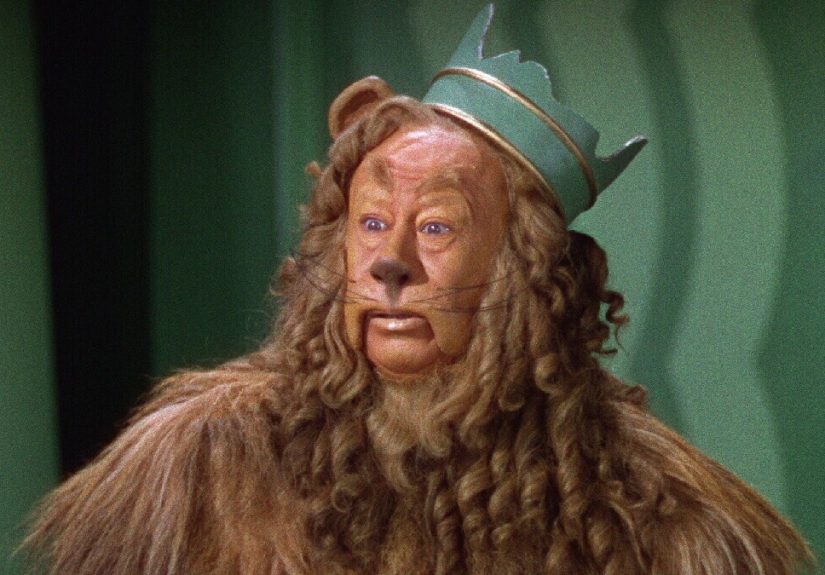
6. The Cowardly Lion’s tough-guy entrance lasts about five seconds
Few comic reversals in classic film are as clean as the Cowardly Lion’s introduction. He storms in with full swagger, ready to dominate the room like the king of every possible jungle, hallway, and conversation. He growls, struts, and acts as though he has been waiting all week to terrify these travelers. Then Dorothy slaps him, and his entire image collapses like a folding chair.
That turn is perfect. One moment he is the loudest creature in Oz, the next he is weepy, offended, and emotionally available in a way no bully ever plans to be. Bert Lahr plays the shift with such commitment that the scene still feels fresh. The joke is not merely that he is scared. It is that he is dramatically, poetically, spectacularly unequipped for the role he has assigned himself. He talks like a legend and reacts like someone who absolutely needs a snack and a blanket.
5. Emerald City glamor and the absurd majesty of the Horse of a Different Color
Oz excels at visual punch lines, and the Emerald City sequence may be the movie’s fanciest joke. Everyone gets polished, brushed, trimmed, and made over like they have wandered into a fantasy department store with no spending limit. Then comes the horse of a different color, which is such a gloriously literal phrase turned into a visual gag that you almost want to applaud the sheer nerve of it.
This moment is funny because it treats nonsense with total seriousness. Nobody stops to ask why the horse is changing color as if it has its own mood board. In Oz, ridiculous things do not arrive with explanation; they arrive with confidence. That is the secret. If a movie gives you a brightly colored horse and acts like this is obviously standard transportation, laughter becomes the natural response. The scene is playful, strange, and just self-aware enough to feel like a wink without breaking the spell.
4. “If I Were King of the Forest” is bravery by way of theatrical overcompensation
The Cowardly Lion gets another slot on this list because honestly, he earns it. “If I Were King of the Forest” is funny for the same reason a lot of great comedy works: the character is trying way too hard. He imagines power, majesty, command, fearlessness. What comes out is a glorious mixture of chest-puffing fantasy and transparent insecurity.
The number works because the Lion is not mocking courage; he is auditioning for it. That makes his bluster endearing instead of annoying. He wants so badly to be grand that every flourish becomes comic. His performance has the energy of someone practicing confidence in the mirror and hoping nobody notices the hands shaking just out of frame. The song and scene also give the film a little theatrical extra, a reminder that Oz is a place where personality problems can become full-scale production numbers.
3. The Winkie guard disguise rescue is chaos in uniform
By the time Dorothy is trapped in the Witch’s castle, the movie could have gone fully serious. Instead, it slides into one of its funniest adventure beats: the Scarecrow, Tin Man, and Lion disguising themselves as Winkie guards. On paper, it is a clever infiltration. On screen, it is three anxious men with wildly different skill sets pretending they belong in enemy territory and hoping no one asks follow-up questions.
The Library of Congress even preserves imagery from this rescue setup, which makes sense because it captures the film’s tonal balance so well. The scene is suspenseful, but it is also delightfully awkward. These are not professional spies. These are desperate friends held together by loyalty, luck, and a complete refusal to admit how shaky the plan is. That is exactly why it works as comedy. Audiences love competence, but they also love watching well-meaning amateurs bluff their way through a crisis.
2. The Wizard’s giant-head routine is both impressive and hilariously overdone
The first full display of the Wizard is one of the movie’s great comic spectacles because it is so magnificently extra. Fire, smoke, booming commands, giant floating face, endless drama: the whole presentation feels like a nervous man got access to special effects and made the most of it. It is intimidating, yes, but it is also funny in the way all oversized self-importance becomes funny eventually.
That scene works on two levels. As a child, you react to the spectacle. As an older viewer, you start noticing the theatrical overkill. The Wizard is like a manager who scheduled too many pyrotechnics for a simple meeting. His demand for the Witch’s broomstick is comic partly because it is delivered with such inflated authority. Oz often laughs at the gap between appearance and reality, and nowhere is that clearer than in a ruler who seems all-powerful while radiating the energy of a man desperately hoping the machine keeps humming.
1. Toto exposing the man behind the curtain
Of all the funny moments in The Wizard of Oz, Toto pulling back the curtain is the best because it is the perfect payoff to the entire movie’s sense of humor. A magical quest leads to a booming all-powerful figure, and who destroys the illusion? Not a warrior. Not a scholar. A small dog with excellent instincts and absolutely no respect for theatrical fraud.
The reveal is funny because it is so simple. After all the fire and noise, the truth is just one flustered man working the controls. His famous plea to ignore what is happening behind the curtain only makes it better. The joke is not just that the Wizard is fake. It is that he is caught in the least dignified way possible. This is classic comedy: high authority punctured by low-tech reality. And it is also why the film stays sharp. Beneath the fantasy, The Wizard of Oz understands something timeless: pomposity is never safe around a curious dog.
Why These Funny Scenes Still Work Today
The movie’s biggest comic strength is that the humor never fights the heart of the story. In fact, it supports it. Dorothy is in danger. She is homesick. The Witch is genuinely menacing. But because the film keeps giving us silliness, swagger, and comic release, the journey feels bigger, warmer, and more human. That balance is hard to pull off. Plenty of fantasy stories become too cute or too grim. The Wizard of Oz somehow gets both magic and mischief into the same basket.
That is why viewers keep coming back. The film has quotable lines, unforgettable entrances, and jokes that do not depend on trends. It trusts the audience to laugh at movement, contrast, vanity, cowardice, and plain old theatrical nonsense. Better still, it lets characters be ridiculous without making them disposable. We laugh at the Lion, but we also root for him. We laugh at the Wizard, but we also understand him. We laugh at the Scarecrow and Tin Man, but they remain deeply lovable. That is not accidental. That is craft.
Experiences That Keep These Oz Moments Funny Across Generations
One of the most interesting things about The Wizard of Oz is how differently its funny moments play depending on where and with whom you watch it. See it alone, and the humor feels elegant and carefully built. See it with family, and the movie becomes a relay race of reactions. Younger viewers often laugh first at the Scarecrow’s boneless movement or the Lion’s dramatic breakdown, while older viewers catch the slyer joke underneath: everybody in Oz is trying to look more impressive than they really are.
That shared viewing experience matters. This is one of those rare classics where grandparents, parents, and kids do not laugh at exactly the same beat, but they all laugh somewhere. A child might lose it at the Tin Man squeaking through his feelings. An adult might laugh hardest when the Wizard overproduces his own entrance like a stage manager with unlimited smoke. A film student may admire the precision of the performances. A casual viewer may simply enjoy the fact that Toto has the strongest anti-nonsense instincts in the cast.
The movie also gets funnier on rewatch. The first time through, Oz feels enormous and mysterious. The second or third time, you start noticing how much comedy is hidden in the rhythm of the scenes. The Lion’s confidence is funny because you already know it has an expiration date. Professor Marvel is funnier once you realize he is the prototype for every smooth-talking operator who ever tried to win trust with a voice and a prop. The Emerald City makeover becomes funnier when you accept that the film is not just showing fantasy luxury; it is gently teasing the idea that presentation alone can transform anybody.
There is also something special about seeing these moments with a crowd. In a theater, classroom, or living room full of people, the jokes breathe differently. Laughter builds in waves. Someone starts chuckling when the Lion puffs himself up, someone else cracks when he folds emotionally a second later, and suddenly the whole room is in on the same comic rhythm. That kind of reaction is rare for older movies, and it says a lot about how cleanly these scenes were built. They do not require explanation, nostalgia, or homework. They still hit.
And then there is the emotional side of the experience. The funniest moments do not weaken the story; they make the ending land harder. When Dorothy says goodbye to her friends, the audience feels it more because these characters have made them laugh. Comedy creates attachment. By the time the curtain is pulled back and illusions are stripped away, the movie has already earned the right to be sentimental. It gave us cowardice, vanity, panic, and improvisation in lovable form, and that is why returning to Oz often feels like revisiting old friends who are still capable of surprising you.
Note: This article is formatted for direct web publishing and intentionally omits inline source links while remaining grounded in documented film history and widely recognized scene details.