Table of Contents >> Show >> Hide
- Why Wedding Shaming Became an Internet Sport
- 40 Wedding Moments That Deserved a Place in the Hall of Shame
- The Real Reason Wedding Drama Gets So Messy
- When Couples Are the Problem
- What Wedding Shaming Teaches Guests
- What Wedding Shaming Teaches Couples
- The Funny Side of Wedding Disasters
- Experience-Based Takeaways: How to Survive Wedding Chaos Without Becoming the Story
- Conclusion: Laugh, Learn, and Please Do Not Wear White
Weddings are supposed to be magical: soft lighting, meaningful vows, happy tears, and at least one uncle who treats the dance floor like a televised audition. But every now and then, the fairy tale gets interrupted by a guest in a white gown, a mother-in-law with a surprise speech, a plus-one who was never invited, or a couple who thinks “cash bar” means “emotional obstacle course.”
That is where wedding shaming comes in. The phrase may sound dramatic, but online communities built around wedding disasters have become a strangely useful mirror. They collect the stories people whisper about in parking lots after receptions: the outrageous invitations, the bridezilla demands, the guest-list warfare, the etiquette crimes, and the wildly tacky choices that make strangers across the internet say, “Absolutely not.”
The viral appeal of groups like “That’s It, I’m Wedding Shaming” is not just about laughing at bad centerpieces or questionable cake toppers. It is about the tension between love and logistics. A wedding is one of the few events where family politics, money, tradition, social media, fashion, food, alcohol, and old grudges are all put into one room and told to behave. Naturally, some of them do not.
Why Wedding Shaming Became an Internet Sport
Wedding shaming works because almost everyone understands the stakes. Even people who have never planned a wedding know the basic rules: do not wear white unless asked, do not bring extra guests, do not announce your pregnancy during the toast, do not propose at someone else’s reception, and do not treat the open bar like a dare from the universe.
Yet these rules are broken with astonishing confidence. That confidence is what makes the stories so shareable. The internet loves a villain, and weddings often provide one wearing satin, sequins, or a suspiciously bridal shade of ivory.
At the same time, wedding shaming is not always cruel. At its best, it is a form of social correction. People read these stories and learn what not to do. They discover that RSVP deadlines matter, that registries are helpful rather than greedy, that plus-ones cost real money, and that “it’s my special day” is not a legal defense for treating friends like unpaid seasonal employees.
40 Wedding Moments That Deserved a Place in the Hall of Shame
The wildest wedding shaming examples usually fall into familiar categories. Some are funny. Some are rude. Some are so chaotic they should have come with a referee. Here are 40 types of moments that make people online collectively clutch their pearls, their bouquets, and their leftover cake.
- The guest who wears white: Not cream, not champagne, not “it looked beige in the store.” White.
- The plus-one smuggler: Someone receives one invitation and arrives with a date, two children, and possibly a cousin named Tyler.
- The RSVP ghost: They ignore every deadline, then ask where they are seated the morning of the wedding.
- The surprise proposal: Romantic? Maybe. Appropriate? Not unless the couple gave explicit permission.
- The pregnancy announcement toast: Congratulations, but this is not your press conference.
- The cash-grab invitation: No ceremony details, no warmth, just a registry link and a Venmo handle doing all the emotional labor.
- The dress-code rebel: Black-tie wedding, cargo shorts energy.
- The child-free wedding protester: They treat “adults only” like a personal attack instead of a planning boundary.
- The bridesmaid invoice shock: A bride expects friends to pay for designer dresses, destination travel, glam, gifts, and her emotional support smoothie.
- The groom who forgot the vows: Love is patient. The officiant, maybe less so.
- The family member who rewrites the guest list: “I invited Aunt Carol’s neighbors because they know your dog.”
- The drunk speech disaster: It begins with “I probably shouldn’t say this,” and tragically continues.
- The ex who shows up: Nothing says “romance” like unresolved drama at table seven.
- The DIY fail centerpiece: Hot glue, glitter, and denial are not always enough.
- The bride who demands weight loss: Bridal party members are people, not accessories with pulse rates.
- The guest who changes meal choices at the reception: The caterer is not a wizard with a chicken wand.
- The couple who charges attendance fees: Budgeting is hard, but selling tickets to your vows is a bold plot twist.
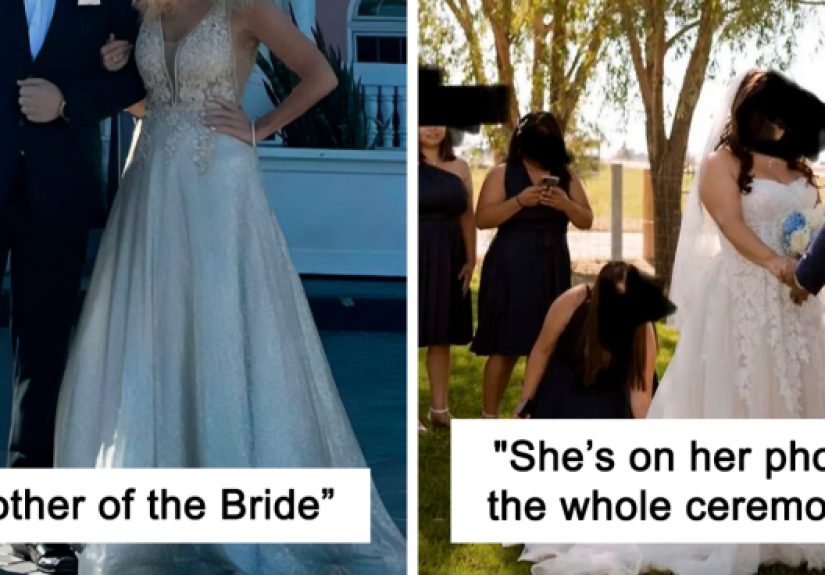
- The mother-in-law in a wedding gown: A classic. A horror film in lace.
- The guest who posts first-look photos early: Social media can wait. The couple should get to reveal their own day.
- The wedding website with aggressive rules: Helpful information is fine. A 12-page manifesto is not.
- The bride who fires bridesmaids publicly: Group chats are not courtrooms.
- The groom’s friend who heckles vows: Comedy has a time and place. This is neither.
- The relative who brings a pet uninvited: Unless the invitation says “and your emotional support iguana,” no.
- The destination wedding guilt trip: Guests are allowed to have budgets, jobs, passports, and limits.
- The registry with only luxury items: A $900 bowl may be beautiful, but so is humility.
- The no-food reception: If guests are drinking and dancing for hours, feed them something more substantial than vibes.
- The bride who dictates hairstyles: Coordinated is one thing. Controlling someone’s bangs is another.
- The guest who brings a full camera setup: Let the photographer work. This is not a wildlife documentary.
- The couple who ignores accessibility: A beautiful venue is not beautiful if guests cannot safely use it.
- The seating chart feud: Putting divorced parents and their new partners at one tiny table is not “efficient.” It is a social experiment.
- The best man who roasts too hard: A toast should honor the couple, not expose every college mistake.
- The bride who expects unpaid labor: Friends can help. Friends should not become a full-service event staff.
- The guest who complains about everything: If the chicken is dry, tell your group chat later, not the bride during photos.
- The couple who forgets thank-you notes: Gratitude still matters, even in the age of emojis.
- The late arrival parade: Walking in during the vows is not a grand entrance.
- The overbearing parent speech: A wedding toast is not the place to relitigate childhood.
- The wedding party rebellion: When expectations are unclear, resentment becomes the unofficial theme color.
- The theme taken too far: Rustic chic is charming. Hay bales in formalwear can become a rash with string lights.
- The couple who bans phones but livestreams drama: Boundaries should apply consistently.
- The guest who steals décor: Centerpieces are not party favors unless someone says they are.
The Real Reason Wedding Drama Gets So Messy
Behind every outrageous wedding post is usually a very ordinary problem: unclear expectations. Weddings require decisions about money, time, attention, and relationships. When those decisions are not communicated clearly, people fill the gaps with assumptions. Unfortunately, assumptions often arrive wearing the wrong dress code and bringing an uninvited boyfriend.
Guest lists are one of the biggest sources of conflict. Every person added to a wedding can affect catering, seating, rentals, transportation, favors, venue capacity, and budget. That is why plus-one etiquette matters. If an invitation names only one person, the respectful move is to attend alone or decline politely. Writing in extra names is not charming. It is basically editing someone else’s budget with a gel pen.
Dress codes are another common battlefield. Modern weddings vary widely, from backyard brunches to formal ballroom affairs, so guests should read the invitation carefully. Wearing white remains one of the most famous wedding guest mistakes because it pulls attention away from the couple. Even if the guest has innocent intentions, the visual message can look competitive. And if your outfit requires the sentence “It’s not technically bridal,” that is usually your cue to choose another outfit.
When Couples Are the Problem
Wedding shaming is not only about bad guests. Couples can earn criticism too. Sometimes the issue is unrealistic expectations. A bride may ask bridesmaids to spend thousands of dollars without considering their financial situations. A groom may treat planning as someone else’s hobby and then suddenly have opinions about napkin fonts. Families may use money as leverage. Vendors may be treated like servants. Guests may be given so many rules that attending feels like applying for a government permit.
Modern couples face real pressure. Weddings in the United States can cost tens of thousands of dollars, and social media has made every detail feel visible, comparable, and permanent. It is understandable that couples want the day to feel special. But “special” should not become “hostile.” The best weddings are not the ones with the most expensive flowers or the strictest aesthetic. They are the ones where people feel welcomed, fed, informed, and emotionally safe.
The Difference Between Boundaries and Control
Healthy wedding boundaries sound like this: “Our venue is adults only,” “Please RSVP by this date,” “The ceremony will be unplugged,” or “The dress code is cocktail attire.” Controlling behavior sounds like this: “You must dye your hair,” “You cannot be pregnant in my photos,” “You owe me a destination bachelorette weekend,” or “You are not allowed to look better than me.”
The internet usually supports clear boundaries. It tends to shame entitlement. That distinction matters. A child-free wedding is not automatically rude. A couple refusing to accommodate a guest’s medical dietary need probably is. A registry is normal. Demanding gifts from people who are not invited is not. Context is everything.
What Wedding Shaming Teaches Guests
For guests, the lessons are simple but powerful. RSVP on time. Read the invitation. Do not assume a plus-one. Follow the dress code. Arrive before the ceremony begins. Avoid dramatic announcements. Drink responsibly. Give a card or gift if you are able. Thank the hosts. Do not post private moments before the couple does.
Most of all, remember that attending a wedding is not just attending a party. It is witnessing a milestone. You do not have to understand every tradition, approve every flower choice, or love every song. You only have to be respectful. That means not turning someone else’s carefully planned day into your own main-character montage.
What Wedding Shaming Teaches Couples
For couples, the lesson is not “be perfect or the internet will roast you.” It is “be considerate, be clear, and be realistic.” Guests are more likely to follow rules when the rules are communicated kindly. Wedding party members are more likely to help when expectations and costs are discussed early. Families are less likely to interfere when boundaries are set before money and emotions get tangled.
A good wedding website can prevent many problems. It can explain dress codes, parking, ceremony timing, meal options, child policies, hotel blocks, accessibility details, and RSVP instructions. The tone should be helpful, not threatening. Think less “royal decree” and more “friendly guide so nobody panics in the parking lot.”
Couples should also budget emotionally, not just financially. Planning a wedding can expose hidden family dynamics and friendship tensions. If a bridesmaid is overwhelmed, a parent is controlling, or a guest is making demands, it helps to respond calmly and privately. Public callouts may feel satisfying for 12 seconds, but screenshots live forever.
The Funny Side of Wedding Disasters
Part of the reason wedding shaming content spreads so quickly is that it gives people permission to laugh at the absurdity of social rituals. Weddings come with enormous expectations: be elegant, be emotional, be original, be traditional, be affordable, be Instagrammable, be relaxed, be perfectly organized, and somehow make 140 people happy while wearing formal shoes.
No wonder things go sideways. A flower girl may refuse to walk. A cake may lean like it has heard bad news. A DJ may play the wrong first dance song. Rain may arrive with dramatic timing. These mishaps are not shame-worthy by themselves. In fact, they often become the stories couples cherish later.
The real shame begins when people respond badly: blaming vendors for impossible weather, yelling at children for being children, humiliating friends, ignoring guest needs, or acting as if a wedding day grants temporary royal immunity. The funniest wedding stories often have a lesson hiding under the tulle: kindness saves more events than perfection ever will.
Experience-Based Takeaways: How to Survive Wedding Chaos Without Becoming the Story
Anyone who has observed enough weddings learns that the most memorable problems rarely come from the things couples fear most. A slightly crooked boutonniere will not ruin the day. A missing charger will not destroy a marriage. A centerpiece that looks smaller than expected will not make guests flee into the night. The real trouble usually comes from people feeling ignored, embarrassed, pressured, or surprised.
The best experience-based advice for couples is to overcommunicate the practical details and underreact to the small imperfections. Tell guests exactly who is invited. Put names on invitations clearly. Add “we have reserved one seat in your honor” if necessary. If the wedding is child-free, say so politely and early. If the venue has stairs, grass, gravel, heat, limited parking, or a long walk, mention it before guests arrive in stilettos and regret.
For wedding party members, the smartest approach is to ask about costs before saying yes. Being a bridesmaid or groomsman is an honor, but it can also be expensive. Clothing, travel, showers, bachelor or bachelorette events, gifts, hair, makeup, hotels, and time off work add up quickly. A healthy couple will understand that friendship should not require financial self-destruction. A simple, honest conversation can prevent resentment later.
For guests, the golden rule is to avoid making extra work for the couple. If the RSVP asks for a meal choice, choose one. If the invitation does not include your children, do not add them. If you have a dietary restriction, communicate it early and respectfully. If you cannot attend after saying yes, notify the couple as soon as possible. If you are running late, enter quietly. If the bar is open, remember that “free” is not the same as “challenge accepted.”
Another useful lesson is that social media can turn small mistakes into permanent entertainment. Before posting a photo, joke, complaint, or behind-the-scenes moment, ask whether the couple would want it online. A blurry shot of the bride before the ceremony, a video of someone crying, or a caption mocking the food may seem harmless in the moment. It can feel very different to the people who spent months planning the day.
Finally, the best weddings are built around hospitality rather than performance. Beautiful photos are wonderful, but guests remember how they felt. Were they welcomed? Was the schedule clear? Did they have enough to eat? Could they find the bathroom? Did the couple seem happy? Did the event feel like a celebration rather than a test?
Wedding shaming stories are entertaining because they are extreme, but they are also useful because they show where manners still matter. A wedding does not need to be flawless. It needs to be thoughtful. If people can leave saying, “That was so them,” instead of “I need to post this immediately,” the couple has already won.
Conclusion: Laugh, Learn, and Please Do Not Wear White
“That’s It, I’m Wedding Shaming” succeeds because weddings reveal people at their most emotional, most hopeful, and occasionally most unhinged. The stories are funny because they are familiar. We recognize the guest who assumes too much, the relative who oversteps, the couple who loses perspective, and the tiny etiquette mistake that snowballs into a group-chat emergency.
But beneath the humor is a surprisingly practical message. Weddings are not just about flowers, outfits, playlists, and cake. They are about respect. Respect the invitation. Respect the budget. Respect the couple’s boundaries. Respect your friends’ finances. Respect the fact that not every moment needs to be content.
A perfect wedding is impossible. A considerate wedding is not. And if everyone involved remembers that, there will be fewer disasters to shame online and more receptions where the biggest scandal is simply someone doing the worm during “September.” Honestly, we can live with that.
Note: This article is an original, web-ready commentary inspired by real wedding etiquette discussions, online wedding-shaming culture, and common modern wedding planning issues. It does not copy private posts or reproduce user-generated content from any online group.