Table of Contents >> Show >> Hide
- Why Steam Corn on the Cob?
- How to Choose the Best Corn for Steaming
- Step-by-Step: Steamed Corn on the Cob
- Flavor Ideas for Steamed Corn on the Cob
- Is Steamed Corn on the Cob Healthy?
- Tips for Buying, Cleaning, and Storing Corn
- Common Questions About Steaming Corn
- 500-Word Experience: Making Steamed Corn on the Cob Even Easier
If summer had a ringtone, it would probably sound like corn kernels popping in a pot and someone yelling, “Who took my last stick of butter?” Steamed corn on the cob is one of those side dishes that looks impressive, tastes amazing, and is secretly so easy you could make it with one hand while flipping burgers with the other. With just fresh corn, water, and a few pantry toppings, you can have crisp-tender, naturally sweet corn on the table in minutes.
Compared with boiling or roasting, steaming corn on the cob helps preserve more of its vitamins and antioxidants while keeping the kernels juicy instead of waterlogged. It’s also incredibly forgiving: you can cook a few ears for a weeknight dinner or load up the pot for a backyard cookout, and the method barely changes. Let’s walk through how to choose the best ears, steam them perfectly, and dress them up (or down) for every occasion.
Why Steam Corn on the Cob?
Better texture and more flavor
When you boil corn, the ears sit fully submerged in water. Leave them too long and they can turn soft, starchy, and a little bland. Steaming, on the other hand, suspends the corn above a small amount of simmering water so the hot vapor gently cooks it. The kernels stay plump, crisp-tender, and intensely sweet rather than soggy.
Many test kitchens and home cooks report that steamed corn gives them the “sweetest bite” with a subtle snap when you sink your teeth in. Because the flavor isn’t diluted in cooking water, you can often skip adding sugar or milk to the pot entirelynature has already done the work.
Nutrient retention
Corn is more than just a vehicle for butter. A medium ear of corn delivers fiber, B vitamins, and minerals like magnesium and potassium, plus antioxidants such as lutein and zeaxanthin that support eye health. Steaming cooks corn at a slightly lower temperature and with less direct contact with water than boiling, which helps preserve heat-sensitive nutrients and prevents water-soluble vitamins from leaching out.
Of course, the toppings you add later are up to you. If you’re watching calories or sodium, you can keep it simple with a light brush of olive oil, herbs, and a pinch of salt. If you’re going full summer festival mode, there’s always butter, cheese, and creamy sauces.
Quick, simple, and low-stress
Another reason steaming is a favorite method: it’s nearly foolproof. Once the water is boiling, the corn typically needs only 4 to 10 minutes depending on how tender you like it and how large the ears are. As long as you keep some water in the bottom of the pot, it’s hard to ruin.
Plus, you don’t need a fancy steamer. A basic pot with a steamer insert works beautifully, but you can also use a metal colander, a wire rack, or even a heat-safe plate set over a small amount of water in a large pan.
How to Choose the Best Corn for Steaming
Great steamed corn starts at the store or farmers market. No amount of butter can rescue an ear that’s old or dried out. Here’s what to look for when you’re picking corn on the cob:
- Husks: Choose ears with bright green, tightly wrapped husks that feel slightly damp. Avoid husks that look brown, brittle, or papery.
- Silks (the tassels at the top): Fresh silk is pale gold to light brown and a bit moist. Dark, dry, or blackened silk is a sign the corn is past its prime.
- Weight and feel: The ear should feel heavy for its size, with kernels that extend all the way to the tip. Gaps or flat spots often mean missing or shriveled kernels.
- Size: Medium-sized ears are usually the sweetest and most tender. Oversized ears can sometimes be tougher and starchier.
Once you bring your corn home, try to cook it as soon as possibleideally the same day. Corn’s natural sugars gradually convert to starch after it’s picked, so the sooner it hits the steamer, the sweeter it will taste. If you need to store it, leave the husks on and refrigerate the ears in a produce drawer for up to a few days.
Step-by-Step: Steamed Corn on the Cob
Ingredients
- 4 to 6 ears fresh corn on the cob, husks and silks removed
- 2 inches of water for the pot
- Salted butter, olive oil, or your favorite toppings (optional)
- Fine salt and freshly ground black pepper, to taste
Equipment
- Large pot with a lid
- Steamer basket, wire rack, or metal colander that fits inside the pot
- Tongs for lifting hot corn
Instructions
- Prep the corn. Peel back and remove the husks, then strip away the silks with your fingers or a soft brush under cool running water. Snap or cut off any long stalk ends so the ears fit comfortably in the pot.
- Add water to the pot. Pour in enough water to come 1 to 2 inches up the sides. The water should sit below the bottom of your steamer basket or colander so the corn is above the liquid, not submerged.
- Bring the water to a boil. Set the steamer basket or colander in the pot, cover, and bring the water to a full boil over high heat.
- Add the corn. Arrange the ears in a single layer (or stack them loosely) in the basket. Cover the pot again so the steam is trapped.
- Steam until crisp-tender.
- For crisp, snappy corn: steam about 4–5 minutes.
- For tender but still firm kernels: steam 6–8 minutes.
- For very soft corn: steam 10–12 minutes.
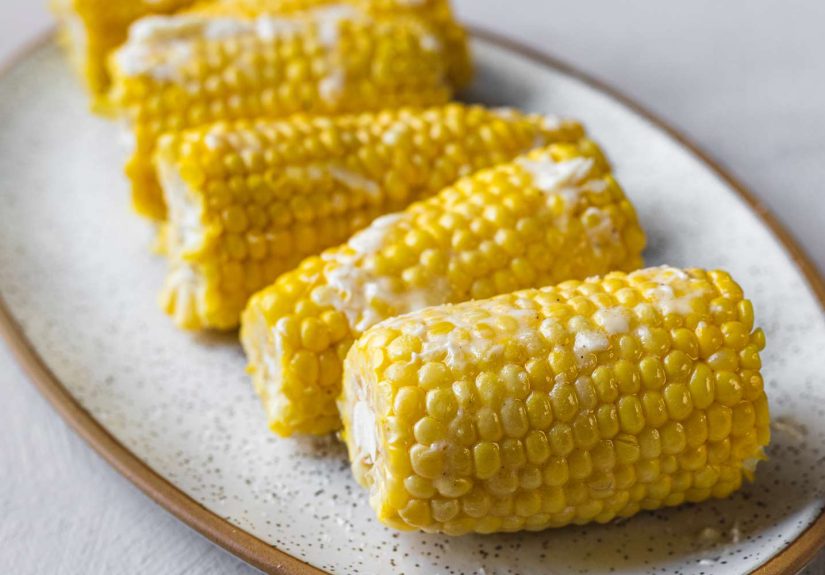
The kernels will turn a deeper, brighter yellow (or yellow-and-white if you’re using bicolor corn) and smell sweet when ready.
- Check the water level. If you’re steaming for more than 8–10 minutes, peek once or twice to be sure there’s still some water in the bottom of the pot. If needed, carefully add a splash of hot water and continue steaming.
- Serve hot. Use tongs to transfer the corn to a platter. While it’s still piping hot, add your favorite toppings and seasonings.
Flavor Ideas for Steamed Corn on the Cob
Classic melted butter and a sprinkle of salt will never go out of style, but steamed corn is a fantastic blank canvas. Try one of these easy twists:
- Garlic-Herb Butter: Mix softened butter with minced garlic, chopped parsley, and a squeeze of lemon juice. Brush over hot corn.
- Parmesan & Pepper: While the corn is still steamy, shower it with grated Parmesan, black pepper, and a pinch of sea salt.
- Chili-Lime: Brush the corn with a little butter or oil, then sprinkle with chili powder, smoked paprika, and lime zest. Finish with fresh lime wedges.
- Mexican-inspired street corn (simplified): Spread a thin layer of mayonnaise or Greek yogurt over the corn, then add crumbled cotija cheese, chili powder, and cilantro.
- Everything Bagel Corn: A fun shortcut: brush with butter and sprinkle with everything bagel seasoning for garlic-onion-sesame crunch.
Is Steamed Corn on the Cob Healthy?
In moderation and with sensible toppings, steamed corn absolutely fits into a balanced diet. A medium ear of corn typically contains around 80–100 calories, plus fiber, protein, vitamins, and minerals. Steaming keeps added fats to a minimum, and you control how much butter, oil, or cheese you add at the table.
Corn is naturally gluten-free and provides complex carbohydrates for energy. The insoluble fiber in the kernels supports healthy digestion and helps you feel full. The yellow pigment comes from carotenoids, which act as antioxidants in the body. If you’re watching carbs, you can pair corn with lean protein and non-starchy vegetables so it fits your overall meal plan.
Like most foods, the healthiest version of steamed corn is the one that matches your needs. For a lighter option, try brushing the ears with olive oil, then seasoning them with herbs, spices, and a squeeze of citrus instead of piling on heavy toppings.
Tips for Buying, Cleaning, and Storing Corn
Cleaning fresh corn
To clean corn efficiently:
- Shuck the corn just before cooking so it doesn’t dry out.
- Peel the husk from the top down, then snap off the base.
- Rub the ear with a clean kitchen towel or soft brush under cool running water to remove stubborn silk threads.
Short-term storage
If you can’t cook the corn right away, leave the husks on, tuck the ears into a plastic bag, and refrigerate them in the crisper drawer. Try to use farmers-market corn within a couple of days for the best sweetness. Grocery-store corn bred for a longer shelf life can often last four or five days in the fridge.
Leftovers and freezing
Have extra steamed corn? Let it cool, then:
- Wrap whole ears and refrigerate for up to three days.
- Cut the kernels off the cob and store them in an airtight container to add to salads, soups, salsas, or grain bowls.
- For longer storage, freeze the kernels in a single layer on a baking sheet, then transfer to a freezer bag. They’ll keep for several months.
Common Questions About Steaming Corn
Can I steam corn without a steamer basket?
Yes. Use a metal colander or mesh strainer that fits inside your pot without touching the water. You can also invert a small heat-safe bowl or rack in the bottom of the pot and rest a plate or shallow pan on top to hold the corn. Just be sure to keep the lid on so the steam stays trapped.
Do I need to add sugar or milk to the water?
Not at all. Modern sweet corn varieties are naturally high in sugar, so steaming with plain water is usually enough to bring out their flavor. If your corn is very early or late in the season and tastes a bit bland, a pinch of sugar in the water won’t hurt, but it’s rarely necessary.
How do I know when the corn is done?
Visual clues and smell are your best guides. The kernels will look fuller and more opaque, and the color deepens slightly. You’ll also notice a sweet, corn-field aroma when you lift the lid. If you’re unsure, carefully jab a fork into a kernel or take a tiny test bitejust beware of the hot steam.
Can I steam frozen corn on the cob?
Yes, but it will take a bit longer. Add frozen ears directly to the steamer basket, cover, and steam for 8–12 minutes, checking for tenderness. Because frozen corn was blanched before freezing, the texture may be slightly softer than fresh, but still delicious.
500-Word Experience: Making Steamed Corn on the Cob Even Easier
If you cook a lot of summer dinners, steamed corn on the cob quickly becomes your weeknight secret weapon. Once you’ve done it a few times, you’ll find small tricks that make the process even smoother and more flexible for real life.
One of the biggest lessons many home cooks learn is timing. Corn doesn’t love sitting around after it’s cooked; those perfect, juicy kernels start to wrinkle if they’re left standing too long. So instead of steaming corn first and letting it wait while you rush to grill the chicken and set the table, flip the order. Get your main dish mostly done, then turn your attention to the corn. Since it takes only a few minutes, you can start steaming it just as you’re finishing the rest of the meal and serve everything hot at once.
Another useful trick is treating the pot of steaming corn as a “holding zone” during a party. If guests are arriving at different times, steam a big batch until it’s just barely tender, then turn the heat to low. The gentle steam will keep the corn warm without overcooking it for a surprising amount of time. Just make sure there’s still a little water in the bottom of the pot and the lid stays on between servings.
Families with picky eaters also tend to love steamed corn because everyone can customize their own cob. Set up a mini topping bar on the kitchen counter: a dish of butter, a bottle of olive oil, bowls of grated Parmesan, chopped herbs, chili powder, lime wedges, and maybe a sprinkle of seasoned salt. Kids enjoy “painting” their corn with melted butter and then rolling it in their chosen seasonings. Adults can keep it simple or go wild with layers of flavor.
Cleanup is straightforward, too. Since the corn never touches the bottom of the pot, you’re not left with starchy water or scorched bits. Once the pot cools, just pour out the water and give everything a quick wash. If you use a metal colander or rack as your steamer, it can often go straight into the dishwasher.
Finally, don’t underestimate how versatile leftover steamed corn can be. The next day, slicing kernels off the cob takes only a few minutes and opens up a whole new world of dishes. Toss the kernels with black beans, cherry tomatoes, and avocado for a quick salad; stir them into scrambled eggs; or add them to a simple pasta with tomatoes, basil, and a handful of cheese. That little bit of sweetness and crunch turns basic meals into something special.
Steamed corn on the cob is the rare side dish that works just as well on a Tuesday night as it does at a Fourth of July cookout. It’s budget-friendly, naturally sweet, quick to prepare, and endlessly adaptable. Once you get comfortable with the method, you may find yourself planning dinners around itbecause when there’s a big platter of buttery, steaming corn on the table, everything else is just the supporting cast.