Table of Contents >> Show >> Hide
- Why This Simple Pancake Recipe Works
- Simple Pancake Ingredients
- How To Make Pancakes Step by Step
- Tips for Fluffy Pancakes Every Time
- Common Pancake Mistakes and How To Fix Them
- Best Pancake Toppings
- Easy Variations on This Homemade Pancake Recipe
- How To Store and Reheat Pancakes
- Pancake Safety Note
- Frequently Asked Questions About Making Pancakes
- Final Thoughts
- Real-Life Pancake Experiences: What Making Pancakes Actually Feels Like
- SEO Tags
There are two kinds of mornings: the ones where you leap out of bed like a cheerful cartoon bluebird, and the ones where you shuffle into the kitchen looking like a crumpled napkin. Pancakes work for both. They are the ultimate breakfast peace treatyeasy enough for sleepy cooks, cozy enough for weekend brunch, and impressive enough to make everyone at the table think you have your life completely under control.
If you have ever wondered how to make pancakes from scratch without ending up with rubbery frisbees, mystery paste, or a smoky kitchen disaster, you are in the right place. This guide breaks down a simple pancake recipe in plain English, with real cooking logic, practical tips, and a few funny truths from the griddle. You do not need fancy ingredients. You do not need a culinary degree. You just need a bowl, a whisk, a pan, and the bravery to stop stirring before your batter turns into cement.
Below, you will learn the best way to make fluffy pancakes with pantry basics, how to avoid common mistakes, how to tell when it is time to flip, and how to customize your stack without turning breakfast into a science fair project. Let’s make pancakes that are golden on the outside, tender in the middle, and gone suspiciously fast.
Why This Simple Pancake Recipe Works
A great homemade pancake recipe does not rely on kitchen magic. It relies on balance. Flour gives structure, baking powder provides lift, a little sugar helps with flavor and browning, salt wakes everything up, milk adds moisture, egg brings richness and binding, and melted butter gives the pancakes that soft, comforting bite people associate with a classic diner stack.
The secret is not overcomplicating things. Many of the best pancake recipes follow the same basic pattern: mix dry ingredients, mix wet ingredients, combine gently, then cook on a properly heated skillet. That gentle mixing matters. If you stir too much, you develop more gluten in the flour, which can make pancakes tough instead of tender. In other words, the batter should look a little imperfect. Small lumps are not a problem. They are a sign that your pancakes still have a chance at greatness.
Simple Pancake Ingredients
This easy pancake recipe makes about 8 medium pancakes, depending on how generous you are with the batter.
- 1 1/2 cups all-purpose flour
- 2 tablespoons granulated sugar
- 2 teaspoons baking powder
- 1/2 teaspoon salt
- 1 1/4 cups milk
- 1 large egg
- 2 tablespoons melted unsalted butter, plus more for the pan
- 1 teaspoon vanilla extract (optional, but highly recommended)
Ingredient Notes
Flour: Standard all-purpose flour is the classic choice for a simple pancake recipe. It gives enough structure without turning the pancakes heavy.
Baking powder: This is what helps your pancakes rise. If your baking powder has been sitting in the back of the cabinet since a previous century, your pancakes may come out flat and gloomy.
Milk: Whole milk adds a bit more richness, but 2% works well too.
Butter: Melted butter adds flavor and tenderness. You can swap in neutral oil if needed.
Vanilla: Optional, but it adds warmth and makes the batter smell like you know what you are doing.
How To Make Pancakes Step by Step
1. Mix the dry ingredients
In a large bowl, whisk together the flour, sugar, baking powder, and salt. This distributes the leavening evenly so you do not end up with one heroic pancake and seven sad ones.
2. Mix the wet ingredients
In a separate bowl or measuring cup, whisk together the milk, egg, melted butter, and vanilla extract.
3. Combine wet and dry ingredients
Pour the wet mixture into the dry mixture. Stir gently until just combined. The batter should be thick but pourable, and it is perfectly fine if a few lumps remain. This is not cake batter. You are not auditioning for smoothness.
4. Let the batter rest briefly
Give the batter 5 to 10 minutes to relax while you heat the pan. A short rest can help the flour hydrate and the batter settle. Just do not leave it parked forever if you want the fluffiest result.
5. Heat your skillet or griddle
Set a nonstick skillet, griddle, or heavy pan over medium heat or medium-low heat, depending on your stove. Add a small amount of butter. The pan should be hot enough that a drop of batter sizzles gently, but not so hot that the butter turns dark and angry in seconds.
6. Portion the batter
Use about 1/4 cup batter per pancake. Pour the batter onto the pan, leaving room between pancakes so they do not merge into one giant breakfast continent.
7. Cook the first side
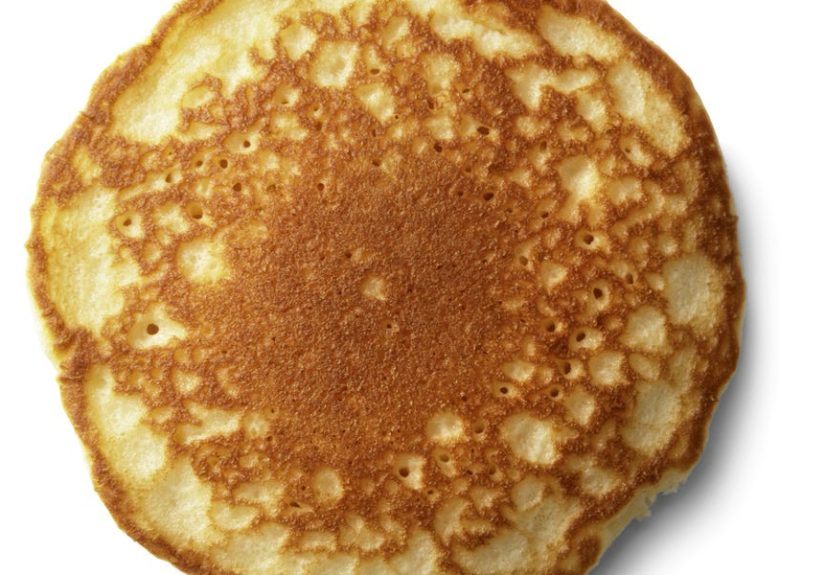
Let the pancakes cook until bubbles appear on top and the edges start to look set and slightly dry. This usually takes about 2 to 3 minutes, depending on your pan and heat level.
8. Flip and finish cooking
Flip once. Cook the second side for another 1 to 2 minutes until golden brown and cooked through. Resist the urge to press down with the spatula. Pancakes are not steaks, and flattening them only squeezes out the light texture you worked for.
9. Serve warm
Transfer cooked pancakes to a plate or keep them warm in a low oven while you finish the batch. Serve with butter, maple syrup, fruit, or whatever makes breakfast feel like a reward.
Tips for Fluffy Pancakes Every Time
Use fresh baking powder
If your pancakes are flat, your baking powder may be the problem. Fresh leavening gives you a better rise and a softer interior.
Do not overmix the batter
This is the big one. Overmixing develops gluten, and gluten is useful when you want chewy bread, not when you want fluffy pancakes. Stir until the flour disappears, then stop. Back away from the bowl like a responsible adult.
Keep the heat moderate
A pan that is too hot can brown the outside before the center cooks. A pan that is too cool can leave the pancakes pale and dense. Medium to medium-low heat is usually the sweet spot.
Flip once
Constant flipping does not improve pancakes. It just creates stress, and breakfast has enough of that already.
Grease lightly
Too much butter in the pan can cause uneven browning. A light coating is all you need.
Common Pancake Mistakes and How To Fix Them
Pancakes are flat
This usually happens because the baking powder is old, the batter was mixed too aggressively, or the batter sat around too long. Use fresh ingredients and cook the batter within a reasonable window.
Pancakes are tough or chewy
You probably overmixed. Next time, stir less. Your batter does not need to be silky smooth to make a beautiful stack.
Pancakes are too dark outside and raw inside
Your heat is too high. Lower the burner a bit and give the pancakes time to cook through.
Pancakes are pale and limp
The pan may not be hot enough. Let it preheat fully before the first batch.
Batter is too thick
Add a tablespoon or two of milk until the batter loosens slightly.
Batter is too thin
Add a tablespoon of flour at a time until it thickens to a pourable consistency.
Best Pancake Toppings
Classic pancakes are wonderful on their own, but toppings take them from “nice breakfast” to “nobody bother me, I am having a moment.” Try these options:
- Warm maple syrup and butter
- Fresh berries and whipped cream
- Sliced bananas and peanut butter
- Chocolate chips and a dusting of powdered sugar
- Greek yogurt and honey
- Toasted pecans or walnuts
- Cinnamon apples or berry compote
Easy Variations on This Homemade Pancake Recipe
Buttermilk pancakes
Swap the milk for buttermilk for a tangier flavor and tender texture. If you do this, many cooks add a little baking soda along with the baking powder to balance the acidity.
Blueberry pancakes
Scatter fresh or frozen blueberries onto each pancake after you pour the batter into the pan. This keeps the berries from turning your whole bowl purple. Pretty? Maybe. Practical? Not really.
Banana pancakes
Add mashed ripe banana for extra moisture and sweetness. Great for using up bananas that have crossed into dramatic freckled territory.
Chocolate chip pancakes
Sprinkle a few chocolate chips onto each pancake after the batter hits the pan. Go easy, unless your long-term goal is dessert disguised as breakfast.
How To Store and Reheat Pancakes
If you somehow have leftovers, let the pancakes cool completely. Store them in an airtight container in the refrigerator for up to 3 days, or freeze them with parchment between each pancake for longer storage.
To reheat, use a toaster, skillet, microwave, or low oven. A toaster is excellent for bringing back a little edge texture. The microwave is faster, but it can make pancakes softer. Not wrong. Just different.
Pancake Safety Note
Do not taste raw pancake batter. It may seem harmless, but raw flour and raw eggs can carry germs. Wait until the pancakes are fully cooked. Your patience will be rewarded with breakfast instead of regret.
Frequently Asked Questions About Making Pancakes
Can I make pancake batter ahead of time?
You can mix the dry ingredients ahead of time and keep them ready in a container. For the best texture, mix the wet ingredients with the dry closer to cooking time.
What makes pancakes fluffy?
Fresh leavening, gentle mixing, and correct pan temperature are the big three. Too much stirring or too much heat can ruin the texture fast.
Can I make pancakes without butter?
Yes. Neutral oil works well in the batter and for greasing the pan.
How do I know when to flip pancakes?
Look for bubbles on the surface and edges that appear set. That is your cue.
Final Thoughts
A simple pancake recipe is one of the most useful kitchen basics you can learn. It is affordable, flexible, and forgiving enough to handle real life. Once you understand the rhythmmix gently, heat the pan properly, flip at the right momentyou can make homemade pancakes whenever the mood strikes, whether that is a holiday brunch, a lazy Sunday, or a Wednesday morning that desperately needs better public relations.
The best pancakes are not always the fanciest ones. They are the ones that arrive hot, golden, and slightly irregular, with butter melting into the surface and syrup working its way into every little crater. They taste like comfort, effort, and a tiny domestic victory. And honestly, that is a pretty good start to any day.
Real-Life Pancake Experiences: What Making Pancakes Actually Feels Like
Making pancakes in a real home kitchen is rarely a flawless food-styling moment, and that is part of the charm. The first pancake is famous for being a little odd. It might come out too pale, a bit lopsided, or shaped like a state nobody can identify. That first pancake is not a failure. It is the warm-up act. It tells you whether the pan is hot enough, whether the batter needs a splash more milk, and whether you are using too much butter in the skillet. In a strange way, the first pancake is the kitchen’s brutally honest life coach.
There is also something wonderfully comforting about the pace of making pancakes. Unlike a rushed weekday breakfast, pancakes slow the morning down. You mix, pour, wait for bubbles, flip, stack, repeat. It becomes rhythmic. Someone usually wanders into the kitchen when the smell starts drifting through the house, pretending they were “just passing by,” when in reality they are there to see how soon syrup will be involved. Pancakes have a remarkable ability to gather people without much effort.
One of the most common experiences people have with a simple pancake recipe is realizing that texture changes everything. A batter that is mixed carefully gives you pancakes that feel soft and light. A batter that was attacked with a whisk for three straight minutes often gives you a denser result. That difference teaches a useful lesson: cooking is not always about doing more. Sometimes it is about stopping at the right time. Pancakes reward restraint, which is a poetic thing to learn before coffee.
Another real-world pancake moment is discovering personal preferences. Some people love a thick, fluffy stack with butter and maple syrup. Others want thinner pancakes with crisp edges. Some insist on blueberries. Some think chocolate chips belong in pancakes, while others think that is dessert wearing a breakfast costume. The fun part is that a basic recipe becomes a starting point for all those opinions. Once you know how to make pancakes well, you can make them your way.
Pancakes are also tied to memory in a way many foods are not. They remind people of weekend breakfasts, sleepovers, grandparents, holiday mornings, or the first time they cooked for someone else and wanted to make something that felt warm and generous. Even a simple stack can feel personal. It says, “I made this for us,” which is surprisingly powerful for a breakfast built from flour, milk, and determination.
And then there is the quiet satisfaction of getting better at them. The first time you make pancakes from scratch, you may second-guess the batter, hover over the skillet, and flip too early. By the third or fourth batch, you start trusting the signs. You know what the bubbles mean. You know how the batter should fall from the spoon. You know when the pan is ready by the sound alone. That kind of kitchen confidence does not arrive with fireworks, but it sticks around. Pancakes are simple, yes, but they teach timing, patience, and a little bit of courage. Not bad for breakfast.