Table of Contents >> Show >> Hide
- Deadheading 101 (Hydrangea Edition)
- The Key to “Should I Cut?”: Old Wood vs. New Wood
- How to Tell What Hydrangea You Have (Even If the Tag Is Gone)
- Quick Decision Guide: Deadhead or Leave Alone?
- Type-by-Type: What to Do With Each Common Hydrangea
- Bigleaf Hydrangea (Hydrangea macrophylla): Mophead & Lacecap
- Reblooming Bigleaf Varieties (Often marketed as “reblooming”)
- Oakleaf Hydrangea (Hydrangea quercifolia)
- Panicle Hydrangea (Hydrangea paniculata)
- Smooth Hydrangea (Hydrangea arborescens)
- Climbing Hydrangea (Hydrangea anomala subsp. petiolaris)
- How to Deadhead Hydrangeas the Safe Way
- Common Mistakes (AKA How People Accidentally Cancel Next Summer)
- So… Should You Deadhead or Leave Them?
- Garden Experiences & Lessons (The “I Learned This the Hard Way” Collection)
- SEO Tags
Your hydrangeas were the main character all summer… and now they’re wearing that “I stayed out in the sun too long”
look. The big question: do you deadhead those fading blooms, or leave them for winter drama and bird-friendly vibes?
The honest answer is delightfully annoying: it depends on what kind of hydrangea you have and what you want from it.
The good news: deadheading hydrangeas is rarely life-or-death for the plant. You’re mostly choosing between
neat-and-tidy vs. cozy-and-ornamental. The bad news: if you cut the wrong kind at the wrong time, next year’s flowers
can vanish like socks in a dryer.
Deadheading 101 (Hydrangea Edition)
Deadheading is simply removing spent flower heads. On many plants, it can push more blooms by preventing
seed production. Hydrangeas aren’t always that dramatic. For most types, deadheading is optionalit’s often more about
aesthetics, plant shape, and protecting buds than “making it bloom again.”
There are exceptions: some reblooming hydrangeas can benefit from removing faded flowers so the plant focuses on
additional rounds of buds. But for many shrubs, deadheading is more like giving your hydrangea a haircut: it looks better,
and sometimes it helps, but it’s not a medical procedure.
The Key to “Should I Cut?”: Old Wood vs. New Wood
Before you touch the pruners, you need one piece of intel: does your hydrangea bloom on old wood or new wood?
In plain English:
-
Old wood bloomers form next year’s flower buds on stems that grew last year. Cut too much at the wrong time,
and you can remove the buds that were quietly loading for next season. -
New wood bloomers flower on fresh growth made in the current season. They’re generally more forgiving if you prune
or deadhead, because buds aren’t “pre-stored” on last year’s stems in the same way.
This one detail explains why hydrangea advice online can sound contradictory. Two people can do “the same thing” and get totally
different resultsbecause they’re growing different species.
How to Tell What Hydrangea You Have (Even If the Tag Is Gone)
Plant tags are wonderful until they mysteriously disappearusually right after you promise yourself you’ll keep them “this time.”
Use these clues instead.
1) Look at the flower shape
-
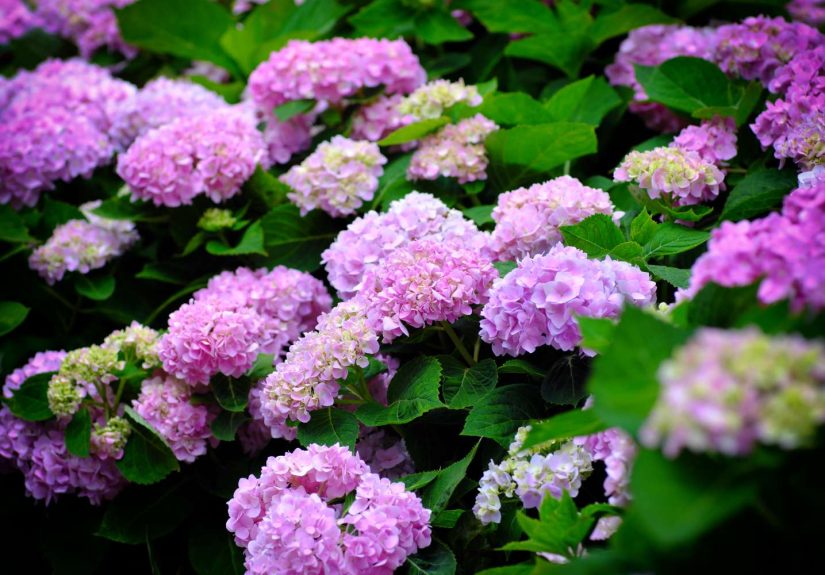
Round, fluffy “mopheads” in blue/pink/purple are often bigleaf hydrangea (Hydrangea macrophylla),
usually old wood (though many newer varieties rebloom). - Lacecap flowers (flat center with a ring of showy florets) are often bigleaf or mountain hydrangeacommonly old wood.
-
Cone-shaped blooms (white turning blush, sometimes lime) are usually panicle hydrangea (Hydrangea paniculata),
a reliable new-wood bloomer. -
Big round white “snowballs” that can get heavy and floppy are often smooth hydrangea (Hydrangea arborescens),
a new-wood bloomer (think ‘Annabelle’ types). - White cone blooms with big oak-shaped leaves are oakleaf hydrangea (Hydrangea quercifolia), generally old wood.
2) Check when it blooms
- Early summer bloomers are often old wood types (bigleaf, oakleaf, mountain, climbing).
- Mid-to-late summer bloomers are often new wood types (panicle, smooth).
- Blooms, pauses, then blooms again can hint at a reblooming bigleaf variety.
3) Peek at the stems and buds
On many old-wood hydrangeas, you’ll find plump buds along stems that formed last year. Those buds are precious.
If you’re unsure, assume your plant is an old-wood bloomer and deadhead with a very light touch.
Quick Decision Guide: Deadhead or Leave Alone?
Here’s the simplest way to decide, without needing a botany degree or a support group for pruning mistakes.
Deadhead now if…
- You want a cleaner look and the blooms are brown, mushy, or heat-blasted.
- You have a reblooming hydrangea and want to encourage another flush (early in the season).
- You have a new-wood hydrangea (panicle or smooth) and you’re just tidying.
- You’re cutting blooms for fresh or dried arrangements (yes, “decorating” counts as gardening).
Leave the blooms alone if…
- You live where winters are cold and buds can get frost-damaged (spent blooms can add a little protection).
- You like winter interestdried hydrangea heads can look gorgeous under frost or snow.
- You have an old-wood hydrangea and it’s late summer or fall (timing matters).
- Your plant is stressed (drought, transplanting, disease). Let it focus on survival, not haircuts.
Type-by-Type: What to Do With Each Common Hydrangea
Bigleaf Hydrangea (Hydrangea macrophylla): Mophead & Lacecap
This is the classic “blue or pink neighborhood celebrity.” Many bigleaf types bloom on old wood, meaning next year’s buds
are often set on last year’s stems. Deadheading is fine, but don’t go on a cutting spree.
- Best approach: Snip the spent flower head off with a short stem, cutting just above the first set of healthy leaves or buds.
- Timing tip: Deadhead soon after blooms fade if you want tidy plants, but avoid heavy cutting later in summer.
- Cold-climate move: Consider leaving dried blooms over winter, then remove them in spring once you see new growth.
Reblooming Bigleaf Varieties (Often marketed as “reblooming”)
Rebloomers can flower on both old and new wood, which is why they’re popular: even if winter nips some buds, you can still
get blooms later. Deadheading can help earlier in the season by redirecting energy.
- Best approach: Deadhead promptly after the first flush fades, but keep cuts shallow.
- Don’t push it late: Stop deadheading as the season winds down so you don’t encourage tender growth before cold weather.
Oakleaf Hydrangea (Hydrangea quercifolia)
Oakleaf hydrangeas are the fashion designers of fall: beautiful leaves, interesting bark, and blooms that age into a papery look.
Deadheading is purely optional and often unnecessary.
- Best approach: Leave blooms for winter interest, or snip lightly if you prefer a cleaner look.
- Bonus: Dried oakleaf blooms can look stunning in arrangements without much effort.
Panicle Hydrangea (Hydrangea paniculata)
Panicle hydrangeas (cone blooms like ‘Limelight’ and friends) are usually new-wood bloomers. They’re more forgiving, and you can
prune them in late winter or early spring for shape.
- Best approach: Deadhead anytime for looks, but many gardeners leave the cones for winter.
- Big pruning: Save shaping and size control for late winter/early spring when the plant is dormant.
Smooth Hydrangea (Hydrangea arborescens)
Smooth hydrangeas (often with big white round heads) also bloom on new wood. Deadheading won’t hurt them, and leaving spent blooms
won’t ruin them either.
- Best approach: Deadhead for tidiness, especially if old blooms get soggy and collapse.
- Structure tip: If your flowers flop, heavier pruning strategies (done at the right time) and support can help.
Climbing Hydrangea (Hydrangea anomala subsp. petiolaris)
Climbing hydrangeas are slow to start, then they decide they own the wall. They’re typically old-wood bloomers and don’t need much intervention.
- Best approach: Minimal deadheading, mostly cosmetic. Avoid major pruning unless you’re controlling size after bloom.
How to Deadhead Hydrangeas the Safe Way
Step 1: Use clean, sharp pruners
Clean cuts heal faster and reduce the chance of disease. (Also, dull pruners make you work harder, and nobody needs that kind of negativity.)
Step 2: Follow the flower head down to a “decision point”
Find the first set of healthy leaves or visible buds beneath the bloom. That’s usually your safest cut lineespecially for old-wood types.
Step 3: Make a small cut above leaves/buds
Cut just above the leaves or buds. Keep the removed stem short when you’re not sure what type you’re growing.
If you’re harvesting for a vase, you can take a longer stembut be mindful on old-wood hydrangeas.
Step 4: Know when to stop for the season
Late-season snipping can encourage tender new growth that won’t harden off before cold weather. If you’re heading toward fall,
it’s often smarter to leave the plant alone and tidy up later.
Common Mistakes (AKA How People Accidentally Cancel Next Summer)
Mistake 1: Cutting old-wood hydrangeas like they’re shrubs in a hedge maze
Bigleaf and oakleaf hydrangeas usually don’t want aggressive pruning. When in doubt, remove only the flower head and dead wood.
Mistake 2: Deadheading too late
Once late summer rolls in, old-wood types may already be forming buds for next year. Late cuts can remove those buds or trigger growth
that’s too tender for winter.
Mistake 3: Confusing “deadheading” with “renovation”
Deadheading is a small snip to remove spent blooms. Renovation pruning is a bigger planbest done with a clear ID of your plant and the right season.
If you’re feeling impulsive, trim flowers only and step away from the shrub.
So… Should You Deadhead or Leave Them?
If you want the simplest rule that keeps you out of hydrangea trouble:
Deadhead lightly during the growing season, and avoid major cutting as fall approachesespecially on bigleaf and oakleaf hydrangeas.
If your hydrangea is a panicle or smooth type, you have more flexibility. If it’s a bigleaf (mophead/lacecap) and you’re unsure,
treat it like an old-wood bloomer and keep cuts minimal.
And remember: leaving dried blooms isn’t “lazy gardening.” It’s strategic. (Also: it’s free winter decor.)
Garden Experiences & Lessons (The “I Learned This the Hard Way” Collection)
Gardeners tend to fall into one of two camps: the “tidy immediately” crew and the “leave it for winter magic” crew. Both can be right
but the best results usually come from matching the habit to the hydrangea type and the local climate.
One of the most common real-world stories goes like this: someone sees browned flower heads in September, grabs pruners, and gives the shrub a quick
haircut because it “looks done for the year.” Next summer, the plant grows leaves like a champ but produces few (or zero) blooms. The confusion is
totally understandableafter all, the plant looked like it needed help. What actually happened is that the hydrangea likely bloomed on old wood,
and those late cuts removed buds that were already set for the next season. The plant wasn’t being dramatic; it was being organized.
Another pattern shows up in colder regions: gardeners who leave the dried flower heads through winter often notice fewer damaged buds in spring.
The old blooms can act like a tiny umbrella for the tender growth below, and they also catch a bit of snow cover that insulates stems. In early spring,
once you see green growth and can tell which stems survived winter, you can snip off the dried heads cleanly and with more confidence. This approach
has a bonus benefit: you avoid “panic pruning” in fall and instead make calm, informed cuts when the plant starts waking up.
Then there’s the “I want more blooms, so I deadhead everything” experiment. With some reblooming hydrangeas, gardeners report that removing faded
flowers earlyespecially after the first big flushcan help the plant redirect energy into additional buds. But the timing matters. Early-season
deadheading can be helpful; late-season deadheading can backfire by encouraging tender growth or stealing time from bud formation. The sweet spot tends
to be: tidy up promptly when blooms fade in summer, then stop as the plant shifts toward end-of-season hardening off.
If you like a neat landscape, a practical compromise is “selective deadheading.” Gardeners often remove the ugliest, brownest blooms first (especially
those that got scorched by heat or battered by storms) while leaving attractive, blush-toned or papery blooms that still look good. This keeps the shrub
presentable without turning the process into a full-scale pruning event. It’s also a great way to get comfortable identifying where buds and leaves sit
on the stemso your cuts get more precise over time.
Finally, there’s the bouquet factor. Many gardeners deadhead partly because hydrangea blooms are irresistible indoors. A useful real-life trick is to cut
blooms for arrangements in the morning when the plant is well-hydrated, then choose stems that minimize disruptionespecially on old-wood plants. For dried
arrangements, gardeners often wait until blooms feel more “papery” and show vintage tones (greens, blush, antique rose). Those blooms tend to dry better and
hold shape longer. If you do this, you’re not just deadheadingyou’re recycling your garden’s glory into your living room.
The overall lesson gardeners keep repeating: hydrangeas reward patience and punish guessing. When you’re unsure, do less. Remove only the spent
flower head, step back, and let the shrub keep its buds. If you learn your hydrangea type over time, you can get bolder with pruningat the right season.
Until then, a light touch beats a confident mistake every single year.