Table of Contents >> Show >> Hide
- Why Seated Exercise Matters When You Have AS
- Safety First: How to Prep for Seated Workouts
- A Gentle Seated Mobility and Stretching Routine
- Seated Strength Training for Core and Upper Body
- Seated Cardio Options for AS
- Breathing, Chest Expansion, and Relaxation
- Making Your Seated Routine Stick
- Lived Experience: What Seated Workouts Feel Like in Real Life
- Bottom Line
Living with ankylosing spondylitis (AS) can feel like there’s a permanent “stiffness filter”
on your body. Mornings are creaky, long days in a chair are unforgiving, and some workout
videos look like they were designed on another planet. The good news? You don’t have to be
on your feet, in a gym, or on the floor to get stronger and feel better. Seated workouts can
improve your fitness with AS, support your spine, and fit into your real lifeeven on flare
days.
In this guide, we’ll walk through safe, beginner-friendly seated workouts that target mobility,
strength, cardio, and breathing. You’ll also learn how to adapt movements if you use a
wheelchair, have limited range of motion, or simply need a gentler way to move that respects
your AS.
Why Seated Exercise Matters When You Have AS
Ankylosing spondylitis is an inflammatory form of arthritis that primarily affects the spine
and sacroiliac joints. Over time, inflammation can lead to stiffness, pain, and changes in
posture. Research and clinical guidelines consistently show that regular physical activity is
one of the core treatments for ASright alongside medication and physical therapy.
Large rheumatology and arthritis organizations recommend that people with AS aim for
moderate-intensity aerobic activity each week (such as 75–150 minutes), plus regular
strengthening and flexibility exercises tailored to their abilities. The goals are to:
- Maintain or improve spine and joint mobility
- Support posture with stronger core and back muscles
- Reduce pain and stiffness over time
- Protect heart and lung health
- Boost mood, sleep, and day-to-day function
Seated workouts are a practical way to hit these goals if:
- You use a wheelchair or mobility aid
- You feel unsteady standing or are worried about falls
- Your hips or knees don’t tolerate weight-bearing exercise
- You’re in a flare and need something gentler
- You spend most of your day at a desk and want quick “movement snacks”
The key takeaway: you don’t have to “stand to be fit.” Movement that’s safe, sustainable,
and repeatable will help your AS far more than any extreme workout you can’t stick with.
Safety First: How to Prep for Seated Workouts
Before you jump into any new routine, especially with AS, your safety checklist comes first.
Talk to Your Care Team
Always check with your rheumatologist or physical therapist before changing your exercise
routine. They can:
- Flag movements that might not be right for your spine or hips
- Help you modify exercises around joint damage, fusions, or past fractures
- Suggest how often and how hard you should exercise based on your current health
Choose the Right Setup
- Use a sturdy chair without wheels, or your wheelchair with the brakes locked.
-
Sit tall with your feet flat on the floor (or footrests) and your weight evenly spread
across your sit bones. - Keep a small pillow or rolled towel handy to support your lower back if needed.
- Have water nearby, and wear comfortable clothes that let you move freely.
Know the Difference Between “Good Effort” and “Bad Pain”
- Mild muscle effort or stretching discomfort is expected.
- Sharp, shooting, or worsening joint pain is a red flagslow down or stop that movement.
-
If you feel dizzy, short of breath, or unwell, pause and check in with your body. If it
doesn’t ease, stop and contact a healthcare professional.
Start with small doses5 to 10 minutes of seated exercise a dayand build up as your body
adapts. Consistency beats intensity for AS.
A Gentle Seated Mobility and Stretching Routine
This short sequence focuses on flexibility and joint mobility. It’s perfect for mornings,
work breaks, or winding down at night. Do each move slowly and never force your range.
1. Seated Posture Reset
Targets: Posture muscles, upper back, core
- Sit tall near the front of your chair, feet flat and hip-width apart.
-
Imagine a string lifting the crown of your head toward the ceiling while you gently tuck
your chin. - Roll your shoulders up, back, and down, opening your chest.
- Hold this tall posture for 20–30 seconds, breathing steadily.
- Relax and repeat 2–3 times.
Think of this as your “reset button” after phone scrolling or laptop slouching.
2. Seated Neck Rotations and Side Bends
Targets: Neck mobility, upper spine
- Sit tall with your shoulders relaxed.
- Slowly turn your head to look over your right shoulder. Stop at a gentle stretch.
- Hold 10–20 seconds, then return to center.
- Repeat to the left side. Perform 2–3 times each way.
- Next, tilt your right ear toward your right shoulder without shrugging the shoulder up.
- Hold 10–20 seconds, then switch sides. Repeat 2–3 times.
Move within comfortit’s about smooth motion, not trying to “crack” your neck.
3. Seated Thoracic Rotation
Targets: Mid-back (thoracic spine), rib mobility
- Sit tall with feet planted. Cross your arms lightly over your chest or place hands on thighs.
- Keeping your hips facing forward, slowly rotate your chest to the right.
- Look over your right shoulder without forcing the range.
- Hold for 5–10 seconds, then return to center.
- Repeat to the left. Perform 5–8 repetitions total, alternating sides.
Imagine your spine like a stack of coins: you’re gently turning the whole stack, not just the
top coin (your neck).
4. Overhead Reach and Side Bend
Targets: Shoulders, ribs, side body
- Sit tall with arms resting at your sides.
-
Inhale as you raise your right arm overhead, reaching toward the ceiling without shrugging
your shoulder. - Exhale as you gently lean to the left, opening the right side of your rib cage.
- Hold 10–20 seconds, then return to center.
- Repeat on the other side. Perform 2–3 rounds each side.
If raising your arm hurts, place your hand at shoulder height on your chest or hip and do a
smaller side bend instead.
Seated Strength Training for Core and Upper Body
Strong muscles around your spine, hips, and shoulders act like a built-in support brace.
Try this simple strength circuit 2–3 days a week, leaving at least one rest day in between.
Aim for 8–12 repetitions of each exercise, 1–3 sets, depending on your energy and comfort.
1. Seated Marches or Leg Extensions
Targets: Hip flexors, thighs, core stability
- Sit tall, holding the sides of your chair for balance if needed.
- Lift your right foot a few inches off the floor, keeping your knee bent.
- Lower it, then lift the left footlike a slow, controlled march.
- Repeat 10–20 times, alternating legs.
If marching is uncomfortable, try straightening one knee at a time into a gentle leg
extension instead, keeping the movement small.
2. Seated Row with Band or Towel
Targets: Upper back, shoulders, posture muscles
-
Sit tall and loop a resistance band (or long towel) around your feet, holding one end in
each hand. - Start with your arms straight and hands in front of your hips.
-
Squeeze your shoulder blades together as you pull your elbows back, keeping them close to
your sides. - Pause for a second, then slowly return to the starting position.
- Repeat 8–12 times with steady breathing.
Focus on the feeling between your shoulder blades, not on yanking as hard as possible.
Smooth, controlled pulls are your goal.
3. Seated Chest Press (No Equipment)
Targets: Chest, shoulders, triceps
- Sit tall with your hands together at chest level, palms pressing into each other.
- Gently press your palms together as if squeezing a ball.
- Hold for 5–10 seconds, then relax.
- Repeat 8–12 times.
This is an easy isometric move when you’re traveling or don’t have any equipment handy.
4. Seated Core Brace
Targets: Deep core muscles that support the spine
- Sit tall with your hands resting on your abdomen.
-
Inhale and let your belly gently expand, then exhale and gently draw your belly button
toward your spine without holding your breath. - Hold this light brace for 5–8 seconds while breathing normally.
- Relax and repeat 8–12 times.
Think of this like zipping up a snug jacketnot so tight that you can’t breathe, just enough
to feel supported.
Seated Cardio Options for AS
Cardio doesn’t have to mean running or jumping. Seated cardio raises your heart rate while
respecting sensitive joints and fused segments. Aim for 10–20 minutes on most days, broken
into shorter chunks if needed.
1. Fast-Paced Seated Marches
How to do it:
- Sit tall and quickly march your feet, pumping your arms like you’re power-walking.
- Go for 30–60 seconds, then rest for 30–60 seconds.
- Repeat 5–10 times depending on your fitness.
2. Arm Circles and Punches
How to do it:
- Sit tall and draw medium-sized circles with your arms out to the sides for 20–30 seconds.
- Switch directions and repeat.
- Then, throw gentle “air punches” straight forward or diagonally upward for another 20–30 seconds.
- Rest and repeat the sequence 3–5 times.
Keep movements within a pain-free range. Smaller circles and shorter punches are absolutely
fine.
3. Pedal Exerciser or Stationary Hand Cycle
If you have access to a compact pedal device (for legs or hands), you can turn TV time into
cardio time. Start with 5 minutes at an easy pace and gradually build up toward 15–20
minutes as tolerated.
Breathing, Chest Expansion, and Relaxation
AS can affect the joints between your ribs and spine, making deep breaths feel restricted.
Breathing exercises and gentle chest expansion help maintain mobility in the rib cage and
support lung function.
1. Seated Diaphragmatic Breathing
Targets: Diaphragm, relaxation, rib mobility
- Sit tall with one hand on your chest and one on your belly.
-
Inhale slowly through your nose, aiming to expand your lower ribs and belly more than
your upper chest. - Exhale gently through pursed lips (like you’re blowing through a straw).
- Repeat for 5–10 breaths.
2. Seated “Hug and Open” Chest Stretch
Targets: Chest, upper back, rib joints
- Sit tall and wrap your arms around yourself in a gentle hug.
- Inhale as you round your upper back slightly, like a relaxed “C” shape.
-
Exhale as you open your arms wide, palms facing forward, gently squeezing your shoulder
blades together. - Repeat 8–10 times with slow, controlled breathing.
These small, intentional movements may not look like much on camera, but they can feel
surprisingly powerful for stiff ribs and a tight upper back.
Making Your Seated Routine Stick
The hardest part isn’t usually the first workoutit’s the tenth, the thirtieth, and the
hundredth. Studies suggest that people with AS who have structured or supervised exercise
plans are more likely to stick with them and spend more time moving each week. Use that
insight to your advantage.
-
Anchor workouts to existing habits. Do a 5-minute seated routine after
your morning meds or evening TV show. -
Think “movement snacks,” not marathons. Three 7-minute sessions count
just as much as one 20-minute session. -
Track what you do. A simple checklist, app, or calendar sticker can make
your progress visible and motivating. -
Use professional support. A physical therapist who understands AS can
fine-tune your seated workouts and hold you accountable. -
Be flare-friendly. On tough days, scale down to breathing and gentle
mobility. Doing “something” is still a win.
Lived Experience: What Seated Workouts Feel Like in Real Life
It’s one thing to read an exercise plan. It’s another to live with a spine that complains
about almost everything and still decide to move. So let’s talk about what seated workouts
with AS can actually feel like in everyday life.
Imagine it’s a Monday morning. Your lower back feels like a rusty hinge, and rolling out of
bed took more negotiation than a business deal. Standing stretches? Not happening. But
you can sit on the edge of the bed or in a chair. You set a 5-minute timer and start with
posture resets, neck rotations, and gentle thoracic twists. By minute three, your body still
isn’t thrilledbut it feels a little less “stuck.” That mini-win is exactly how seated
workouts start to matter.
People with AS often describe a pattern: if they skip movement for a few days, the stiffness
builds up like unpaid bills. Seated routines make it easier to “pay a little every day.”
You can sneak in a set of rows while answering emails, do leg marches while you’re on a
call, or practice diaphragmatic breathing while you’re waiting for the kettle to boil.
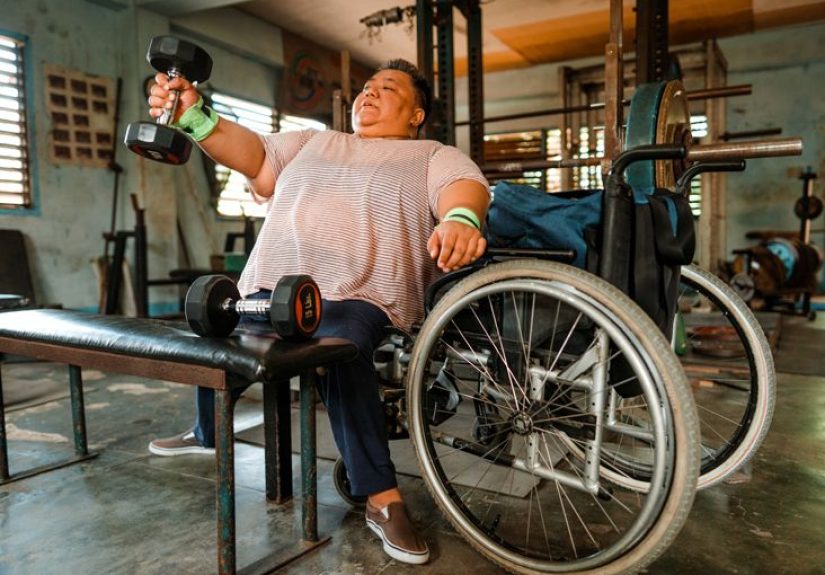
If you use a wheelchair, seated workouts can double as both fitness and function. Strengthening
your shoulders and upper back can make pushing the chair less exhausting. Core bracing and
posture drills help you feel more stable when reaching, transferring, or navigating tight
spaces. Many people find that once they connect exercise to independencegetting in and
out of the car more easily, lasting longer at social eventsthe motivation feels less like
“I should exercise” and more like “I want this freedom.”
Emotionally, seated workouts can also shift the story you’re telling yourself about your
body. AS can make you feel betrayed by your joints, especially if you were once very active.
Gentle, consistent movement is a way of saying, “Yes, things are differentbut this body
still does things for me every day, and I’m going to support it.” That mindset can be just
as important as the physical benefits.
There will be frustrating days. Some sessions will feel amazing, and others will feel like
a slog. You might wonder whether such “small” movements are doing anything. But over weeks
and months, patterns emerge: mornings that are slightly easier, walks that last a little
longer, flare days that feel a bit less overwhelming. Those changes rarely show up overnight,
but they add up quietly when you keep showing up for yourself in those short, seated
sessions.
Most importantly, your seated workout routine is yours. If a particular move consistently
aggravates your symptoms, you can swap it out in partnership with your care team. If you
love music, pair your exercises with your favorite playlist. If you’re competitive, track
how many days in a row you hit your “movement minimum.” The more your routine reflects your
personality and life, the more likely it is to stickAS and all.
Bottom Line
Seated workouts are not a consolation prize for “real exercise.” They are a smart, evidence-based,
and flexible way to manage ankylosing spondylitis, protect your spine, and build strength
on your own terms. By combining mobility, strength, cardio, and breathing work into short,
repeatable routines, you can support your joints, reduce stiffness, and feel more capable
in your daily lifewithout ever leaving your chair.
Work with your healthcare team to tailor these ideas to your body, start small, and stay
consistent. Your future selfsitting, standing, or rollingwill thank you.