Table of Contents >> Show >> Hide
- The Cloud Slowdown Narrative Has a Problem: The Numbers
- Why SAP’s Cloud Business Keeps Accelerating
- Microsoft: The Cloud Giant That Keeps Finding Another Gear
- What SAP and Microsoft Teach Us About Cloud Spending
- Why “Cloud Is Still On Fire” Does Not Mean Every Vendor Wins
- Specific Examples: How Enterprises Think About Cloud Now
- Cloud Growth Is Becoming AI Growth
- Experience-Based Perspective: What This Means in the Real World
- Conclusion: The Cloud Fire Has Changed Shape, Not Gone Out
- SEO Tags
Every few quarters, someone in tech declares that cloud growth is “over,” “slowing forever,” or “just not what it used to be.” Then SAP and Microsoft walk into the earnings room, casually drop numbers big enough to make a spreadsheet sweat, and remind everyone that enterprise cloud is not exactly taking a nap.
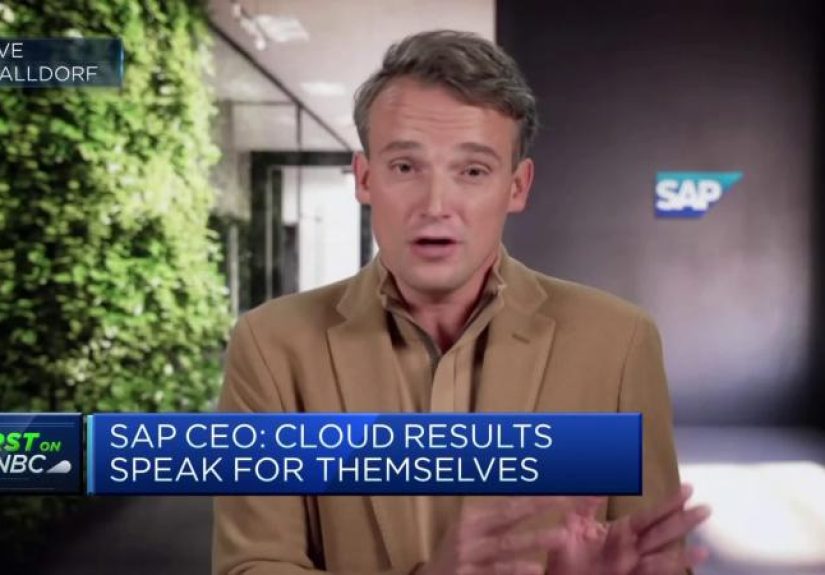
The headline tells the story with the subtlety of a marching band: SAP’s cloud business is still accelerating, while Microsoft’s cloud engine keeps pushing forward at massive scale. The specific numbers in the original SaaStr-style framingSAP heading toward a roughly $15 billion cloud run rate and Microsoft’s cloud operation growing around 23% at about $24 billioncaptured a larger point that remains true: the cloud market is not dead. It is changing. It is maturing. It is becoming more selective. But for the strongest platforms, it is still very much on fire.
That matters for software founders, CIOs, investors, procurement teams, and anyone wondering whether enterprise cloud spending has hit a ceiling. The short answer: no. The more useful answer: cloud spending is shifting toward platforms that are mission-critical, deeply integrated, AI-ready, and trusted enough to run the parts of a business that cannot go down without causing a small corporate weather event.
The Cloud Slowdown Narrative Has a Problem: The Numbers
Cloud computing did cool from the anything-goes era of 2020 and 2021. Customers optimized bills. CFOs started asking uncomfortable questions. Nice-to-have tools suddenly had to prove they were more than digital desk ornaments. But cooling is not the same as collapse.
Gartner has projected worldwide public cloud end-user spending to reach hundreds of billions of dollars annually, with growth driven by generative AI, application modernization, hybrid cloud, and multicloud needs. That is not “the market is over” behavior. That is “the market bought a bigger backpack” behavior.
The key difference is quality of demand. Businesses are no longer buying every SaaS subscription that wanders into a demo call wearing a hoodie and promising “productivity.” They are prioritizing systems that help them run finance, HR, supply chain, customer operations, security, analytics, AI workloads, and core infrastructure. In other words, the cloud is becoming less about experimentation and more about operations.
That shift is exactly why SAP and Microsoft are such useful examples. These are not tiny software vendors trying to squeeze another $9 per user from a clever widget. They sell deeply embedded enterprise platforms. Their customers do not just “use” the software; they build workflows, compliance structures, reporting systems, and business processes around it.
Why SAP’s Cloud Business Keeps Accelerating
SAP is often described as old-school enterprise software, which is fair in the same way calling the Hoover Dam “some concrete” is fair. Founded in 1972, SAP has spent decades becoming the operational backbone for many of the world’s largest companies. Finance, procurement, manufacturing, supply chain, human capital management, and enterprise resource planning all sit inside SAP’s universe.
That makes SAP’s cloud transition especially important. Moving from on-premises ERP to cloud ERP is not like switching from one note-taking app to another. It is more like moving the engine of an airplane while the passengers are still asking for coffee. The fact that SAP has continued to grow cloud revenue and cloud backlog shows that large enterprises are willing to make that journey when the value is clear.
RISE with SAP and the Core ERP Advantage
One of SAP’s major cloud growth drivers is RISE with SAP, a transformation offering designed to help existing SAP customers move from legacy ERP environments toward cloud ERP and the broader SAP Business Suite. This is not simply “hosting old software somewhere else.” The strategic pitch is broader: modernize processes, simplify infrastructure, improve upgrade paths, and position the business for AI-enabled workflows.
That matters because SAP’s best customers are not shopping for a cute dashboard. They are trying to modernize the systems that close the books, manage suppliers, track inventory, plan production, and keep executives from discovering operational problems through angry customer emails. Cloud ERP gives those customers a path to standardization, continuous updates, and better integration with data and AI services.
When SAP reported strong cloud revenue growth, increasing current cloud backlog, and rising cloud ERP suite revenue, it reinforced a basic lesson: mission-critical software has pricing power, renewal strength, and strategic importance. Customers may trim optional apps, but they are far less likely to abandon the platform that runs their business.
SAP Business AI Adds Fuel to the Cloud Fire
AI has become the espresso shot inside the cloud market. For SAP, Business AI and Jouleits AI assistantare part of a larger attempt to make enterprise systems more intelligent, not just more remote. The value proposition is not “look, a chatbot!” It is about helping finance teams analyze exceptions, procurement teams manage suppliers, HR teams answer workforce questions, and operations leaders understand business processes faster.
That is where SAP has an advantage: business context. Generic AI can summarize a document. SAP’s AI ambitions are tied to structured enterprise data, workflows, permissions, and processes. In enterprise software, context is king, queen, and probably the entire royal accounting department.
As more SAP cloud orders include AI-related components, the cloud story becomes less about migration and more about modernization. Companies are not moving to the cloud only because servers are annoying. They are moving because the next wave of automation, analytics, and AI works better when data and applications are connected in cloud-ready environments.
Microsoft: The Cloud Giant That Keeps Finding Another Gear
Microsoft’s cloud story is different from SAP’s but equally powerful. Microsoft is not just selling one cloud product. It has a sprawling cloud ecosystem that includes Azure, Microsoft 365, Dynamics 365, security, data platforms, developer tools, AI services, and Copilot. In practical terms, Microsoft has turned the enterprise workplace, infrastructure stack, and AI platform into one giant commercial flywheel.
The original framing around Microsoft growing cloud revenue at about 23% and operating at roughly $24 billion in scale captured a moment when investors were debating whether cloud demand had peaked. Since then, Microsoft’s cloud business has only become more central to the company. Microsoft Cloud revenue has continued to expand dramatically, and Azure has surpassed major annual revenue milestones.
Azure Is No Longer Just Infrastructure
Azure started as a cloud infrastructure competitor to Amazon Web Services, but today it is much more than rented compute and storage. It is a platform for databases, analytics, AI training and inference, cybersecurity, application development, hybrid cloud, and enterprise integration.
That matters because cloud customers increasingly want platforms, not isolated services. A bank may need compliance controls. A manufacturer may need edge computing and IoT integration. A healthcare organization may need secure data handling. A software company may need AI model deployment. Azure’s strength is that Microsoft can wrap infrastructure, productivity, identity, security, and AI into one enterprise-friendly package.
Microsoft’s growth also benefits from its installed base. Millions of organizations already use Windows, Office, Teams, Active Directory, Microsoft 365, and Dynamics. Selling cloud services into that base is not automatic, but it is certainly easier than introducing a completely unfamiliar vendor. Microsoft does not have to knock on the enterprise door; in many cases, it already has a badge.
Copilot and AI Are Expanding Cloud Demand
Microsoft’s AI strategy has made cloud growth even more interesting. Copilot in Microsoft 365, GitHub Copilot, Azure AI services, and enterprise AI tooling all create new demand for cloud infrastructure. AI workloads require computing power, storage, networking, security, and data management. None of that floats in the air on good vibes.
As Microsoft invests heavily in data centers, chips, and AI infrastructure, it is making a bet that enterprise customers will keep moving from experimentation to production. That bet is expensive, but the demand signals are strong. Azure growth has remained robust, and Microsoft continues to guide for strong cloud demand even as capital spending rises.
The important point is that AI does not replace cloud. It consumes cloud. Generative AI applications need scalable infrastructure. AI agents need access to enterprise data. Model training and inference require massive compute. The more businesses want AI in real workflows, the more they need cloud platforms capable of supporting it.
What SAP and Microsoft Teach Us About Cloud Spending
SAP and Microsoft show that the cloud market is not one simple market. It is a collection of layers: infrastructure, platform services, business applications, productivity tools, data systems, AI services, security, and industry-specific solutions. Some layers are under pressure. Others are exploding.
The weaker areas tend to be optional software categories with unclear ROI, duplicate functionality, or low switching costs. These are the tools that get cut when finance teams say, “Why are we paying for five platforms that all claim to improve collaboration while nobody answers emails?”
The stronger areas are different. They are embedded, strategic, and difficult to replace. ERP, cloud infrastructure, identity, security, data platforms, productivity suites, and AI-ready business systems are much harder to eliminate. They are not decorative. They are plumbing. And in business, plumbing only gets attention when it breaks.
Cloud Buyers Are Becoming More Rational
The current cloud market rewards vendors that can prove measurable value. That means better unit economics, stronger customer retention, deeper integrations, and clearer business outcomes. “We save time” is no longer enough. Buyers want to know how much time, for whom, at what cost, and whether the tool will still be useful after the next reorganization.
For startups, this is both scary and useful. The scary part is that selling software is harder when customers are disciplined. The useful part is that discipline clarifies what matters. If a product is mission-critical, integrated into workflows, and tied to revenue, risk reduction, compliance, or cost savings, it can still grow. If it is a nice-to-have feature wrapped in a subscription model, the market may be less forgiving.
Why “Cloud Is Still On Fire” Does Not Mean Every Vendor Wins
Cloud growth can be strong while many cloud vendors struggle. That sounds contradictory, but it is exactly what happens in maturing markets. Dollars consolidate around trusted platforms. Buyers reduce tool sprawl. Procurement teams negotiate harder. Security reviews become more intense. CFOs become less impressed by buzzwords and more interested in payback periods.
This is why SAP and Microsoft are not just evidence of cloud demand; they are evidence of cloud consolidation. Large customers increasingly prefer vendors that can solve multiple problems, integrate across departments, and support long-term transformation. That does not mean smaller vendors cannot win. It means they need a sharper reason to exist.
A startup can still beat a giant if it solves a painful problem dramatically better. But it cannot merely be “another dashboard,” “another workflow layer,” or “another AI assistant” that summarizes the same meeting everyone was trying to avoid in the first place.
Specific Examples: How Enterprises Think About Cloud Now
Consider a global manufacturer running legacy ERP. The company wants better demand forecasting, cleaner procurement data, faster financial close, and more resilient supply chain planning. Moving to cloud ERP is not just an IT decision; it affects operations, finance, logistics, compliance, and executive reporting. That is SAP’s opportunity.
Now consider a financial services company building AI tools for customer service, fraud detection, and internal productivity. It needs secure cloud infrastructure, identity management, data governance, productivity software, developer tools, and AI services. That is Microsoft’s playground.
In both cases, cloud spending is tied to strategic modernization. The buyer is not asking, “Can we add another app?” The buyer is asking, “Can we run the business better, faster, safer, and with enough flexibility to survive whatever next year throws at us?” That is a much stronger demand driver.
Cloud Growth Is Becoming AI Growth
The next chapter of cloud is inseparable from AI. Generative AI, predictive analytics, autonomous agents, and real-time decision systems all need scalable computing environments and clean data foundations. Companies that delayed cloud modernization may find AI adoption harder because their data remains trapped in disconnected systems.
This is why cloud migration is no longer only about cost savings. In fact, cloud can be expensive when poorly managed. The stronger argument is capability. Cloud gives organizations access to modern data platforms, faster innovation cycles, improved resilience, and AI services that would be difficult to build alone.
SAP and Microsoft both understand this. SAP emphasizes business process intelligence and AI inside enterprise workflows. Microsoft emphasizes Azure AI, Copilot, developer productivity, and cloud infrastructure. Different routes, same destination: make cloud the operating layer for modern enterprise intelligence.
Experience-Based Perspective: What This Means in the Real World
From a practical business perspective, the SAP and Microsoft cloud stories feel familiar to anyone who has watched enterprise software buying up close. Companies rarely modernize because a vendor uses exciting language. They modernize when the pain of staying still becomes more expensive than the pain of change.
In many organizations, cloud adoption starts with a simple problem: the old system works, but only because a small group of exhausted experts knows which buttons not to touch. Reports take too long. Upgrades feel risky. Data sits in silos. Teams export spreadsheets, rename them “final_final_v7,” and hope nobody asks why two departments have different numbers for the same metric. Eventually, leadership realizes the business is not just running on software. It is running on workarounds.
That is where cloud transformation becomes compelling. A company moving from legacy SAP environments to cloud ERP may not see instant magic on day one. There will be planning, change management, process redesign, data cleanup, and plenty of meetings with names like “Steering Committee Alignment Sync,” which is corporate poetry for “please make a decision.” But the long-term value can be significant. The business gets a cleaner foundation, more consistent processes, and a better path to continuous innovation.
Microsoft’s cloud experience is often more gradual but just as powerful. A company may begin with Microsoft 365, then expand into Teams, security, Azure workloads, Power Platform, Dynamics, and eventually Copilot. The cloud footprint grows because the products connect. Identity, productivity, data, development, and AI start reinforcing one another. That is not accidental; it is the platform strategy working exactly as designed.
The biggest lesson from real-world cloud adoption is that technology alone does not create transformation. Leadership clarity does. Companies that treat cloud as a hosting project often end up with higher bills and the same old confusion in a shinier container. Companies that treat cloud as a business modernization project have a better chance of seeing meaningful results.
For example, a finance team implementing cloud ERP should not simply copy every legacy process into a new environment. That is like moving into a new house and bringing the broken garage door, the mystery drawer, and the carpet stain with you. The better approach is to simplify workflows, standardize reporting, improve controls, and decide which customizations truly create business value.
Similarly, a company adopting Microsoft Copilot or Azure AI should not expect productivity gains just because licenses were purchased. AI needs good data, thoughtful governance, user training, and clear use cases. The best early wins often come from focused workflows: summarizing customer interactions, speeding up software development, improving internal search, automating document review, or helping employees analyze data without waiting three weeks for a report.
The cloud winners will be organizations that connect strategy, architecture, people, and process. SAP and Microsoft provide powerful platforms, but customers still need to do the hard work of modernization. The good news is that the market is moving in their favor. AI is making cloud foundations more valuable, not less. Data quality is becoming a board-level issue. Business agility is no longer a slogan; it is a survival skill.
So when someone says the cloud is “not hot anymore,” the best response may be: compared with what? Optional apps may be under pressure. Overfunded software categories may be correcting. But core cloud platforms, cloud ERP, AI infrastructure, productivity clouds, and mission-critical enterprise systems are still growing because they solve problems businesses cannot ignore.
Conclusion: The Cloud Fire Has Changed Shape, Not Gone Out
SAP and Microsoft prove that the cloud market remains large, resilient, and strategically important. The fire is not spreading evenly across every software category, but it is burning brightly where cloud supports essential business operations, AI adoption, data modernization, and long-term digital transformation.
The real lesson is not that every cloud company will thrive. The lesson is that customers are choosing more carefully. They are spending on platforms they trust, systems they need, and capabilities that prepare them for the AI-driven future. SAP benefits because ERP and business process modernization are mission-critical. Microsoft benefits because Azure, Microsoft 365, Dynamics, security, and AI form one of the most powerful enterprise ecosystems in the world.
Cloud is no longer a novelty. It is infrastructure, strategy, and competitive advantage rolled into one. And judging by SAP’s acceleration, Microsoft’s scale, and the broader market forecasts, the cloud is still very much on fire. It is just wearing a suit now.