Table of Contents >> Show >> Hide
- Why This Roommate Fight Feels Bigger Than One Bathroom
- The Core Issue Is Not “Assigned Male At Birth”
- What Roommates Actually Owe Each Other In Shared Housing
- Where The Boyfriends Argument Really Fails
- What A Fair Household Policy Would Look Like
- When A Dispute Like This Becomes More Than “Just Drama”
- How To Talk About It Without Setting The Apartment On Fire
- Experiences Related To This Topic: What These Conflicts Often Look Like In Real Life
- Conclusion
- SEO Tags
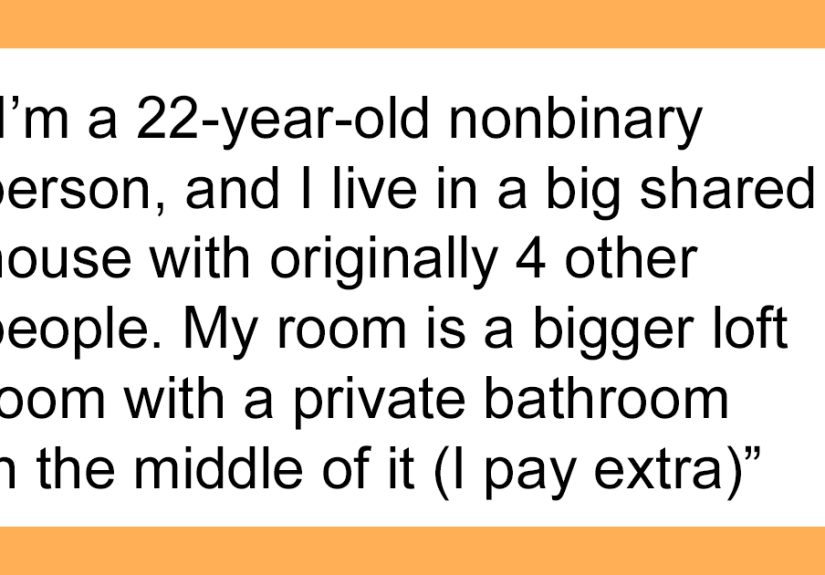
Shared housing is where many modern values go to wrestle in a tiny ring with one shower curtain and a suspiciously damp bath mat. In theory, roommates split rent, divide chores, and learn patience. In practice, they also argue about dishes, thermostat wars, and, sometimes, who gets access to which bathroom and why. That is exactly why this headline-making conflict hits such a nerve: it is not just about a bathroom. It is about privacy, respect, boundaries, and the exhausting habit some people have of treating a nonbinary person’s identity like a debate prompt instead of a reality.
At the center of the dispute is a claim that sounds confident but collapses under basic scrutiny: because a nonbinary person was assigned male at birth, their roommates believe boyfriends should be allowed in that person’s bathroom. That argument tries to turn someone’s birth assignment into a permanent permission slip for other people’s comfort. It also skips over the more obvious question: whose boundaries are being ignored in the home right now?
If this sounds like internet drama with extra plumbing, it is. But it is also a useful case study in how roommate conflict, gender identity, and guest rules collide in real life. Strip away the viral headline, and the lesson becomes surprisingly simple: a shared home works best when the people living there respect identity, communicate clearly, and stop acting like “assigned at birth” overrides consent.
Why This Roommate Fight Feels Bigger Than One Bathroom
People react strongly to stories like this because bathrooms are emotionally loaded spaces. They are ordinary, private, and deeply routine. That means they also become symbolic. Who feels safe there? Who gets questioned there? Who is expected to be flexible, and who is assumed to be entitled?
In many roommate disputes, the stated argument is practical. Maybe someone says the guest just needs to shower. Maybe someone insists it is the most convenient bathroom. Maybe somebody shrugs and says, “It’s not a big deal.” Yet the real issue often lives underneath the logistics. A bathroom dispute can reveal who in the household gets treated as fully human, whose comfort is optional, and whose identity is quietly placed on trial every time a guest walks in.
That is why this particular conflict resonates. The roommates are not merely negotiating foot traffic. They are implying that the nonbinary resident’s assigned sex at birth matters more than the resident’s gender identity, personal space, or sense of privacy. That is not a neutral position. It is a loaded one.
The Core Issue Is Not “Assigned Male At Birth”
Gender identity is not a costume people borrow for convenience
One of the biggest mistakes people make in conversations like this is treating “assigned male at birth” as if it settles the matter forever. It does not. That phrase describes what label was given to someone at birth. It does not magically erase how that person understands themselves, lives in the world, or wants to be treated in their own home.
Nonbinary people are not failed versions of men or women. They are not halfway points. They are not loopholes in someone else’s social logic. A nonbinary person may use they/them pronouns, or another set of pronouns, and may describe their relationship to gender in a way that does not fit tidy categories. That does not make their identity vague. It makes other people’s assumptions lazy.
So when roommates argue, “Well, they were assigned male at birth, so boyfriends can use that bathroom,” what they are really saying is: “We have decided your birth label matters more than your current personhood.” That is not a household policy. That is disrespect wearing flip-flops.
Bathrooms are about privacy before they are about ideology
Even without the gender identity piece, most people understand that bathrooms are sensitive spaces. Nobody enjoys surprise guests wandering into the bathroom they primarily use, leaving wet towels behind, or turning a quiet morning into a pop-up social event with beard trimmings in the sink.
Once you add a history of being misgendered, scrutinized, or invalidated, the discomfort grows. A nonbinary resident may reasonably feel that allowing boyfriends into their bathroom is not just inconvenient. It may feel intrusive, disrespectful, or like a message that their comfort ranks below everyone else’s convenience.
And honestly, that reaction makes sense. A home is supposed to be the place where a person is least likely to be second-guessed. If the household cannot manage that, the problem is not the resident asking for privacy. The problem is the house culture.
What Roommates Actually Owe Each Other In Shared Housing
Shared living does not work on mind reading, and it definitely does not work on vibes. It works on agreements. Good roommates do not assume that because they pay rent, every inch of the home becomes a free-for-all for their partners, friends, cousins, and mysterious plus-ones who “just need to stop by for a minute” and somehow stay four hours.
In the real world, fair roommate arrangements usually include a few basic principles:
- Guests are discussed in advance. Surprise visitors create avoidable conflict, especially in tight spaces.
- Common areas and semi-private areas are not the same thing. A living room is different from a bathroom someone primarily uses.
- Comfort matters. If one person feels unsafe, disrespected, or constantly overruled, the arrangement is failing.
- House rules should be explicit. “I thought it was fine” is not a policy. It is a future argument.
This is where the roommates’ logic falls apart. Even if the home has technically shared facilities, that still does not mean every resident gets unilateral authority to route guests into whichever space is most convenient for them. A bathroom can be legally shared and still socially governed by courtesy, routine, and mutual respect.
That matters even more if the bathroom is attached to a bedroom, mostly used by one person, or functionally treated as “their bathroom” by everyone in the home. In that case, pushing access over that resident’s objection is not practical problem-solving. It is boundary flattening.
Where The Boyfriends Argument Really Fails
The roommates’ position sounds, at first glance, like a weird blend of biology and convenience. But once you inspect it, it fails for four reasons.
1. It confuses sex assignment with household consent
A person’s assigned sex at birth does not determine who gets access to their space. Consent does. If the nonbinary resident does not want roommates’ boyfriends using that bathroom, that boundary deserves real consideration. The household should be discussing guest policies, not digging around in someone’s birth assignment like amateur archivists of other people’s bodies.
2. It places convenience above dignity
There is a huge difference between “we need a workable guest plan” and “your discomfort is less important than my boyfriend’s convenience.” One is a solvable roommate issue. The other is a value statement, and not a flattering one.
3. It uses gender identity only when it is useful to dismiss it
This is the classic move. A nonbinary identity gets ignored just long enough for other people to justify what they already wanted to do. Suddenly, birth assignment becomes the only fact that matters. It is selective logic, and selective logic almost always shows up right before a terrible roommate meeting.
4. It ignores the emotional history behind the objection
For many gender-diverse people, bathrooms are not neutral territory. They can be spaces tied to discomfort, scrutiny, or conflict. A roommate who understands that history and still pushes the issue is not being practical. They are being careless with someone else’s sense of safety.
What A Fair Household Policy Would Look Like
A fair solution does not require everyone to think the same way about gender. It requires everyone to act like adults in a shared home. That means the policy should focus on behavior, not identity-based loopholes.
A reasonable bathroom and guest policy might sound like this:
- Guests must be announced before visiting.
- Guests use only the bathroom agreed upon by all roommates.
- If a bathroom is primarily used by one resident, that resident has final say over guest access.
- Overnight guests are limited by frequency and discussed ahead of time.
- No roommate gets to justify access by referencing another roommate’s sex assigned at birth.
That last point should be obvious, but apparently some households need it written down in language bold enough to survive both passive aggression and group chats.
The best roommate agreements are boring. That is the goal. Boring means clear. Boring means nobody is improvising rules during an argument. Boring means the home is functioning as a home, not as a weekly panel discussion on who deserves privacy.
When A Dispute Like This Becomes More Than “Just Drama”
It is tempting to dismiss these situations as messy roommate nonsense. But there is a line where ordinary conflict turns into a pattern of invalidation. If the nonbinary resident is repeatedly misgendered, overruled on personal boundaries, or made to feel that their comfort never counts, the issue becomes bigger than bathroom logistics.
At that point, the household is communicating something harmful: your identity is negotiable here, your privacy is negotiable here, and your limits are only real when they are convenient for us. That message wears people down. It turns home into a place of vigilance instead of rest.
And that is why respect matters so much in shared housing. You do not have to understand every detail of someone’s gender identity to honor their humanity. You do not have to become a philosopher of gender to grasp the sentence, “Please do not send your boyfriend into the bathroom I use.” You just have to recognize that no one wants to live with people who treat their boundaries like optional side quests.
How To Talk About It Without Setting The Apartment On Fire
If someone in this situation wants to address the conflict productively, the strongest move is to shift the discussion away from identity debate and toward house rules. That keeps the conversation grounded.
Instead of saying, “You are invalidating me,” which may be true but can trigger defensiveness right away, a resident could try: “I need us to create a clear guest and bathroom policy. I am not comfortable with partners using the bathroom I primarily use, and I need that boundary respected.”
Then follow with specifics. Which bathroom is for guests? How much notice is required? How often can partners stay over? Who cleans what after guests leave? What happens when someone ignores the agreement?
Concrete questions usually do more work than abstract moral speeches. Not because morality is irrelevant, but because some roommates will nod through a values conversation and still pretend they misunderstood the practical rule. Clarity closes that loophole.
If the conflict continues, it may be time for mediation, a revised roommate agreement, or, in the worst-case scenario, a new living arrangement. Nobody should have to keep auditioning for basic respect in the place where they sleep.
Experiences Related To This Topic: What These Conflicts Often Look Like In Real Life
Stories like this gain traction because they echo real experiences people have in shared homes. The details vary, but the emotional pattern is familiar. One nonbinary renter might say the problem started small: a roommate’s boyfriend using “their” bathroom once during a party. Nobody asked. Nobody cleaned up. When the resident objected, the response was not an apology but a debate over whether the bathroom could really be considered theirs. The conversation drifted immediately toward anatomy and birth assignment, as if those facts were more relevant than the lived routine of the apartment. What made the experience sting was not the single visit. It was the speed with which the resident’s comfort was converted into a courtroom exhibit.
Another common experience is the “you’re being difficult” narrative. A resident sets a boundary about guests, and the household recasts that boundary as selfishness. Suddenly, the person asking for privacy becomes the villain, while the people pushing for broader access frame themselves as reasonable. This is especially painful for nonbinary people because the argument often comes bundled with subtle misgendering. Nobody says the quiet part too loudly, but it hovers in the room: we do not fully believe your identity, so your bathroom boundary feels less legitimate to us. That kind of atmosphere can make a resident feel stranded inside their own lease.
Some people describe the opposite experience, and it is striking how simple it sounds. A roommate says, “Hey, my partner is coming over Friday. Which bathroom should they use?” The answer is discussed once. Everybody follows it. The world keeps spinning. No one writes a thesis about chromosomes. These stories are less dramatic, but they reveal the real secret to peaceful co-living: respect is not complicated until someone starts looking for excuses not to give it.
There are also residents who say the bathroom itself was never the whole issue. It was the pattern around it. The same roommates who dismissed the bathroom boundary also “forgot” pronouns, laughed off corrections, or treated nonbinary identity like a temporary setting that could be toggled off during inconvenience. In those cases, the fight over guest access became the moment when everything else snapped into focus. The problem was never a boyfriend needing to wash his hands. The problem was living with people who felt entitled to decide which parts of another person’s identity counted.
Then there are the people who eventually moved out and said the biggest surprise was how much lighter life felt afterward. They were not escaping a luxury crisis or some grand ideological battle. They were escaping the drip-drip-drip effect of constant small invalidations. A home should not require defensive speeches before breakfast. It should not make someone feel like privacy must be earned through debate. When people leave these living situations, they often describe relief more than anger. Relief that nobody is arguing over their bathroom. Relief that their pronouns are not treated like trivia. Relief that the place they live finally feels like a home instead of an appeal hearing.
Conclusion
The headline may sound outrageous, but the underlying lesson is clear. Roommates do not get to bypass a nonbinary person’s boundaries by pointing to the sex they were assigned at birth. That is not respectful, and it is not a smart way to run a household. The real issue is not biology versus bathroom access. It is whether a shared home is organized around consent, privacy, and basic decency.
In healthy roommate situations, guest rules are discussed, bathroom use is clarified, and nobody has to defend their identity just to feel comfortable brushing their teeth. In unhealthy ones, convenience becomes an excuse, “fairness” becomes selective, and one person keeps getting told to shrink so other people can avoid mild inconvenience. That is not compromise. That is pressure with a roommate label attached.
If there is a takeaway here, it is this: a good house rule should never require someone to feel less real in their own home. Once a policy starts there, it is already broken.