Table of Contents >> Show >> Hide
- Why This Baked Mac and Cheese Stays So Creamy
- Ingredients
- Equipment You’ll Want
- Step-by-Step: How to Make Rich and Creamy Baked Macaroni and Cheese
- 1) Prep and cook the pasta (but don’t overdo it)
- 2) Make the roux (aka: the sauce’s foundation)
- 3) Add dairy slowly for a smooth, thick sauce
- 4) Season, then melt in the cheeses (off heat for best texture)
- 5) Combine pasta and sauce like you mean it
- 6) Build the topping for maximum crunch
- 7) Bake: covered first, then uncovered
- 8) Rest before serving (yes, it matters)
- Cheese Choices: The “Why” Behind the Blend
- Pro Tips for Ultra-Creamy Baked Mac and Cheese
- Easy Variations (Because Mac and Cheese Loves a Costume Change)
- Make-Ahead, Storage, and Reheating
- Troubleshooting: If Your Mac and Cheese Misbehaves
- Recipe Schema for SEO (Optional but Helpful)
- Conclusion
- Experience Notes: What Making This Recipe Feels Like (And Why People Keep Requesting It)
There are two kinds of baked mac and cheese in this world: the kind you politely scoop onto your plate,
and the kind you “accidentally” eat standing over the stove because you were just checking the seasoning.
This is the second kind.
A truly rich and creamy baked macaroni and cheese recipe isn’t about dumping more cheese and hoping for the best.
It’s about building a sauce that stays silky in the oven, using pasta that grabs onto that sauce like it’s holding onto a winning lottery ticket,
and baking just long enough to get bubbly edges without drying out the center. If you want a casserole-style baked mac and cheese
that’s creamy, not grainy; gooey, not greasy; and confidently cheesy without tasting like a dairy aisle collapsewelcome home.
Why This Baked Mac and Cheese Stays So Creamy
Baked mac and cheese has a reputation for drying out because pasta keeps absorbing moisture as it sits in heat.
The fix is not “more cheese.” (Cheese is a hero, but it’s not a hydration plan.)
The fix is extra sauce + smart cheese choices + gentle baking.
- Extra-saucy ratio: More sauce than you think you need so the pasta doesn’t steal it all.
- Freshly shredded cheese: Melts smoother and tastes better than pre-shredded.
- Proper heat control: Add cheese off the heat so it melts, not separates.
- Two-layer topping strategy: A little cheese + buttery crumbs = crunch that locks in moisture.
Ingredients
This recipe serves 6 to 8 (or 4 to 6 if your family “just wants a small bowl” eight times).
The ingredient list looks long, but it’s mostly cheese and good intentions.
For the Pasta
- 1 pound elbow macaroni or cavatappi
- Salt (for boiling water)
- 1 tablespoon butter (to lightly coat drained pasta, optional but helpful)
For the Creamy Cheese Sauce
- 6 tablespoons unsalted butter
- 1/3 cup all-purpose flour
- 3 cups whole milk (warmed)
- 1 cup half-and-half (or evaporated milk for extra silkiness)
- 2 ounces cream cheese (optional, but it makes the sauce extra plush)
- 1 teaspoon mustard powder (secret weapon: flavor + smoother melt)
- 1/2 teaspoon smoked paprika (or sweet paprika)
- 1/8 teaspoon nutmeg (optional, but classic in creamy sauces)
- 1/2 teaspoon kosher salt, plus more to taste
- 1/2 teaspoon black pepper
- 16 ounces sharp cheddar, freshly shredded (about 4 cups)
- 8 ounces Gruyère, freshly shredded (about 2 cups)
- 4 ounces Fontina or Monterey Jack, freshly shredded (about 1 cup)
For the Crunchy Topping
- 1 cup panko breadcrumbs
- 2 tablespoons melted butter
- 1/2 cup finely grated Parmesan
- Optional: pinch of cayenne or a few dashes of hot sauce
Equipment You’ll Want
- Large pot for pasta
- Whisk + medium-large saucepan
- 3-quart baking dish (9×13-inch works great)
- Microplane or grater (your cheese deserves better than pre-shredded)
Step-by-Step: How to Make Rich and Creamy Baked Macaroni and Cheese
1) Prep and cook the pasta (but don’t overdo it)
Preheat your oven to 350°F. Butter a 3-quart baking dish.
Bring a large pot of well-salted water to a boil. Add the pasta and cook it
1 to 2 minutes less than the package says. You want it just shy of al dente,
because it’s heading to the oven for a second round.
Drain the pasta and toss with 1 tablespoon butter (optional) to prevent sticking.
Set aside while you build the sauce.
2) Make the roux (aka: the sauce’s foundation)
In a saucepan over medium heat, melt 6 tablespoons butter.
Whisk in 1/3 cup flour and cook for about 1 minute,
whisking constantly. You’re cooking out the raw flour taste, not trying to brown it.
Think “blonde roux,” not “toasted marshmallow.”
3) Add dairy slowly for a smooth, thick sauce
Slowly whisk in the warmed milk, a splash at a time at first, then in a steady stream.
Once smooth, whisk in the half-and-half (or evaporated milk). Bring to a gentle simmer.
Cook, whisking often, until the sauce thickens enough to coat the back of a spoon,
about 4 to 6 minutes.
4) Season, then melt in the cheeses (off heat for best texture)
Turn off the heat. Whisk in the cream cheese (if using) until smooth.
Add mustard powder, paprika, nutmeg (if using), salt, and pepper.
Now add the shredded cheeses gradually, stirring until melted and glossy.
If the sauce looks too thick at this stage, whisk in a splash of warm milk.
5) Combine pasta and sauce like you mean it
Pour the sauce over the pasta (in the pot or a large bowl) and stir gently
until every noodle is coated. This is the moment where you’ll think,
“Is this too saucy?” The answer is: no. Future-you wants saucy.
6) Build the topping for maximum crunch
In a small bowl, mix panko with melted butter and Parmesan.
Add cayenne if you want a subtle kick.
7) Bake: covered first, then uncovered
Spoon the mac and cheese into the baking dish. Sprinkle a small handful of extra cheddar (optional),
then add the buttery panko topping.
Cover loosely with foil and bake for 15 minutes. Remove foil and bake
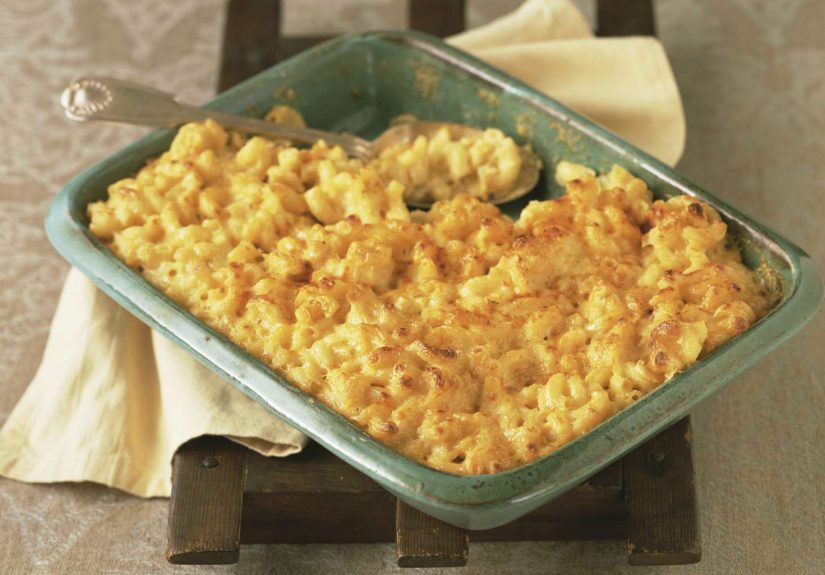
10 to 15 minutes more, until bubbly around the edges and golden on top.
If you want a darker crust, broil for 30 to 60 secondsbut watch it like a hawk
(broilers do not negotiate).
8) Rest before serving (yes, it matters)
Let it rest 10 minutes. This helps the sauce settle into peak creaminess
instead of running for the exit when you scoop.
Cheese Choices: The “Why” Behind the Blend
A great baked mac and cheese recipe doesn’t rely on one cheese to do everything.
It’s a team sport:
- Sharp cheddar: Bold flavor, classic “mac and cheese” identity.
- Gruyère: Nutty richness and a smooth melt that feels fancy without being fussy.
- Fontina or Monterey Jack: Creamy melt and stretch for that gooey bite.
- Parmesan (topping): Salty punch + crispness in the breadcrumb crust.
Pro tip: shred your own cheese. Pre-shredded varieties often contain anti-caking ingredients
that can make sauces grainy or less smooth.
Pro Tips for Ultra-Creamy Baked Mac and Cheese
Keep the sauce slightly looser than you think
The oven thickens the sauce, and the pasta absorbs moisture while it bakes. If your sauce feels perfect on the stovetop,
it may bake up a little tight. Aim for “luxuriously pourable,” not “spoon-standing-up.”
Use mustard powder for smoother melt and better flavor
Mustard powder doesn’t make it taste like mustardit makes it taste like cheese with a microphone.
It boosts savoriness and helps the sauce stay cohesive.
Don’t overbake
Once it’s bubbling and the top is golden, pull it. Overbaking is the #1 reason creamy mac turns into “cheesy pasta brick.”
Delicious brick… but still.
Cover with foil for the first half
This traps steam so the interior stays moist while the sauce finishes thickening. Then uncover to get that crunchy top.
Easy Variations (Because Mac and Cheese Loves a Costume Change)
Southern-style custardy baked mac
Want a firmer, sliceable texture? Whisk 2 eggs with 1/2 cup milk and stir it into the pasta-and-sauce mixture
right before baking. The result is richer and more setgreat for holiday pans.
Spicy mac and cheese
- Add 1/2 teaspoon cayenne, or
- Stir in 1 to 2 tablespoons hot sauce, or
- Fold in diced pickled jalapeños for tang and heat.
BBQ chicken mac
Stir in 2 cups shredded cooked chicken and 2 to 3 tablespoons barbecue sauce.
Bonus points if you add thin-sliced scallions on top after baking.
Veggie-loaded comfort
Fold in sautéed spinach, roasted broccoli, caramelized onions, or roasted butternut squash.
Veggies + cheese is basically a salad if you squint.
Make-Ahead, Storage, and Reheating
Make-ahead
Assemble everything (including topping) up to 24 hours ahead. Cover and refrigerate.
When ready to bake, let the dish sit at room temperature for 20 to 30 minutes while the oven preheats.
Bake covered a little longer (add 5 to 10 minutes), then uncover to brown.
Fridge storage
Store leftovers in an airtight container for up to 4 days.
Best reheating method
For the creamiest results, reheat in the oven at 325°F, covered,
with a splash of milk stirred in (or drizzled over the top) until hot. Microwave works toojust add a little milk
and heat in shorter bursts, stirring between.
Freezing
You can freeze baked mac and cheese for up to 2 months.
Thaw in the fridge overnight, then reheat covered. Add a splash of milk to bring the sauce back to life.
Troubleshooting: If Your Mac and Cheese Misbehaves
“My sauce got grainy.”
Common causes: cheese added while the sauce was too hot, using pre-shredded cheese, or overheating after the cheese went in.
Fix next time: turn off heat before adding cheese, shred it yourself, and melt gently.
“It’s dry.”
Likely overbaked or not enough sauce-to-pasta ratio. Fix next time: keep the sauce slightly looser,
cover the dish for the first half of baking, and pull it when it’s bubblynot when it’s “been bubbly for 20 minutes.”
“It’s greasy.”
Usually from overheating the cheese or using an all-cheddar blend (cheddar can separate if pushed too hard).
Fix: mix in a good melter like Gruyère, Jack, or Fontina, and melt cheese off-heat.
Recipe Schema for SEO (Optional but Helpful)
Conclusion
This is the kind of baked mac and cheese that shows up creamy, confident, and dressed in a crunchy breadcrumb crown
the comfort-food equivalent of wearing sweatpants that somehow look expensive.
Make it for a holiday, a potluck, a Tuesday, or as emotional support pasta. No judgment. Only cheese.
Experience Notes: What Making This Recipe Feels Like (And Why People Keep Requesting It)
The first time you make a truly rich and creamy baked macaroni and cheese recipe from scratch, there’s a tiny moment of disbelief
like, “Wait… I made this? In my kitchen? With the same whisk I use to stir instant pudding?” That’s the magic.
It’s not complicated in a fancy way; it’s satisfying in a you’re in control of the comfort way.
The experience usually starts with optimism and ends with you guarding the baking dish like a dragon sitting on a cheese-hoard.
When you shred the cheese yourself, you’ll notice how fast it disappears. Not because you measured wrong (okay, maybe a little),
but because “quality control” happens. Sharp cheddar tastes like confidence. Gruyère tastes like you read a cookbook with French words.
And Monterey Jack or Fontina? That’s the glue holding the gooey dream together.
Then comes the roux stepthe part that makes people nervous. In reality, it’s just butter and flour deciding to become friends.
The smell is subtle: warm, toasty, like the beginning of something good. When you whisk in milk and the sauce thickens,
it feels like you unlocked a small life skill. It’s not dramatic, but it’s deeply satisfyinglike folding a fitted sheet and
somehow doing it correctly on the first try (rare, but possible).
The best “aha” moment is melting in the cheese off the heat. You’ll see the sauce transform from “nice white sauce”
into “I would like to live here.” It turns glossy, smooth, and spoon-coating in a way that makes you want to text someone
a photo they didn’t ask for. And if you add mustard powder, you don’t taste mustardwhat you taste is a stronger, rounder cheese flavor,
like the sauce got an upgrade from standard definition to 4K.
Baking is where the atmosphere changes. Your kitchen starts to smell like nostalgia, even if you didn’t grow up with baked mac and cheese.
It’s the universal comfort scent: butter, toasted crumbs, and warm dairy notes that make people wander in and ask,
“Is it done yet?” (Translation: “I’m about to hover.”)
When you pull it out, the top is golden and crisp, and the edges are bubblingthis is the victory lap.
But the real pro move is letting it rest. Those 10 minutes feel long because you can hear the topping crackle
and you want to dive in. Resting makes the inside creamier, the scoops cleaner, and the whole dish more “restaurant” and less “pasta soup.”
Serving it is its own experience. The first spoonful stretches a little, the sauce clings to the noodles,
and the crunch on top gives you that contrast that boxed mac can only dream of. People tend to go quiet for a second
(the highest compliment), then suddenly everyone has a “small” second helping. Someone will ask what cheeses you used.
Someone else will say, “This tastes like the holidays,” even if it’s June.
Leftoversif you have themoften become even more emotionally important the next day. Reheat with a splash of milk and it comes back creamy.
It’s the kind of food that makes a random weekday lunch feel like a reward. And if you bring it to a gathering,
you’ll learn a simple truth: mac and cheese doesn’t travel alone. It travels with expectations.
Once you’re “the mac person,” you’re the mac person forever. Congratulations. Please accept this honorary cheese crown.