Table of Contents >> Show >> Hide
- What Happened At Cannes?
- Kelly Rowland’s Explanation: “I Stood My Ground”
- Why Fans Called The Incident “Racist Pure And Simple”
- The Role Of Personal Boundaries On A Public Red Carpet
- Why The Cannes Setting Made The Moment Bigger
- Similar Incidents Added Fuel To The Debate
- Media Framing: Diva, Defiant, Or Disrespected?
- The Bigger Conversation About Race And Public Treatment
- What Cannes And Event Organizers Can Learn
- What The Public Can Learn From Rowland’s Reaction
- Experience Notes: What This Incident Feels Like Beyond The Red Carpet
- Conclusion
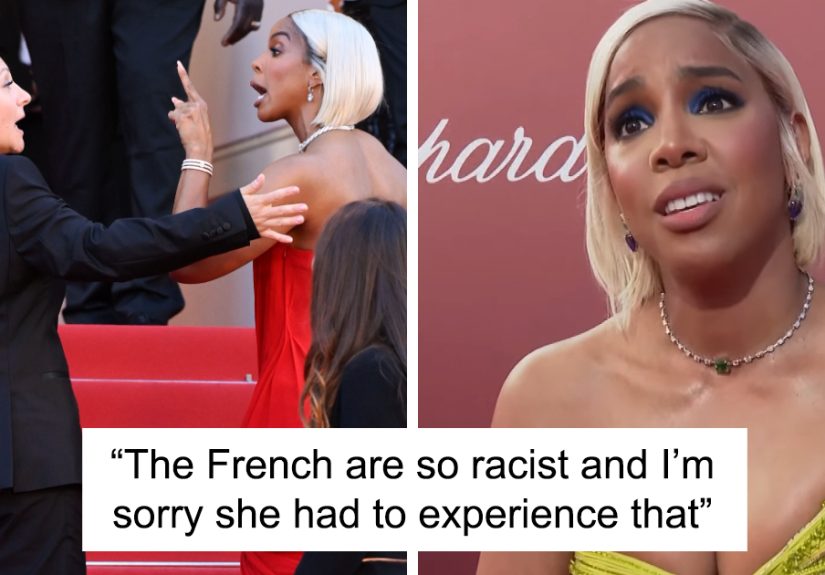
Kelly Rowland arrived at Cannes looking like a full-stop sentence in red: elegant, calm, camera-ready, and very clearly not there to be rushed like someone late for boarding group C. But within minutes, the glamour of the red carpet turned into one of the most talked-about celebrity moments of the 2024 Cannes Film Festival. A video showed Rowland in a tense exchange with a female security staffer on the steps of the Palais des Festivals during the premiere of Marcello Mio, and the internet did what the internet does best: paused, zoomed, lip-read, debated, defended, accused, and turned a few seconds of footage into a global conversation.
The phrase “racist pure and simple” spread among online supporters who believed Rowland was treated differently from other guests. Rowland herself did not deliver a courtroom verdict; she described the moment as a boundary issue and pointed to what she saw as unequal treatment. That distinction matters. The Cannes incident was not just about a celebrity “snapping.” It became a broader discussion about race, respect, personal space, public image, and how quickly a red-carpet interaction can become a cultural flashpoint.
What Happened At Cannes?
The incident took place during the 77th Cannes Film Festival, which ran from May 14 to May 25, 2024. Rowland was attending the red-carpet premiere of Marcello Mio, a French-Italian film directed by Christophe Honoré. She appeared in a striking red gown, smiling for photographers and waving as she moved up the famous Cannes stairs.
Then the tone shifted. Video footage showed a security staffer appearing to guide Rowland along, placing an arm near her and directing her toward the entrance. Rowland turned around and spoke firmly to the usher, raising her finger as the staffer continued to gesture. Another person in Rowland’s party appeared to intervene as the singer and actress continued up the stairs.
On a red carpet, timing is everything. Photographers want the shot. Stars want the moment. Festival staff want the traffic moving. Everyone is under pressure, and the carpet is less “fairy-tale runway” than “very fancy airport security line with diamonds.” But what made this moment different was Rowland’s visible frustration and the way many viewers interpreted the guard’s physical closeness and urgency.
Kelly Rowland’s Explanation: “I Stood My Ground”
After the video went viral, Rowland addressed what happened. Speaking to the Associated Press, she said she had a boundary and stood by it. She also said that other women on the carpet who did not look like her were not treated the same way. Her message was controlled, emotional, and direct: she believed she had been scolded and pushed along in a way others had not.
That is the key to understanding the story. Rowland did not frame her response as a random outburst. She framed it as self-protection. In other words: she was not being “difficult”; she was enforcing a line. For many fans, especially Black women who have experienced being over-policed in professional or public spaces, that explanation landed with force.
Rowland’s reaction also challenged a familiar celebrity-media script. When a famous woman reacts in public, the immediate headline often becomes “diva behavior.” But when the full context includes physical contact, rushed movement, and possible unequal treatment, the story becomes more complicated. Sometimes “she lost her temper” is just the lazy headline wearing comfortable shoes.
Why Fans Called The Incident “Racist Pure And Simple”
The strongest reactions came from viewers who believed the guard’s treatment reflected racial bias. Online, many fans argued that Rowland was being hurried, touched, and corrected in a way that white celebrities were not. The phrase “racist pure and simple” captured that anger in blunt internet language.
It is important, though, to separate three things: what the video shows, what Rowland said, and what viewers concluded. The video shows a tense exchange. Rowland said she felt boundaries were crossed and that other women were treated differently. Viewers then connected that to a broader history of Black women being labeled aggressive when they assert themselves.
That history is why the incident traveled beyond celebrity gossip. For many people, the clip was not just about Cannes. It was about offices, schools, stores, airports, restaurants, and every place where someone is told to “calm down” after they calmly say, “Please do not touch me.” Rowland’s expression became a meme, but the feeling behind it was very real.
The Role Of Personal Boundaries On A Public Red Carpet
Red carpets are strange places. They are public, but not casual. They are choreographed, but chaotic. Celebrities are invited to pose, but also expected to move quickly. Security staff may need to manage crowd flow, but guests still have the right to basic personal space.
Rowland’s use of the word “boundary” was powerful because it shifted the conversation away from celebrity ego and toward human dignity. You do not stop being entitled to personal space because you are wearing couture. A red dress is not a permission slip. A camera flash is not consent to be handled roughly.
Security work is difficult, especially at a high-profile event like Cannes, where schedules are tight and international media attention is intense. But good crowd management does not require unnecessary physical pressure or disrespectful communication. The best security professionals know how to be firm without making people feel small.
Why The Cannes Setting Made The Moment Bigger
Cannes is not just any film festival. It is one of the most glamorous and closely watched cultural events in the world. The red carpet is practically a character of its own: dramatic stairs, black-tie rules, screaming photographers, gowns with their own zip codes, and enough flashbulbs to power a small moon.
Because Cannes is so symbolic, every interaction there feels amplified. The festival represents prestige, taste, access, and old-school European glamour. So when a Black American superstar appears to be rushed or scolded in that setting, viewers are quick to read the moment through a larger lens: Who gets to take up space? Who gets patience? Who gets treated as a guest, and who gets treated as a problem?
That is why Rowland’s Cannes incident became bigger than a few seconds on the stairs. It touched a nerve about visibility. The red carpet is designed to display people, but not everyone is displayed with equal grace.
Similar Incidents Added Fuel To The Debate
The conversation intensified when other videos surfaced involving the same or similar Cannes security behavior. Dominican actress Massiel Taveras was later seen in a tense interaction with a security guard while wearing a dramatic gown with a long train. Reports also discussed Ukrainian model Sawa Pontyjska, who claimed she experienced excessive force from security at the festival.
These follow-up incidents made people revisit Rowland’s reaction. If more than one guest felt rushed, blocked, or physically managed too aggressively, then maybe the problem was not simply “one celebrity being upset.” Maybe it pointed to a larger issue with how red-carpet security was being handled.
Still, the racial element remained central to Rowland’s case because she specifically compared her treatment to that of women who did not look like her. That comparison is what changed the conversation from “Was security too strict?” to “Was security applied equally?” Those are not the same question, and the second one is much harder to brush away with a shrug and a festival badge.
Media Framing: Diva, Defiant, Or Disrespected?
One reason the Kelly Rowland Cannes incident generated so much debate is that media framing can dramatically shape public opinion. A headline that says “Kelly Rowland scolds security” suggests attitude. A headline that says “Kelly Rowland stands her ground” suggests dignity. Same footage, different doorway into the story.
Women, especially women of color, often face a no-win situation in public conflict. If they stay quiet, discomfort is ignored. If they speak up, they risk being called rude. If they show emotion, they are accused of overreacting. If they remain composed, people say it could not have been that serious. It is the kind of logic loop that needs a software update and possibly a snack.
Rowland’s response cut through that. She did not apologize for protecting her boundary. She did not perform excessive politeness to make the moment easier for everyone else. She simply said, in essence, that she knew what happened and stood by her response.
The Bigger Conversation About Race And Public Treatment
The viral Cannes incident reflects a broader conversation about racial profiling and public treatment. Racial bias is not always loud, obvious, or announced with cartoon-villain music. Sometimes it appears in who gets rushed, who gets watched, who gets touched, who gets corrected, and who is assumed to be “causing trouble.”
That is why many people related to Rowland’s frustration. The issue was not just whether a staffer needed to move guests along. The issue was whether Rowland was moved along with the same respect given to others. Equal rules are only equal when they are enforced equally.
For brands, festivals, and public institutions, this moment offers a clear lesson: representation is not only about who gets invited. It is also about how people are treated once they arrive. Inviting diverse guests to elite spaces means very little if those guests have to fight to be respected inside those spaces.
What Cannes And Event Organizers Can Learn
The Kelly Rowland incident should be studied by event organizers, not dismissed as a celebrity dust-up. Major festivals need security teams that are trained not only in crowd control, but also in cultural awareness, de-escalation, and non-invasive communication. A staffer can guide without grabbing. A team can manage time without humiliating guests. A red carpet can run on schedule without turning into a velvet-rope obstacle course.
Clear protocols would help everyone. Guests should know how long they can pose. Security should know when physical contact is appropriate and when verbal direction is enough. Handlers should have direct communication with festival staff. And if an incident occurs, organizers should have a transparent process for review.
Silence may feel safer for institutions, but in viral moments, silence often becomes its own statement. When millions of people have already watched the clip, pretending nothing happened is like trying to hide a chandelier under a napkin.
What The Public Can Learn From Rowland’s Reaction
There is a personal lesson here, too. Rowland’s response reminds people that boundaries are not rude. Boundaries are instructions for respect. You can set them quietly, firmly, and without needing to write a 12-page emotional dissertation with footnotes.
Her reaction also shows that staying composed does not mean staying silent. She did not appear to lose control; she appeared to correct behavior she found unacceptable. That distinction matters, especially in a culture that often mistakes assertiveness for aggression when it comes from women of color.
For everyday readers, the takeaway is simple: you are allowed to say no to unwanted contact. You are allowed to object when you are being treated unfairly. You are allowed to stand your ground without shrinking yourself into a more convenient size for other people.
Experience Notes: What This Incident Feels Like Beyond The Red Carpet
The reason this story resonated so widely is that many people have lived smaller versions of it. Not on the Cannes stairs, perhaps, and not while wearing a red gown that deserves its own weather report, but in ordinary settings where power, perception, and respect collide.
Think about the person in a store who is followed more closely than other shoppers. Think about the student who is corrected more harshly for the same behavior classmates get away with. Think about the employee whose direct tone is labeled “aggressive,” while another person’s identical tone is praised as “leadership.” These experiences may not come with photographers, but they carry the same emotional weight: the sense that you are being managed differently before you have even done anything wrong.
That is why Rowland’s phrase about boundaries mattered. Boundaries are not only for dramatic conflicts. They are everyday tools. They help people say, “Please speak to me respectfully,” “Do not touch me,” “I need a moment,” or “That rule should apply to everyone.” Those statements are not attacks. They are maintenance for basic dignity.
In workplaces, schools, and public spaces, the Cannes incident can be used as a conversation starter. How do we respond when someone says they feel singled out? Do we get defensive, or do we get curious? Do we focus only on whether a rule exists, or do we ask whether the rule is being applied fairly? Do we demand perfect calm from the person who feels mistreated while ignoring the behavior that created the conflict?
A useful experience-based lesson is to pay attention to patterns. One awkward interaction can be a misunderstanding. Repeated similar interactions suggest a system problem. If several people describe feeling rushed, touched, dismissed, or policed in the same environment, leaders should not wait for a viral video before taking it seriously.
Another lesson is that dignity is often communicated through small actions. A staff member who says “This way, please” with space and courtesy creates a very different experience from someone who blocks, grabs, or scolds. A manager who listens without interrupting can defuse a situation faster than one who starts with denial. A bystander who says, “I saw that too,” can make someone feel less alone.
For anyone who has ever been told they were “too sensitive” after pointing out unfair treatment, Rowland’s Cannes moment offered a sharp reminder: sensitivity is not the problem when the room has a respect leak. People notice tone. They notice body language. They notice who gets patience and who gets pressure. And yes, they notice when a glamorous event suddenly starts acting like the line outside a nightclub with one clipboard and too much confidence.
Ultimately, the experience connected to this incident is about refusing to disappear. Rowland did not let the moment pass in silence simply because cameras were present. She also did not allow the public conversation to reduce her to a meme. She explained herself with clarity, and that clarity is why the story lasted longer than a typical celebrity red-carpet clip.
Conclusion
The viral Kelly Rowland Cannes incident was not just a red-carpet disagreement. It became a cultural case study in boundaries, race, media framing, and the right to be treated with respect in elite spaces. Whether one sees the moment as poor crowd control, racial bias, or both, Rowland’s response made one thing clear: glamour does not cancel dignity.
The phrase “racist pure and simple” may have come from public reaction, but the deeper issue is more layered. Rowland pointed to unequal treatment. Fans recognized a familiar pattern. Media outlets debated the framing. And event organizers everywhere were handed a reminder that prestige is not only measured by who walks the carpet, but by how they are treated while walking it.
In the end, Rowland’s message was not complicated. She had a boundary. She stood by it. And sometimes, the most powerful thing a person can do in a room full of cameras is refuse to be moved along like their presence is an inconvenience.