Table of Contents >> Show >> Hide
- Why This DOOM Port Blew Up Online
- What Device Are We Talking About, Exactly?
- How DOOM Ended Up Running on a Charger
- The Hardware Specs That Make the Joke Work
- Is It Actually Playable or Just Internet Playable?
- Why DOOM Keeps Getting Ported to Strange Devices
- What Consumers and Makers Can Learn From This
- Should You Try This Yourself?
- Experience Notes: What “Playing DOOM on a Charging Station” Feels Like (500+ Words)
- Conclusion
There are two kinds of people in this world: people who ask, “Why would anyone play DOOM on a charging station?” and people who immediately ask, “Okay, but how smooth is it?” This story is for the second group (and the first group, because honestly, you’re curious too).
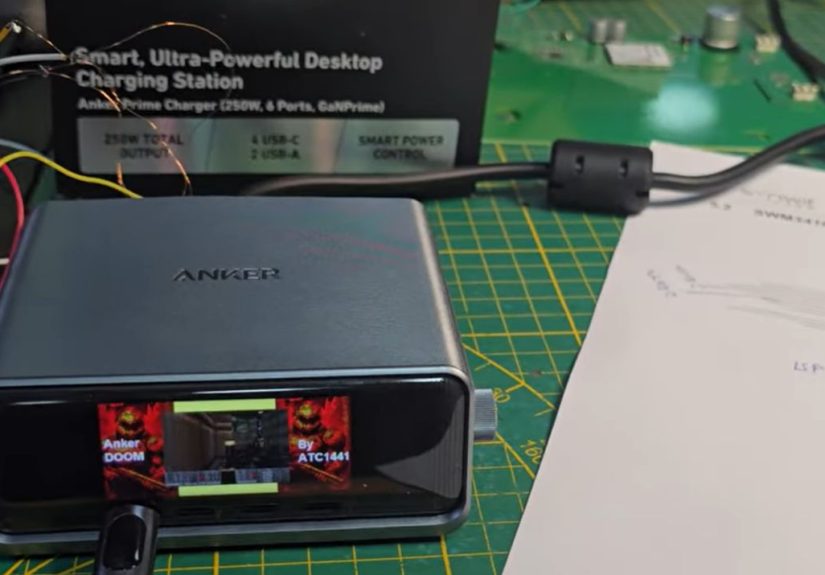
In one of the most delightfully unnecessary tech hacks in recent memory, hardware hacker Aaron Christophel got classic DOOM running on an Anker Prime desktop charging device with a built-in screen and control dial. Yes, an actual charger. The same object that usually sits on your desk quietly pumping power into your laptop can apparently moonlight as a demon-slaying machine. The internet, as expected, applauded.
But this isn’t just a goofy “can it run DOOM?” stunt. It’s also a surprisingly good case study in how much computing power is hiding inside everyday gadgets. Modern charging stations are no longer “dumb bricks.” Many now include displays, app connectivity, wireless features, smart power balancing, and firmware logic. In other words: tiny computers that also happen to charge your phone. That’s exactly why this hack is funny and genuinely interesting.
Why This DOOM Port Blew Up Online
The phrase “can it run DOOM?” has become a long-running meme in tech culture because the original 1993 game is old enough, compact enough, and iconic enough to be ported to wildly unconventional hardware. Over the years, people have made it run on calculators, badges, appliances, and other devices that absolutely did not sign up for this. The Anker Prime charging station joins that chaotic hall of fame for one simple reason: it’s weird, but not impossible.
Unlike many novelty ports that are more “proof of life” than “playable,” this one looks legitimately usable on the tiny display. That’s a big part of the appeal. It’s not just a static menu screen or a single level rendered at one frame every other birthday. It actually resembles a game session. A clumsy one, sure. But a real one.
What Device Are We Talking About, Exactly?
The device at the center of the story is Anker’s premium desktop charging hardware in the Prime lineup, specifically the model with a built-in display and a smart control dial. Anker markets this class of product as a high-output multi-port desktop charger (often described as a “charging station” in coverage), and it’s designed for people who charge multiple devices at once.
On the practical side, this is a serious charger: up to 250W total output, six USB ports (four USB-C and two USB-A), and a front display that shows charging information. Anker also highlights app-connected features, a smart dial for adjusting power behavior, and monitoring/safety systems. In normal life, it’s meant to help power laptops, tablets, phones, and accessoriesnot blast imps in pixelated corridors. But here we are, and frankly, it looks like it was waiting for this moment.
Why the Display and Dial Matter
The two features that make this hack possible (and entertaining) are:
- A color LCD screen on the front of the charger
- A rotary push dial that can be turned and clicked
That combination gives hackers both output (a screen) and input (a control mechanism). If a device has both, the DOOM community basically hears a starter pistol.
How DOOM Ended Up Running on a Charger
Reports on the project explain that Aaron Christophel was already exploring Anker Prime hardware and noticed that the charging device shared some traits with another Anker Prime gadget (including wireless connectivity like BLE, plus Wi-Fi support on the charger platform). Once you realize a “charger” contains a reasonably capable chip, memory, and a display controller path, the question changes from “Can it run DOOM?” to “How much work will it take?”
The answer, in this case, appears to be: a lot of smart reverse engineering, but not a full Frankenstein rebuild. Coverage repeatedly notes that the demo was achieved without permanent hardware modifications to the charger itself, using access via a debug header to load software. That distinction matters. It’s still advanced tinkering, but it’s not the same thing as replacing the guts of the charger and then calling it an “Anker port.”
In plain English: the hardware already had the horsepower. The hack was about understanding the internals well enough to use it.
The Hardware Specs That Make the Joke Work
Multiple reports describe the internals as much beefier than most people expect from a charging accessory. The project has been associated with a Synwit ARM-based microcontroller (often cited as an SWM34S / SWM341RET7-class part) running around 150 MHz, along with roughly 8 MB SDRAM and 16 MB external flash. There’s also a front display in the 200 × 480 range (orientation depends on how you describe it).
If that sounds like overkill for “show battery percentages and wattage numbers,” well… that’s part of the internet’s reaction too. But for a premium smart charging device with a UI, app integration, monitoring, and feature updates, modern OEMs often use hardware platforms that are more capable than consumers assume.
And once a gadget has a decent MCU, memory, display, and input? Congratulations. It’s now a “maybe DOOM” candidate.
What It Says About Modern Gadgets
This hack is funny because it’s absurd. It’s interesting because it’s normal.
A surprising number of everyday products now include:
- Wireless connectivity (Bluetooth/Wi-Fi)
- Display processors and UI logic
- Firmware update mechanisms
- Memory sizes that would have sounded luxurious decades ago
- Embedded software stacks far beyond “on/off” behavior
Your charging station is no longer just a power strip with better PR. It’s a small computer with a day job.
Is It Actually Playable or Just Internet Playable?
Great question, because these are not always the same thing.
By all accounts, the Anker Prime DOOM demo looks surprisingly playablewith a giant asterisk attached to the controls. Performance appears better than most people would expect from a charger screen, especially when the game is not pushed to a full-screen configuration. The visuals are recognizable, movement looks reasonably smooth, and the novelty doesn’t completely overshadow usability.
The catch? Input. The charging device uses a single click-and-rotate dial. That means movement, turning, interaction, and firing are all mapped to combinations of twisting and pressing one control. It works, but in the same way eating spaghetti with a coffee stirrer “works.” You can do it. You may even impress people. But nobody is calling it ergonomic.
A Typical Control Mapping (As Reported)
- Rotate the dial for forward/back movement
- Press the dial to fire / activate
- Press + rotate to turn left/right
That’s clever, and honestly kind of elegant for a one-knob interface. It’s also hilariously chaotic in combat. Opening a door while accidentally firing? Very on-brand for this setup.
Why DOOM Keeps Getting Ported to Strange Devices
This isn’t just nostalgia. DOOM is a perfect stress test for creativity:
- It’s iconic enough that everyone instantly recognizes it.
- It has a long history of ports and modding.
- It’s complex enough to be impressive, but old enough to be feasible on tiny hardware.
- It creates a universal benchmark for hacker bragging rights.
If you can get a menu, movement, and combat running, people immediately understand the achievement. No explanation needed. It’s the embedded-hardware equivalent of dunking a basketball in dress shoes.
The Anker Prime charging station version stands out because it sits in that sweet spot between ridiculous and practical. It’s not a gimmick display with no controls. It’s not a giant hidden PC stuffed into a novelty shell. It’s a real consumer product with real UI hardware being repurposed in a way that exposes how capable modern “appliances” have become.
What Consumers and Makers Can Learn From This
1) “Smart” means software complexity
When a charger has app control, display modes, scheduling, and wireless features, it also has firmware, update paths, and a broader software surface area. That’s not automatically badit can be genuinely usefulbut it does mean these devices deserve to be treated more like electronics platforms than simple accessories.
2) Debug access matters
The fact that a skilled hacker can interface with the device through debugging access is a reminder that development and manufacturing conveniences can become tinkering opportunities. For enthusiasts, that’s exciting. For manufacturers, it’s a reason to think carefully about security, documentation, and support boundaries.
3) Premium hardware often has hidden headroom
If a product needs a nice screen, fluid UI, wireless features, and monitoring, the internal silicon may be much stronger than the public marketing pitch suggests. The box says “250W charger.” The internals quietly whisper, “I contain a tiny computing platform.”
Should You Try This Yourself?
If you’re asking from pure curiosity: enjoy the demo and admire the engineering.
If you’re asking because you want to replicate it: be careful. This is mains-powered hardware. Opening or probing a charging station can present electrical risks, may void your warranty, and can damage a pricey device if you get things wrong. Reverse engineering is a legitimate technical skill, but this is not a beginner weekend project next to your iced coffee and half-built keyboard.
The safer takeaway is conceptual: this hack is a fascinating example of how much functionality is hiding inside modern consumer tech. Even if you never solder a wire, it changes how you look at the gadgets on your desk.
Experience Notes: What “Playing DOOM on a Charging Station” Feels Like (500+ Words)
Let’s talk about the actual experience, because that’s where this story goes from “cool headline” to “I kind of want to try it.” Watching DOOM run on the Anker Prime charging station feels like witnessing two completely different timelines collide. In one timeline, 1990s PC gaming is loud, frantic, and gloriously messy. In the other, modern desk life is minimal, cable-managed, and optimized down to wattage graphs. This hack smashes those worlds together in the funniest possible way.
First, there’s the visual contrast. You’re looking at a premium desktop chargersomething that normally displays charging stats, power distribution, or a clockand suddenly it’s rendering dark corridors, doors, enemies, and muzzle flashes. That tiny screen changes the emotional tone of the device instantly. It stops being “the thing that charges my laptop” and becomes “the charger that apparently has hobbies.” That alone is comedy gold.
Then you notice the controls, and the whole thing becomes a performance. Traditional DOOM inputs are built around a keyboard (and later, mouse/gamepad comfort). Here, you’re driving the game through a single rotary push dial. It looks awkward because it is awkward, but it’s also surprisingly intuitive after a moment. Twist. Press. Twist-and-press. You can almost feel your brain trying to invent a new control language in real time. It’s like learning a tiny dance where every move either opens a door or accidentally fires a shotgun.
That accidental action is part of the charm. On a normal setup, precision is the point. On a charging station, improvisation is the point. You’re not chasing speedrun records. You’re proving that something absurd can be made functional enough to be delightful. Every successful turn, every enemy hit, every door that opens when you meant it to feels like a minor miracle. And every mistake feels funny instead of frustrating, because the entire premise is already gloriously unreasonable.
There’s also a weird satisfaction in the scale of it. DOOM was once a landmark PC experience, and now pieces of that experience fit onto a desktop accessory sitting inches from a USB-C cable. It makes you appreciate how far embedded hardware has come. You’re not just watching a game runyou’re watching a cultural icon shrink into an object that, on paper, should never be associated with gameplay in the first place. That miniaturization is part engineering feat, part magic trick.
Another fun layer is the social reaction. If this is sitting on your desk and someone walks by, they do a double take. They expect to see charging percentages. Instead, they see DOOM. You don’t need to explain why it exists (because there is no practical reason). You only need to explain that yes, it really is running there, and yes, the knob is the controller. The device becomes an instant conversation starter part hacker flex, part office comedy prop, part accidental art piece.
And honestly, that’s the core experience: delight. Not “best way to play DOOM.” Not “replacement for a handheld console.” Just delight. It’s the same feeling as seeing a beautifully over-engineered Rube Goldberg machine: deeply unnecessary, technically impressive, and impossible not to enjoy. You’re reminded that technology doesn’t always have to justify itself with productivity. Sometimes the best demo is the one that makes people laugh, ask questions, and think differently about the devices they use every day.
In that sense, playing DOOM on the Anker Prime charging station is more than a meme. It’s a tiny celebration of curiosity. It says: this box can do more than the label suggests, and so can the people who take it apart, understand it, and imagine something weird for it to become. That spiritthe playful, inventive, “what if?” mindsetis the real reason these projects spread so quickly online. The demons are just a bonus.
Conclusion
“Playing DOOM on the Anker Prime charging station” sounds like a joke headline, but it reveals something real about modern hardware: many “simple” gadgets are now surprisingly capable computing platforms. This particular project works because the Anker Prime device combines a screen, a dial, smart firmware, and enough embedded horsepower to make a classic game genuinely runnable.
No, it’s not the best way to play DOOM. Yes, it’s one of the funniest. And more importantly, it’s a perfect snapshot of hacker culture at its bestcurious, clever, and just the right amount of chaotic.