Table of Contents >> Show >> Hide
- Who Is Vince Skelly?
- Why the “Quick Takes” Format Actually Works Here
- What His Quick Answers Reveal About His Design World
- The Wood, the Storm, and the California Context
- Why His Furniture Feels Ancient and Modern at the Same Time
- Recent Projects That Show His Range
- Why Designers, Collectors, and Regular Humans Should Care
- Extended Reflections: The Experience of Vince Skelly’s World
- Conclusion
Some artists need a full-length documentary to explain what they do. Vince Skelly can get surprisingly far with a few short answers, a chainsaw, and a piece of salvaged wood the size of a small dinosaur. That is part of what makes Quick Takes With: Vince Skelly so compelling as a design story. The format is brief, but the ideas are not. In a handful of punchy responses, Skelly reveals a design philosophy that is playful, deeply material-driven, and refreshingly allergic to fake polish.
If you are not already familiar with his work, Skelly is a California wood sculptor and designer whose chairs, stools, benches, tables, and abstract objects often begin as a single block of wood. Rather than forcing timber into a slick, anonymous product, he pays attention to the grain, knots, cracks, and quirks that make each piece feel alive. The result is furniture that lands somewhere between sculpture and useable object. It is serious craft without being stuffy, and refined design without the usual “please don’t touch that” energy.
That balance is exactly why his quick-take answers matter. They do not just tell us what Vince Skelly likes. They show how he thinks, how he lives, and why his work has become so interesting to design editors, museums, galleries, and homeowners who want more from furniture than a flattering catalog photo.
Who Is Vince Skelly?
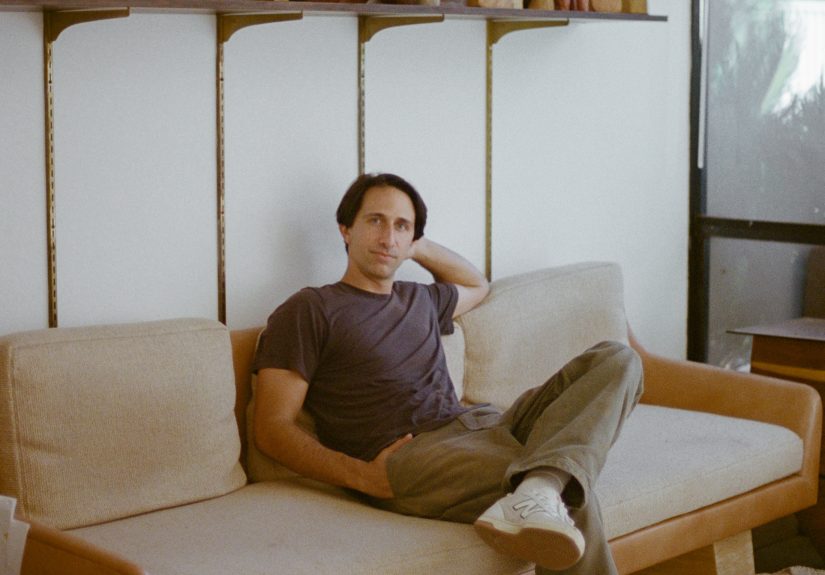
Vince Skelly is a Claremont, California-based artist and designer whose practice explores the line between sculptural furniture and fine art. He has been widely recognized for creating wooden forms from a single block, often working reductively with chainsaws and hand tools to tease out shapes that feel ancient, monolithic, and somehow still perfect for a modern room. That alone would make him notable. What makes him memorable is that his work never feels like a design-school exercise in Minimalism With a Capital M. It has warmth, humor, and a kind of grounded physicality that many contemporary interiors desperately need.
Skelly’s background helps explain that sensibility. He has roots in graphic design, grew up in Claremont, spent years in Portland, and returned to Southern California with an eye sharpened by both art history and everyday observation. In profile after profile, a consistent picture emerges: he is drawn to prehistoric forms, California craft lineage, public art, and objects that invite use rather than intimidation. That combination gives his work an unusual kind of clarity. It feels studied, but never overcooked.
Why the “Quick Takes” Format Actually Works Here
There are designers whose short answers feel like branded wallpaper. You know the type: favorite object, favorite room, favorite candle, favorite painfully expensive spoon. Skelly’s responses work because they do something more revealing. They connect taste to practice. In other words, the man who carves raw wood into chunky sculptural forms also has opinions that sound like they were carved from a log and sanded only when necessary.
His three-word description of his style is the headline-stealer: “Natural, chunky, Flintstones.” That line is funny, but it is also uncannily accurate. “Natural” signals his devotion to material honesty. “Chunky” captures the mass and weight of his forms. “Flintstones” adds a pop-cultural wink that keeps the whole thing from collapsing into solemn craft-world mumbling about process and spirit. In one line, he tells you that he respects history, enjoys shape, and is not afraid of a little cartoon logic. Frankly, more designers should try that.
His “unpopular design opinion” is just as sharp: “Coasters bad. Drink rings good.” Beneath the joke is a real stance about living with objects rather than preserving them in museum-grade fear. He is not arguing for carelessness. He is arguing against the kind of decorative perfectionism that strips interiors of memory. A room should show signs of use. A table should not look like it was emotionally unavailable the day it arrived.
What His Quick Answers Reveal About His Design World
He values objects with spirit, not performance
One of the best clues to Skelly’s worldview is his design pet peeve: “Performative coffee table books.” Ouch. Also, fair. The line lands because it cuts through a real design habit of staging intelligence instead of living it. In Skelly’s universe, objects should not exist just to broadcast taste. They should have weight, function, and some inner life. That helps explain why he gravitates toward materials that hold evidence of time and transformation.
It also helps explain why his favorite design shop is a serious architectural bookstore and why the book on his bedside table centers on Isamu Noguchi. He is clearly interested in design as a living tradition, not as a set of algorithms for making a room “content-ready.” His desert-island design book choice, Handcrafted Modern, tracks perfectly with that attitude. It is a pick that reflects reverence for makers who shaped modern design through handwork, experimentation, and material intimacy.
He likes homes that feel inhabited
Asked about his best house upgrade, he answers: a garden. Not a smart system. Not a lighting package. Not a suspiciously expensive faucet that looks like it came with its own publicist. A garden. That choice says a lot. It suggests that the home, for Skelly, is not just a visual composition but an ecosystem. It is a place where natural forms, seasons, texture, and use all matter.
His budget-friendly design move also feels true to his practice: vintage and handmade pillows sourced online. That is not flashy advice, but it is good advice. It points to a layered approach to space, one built from materials and objects with personality rather than a one-click matching set. Even his answer about favorite sheetsfresh from the dryerleans toward experience over branding. That is Skelly all over: sensual without being precious.
He is serious about form, but never too serious
There is something charmingly complete about a designer whose go-to kitchen utensil is a fish spatula and who does not leave the house without a skateboard. The fish spatula is one of those cult objects beloved by people who appreciate good tools. The skateboard, meanwhile, gives the whole profile motion. It suggests a person who still likes glide, spontaneity, friction, and maybe the occasional controlled risk. It is hard not to see a connection between that and the way his furniture balances mass with play.
Then there is Twin Peaks as an aesthetic touchstone. Of course it is. Skelly’s work often carries a mood that is both earthy and slightly uncanny. It feels rooted in landscape but not tame. Twin Peaks is not a random answer. It fits a maker interested in mystery, texture, silence, and forms that seem to hold stories without spelling them out.
The Wood, the Storm, and the California Context
To understand why Vince Skelly stands out, you have to move beyond the rapid-fire interview format and look at the material conditions behind the work. Again and again, coverage of Skelly points to the same core facts: he often works with salvaged or sustainably sourced wood, he shapes forms from a single block, and he responds directly to the character of the timber instead of treating it like neutral raw input.
That philosophy became especially visible in the work connected to the January 2022 windstorm in Claremont, when hundreds of trees came down in the area. Skelly salvaged usable timber and turned that moment of destruction into furniture and sculpture. The resulting exhibitions, including After the Storm and A Conversation with Trees, made clear that his practice is not just about formal beauty. It is about transformation, memory, locality, and respect for material history.
This is one reason his work feels bigger than a trend. Plenty of brands now talk about sustainability. Skelly’s practice gives the idea physical form. These are not vague claims wrapped in recycled packaging. These are actual trunks, actual losses, actual surfaces shaped into objects that carry their origins with them.
Why His Furniture Feels Ancient and Modern at the Same Time
Skelly’s work is often described through comparisons to figures such as JB Blunk and Wharton Esherick, and the references make sense. His pieces can feel monolithic, elemental, and deeply handmade. But they are not imitations of earlier masters. What he seems to borrow is permission: permission to let furniture behave like sculpture, to let roughness coexist with refinement, and to let utility remain visible without becoming boring.
His forms often evoke dolmens, totems, and simplified silhouettes that seem excavated rather than manufactured. Yet they also fit surprisingly well in contemporary interiors. That tension is part of their charm. A Skelly stool can look like it arrived from another millennium and still make a sharp apartment feel more current. That is not easy to do. Many “statement pieces” merely shout. His pieces tend to resonate.
The phrase “natural, chunky, Flintstones” comes back here, and not by accident. It is funny because it is true. His work has cartoon clarity and prehistoric heft, but it is guided by modern restraint. He knows when to stop. He knows that wood already contains drama. He does not need to over-style it into submission.
Recent Projects That Show His Range
If anyone still thinks Skelly is only “the wood stool guy,” his recent projects should end that conversation. One of the most interesting developments in his practice is the release of his first chess set. The project extends his sculptural language into a new category without feeling like a random merch detour. He began with hand-carved redwood maquettes, used those as masters for molds, and had the 32 pieces cast in solid bronze. The resulting set preserves the texture, tool marks, and irregularities of the original carvings. The walnut board doubles as both playing surface and wall-mounted display shelf. That is functional design with a collector’s brain and an artist’s sense of ritual.
He has also appeared in major exhibition contexts that reinforce how museums and design institutions are reading his work. At Craft Contemporary, his pieces were placed in dialogue with the legacy of Evelyn and Jerome Ackerman in Material Curiosity by Design, a show about material intelligence, California modernism, and the relationship between art and making. He was also featured in the museum’s Maker-in-Residence programming, which invited visitors into a more direct encounter with process. That matters. It suggests that Skelly is not being treated as a novelty act but as part of a larger conversation about contemporary craft, regional identity, and the future of functional art.
Why Designers, Collectors, and Regular Humans Should Care
Skelly’s appeal is not limited to the gallery crowd. His quick-take answers reveal several lessons that are surprisingly useful for anyone interested in home design.
First, a memorable interior does not come from perfection. It comes from character. That is why his anti-coaster joke hits a nerve. A room should record life. Second, material matters. A piece does not need to be glossy or expensive to feel meaningful, but it does need honesty. Third, references can be both cultured and playful. You can admire Noguchi, love Twin Peaks, keep a skateboard by the door, and still make furniture worthy of museum walls. Maybe especially then.
There is also a broader lesson in how he approaches inspiration. He does not seem to divide the world into “high design” and “everything else.” Ancient forms, midcentury makers, public art, cartoons, practical utensils, gardens, books, and handmade objects all belong to the same imaginative field. That is a healthier model for design than the endless hunt for luxury signals. It makes room for curiosity, memory, and humor.
Extended Reflections: The Experience of Vince Skelly’s World
To spend time with Vince Skelly’s work, even just through interviews and exhibition coverage, is to be reminded that design is not only about appearance. It is about contact. You can almost feel that in the way his objects are described: the dense weight of a stool cut from one block, the visible tool marks that refuse to disappear, the cracks and grain that are treated as features rather than flaws. These are not pieces designed to evaporate into the background. They ask to be noticed, but they do not beg for attention. That distinction is important.
There is a particular experience that seems to follow his work around, and it is the experience of slowing down. In a design culture dominated by speed, scrolling, and rooms created for the camera before the human body, Skelly’s objects seem to insist on a different pace. They make you look at shape. They make you notice mass. They make you think about where the material came from and what it used to be before it became a chair, bench, table, or chess piece. That is a rare quality in contemporary home design, and it gives his work unusual emotional depth.
His quick-take answers reinforce that same feeling. The answers are witty, but they are not frivolous. They suggest a life organized around real use: a garden that changes the feeling of home, a fish spatula that earns its keep, sheets appreciated for the immediate pleasure of warmth and softness, books that deepen visual thinking, and a skateboard that keeps movement in the picture. Even the jab at performative coffee table books points to a bigger idea. Design should be lived with, not merely staged.
That may be the most valuable experience attached to the phrase “Quick Takes With: Vince Skelly”. It is not just an interview title. It becomes a miniature map of a creative life. A few short prompts open onto much bigger themes: California craft history, salvaged wood, sculptural furniture, domestic ritual, humor as taste, and the possibility that an object can be both practical and quietly profound.
There is also something reassuring about Skelly’s refusal to flatten his practice into a single mood. Yes, the work is grounded and earthy. Yes, it has historical references and formal discipline. But it also has jokes. It has visual mischief. It has the boldness to say “Flintstones” in a world where many designers would rather die than sound unserious for three seconds. That confidence is part of why the work feels contemporary. It trusts the audience enough to let intelligence and play exist in the same room.
And perhaps that is the deepest takeaway. Vince Skelly’s design world suggests that the best interiors and objects do not choose between refinement and roughness, or between thoughtfulness and fun. They hold both. They let materials speak. They welcome evidence of use. They carry memory without becoming nostalgic mush. They feel substantial in every sense of the word. In that way, the Skelly experience is not just about wood furniture or collectible design. It is about recovering a more human relationship to the things we live with every day.
Conclusion
Vince Skelly’s quick takes may be short, but they sketch a remarkably full portrait of the artist behind the work. He comes across as a maker who respects craft history, listens to material, embraces humor, and believes good design should be lived with rather than worshipped from a safe distance. His answers are funny because they are precise. His furniture is striking because it is grounded. And his larger body of work proves that sculptural wood furniture can be both soulful and sharply contemporary.
In a design landscape crowded with polished sameness, Vince Skelly offers something sturdier: form with memory, utility with personality, and taste with bark still on it. That is a pretty good quick take. It is also a pretty good blueprint for what enduring design looks like now.