Table of Contents >> Show >> Hide
- Who Is Hollie Velten-Lattrell?
- Why This “Quick Takes” Feature Actually Tells You a Lot
- The Design Language of SPACES by Hollie Velten
- Quick Takes That Reveal the Person Behind the Rooms
- Projects That Show Her Signature Style in Action
- Why Hollie Velten-Lattrell’s Work Feels So Current
- Extended Experiences: What It Feels Like to Enter a Hollie Velten-Lattrell World
- Final Take
Note: This web-ready article is freshly written from publicly available reporting and studio materials. Source links and publishing artifacts have been intentionally omitted.
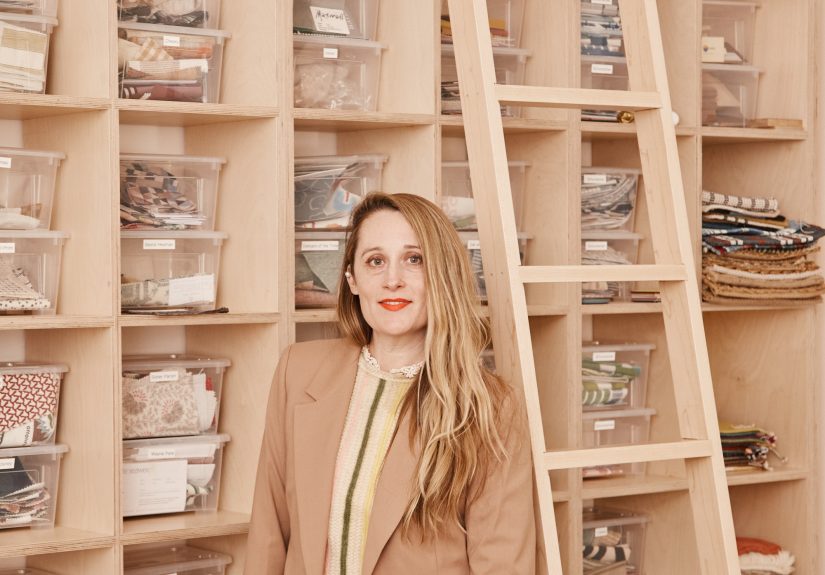
Some designers decorate rooms. Hollie Velten-Lattrell reads them like diaries with better lighting. The founder and principal of SPACES by Hollie Velten has built a reputation for interiors that feel expressive, layered, a little cinematic, and refreshingly alive. Her work is not about chasing sterile perfection or turning every home into a beige museum of expensive restraint. Instead, she leans into what makes a house feel human: memory, mood, texture, contrast, and those oddly specific details that tell you someone actually lives there. Imagine a room that says, “Yes, I am curated,” but also, “Please sit down and spill a little tea.”
That spirit makes Hollie an especially good fit for a “Quick Takes” profile. Her design philosophy is concise enough to fit in a questionnaire, but rich enough to spill far beyond one. In interviews, project features, and design commentary, she comes across as a creative hybrid: part designer, part cultural translator, part emotional detective, and part thrift-store treasure hunter with very good loafers. The result is a body of work that feels both intellectually grounded and gloriously unbuttoned.
Who Is Hollie Velten-Lattrell?
Hollie Velten-Lattrell is the founder of SPACES by Hollie Velten, an interior design studio based in Maplewood, New Jersey. Her background is not the standard “I arranged throw pillows at age six and never looked back” origin story. She grew up in Northern California, studied dance at the University of California, Santa Barbara, and has described her interest in space as deeply influenced by postmodern choreography and the Ballet Russes. That detail matters, because you can feel it in her work. Her rooms understand movement. They understand bodies in space. They understand that a home should do more than look good from the doorway like it is posing for prom photos.
Before launching her studio, Hollie also worked in merchandising and buying, including senior buyer roles for brands such as Anthropologie, West Elm, and Forever 21. That retail background shows up in her fluency with sourcing, product, styling, and the practical side of getting a room from dreamy mood board to actual, livable reality. She also consulted for retailers and brands on trends, visual research, and design direction, which helps explain why her interiors often feel both timeless and sharply tuned to the present moment.
Why This “Quick Takes” Feature Actually Tells You a Lot
The genius of a good quick-take interview is that the little answers are never really little. Ask someone what is on their bedside table, what movie aesthetic stays with them, or what design opinion they hold onto when everyone else is running toward trend-of-the-week madness, and suddenly you know far more than you expected. In Hollie’s case, those answers sketch a person whose design brain is fed by art, film, costume, old houses, emotional cues, and the thrill of finding something soulful where someone else only saw “used.”
Her self-description of her style is wonderfully compact: conversation of contrasts. That phrase deserves its own frame. It captures why her interiors feel so memorable. They balance masculine and feminine, decorative and sparse, old and new, tailored and loose, refined and playful. She does not seem interested in rooms that behave too politely. She wants them to spark, respond, and say something back.
The Design Language of SPACES by Hollie Velten
1. Emotion comes before formula
One of the most distinctive things about Hollie’s process is the way she gets to know clients. Rather than relying only on a conventional design questionnaire, she has used prompts such as “I left my heart in…” and “The first thing I do in this space is…” to understand how people live and what makes them feel at home. That approach is part practical and part poetic, which is honestly the sweet spot for good interior design. Floor plans matter, yes. So do cabinet depths. But so does the emotional weather of a room.
That same approach has helped shape her reputation for highly personalized interiors. She is not designing into a trend template. She is designing into a person’s rhythms, obsessions, comfort rituals, history, and quirks. That is a harder job than copying a popular showroom look, but it is also why her projects feel like stories instead of staged catalog pages.
2. Old houses deserve respect, not flattening
Across project features, Hollie repeatedly returns to the idea of preserving what makes a home singular and storied. She often works with older homes in New Jersey and seems especially skilled at helping former city dwellers settle into larger suburban houses without losing their identity. Instead of sanding off the weirdness, she works with architectural character, vintage references, and custom details to make these homes feel more grounded and more personal.
In other words, she is not here to erase the soul of a 1901 brownstone or a 1930s Colonial in the name of “clean lines.” The walls can keep their quirks. The floors can have history. The bones can stay interesting. Thank goodness, because not every room wants to be reborn as an all-white rectangle with one sad olive tree in the corner.
3. Kids are people, not tiny roommates with plastic furniture
Another recurring theme in Hollie’s work is the idea that children’s spaces deserve the same emotional intelligence and design care as adult spaces. She has even used the phrase “space doula” to describe her approach, especially in rooms for kids. That mindset centers comfort, agency, curiosity, and identity. In practice, that can mean asking children how colors feel rather than simply asking for a favorite color, creating nooks that support reading or retreat, or incorporating heirlooms and self-made art so a room reflects the child’s own world.
It is a thoughtful, slightly rebellious way to design. She treats a child’s room as a place for self-discovery, not just toy storage with wallpaper. Honestly, a lot of adults could use that level of care too.
Quick Takes That Reveal the Person Behind the Rooms
If you want the condensed version of Hollie’s sensibility, her interview answers are a delight. They read like a mood board with a pulse.
Go-to gift
Fresh flowers in a vintage vase or a Junk Vessel. Translation: generous, tactile, beautiful, and not remotely boring.
Bedside table essentials
Water, books, and a notebook for middle-of-the-night ideas. That tracks. The best design minds rarely switch off neatly at 10 p.m. and say, “Well, creativity is closed now.”
Design influences
Her first design love reaches back to the Ballet Russes and collaborators like Pablo Picasso, Coco Chanel, and Bronislava Nijinska. That helps explain the theatricality in her work. She is drawn to worlds where costume, movement, form, and atmosphere all collaborate.
Screen aesthetics she loves
Films by Luca Guadagnino, The Umbrellas of Cherbourg, and Eric Rohmer. That is not just a list; it is an x-ray. Color, mood, sensuality, sunlight, longing, composition, and emotional intelligence all live there.
Favorite design sources
Local New Jersey thrift stores, estate sales, flea markets, and online classics like 1stDibs, Chairish, Etsy, and eBay. That mix says a lot about how her rooms come together: curated, yes, but never over-sanitized.
Design pet peeve
Fear and paralysis. Hollie has spoken about clients waiting for “certified perfection” instead of following emotive momentum. That may be one of the smartest design takes on the internet. Most beautiful homes are not built by people waiting until every decision feels spiritually notarized.
Projects That Show Her Signature Style in Action
The kitchen with “Cotswold charm” and “Japanese simplicity”
One of the most revealing features on Hollie’s work involves a Maplewood kitchen designed around the clients’ love of English countryside warmth and Japanese restraint. That pairing could have gone very wrong in less careful hands. Instead, it became a lesson in balance: softness without fuss, neutrality without lifelessness, and personality without overcrowding. Hollie used the clients’ emotional references as actual design material, proving that personal storytelling can be more useful than a hundred generic inspiration photos.
The small but mighty primary suite
In a 1910 New Jersey Colonial, Hollie reworked a compact primary suite with an almost choreographic understanding of space. She used palette repetition, pattern scale, and purposeful detail to make a small footprint feel richer and more coherent. That is a recurring strength in her portfolio: she does not just decorate square footage; she directs it.
The color-smart basement redo
In a basement renovation featured by Architectural Digest, she used what was described as “color folding” to zone the space and shift its mood. The idea was not to create random pops of color like confetti at a child’s birthday party. It was to connect and transition spaces in a way that felt intuitive. That subtlety is key. Hollie likes personality, but she seems equally invested in rhythm.
The expressive brownstone
A Hoboken brownstone project showed her love of custom functionality, color, texture, and old-meets-new tension. Built-ins, reading nooks, heirloom display, and smart storage were all handled in a way that felt personal rather than merely efficient. That is very Hollie: utility, but make it soulful.
Why Hollie Velten-Lattrell’s Work Feels So Current
Part of what makes Hollie interesting right now is that she seems to sit at the intersection of several design conversations without becoming trapped by any of them. She values heritage and memory, but she is not dusty. She appreciates romance and decoration, but she is not precious. She understands trend forecasting, but she is not trend-chasing. She has also spoken about a more pared-back, artful version of traditionalism emerging in interiors, one that feels softer, warmer, and less performatively maximalist. That idea fits her work beautifully.
Her spaces are also deeply aligned with how many people want to live now: in homes that are functional, emotionally resonant, layered over time, and expressive without feeling exhausting. Nobody wants a room that looks like it needs permission to be sat in. Hollie’s interiors may be polished, but they still seem to expect actual life: kids, books, coffee cups, guests, weird heirlooms, and the occasional brilliant thrift-store lamp that should not work but absolutely does.
Extended Experiences: What It Feels Like to Enter a Hollie Velten-Lattrell World
Spend enough time looking at Hollie Velten-Lattrell’s work, and a pattern emerges that goes beyond style. Her rooms seem built around experiences. Not “experiences” in the marketing sense, where someone says the word with too many teeth while trying to sell you scented hand soap. Real experiences. The kind that sneak up on you the second you sit down and notice your shoulders drop.
Imagine walking into one of her projects for the first time. Nothing screams for attention, but everything has a point of view. A trim color deepens a wallpaper instead of competing with it. A built-in is not there merely to prove the budget had stamina; it actually helps a family live better. A reading nook feels like an invitation rather than a design stunt. Even the vintage pieces seem chosen for emotional temperature, not just pedigree. The room says, “Relax, but also look closer.”
That may be the most memorable experience related to Hollie’s work: the feeling that beauty and comfort are not enemies. Too many interiors lean hard in one direction. Some are comfortable but forgettable, like they were assembled by a very competent committee. Others are gorgeous but slightly hostile, like a beautiful person who keeps checking their reflection while you talk. Hollie’s spaces seem to resist both extremes. They have polish, but they also have softness. They have ideas, but they also have humor.
Her work with kids’ rooms especially underscores that experience-first thinking. You can sense that she is interested in how a child will move, play, read, hide, imagine, and grow inside a room. That changes everything. Suddenly a closet can become a dreamlike nook. A mirror becomes a tool for self-discovery. Art becomes something a child can curate, not just something adults pin up as proof they are supportive. The room becomes a collaborator in everyday life.
There is also an unmistakable sensory dimension to her design language. You see it in the references she returns to: film, dance, textiles, vintage finds, painted finishes, storied architecture, and emotionally charged color. Even when the palette is restrained, it rarely feels flat. It feels layered, touched, handled, and lived with. Her spaces often suggest that a home should be read with the eyes, yes, but also with memory, habit, and touch.
And then there is the confidence factor. Hollie often seems to encourage people to trust an instinct, follow a feeling, and stop waiting for perfect certainty before making a home their own. That is a powerful experience in itself. Her rooms do not just look personal; they appear to give people permission to be more personal. A thrifted object can sit beside a custom piece. A soft mushroom neutral can support a brave pattern. A historic house can keep its oddities and still feel fresh. A family can move to the suburbs and not lose its identity in a sea of over-renovated sameness.
In that sense, “Quick Takes With: Hollie Velten-Lattrell” is not just a catchy title. It is a reminder that a few smart answers can reveal a full creative worldview. And Hollie’s worldview is a good one: homes should emote, people should feel seen, and design should leave enough room for memory, surprise, and real life to keep happening.
Final Take
Hollie Velten-Lattrell stands out because she brings together emotional intuition, art-world references, retail sharpness, and a deep respect for how people actually inhabit rooms. Her work is layered but not fussy, expressive but not chaotic, and grounded enough to feel livable long after the photos are taken. In a design culture that often swings between algorithmic sameness and overstyled spectacle, that balance feels rare. Her “quick takes” may be brief, but the worldview behind them is anything but small.