Table of Contents >> Show >> Hide
- What “Preservative-Free” Really Means (And What It Doesn’t)
- Why Preservatives Can Bug Your Eyes
- Who Benefits Most From Preservative-Free Eye Drops?
- The Big Benefits (Plus the Trade-Offs Nobody Puts on the Front Label)
- How to Choose the Right Type: Match the Drop to Your Dry Eye “Flavor”
- Product Recommendations: Real Preservative-Free Options Commonly Sold in the U.S.
- How to Use Preservative-Free Drops Like a Pro (Not Like a Germ Artist)
- Don’t Confuse Dry Eye With “Get the Red Out” Drops
- When You Should Stop DIY-ing and See an Eye Doctor
- Conclusion: Preservative-Free Is a Smart UpgradeIf You Use Drops Often
- Real-World Experiences: What Using Preservative-Free Drops Feels Like (The Honest Version)
Dry eyes have a special talent: they can make you feel like you’ve been staring into a hair dryer while simultaneously sprinkling sand into your eyeballs. Fun!
If you’ve ever stood in the pharmacy aisle holding two nearly identical boxes of artificial tearswondering why one costs more and why the word “preservative” is suddenly your problemthis guide is for you.
We’re going to break down what preservative-free eye drops actually are, why they can be a game-changer for certain people, and which real, widely available products in the U.S. are worth knowing about.
Along the way: a little science, a lot of practical tips, and zero “miracle cure” nonsense.
What “Preservative-Free” Really Means (And What It Doesn’t)
Most multi-use eye drop bottles include preservatives to slow bacterial growth after the bottle has been opened. That’s helpful for shelf lifebut not always helpful for your eyeballs.
Preservative-free drops skip those additives and rely on packaging to stay sterile.
Two common preservative-free formats
- Single-use vials: Tiny plastic ampoules. Open, use, toss. Great for sterility; slightly annoying for anyone who owns pockets full of lint.
- Multi-dose preservative-free bottles: These use special one-way valves, filters, or sterile delivery systems so the contents stay cleaner without preservatives. Convenientjust follow the “use within X days/months” rules on the label.
One more twist: you’ll also see drops with “gentler” preservatives (sometimes called “soft” or “vanishing” preservatives). Those can be easier on some eyes than older preservatives,
but they are not the same thing as preservative-free. If your eyes are sensitive or you use drops frequently, that distinction matters.
Why Preservatives Can Bug Your Eyes
The preservative that gets the most side-eye from eye doctors is benzalkonium chloride (BAK). It’s common, it’s effective against microbes,
and it can also be irritatingespecially with repeated, long-term exposure.
Research and clinical references have linked BAK-preserved drops to ocular surface irritation and changes that can worsen dry eye symptoms in some people.
Translation: if you’re using preserved drops multiple times a day for months, your eyes may start acting like they’re protesting the working conditions.
Who Benefits Most From Preservative-Free Eye Drops?
Preservative-free doesn’t automatically mean “better for everyone.” It means “better for a bunch of common situations,” especially these:
-
You need drops more than ~4 times/day. Many clinical resources recommend preservative-free options when you’re dosing frequently.
(Frequent preserved-drop use can be irritating.) - You have moderate-to-severe dry eye or symptoms that keep coming back fast (burning, gritty feeling, blurred vision after screens).
- You wear contact lenses and your eyes get dry or irritated (always follow the specific label instructions for contact use).
- You’re recovering from eye surgery or have a sensitive ocular surface.
- You use long-term medicated eye drops (like some glaucoma regimens) and have ocular surface symptomspreservative-free options can reduce irritation for some patients.
The Big Benefits (Plus the Trade-Offs Nobody Puts on the Front Label)
Benefits
- Often more comfortable for frequent use: fewer irritating additives for sensitive eyes.
- Friendlier for chronic dry eye routines: especially if you’re stacking multiple therapies (warm compresses, lid hygiene, drops, etc.).
- Helpful for people prone to stinging or redness: particularly when preservatives are the trigger.
Trade-offs
- Cost: single-use packaging and special bottle systems can be pricier.
- Plastic: single-use vials are convenient… and also a tiny landfill parade.
-
Contamination risk if used incorrectly: preservative-free formulas can be more vulnerable if a bottle tip touches skin, lashes, countertops, the inside of your purse, etc.
(Yes, the inside of your purse is basically a biology experiment.)
Bottom line: preservative-free drops are typically a good choice when you use drops often or your eyes are easily irritatedjust be strict about hygiene and replacement timelines.
How to Choose the Right Type: Match the Drop to Your Dry Eye “Flavor”
“Dry eye” isn’t one single thing. Some people don’t make enough tears. Others make tears that evaporate too quickly (often related to the eyelid oil glands).
Many people have a mix. Your best drop depends on what your eyes are complaining about today.
1) Water-based lubricating drops (good starter option)
These are classic “artificial tears.” They’re great for mild-to-moderate dryness, screen fatigue, air conditioning, travel, and that “my eyes feel dusty” vibe.
Look for ingredients like carboxymethylcellulose, povidone, polyethylene glycol, propylene glycol, or glycerin.
2) Hyaluronic acid + humectant drops (for longer hydration)
Hyaluronic acid (often listed as sodium hyaluronate) holds onto water like it’s hoarding it for winter.
These drops can feel “cushionier” and are popular for dryness from screens, wind, and overall tear instability.
3) Lipid or emulsion-based drops (for evaporative dry eye / MGD-leaning symptoms)
If your eyes feel better for five minutes after drops and then dry out againespecially with burning or irritationyour issue may be fast evaporation.
Lipid/emulsion drops aim to support the oily layer of the tear film and slow moisture loss.
4) Gel drops and nighttime ointments (when you need “heavy duty”)
Gels can blur vision temporarily, but they stick around longer. Many people use them at night or when symptoms spike.
If you wake up with dry, irritated eyes, a nighttime product may be your missing piece.
Product Recommendations: Real Preservative-Free Options Commonly Sold in the U.S.
Below are widely available examples (OTC) with preservative-free versions. Formulas and packaging can change over time,
so always confirm on the box and follow label instructionsespecially if you wear contacts or use other eye medications.
Everyday Preservative-Free “Workhorse” Drops
Refresh Plus (preservative-free single-use vials)
A classic choice for mild-to-moderate dry eye symptoms. Commonly uses carboxymethylcellulose sodium as the lubricant.
It’s popular with people who want straightforward moisture without a heavy feel.
TheraTears PF (preservative-free single-use vials)
Another well-known option with carboxymethylcellulose sodium. Single-use packaging is designed to keep things sterile;
the label typically advises discarding any leftover solution after opening.
Systane Ultra PF (preservative-free; check packaging type)
Uses a lubrication combo often based on polyethylene glycol 400 and propylene glycol.
Many users like this style for screen-related dryness because it can feel smooth without being thick.
Blink Tears (preservative-free options exist; verify PF on box)
Often uses polyethylene glycol 400 as a lubricant. A practical choice if you prefer a lighter, watery drop.
Hyaluronic Acid “Cushiony Hydration” Picks
Biotrue Hydration Boost (preservative-free multi-dose bottle)
Designed around glycerin and includes hyaluronan (hyaluronic acid) for moisture retention.
Many people reach for this category when dryness is driven by screens, indoor air, or long days that end with tired eyes.
iVIZIA Lubricant Eye Drops (preservative-free multi-dose bottle)
A preservative-free option featuring ingredients like povidone, sodium hyaluronate, and trehalose.
Notably, the label may specify it can be used for a set period after opening (for example, up to around 90 daysalways confirm your exact package).
Oasis Tears Plus (preservative-free; vial or PF bottle options)
Commonly features glycerin plus sodium hyaluronate. This “humectant + hyaluronate” pairing is often chosen
when you want a drop that feels more hydrating than basic artificial tears.
Lipid/Emulsion Options for Evaporative Dry Eye (MGD-Leaning Symptoms)
Systane Complete PF (preservative-free emulsion)
An emulsion-style drop with propylene glycol plus lipid-supporting ingredients (often including mineral oil and other emulsion components).
This category can be especially useful when your tears evaporate quickly and you need longer-lasting comfort.
Retaine MGD (preservative-free emulsion in single-use vials)
A preservative-free emulsion that uses light mineral oil and mineral oil as active ingredients.
It’s commonly positioned for moderate-to-more intense dryness where tear evaporation and tear film stability are issues.
Optase MGD Advanced (preservative-free; multi-dose format varies)
Another preservative-free option that includes ingredients such as sodium hyaluronate and oils aimed at supporting tear film stability.
This category is often used when standard watery drops just don’t stay around long enough.
How to Use Preservative-Free Drops Like a Pro (Not Like a Germ Artist)
Quick technique checklist
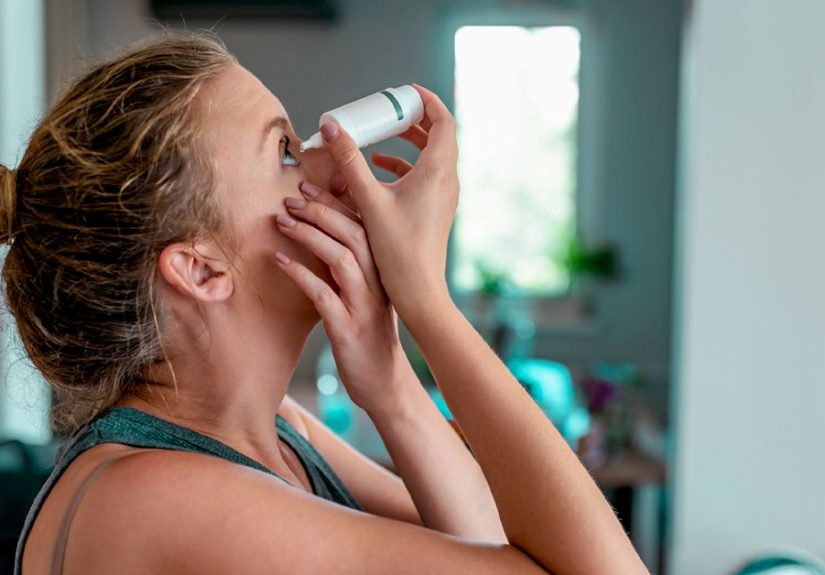
- Wash hands. Yes, every time. No, “I rinsed for half a second” doesn’t count.
- Don’t touch the tip. Not your eye, not your lashes, not your fingers, not the counter.
- One drop is usually enough. Your eye isn’t a shot glass.
- Close gently for 30–60 seconds. Blinking like a cartoon character can pump drops right out.
- Wait between different drops. If you use multiple products, spacing them out (often ~5 minutes) helps avoid “diluting” the first drop.
Single-use vial rules
- Open it only when you’re ready to use it.
- Use immediately and discard leftover liquid unless the label clearly permits re-capping (many do not).
- Don’t store opened vials “for later.” That’s how bacteria get a timeshare.
Multi-dose preservative-free bottle rules
- Follow the “use within X days/months after opening” guidance.
- Keep the cap clean and tightly closed.
- If the solution changes color, gets cloudy, or the tip looks damagedretire it.
Don’t Confuse Dry Eye With “Get the Red Out” Drops
If your main issue is dryness, lubricating drops are usually the better starting point than redness-relief drops with decongestants.
Decongestant drops can cause rebound redness when overusedmeaning your eyes can look even redder once the effect wears off.
If redness is persistent, painful, or paired with vision changes, it’s worth getting checked rather than playing pharmacy roulette.
When You Should Stop DIY-ing and See an Eye Doctor
Over-the-counter drops are greatuntil they’re not. Seek professional care if you have:
- Eye pain (not just “annoying dryness” but real pain)
- Light sensitivity or significant tearing
- Discharge or crusting (especially with contact lens use)
- Vision changes that don’t clear quickly
- Symptoms that worsen or don’t improve after a couple of weeks of consistent care
Dry eye can be a sign of underlying issues (meibomian gland dysfunction, allergies, medication effects, autoimmune conditions, eyelid inflammation).
An eye care professional can recommend targeted treatmentssometimes prescription drops, in-office therapies, or eyelid treatmentsso you’re not stuck on the “buy another box and hope” plan forever.
Conclusion: Preservative-Free Is a Smart UpgradeIf You Use Drops Often
Preservative-free eye drops aren’t hype; they’re a practical tool. If you use artificial tears frequently, have sensitive eyes,
or deal with chronic dryness, preservative-free options can be more comfortable and easier on your ocular surface.
The main downsidescost and packagingare real, but for many people the comfort payoff is worth it.
Start by matching the formula to your symptoms: watery lubricants for mild dryness, hyaluronic acid for hydration that hangs around,
lipid/emulsion drops for fast evaporation, and gels for nighttime backup.
Then use them correctly (clean hands, clean tip, correct discard rules) so “preservative-free” doesn’t accidentally become “preservative-free… and also contaminated.”
Real-World Experiences: What Using Preservative-Free Drops Feels Like (The Honest Version)
People rarely talk about eye drops like they talk about skincare. Nobody is hosting a “lubricant eye drop routine” on social mediayet.
But in real life, switching to preservative-free drops often comes with a few predictable experiences that are helpful to know ahead of time.
First, the surprise: comfort can feel different within days. A lot of frequent drop users describe the same pattern:
preserved drops work at first, then the eyes start stinging a little, then the stinging becomes “normal,” and eventually the person assumes their dry eye is simply getting worse.
When they switch to preservative-free, they’re shocked that the baseline irritation calms down. Not everyone feels a dramatic difference,
but it’s common for people who were dosing many times a day to say, “Oh… so my eyes don’t actually like that other stuff.”
Second, the trial-and-error phase is real. You might try a watery, carboxymethylcellulose-based drop and love it in the morning,
then feel like it “does nothing” by mid-afternoon. That doesn’t mean it’s a bad product; it may mean your dryness is more evaporative than you thought,
or you need a different texture. Many people end up with a two-drop strategy: a lighter, easy daytime drop for quick refreshes,
and a more substantial emulsion or gel for later in the day or before bed.
Third, single-use vials are both genius and mildly annoying. Folks appreciate the sterility and “open/use/toss” simplicity,
but they also complain about the practical stuff: vials rolling under the car seat, fiddly caps, and the feeling that you’re throwing away
a tiny amount of perfectly good liquid. A common workaround is to keep a few vials in a small, clean caselike a travel pill container
so they don’t turn into purse confetti. If you hate the vial lifestyle, multi-dose preservative-free bottles can feel like freedom,
as long as you respect the “use within X days after opening” timeline.
Fourth, people often discover triggers they didn’t notice before. Once the eyes calm down, patterns become obvious:
the ceiling fan at night, the car vents blasting heat, the “I forgot to blink for three hours” screen marathon,
or the contact lenses that feel fine until 4 p.m. Preservative-free drops don’t remove triggers, but they can make it easier to identify them
because you’re not constantly fighting background irritation.
Finally, the biggest win is often predictability. The best dry eye routine is the one you’ll actually do.
Many people say preservative-free drops become their reliable baselinesomething they can use as needed without worrying they’re adding irritation over time.
Combine that with a few lifestyle tweaks (blink breaks, better hydration, humidifier, warm compresses if recommended),
and the day-to-day “my eyes are mad at me” feeling becomes less frequent and less intense. Not glamorous, but genuinely life-improvingespecially if your job involves screens.