Table of Contents >> Show >> Hide
- Why Your Thoughts Feel True Even When They Are Not
- Common Ways Thoughts Lie to You
- How Cognitive Behavioral Therapy Helps You Challenge Thoughts
- A Simple Method to Take Back Control
- Mindfulness: Watching Thoughts Without Obeying Them
- Why Positive Thinking Is Not Enough
- The Role of the Body: Your Thoughts Are Not Floating in Space
- When to Seek Professional Support
- Practical Examples: Rewriting Thoughts in Real Life
- Experience Section: What It Feels Like to Stop Believing Every Thought
- Conclusion: Your Mind Is Powerful, But You Are Not Powerless
- SEO Tags
Here is a mildly uncomfortable truth: your brain is brilliant, dramatic, protective, lazy, creative, and occasionally as reliable as a weather app during a thunderstorm. The podcast topic “Your Thoughts Are Lying to You: How to Take Back Control” lands because most people have experienced the same private ambush: one tiny mistake happens, and suddenly the mind starts producing a full cinematic trailer titled Everything Is Ruined: The Director’s Cut.
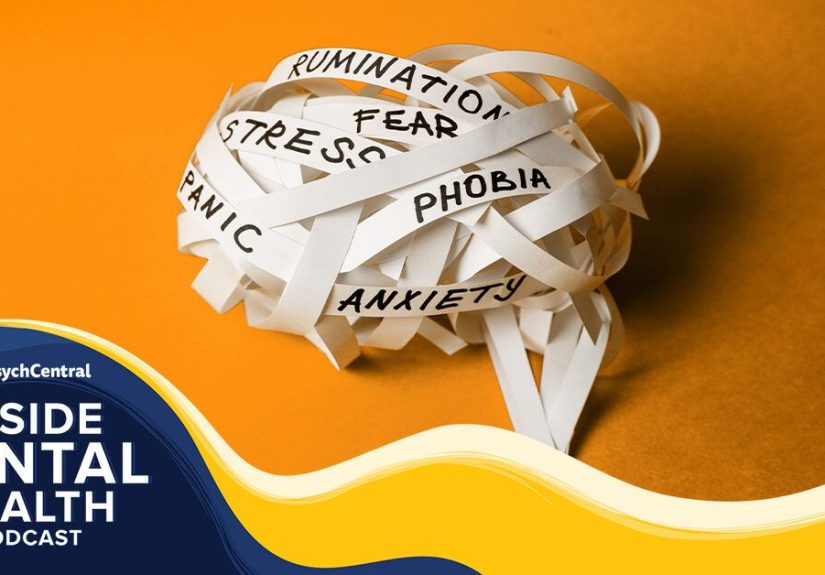
This article explores the big idea behind the conversation: thoughts are not always facts. They can be guesses, habits, warnings, echoes of old experiences, emotional weather reports, or mental spam wearing a tiny suit. The goal is not to become “positive” in a fake-smile, inspirational-mug kind of way. The goal is to become more accurate, more flexible, and less controlled by every gloomy sentence that pops into your head.
Drawing from cognitive behavioral therapy, mindfulness research, stress-management guidance, and the broader discussion around automatic negative thoughts, this guide explains why the mind lies, how distorted thinking takes over, and what practical steps can help you reclaim control without declaring war on your own brain.
Why Your Thoughts Feel True Even When They Are Not
Thoughts feel powerful because they arrive from inside the house. When a friend says, “You are going to fail,” you might question their attitude, their sleep schedule, or whether they need a snack. But when your own mind says it, you often treat it like breaking news from a trusted anchor.
The problem is that the brain is not designed only for truth. It is designed for survival. That means it scans for threats, fills in missing details, predicts danger, and sometimes treats embarrassment, rejection, uncertainty, and unread emails like wild animals with teeth. Helpful? Sometimes. Accurate? Not always.
The Brain Loves Shortcuts
Because the brain processes enormous amounts of information, it uses shortcuts. These shortcuts can help you make fast decisions, but they can also produce cognitive distortions: inaccurate patterns of thinking that twist reality. For example, after one awkward conversation, you might think, “I am terrible with people.” That is not a conclusion. That is a mental magic trick.
In the podcast’s spirit, the point is not that every negative thought is false. Some thoughts contain useful information. “I need to prepare more for this meeting” might be wise. But “I am a disaster and everyone can tell” is probably your anxiety doing community theater.
Common Ways Thoughts Lie to You
Negative thoughts usually do not walk in wearing a name tag that says, “Hello, I am a distortion.” They sound normal. They sound urgent. They sound like common sense. That is what makes them sneaky.
1. All-or-Nothing Thinking
This is the mental habit of turning life into a light switch: perfect or failure, loved or rejected, successful or doomed. You miss one workout and think, “I never stick with anything.” You make one typo in a report and decide your career is now a historical tragedy.
A more accurate thought might be: “I made a mistake. I can correct it, learn from it, and move on.” Less dramatic? Yes. More useful? Absolutely.
2. Mind Reading
Mind reading is when you assume you know what someone else thinks without evidence. Your coworker replies “sure” instead of “sure!” and suddenly you are decoding punctuation like a national security analyst.
The healthier question is: “What do I actually know?” Often, the answer is: not much. That tiny pause before someone texts back may mean they hate you, or it may mean they are eating tacos, driving, working, parenting, sleeping, or trapped under a cat.
3. Catastrophizing
Catastrophizing turns a problem into a prophecy. A bill arrives, and your mind jumps straight to homelessness. Your boss says, “Can we talk?” and your brain starts packing your desk.
Taking back control means slowing the movie down. Ask, “What is the most likely outcome? What would I do if the hard thing happened? What support or options do I have?” Catastrophizing thrives in vagueness. Specific plans shrink it.
4. Emotional Reasoning
Emotional reasoning says, “I feel it, therefore it must be true.” If you feel guilty, you assume you did something wrong. If you feel anxious, you assume danger is nearby. If you feel unlovable, you assume that is a fact written somewhere in the Constitution.
Feelings are real experiences, but they are not always accurate reports. Anxiety can be loud without being correct. Sadness can be heavy without being permanent. Shame can feel convincing while still being a liar with excellent lighting.
5. Labeling
Labeling turns behavior into identity. You did not procrastinate; you are “lazy.” You did not lose your temper; you are “a bad person.” You did not struggle with a task; you are “stupid.”
Labels trap people. Descriptions give people room to change. “I avoided that task because I felt overwhelmed” is a starting point. “I am useless” is a locked door.
How Cognitive Behavioral Therapy Helps You Challenge Thoughts
Cognitive behavioral therapy, often called CBT, is built around a practical idea: thoughts, feelings, body sensations, and behaviors influence one another. Change one part of the cycle, and the whole system can shift.
CBT does not ask you to chant, “Everything is amazing,” while your inbox is on fire. It asks you to examine your thinking with curiosity. Is the thought true? Is it complete? Is it helpful? Is there another way to interpret the same situation?
The Thought-Feeling-Behavior Loop
Imagine you send a message and the person does not respond for six hours. Your thought might be, “They are ignoring me because I am annoying.” That thought creates anxiety or sadness. Those feelings may lead you to send five follow-up messages, withdraw, complain to someone else, or mentally rehearse a breakup speech for a friendship that was never in danger.
Now imagine a different thought: “I do not know why they have not answered. I can wait, and I can check in later if needed.” Your body relaxes. Your behavior changes. Same event. Different interpretation. Different emotional outcome.
A Simple Method to Take Back Control
You do not need a velvet therapy couch to start practicing better thinking. You need a pause, a little honesty, and the willingness to treat your thoughts like suspects, not supervisors.
Step 1: Catch the Thought
Write down the exact sentence your mind is saying. Not the polished version. Not the socially acceptable version. The real one. “I am going to embarrass myself.” “Nobody cares.” “I always ruin things.” Getting the thought out of your head and onto paper gives you distance. It becomes a sentence, not a monster.
Step 2: Name the Pattern
Ask whether the thought includes all-or-nothing thinking, mind reading, catastrophizing, labeling, overgeneralizing, or emotional reasoning. Naming the pattern is powerful because it turns “This is reality” into “Ah, this is that thing my brain does.” Congratulations. You have caught the raccoon in the attic.
Step 3: Check the Evidence
Ask two questions: “What evidence supports this thought?” and “What evidence does not support it?” The second question matters because anxious thinking tends to gather evidence like a biased lawyer. It looks only for proof that the fear is correct.
For example, “Everyone thinks I am bad at my job” may fall apart when you remember positive feedback, completed projects, repeat clients, or the fact that nobody has actually said that. Your mind may still feel uneasy, but now it has competition from reality.
Step 4: Create a Balanced Replacement Thought
A balanced thought is not sugary. It is sturdy. Instead of “I am amazing and nothing can hurt me,” try: “I am nervous, but I have handled difficult conversations before.” Instead of “I failed,” try: “This did not go the way I wanted, and I can learn from it.”
Step 5: Choose One Useful Action
Thought work becomes stronger when paired with behavior. If your thought says, “I cannot handle this,” choose one small action that proves you can begin. Send the email. Take the walk. Drink water. Make the appointment. Clean one corner. Read one page. Big confidence often grows from tiny evidence.
Mindfulness: Watching Thoughts Without Obeying Them
Mindfulness is not about emptying the mind. If you have ever tried to stop thinking, you know the mind responds by producing seventeen thoughts about whether you are thinking correctly. Mindfulness is the practice of noticing thoughts without immediately believing or chasing them.
One helpful phrase is: “I am having the thought that…” Instead of saying, “I am a failure,” say, “I am having the thought that I am a failure.” That tiny phrase creates space. It reminds you that a thought is an event in the mind, not a final verdict.
Try the 60-Second Thought Defusion Practice
Sit comfortably. Take a slow breath. Notice the next thought that appears. Do not fight it. Silently label it: “planning,” “worrying,” “judging,” “remembering,” or “imagining.” Then return your attention to your breath. Repeat for one minute.
This practice teaches the nervous system a radical lesson: thoughts can appear without becoming instructions. You do not have to click every mental pop-up ad.
Why Positive Thinking Is Not Enough
There is a difference between healthy optimism and emotional wallpaper. Healthy optimism says, “This is hard, and I have options.” Toxic positivity says, “Good vibes only,” while the kitchen is actively on fire.
Taking back control does not mean replacing every negative thought with a cheerful slogan. It means building a more honest relationship with your mind. Some thoughts need to be challenged. Some need to be comforted. Some need a nap, a meal, a walk, or a serious reduction in doomscrolling.
The Role of the Body: Your Thoughts Are Not Floating in Space
Thoughts feel mental, but they are deeply connected to the body. Poor sleep, hunger, too much caffeine, lack of movement, chronic stress, alcohol, loneliness, and constant screen stimulation can all make negative thinking louder.
That is why basic self-care is not shallow advice. It is brain maintenance. A short walk, steady meals, deep breathing, outdoor time, journaling, and connection with supportive people can lower the volume on mental distortion. The goal is not to become a wellness influencer arranging lemons on a marble counter. The goal is to make your nervous system feel less like it is being chased by invisible bees.
When to Seek Professional Support
Self-help tools are useful, but they are not a replacement for care when symptoms are intense, persistent, or interfering with daily life. If negative thoughts are linked with depression, anxiety, trauma, panic, substance use, self-harm, or thoughts of suicide, professional support matters.
A licensed therapist can help you identify patterns, practice CBT skills, process painful experiences, and build strategies tailored to your life. Asking for help is not proof that you are broken. It is proof that you are done letting your mind run the whole meeting without supervision.
Practical Examples: Rewriting Thoughts in Real Life
Example 1: The Work Mistake
Old thought: “I messed up that presentation. Everyone thinks I am incompetent.”
More balanced thought: “The presentation had weak spots, but one performance does not define my ability. I can ask for feedback, improve the slides, and prepare differently next time.”
Example 2: The Unanswered Text
Old thought: “They are ignoring me. I must have done something wrong.”
More balanced thought: “I do not know why they have not replied. There are many possible explanations. I can wait before making a story out of silence.”
Example 3: The Bad Mood
Old thought: “I feel awful, so my life must be awful.”
More balanced thought: “I am having a painful day. A feeling can be real without describing my whole life.”
Experience Section: What It Feels Like to Stop Believing Every Thought
The first time you seriously question your thoughts, it can feel strange, almost rude. After all, the inner voice has been narrating your life for years. It has commented on your outfit, your career, your relationships, your bank account, your lunch choices, and that one awkward thing you said in 2014. Suddenly saying, “Hold on, are you even right?” feels like interrupting a very bossy roommate.
In real life, taking back control usually starts in ordinary moments. You wake up and your brain says, “Today is going to be terrible.” Normally, you might believe it before your feet touch the floor. But with practice, you pause. You ask, “Is that a prediction or a fact?” Then you notice: you are tired, you slept badly, and you have a difficult task waiting. The day may be challenging, but it has not been legally declared terrible. That small distinction can change your posture, your breathing, and your first decision of the morning.
Another common experience happens during social anxiety. You leave a conversation and your mind opens the review panel: “Why did you say that? They noticed. They definitely noticed. They are probably forming a committee.” The old pattern is to replay the moment until it becomes larger than the actual event. The new pattern is to write down the accusation and test it. Did anyone react badly? Did the conversation continue normally? Have you ever forgotten other people’s minor awkward moments? Of course you have. Most people are busy starring in their own internal dramas. They are not carefully archiving yours.
The process is not instant. Some thoughts return like spam emails from a company you never subscribed to. “You are not good enough” may show up again and again. The win is not that it disappears forever. The win is that you answer differently. Instead of obeying it, you recognize it. Instead of spiraling, you breathe. Instead of avoiding everything, you take one useful action.
There is also a quiet confidence that grows from this practice. It is not flashy confidence. It does not need a theme song. It sounds more like, “I can handle this moment.” That confidence comes from experience: the experience of surviving discomfort, challenging mental distortions, making repairs after mistakes, and learning that emotions rise and fall.
Taking back control does not mean controlling every thought. That would be exhausting, and frankly, the brain is too weird for that. It means controlling your response. You can let a thought pass through without building it a guest room. You can hear fear without handing it the steering wheel. You can treat your mind with compassion and still fact-check it.
Conclusion: Your Mind Is Powerful, But You Are Not Powerless
The message behind “Your Thoughts Are Lying to You: How to Take Back Control” is both simple and life-changing: you are not required to believe everything you think. Your mind can protect you, guide you, and solve problems, but it can also exaggerate, distort, accuse, and panic. Learning to challenge thoughts is not about becoming emotionless. It is about becoming free enough to respond wisely.
Start small. Catch one thought today. Name the distortion. Check the evidence. Replace it with something balanced. Take one useful action. Repeat. Over time, your mind may still talk, but it no longer gets unlimited authority. That is how control returns: not through force, but through awareness, practice, and a little well-timed skepticism.