Table of Contents >> Show >> Hide
- What Are Churros, Exactly?
- Ingredients for Homemade Churros
- Equipment You Will Want Nearby
- How to Make Churros Step by Step
- How to Make the Optional Chocolate Sauce
- Tips for Crispy, Golden Churros
- Common Churro Mistakes and How to Fix Them
- Easy Variations
- How to Store and Reheat Churros
- Why Homemade Churros Are Worth It
- What Making Churros Actually Feels Like in a Home Kitchen
- Final Thoughts
If you have ever bitten into a great churro, you already know the magic: a crisp, ridged shell, a warm and tender center, and a generous coat of cinnamon sugar that somehow ends up on your fingers, your shirt, and possibly your soul. That is not a flaw. That is the churro experience.
The good news is that homemade churros are absolutely doable. The slightly less glamorous news is that they are not “just fry some dough and hope for the best.” Great churros depend on texture, temperature, and timing. Once you understand those three things, though, the whole process becomes far less intimidating and much more fun.
This guide will walk you through exactly how to make churros at home, from mixing the dough to frying, coating, serving, and rescuing your first batch if it gets a little dramatic. Because sometimes homemade desserts are less “effortless bakery fantasy” and more “why is there cinnamon sugar on the dog?”
What Are Churros, Exactly?
Classic churros are a fried pastry made from a cooked dough that is piped into hot oil, fried until golden, and rolled in sugar. In many recipes, the dough works a lot like pâte à choux, which is the same family of dough used for cream puffs and éclairs. That is why churros can be crisp outside yet light and slightly airy inside.
What separates a good churro from a mediocre one is contrast. You want crunchy edges, a center that is cooked through but not dry, and a sugar coating that clings instead of sliding off in defeat. Many people also serve churros with chocolate sauce, dulce de leche, or caramel, but even plain churros can be excellent when the texture is right.
Ingredients for Homemade Churros
This recipe makes about 16 to 18 medium churros, depending on how long you pipe them.
For the churro dough
- 1 cup water
- 6 tablespoons unsalted butter
- 2 tablespoons granulated sugar
- 1/2 teaspoon salt
- 1 cup all-purpose flour
- 3 large eggs
- 1 teaspoon vanilla extract
- Neutral oil for frying, such as canola or vegetable oil
For the cinnamon-sugar coating
- 1 cup granulated sugar
- 2 teaspoons ground cinnamon
Optional chocolate dipping sauce
- 1/2 cup heavy cream
- 4 ounces semisweet chocolate, chopped
- 1 pinch salt
- 1/4 teaspoon cinnamon or vanilla extract, optional
Equipment You Will Want Nearby
- Medium saucepan
- Wooden spoon or sturdy spatula
- Mixing bowl or stand mixer
- Piping bag fitted with a large star tip
- Heavy pot or Dutch oven
- Deep-fry or candy thermometer
- Kitchen shears or a paring knife
- Paper towels or a wire rack
The star tip is not just for looks. Those ridges help create more crisp surface area, which is exactly what you want in a churro. A plain round tip can work in an emergency, but the result will be less classic and often less crunchy.
How to Make Churros Step by Step
1. Make the cinnamon sugar first
Mix the sugar and cinnamon in a shallow bowl or baking dish and set it aside. Doing this early is a small move with big benefits. Freshly fried churros wait for no one, and you want that coating ready the second they come out of the oil.
2. Cook the base dough
In a medium saucepan, combine the water, butter, sugar, and salt. Bring the mixture to a gentle boil over medium heat. Once the butter is melted and the liquid is bubbling, add the flour all at once.
Now stir like you mean it. The mixture will look rough for a moment, then come together into a thick dough. Keep stirring for another minute or two until the dough forms a ball and a thin film begins to appear on the bottom of the pan. This step matters because it cooks off excess moisture and builds structure.
3. Cool slightly, then add the eggs
Transfer the hot dough to a mixing bowl or the bowl of a stand mixer. Let it cool for about 3 to 5 minutes. You do not want it cold, but you also do not want to scramble the eggs and accidentally invent dessert-flavored breakfast.
Add the eggs one at a time, beating well after each addition. The dough may look slippery or separated at first. Keep mixing. It will come back together into a smooth, glossy paste. Stir in the vanilla extract.
When the churro dough is ready, it should be thick enough to hold its shape but soft enough to pipe. Think sturdy mashed potatoes with ambition.
4. Heat the oil
Pour about 2 to 3 inches of oil into a heavy pot or Dutch oven. Heat it to 360°F. Anywhere in the 350°F to 375°F range can work, but 360°F is a nice sweet spot for homemade churros because it gives you good browning without scorching the outside before the inside cooks.
Use a thermometer. This is not the moment for vibes-based frying.
5. Pipe the churros
Transfer the dough to a piping bag fitted with a large star tip. Carefully pipe 4- to 6-inch strips directly into the hot oil, snipping the ends with kitchen shears or a small knife. Work in batches so the pot is not crowded.
If piping directly into hot oil feels too exciting for a weekday, you can pipe the dough onto parchment strips first, then gently lower the dough into the oil. It is a little slower, but it can feel much more controlled.
6. Fry until deep golden brown
Fry the churros for about 2 to 3 minutes per side, depending on size, turning as needed. They should be evenly golden brown and feel slightly firm on the outside. If they brown too quickly, the oil is too hot. If they sit there looking pale and confused, the oil is too cool.
Transfer the fried churros to a wire rack or paper towel-lined tray for a brief drain. Let them sit for about 15 to 30 seconds, then move quickly to the cinnamon sugar.
7. Coat and serve
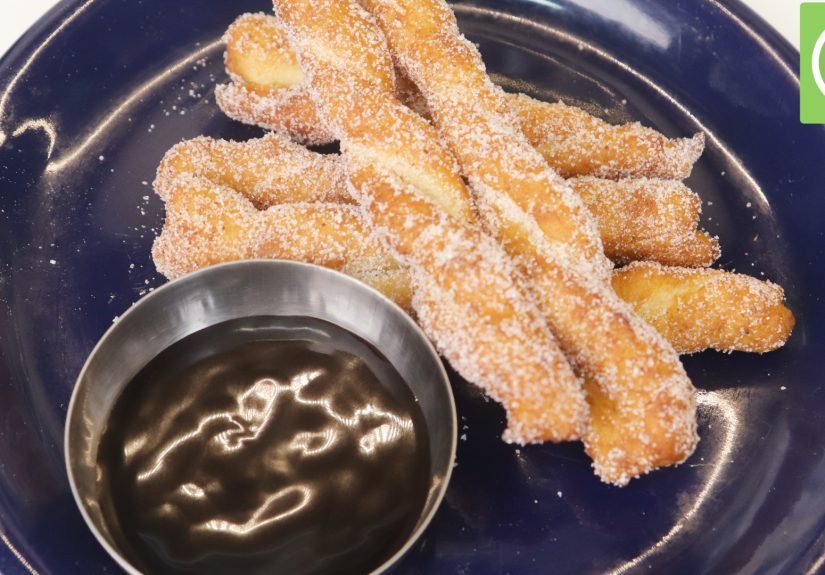
Roll the warm churros in the cinnamon sugar until fully coated. Serve immediately while they are still crisp and warm. Homemade churros are one of those desserts that really shine in the first few minutes, when the outside crackles and the center is still soft.
How to Make the Optional Chocolate Sauce
Heat the heavy cream in a small saucepan until steaming but not boiling. Remove from the heat and add the chopped chocolate, salt, and optional cinnamon or vanilla. Let it sit for 1 minute, then whisk until smooth.
This gives you a glossy dipping sauce that feels a little fancy without being fussy. If you want a thicker, more dramatic dip, use a bit more chocolate. If you want it thinner, add a splash of warm milk or cream.
Tips for Crispy, Golden Churros
Watch the dough texture
If the dough is too stiff, piping will feel like an upper-body workout you did not consent to. If it is too loose, the churros may spread or fry up oddly. Smooth, thick, and pipeable is the goal.
Do not skip the thermometer
Oil temperature is everything. Too hot, and the outside browns before the inside cooks. Too cool, and the churros absorb more oil and turn heavy instead of crisp.
Use a star tip
Those iconic ridges are not just cute. They help create crunch and encourage even cooking.
Do not overcrowd the pot
Adding too many churros at once drops the oil temperature. That leads to soggier results and a sadder dessert tray.
Coat while warm
Cinnamon sugar sticks best when the churros are still warm but not dripping with oil.
Common Churro Mistakes and How to Fix Them
My churros are raw in the middle
The oil was probably too hot, or the churros were piped too thick. Lower the oil temperature slightly and make shorter, slimmer pieces next time.
My churros are greasy
The oil likely ran too cool. Check your thermometer and fry in smaller batches.
My dough is impossible to pipe
It may be too dry or too cool. Beat it a little more, or add a small amount of beaten egg if it truly feels too stiff. Do this gradually so you do not overshoot.
My churros lost their crunch fast
That usually means they needed a little more frying time or had too much internal moisture. Let them get deeply golden, not just light tan.
Easy Variations
- Mexican-style twist: Add a pinch of nutmeg or extra cinnamon to the dough.
- Filled churros: Pipe in dulce de leche, chocolate ganache, or pastry cream after frying.
- Mini churros: Make shorter pieces for parties or dessert boards.
- Citrus sugar: Add a little orange zest to the cinnamon sugar for a brighter finish.
- Spiced chocolate dip: Stir in cayenne or espresso powder for extra depth.
How to Store and Reheat Churros
Churros are best the day they are made, preferably while everyone is still hovering around the stove pretending they are “just helping.” If you do have leftovers, store them in an airtight container at room temperature for up to one day.
To reheat, place them in a 375°F oven or an air fryer for a few minutes until warmed through and crisp again. A microwave will make them soft, which is useful only if your dream churro texture is “cinnamon noodle.”
You can also pipe the raw dough onto parchment, freeze it until firm, and fry from frozen with a little extra cooking time. This is a smart make-ahead move for parties or holiday desserts.
Why Homemade Churros Are Worth It
Yes, you can buy churros at amusement parks, fairs, food trucks, and the occasional heroic bakery. But making churros at home has a special kind of payoff. You control the freshness, the cinnamon sugar ratio, the dipping sauce situation, and the most important detail of all: whether anyone else gets the first one.
Homemade churros also look wildly impressive for how simple the ingredient list is. Flour, water, butter, eggs, sugar, cinnamon, and oil do not exactly sound like a dramatic entrance. Yet together, they produce a dessert that feels festive, comforting, and just a little bit theatrical.
What Making Churros Actually Feels Like in a Home Kitchen
The first time many people make churros, they expect a calm baking project. Then the dough starts coming together in the saucepan, the piping bag appears, a pot of hot oil enters the scene, and suddenly the whole thing feels like a cooking show challenge with better snacks. That is normal. Churros have a way of seeming more intimidating than they really are.
One of the most relatable experiences is discovering that the dough changes character several times. At first it looks rough and lumpy. Then it becomes a thick mass. Then, after the eggs go in, it briefly looks like a mistake. This is usually the point where people assume they have ruined everything. They have not. Churro dough often looks messy before it turns smooth and glossy. The trick is to keep mixing and trust the process.
Piping is another moment of truth. In your head, you imagine long, elegant churros landing neatly in the oil like they are auditioning for a pastry commercial. In real life, the first one may look a little abstract. Maybe a bit crooked. Maybe a bit too short. Maybe shaped like punctuation. Again, normal. By the second or third batch, your hands figure it out. The beauty of churros is that even the oddballs usually taste fantastic once they are golden and rolled in cinnamon sugar.
There is also a very specific kind of kitchen joy that happens when the first batch comes out right. You hear the faint crackle from the crust. You toss the warm churros in sugar. The smell of butter, fried dough, and cinnamon fills the room. Someone wanders in “just to see what smells good,” which is code for “I would like one immediately.” That moment is a big part of why homemade churros are so satisfying. They are not just dessert. They create atmosphere.
Making churros at home also teaches patience in a surprisingly delicious way. If the oil is not hot enough, the dough absorbs too much oil. If it is too hot, the outside darkens too fast. If you rush the egg step, the dough can break. If you skip the sugar coating while the churros are warm, it does not cling as well. Churros reward attention. Not perfection, just attention. They are one of those recipes that make you better at cooking because they ask you to notice what is happening.
Another shared experience is realizing that churros are a social dessert. People rarely eat one politely and move on. They reach for another. They compare the ends to the middle pieces. They debate chocolate sauce versus plain cinnamon sugar. They ask whether you can make a second batch. Even when the shapes vary or a few pieces come out darker than planned, churros tend to disappear quickly. That is usually the sign of a successful homemade dessert, not a flawless one.
And maybe that is the best part. Churros do not need to look perfect to be wonderful. They are warm, generous, slightly messy, and best enjoyed right away. In other words, they are the kind of dessert that feels human. The experience of making them is part technique, part comedy, and part reward. You start with a saucepan and a little courage, and you end up with a plate of crisp, cinnamon-sweet proof that your kitchen can absolutely pull this off.
Final Thoughts
If you want a dessert that feels special without requiring a pastry degree and emotional support whisk, churros are an excellent choice. Once you understand the dough, the oil temperature, and the timing, the process becomes simple and repeatable. Better yet, it becomes fun.
So the next time you are craving something warm, crunchy, sweet, and undeniably crowd-pleasing, skip the frozen dessert aisle and make churros at home. They are crisp, golden, a little dramatic, and very worth the cinnamon sugar on your countertop.