Table of Contents >> Show >> Hide
- Quick refresher: who is G.E. Smith (and why did he look like the coolest substitute teacher alive)?
- Why Al Green was the perfect “career highlight” test
- The SNL moment: when Memphis soul walked into Studio 8H
- So why did G.E. Smith call it a career highlight?
- Inside the “Memphis sound” Smith was chasing
- What fans miss when they only talk about “the famous guest”
- Why this highlight still resonates
- Takeaways: what working musicians can steal (ethically) from this story
- Conclusion: the coolest highlight is the one built on humility
- Experiences Related to This Topic (Extended)
Some people collect souvenirs. G.E. Smith collected “wait… is that really happening?” moments.
If you watched Saturday Night Live in the late ’80s or early ’90s, you probably remember the band shots:
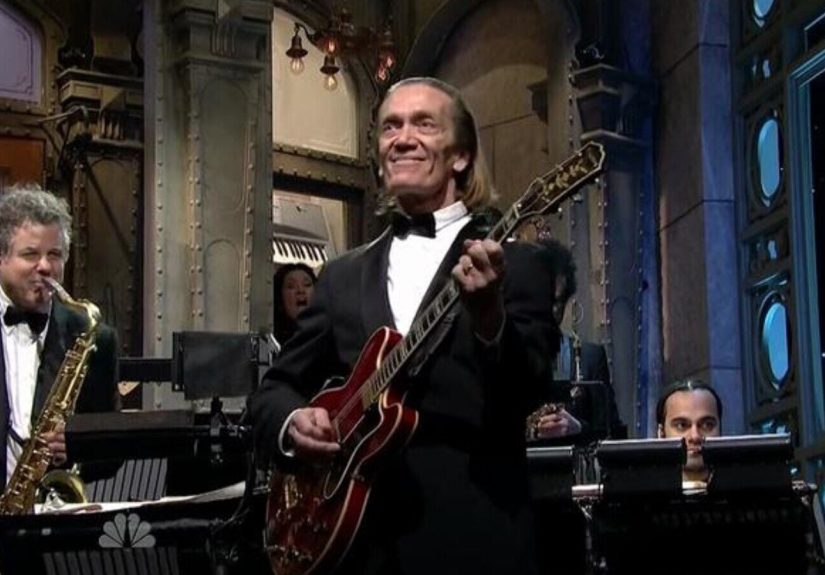
the camera swings over, the horns pop, the groove locks in, and there’s G.E. Smithpony tail, Telecaster, and a facial expression that says,
“Yes, I am taking this very seriously, and also yes, the sketch you just watched was bananas.”
Smith played with an absurd list of musical guests during his decade steering the SNL band. But when he was asked about a true peak moment,
he didn’t pick the obvious “rock royalty” answer. He picked a singer whose voice can make a room go quiet in the most respectful way possible:
Al Green.
Smith has said that playing with Greentwicewas a career highlight. Not because it was flashy, or difficult in the “look how many notes I played”
sense, but because it demanded something harder: taste, restraint, and a deep respect for the Memphis soul blueprint.
Quick refresher: who is G.E. Smith (and why did he look like the coolest substitute teacher alive)?
Before he became the face of the SNL band, G.E. Smith built a reputation as a working guitarist who could do the jobany jobwithout making it about himself.
He played sessions in New York, then landed a major gig as lead guitarist for Daryl Hall & John Oates right as the duo hit their most popular era.
Then, in 1985, he moved into Studio 8H as bandleader and co-musical director for Saturday Night Live.
That role is part music director, part traffic controller, part vibe manager. You’re backing guest artists, bridging sketch transitions,
punctuating jokes, and doing it all livewhere “oops” is forever. It’s not just playing guitar; it’s keeping the whole musical machine
feeling confident, flexible, and human.
Why Al Green was the perfect “career highlight” test
Al Green isn’t just a hitmaker. He’s a masterclass in emotional precision. The classic Hi Records-era soundguided by producer Willie Mitchell,
built around the Hi Rhythm Section, and colored by guitarist Teenie Hodgescreated records that feel intimate without being small.
Everything breathes. The groove is patient. The guitar doesn’t shout; it suggests.
That’s exactly the kind of music that exposes you. In loud rock, you can hide behind distortion and attitude. In Memphis soul,
your right hand is basically on trial. Every muted strum is a statement. Every chord stab is either “mmm” or “nope.”
Smith has explained that he studied Teenie Hodges’ parts to prepare for playing with Green. That’s not fanboy triviathat’s professional respect.
In the soul world, “close enough” is not a compliment. If you’re going to touch those songs, you play them like you mean them.
The SNL moment: when Memphis soul walked into Studio 8H
Al Green appeared as the musical guest on Saturday Night Live on January 25, 1986 (hosted by Dudley Moore).
On that episode, Green performed “Going Away” and “True Love”songs tied to his mid-’80s gospel-era recordings that still carried
that unmistakable Hi/Memphis DNA.
Even if you’ve never played a note in your life, you can feel the risk in a live-TV musical performance:
the short rehearsal window, the camera blocking, the monitoring quirks, the nerves, the “please don’t let the guitar cable betray me” prayer.
Now add one more ingredient: the artist’s voice is right there, not filtered through the nostalgia of a record.
Smith has said that hearing Al Green sing in the room didn’t feel different than hearing a recordingbecause Green’s voice was just that beautiful,
that consistent, that “how is this even legal?” in person.
So why did G.E. Smith call it a career highlight?
1) Because “great” in soul music is about feel, not flash
There are gigs that reward volume and ego. This wasn’t one of them. Memphis soul rewards the opposite:
discipline, pocket, and the ability to make a two-chord moment feel like a whole conversation.
If you can do that next to Al Green, you’ve basically passed a musical personality test.
2) Because he chased a specific legacy: the Teenie Hodges guitar language
Teenie Hodges’ playing is full of “small” decisions that do huge emotional work: tight, damped rhythm strokes; chord voicings that sparkle without crowding;
and fills that answer the vocal instead of competing with it. Smith didn’t just show up and “jam.”
He came in aiming for that vocabulary.
3) Because the best compliment is the one that says “you understood the assignment”
In one interview, Smith recalled playing with Green on SNL and getting the kind of feedback that makes a working musician feel ten feet tall:
Green turned around and basically said, “That’s exactly rightI haven’t heard that guitar sound in years.”
That’s not just praise. That’s validation that you honored the source.
4) Because live TV adds pressure, and pressure makes the truth louder
Live TV is a strange place for soul music, which thrives on warmth and space. On SNL, everything is timed, counted, cued, and squeezed into the clock.
Pulling off a classic-feeling groove under those conditions is its own kind of magic trick.
When it works, it’s electricnot because it’s perfect, but because it’s alive.
Inside the “Memphis sound” Smith was chasing
People throw around the phrase “Memphis sound,” but the Hi Records flavorespecially on classic Al Green recordingshas some signature features:
a groove that sits deep without dragging, guitars that talk in short phrases, and arrangements that leave oxygen for the vocal.
It’s intimate music that still moves like a dance floor.
Smith has described loving that Memphis sound and preparing carefully for it. That makes sense when you look at how Royal Studios
and Willie Mitchell shaped those records: a controlled, consistent environment where small tone choices mattered, and the band played like a single organism.
Memphis-soul guitar moves (no gatekeeping, just the good stuff)
- Muted right-hand groove: your strum becomes a percussion instrument.
- Chord fragments & triads: you imply harmony without swallowing the singer.
- “Answer the vocal” fills: short lines that feel like call-and-response, not a solo.
- Clean-to-crunch edge: enough bite to speak, not enough to shout.
- Time feel over speed: the pocket is the flex.
It’s also why the Telecaster is such a common weapon here. Smith is famously associated with Tele-style tonesclear, punchy, and articulate.
That kind of guitar doesn’t let you hide, which is exactly what makes it perfect for soul rhythm work.
What fans miss when they only talk about “the famous guest”
When people think about SNL music history, they often focus on the celebrity on the microphone. But the secret sauce is the infrastructure:
the house band, the arrangements, the cues, and the musicians who can switch styles instantly without making it feel like a costume change.
Smith’s decade leading the band happened during an era when late-night house bands were a real cultural forcemusicians audiences recognized,
not just anonymous sound behind the jokes. Those band shots mattered. They signaled: “This show is chaotic, but the groove is stable.”
Why this highlight still resonates
Smith’s “career highlight” pick is refreshing because it isn’t about clout. It’s about craft. It’s a guitarist saying,
“The greatest moment wasn’t when I stood near a legend. It was when I got the details right enough to serve the music.”
And it’s a reminder of what makes Al Green special: his voice, yesbut also the ecosystem around him.
The producer who shaped the sound, the rhythm section that breathed together, and the guitar parts that became a language other players still study decades later.
Takeaways: what working musicians can steal (ethically) from this story
- Study the original parts. Not to copy-pastejust to learn the grammar of the style.
- Serve the singer. If the vocal is the sun, your guitar is the weather.
- Chase feel, not volume. The pocket is louder than distortion.
- Make the band comfortable. Confidence is contagious on live TV.
- Take “invisible” gigs seriously. A two-bar groove can be a career memory.
- Let the compliment land. If Al Green says you nailed it, you don’t argue.
Conclusion: the coolest highlight is the one built on humility
G.E. Smith played alongside countless icons. But his spotlight moment wasn’t about being seenit was about hearing:
hearing a once-in-a-generation voice up close, matching a legendary groove with respect, and feeling that rare click where preparation meets the moment.
In a career full of bright lights and famous names, the highlight was simple: a guitar part played the right way, next to Al Green,
with the Memphis sound alive in Studio 8Hproof that sometimes the biggest flex is having the taste to keep it tasteful.
Experiences Related to This Topic (Extended)
There’s a specific kind of thrill musicians talk about when they try to recreate a legendary “feel” rather than a flashy riff. It’s not the adrenaline of speed.
It’s the quiet panic of detail: Is my right hand sitting in the pocket? Are my chords too thick? Am I stepping on the vocal?
If you’ve ever chased a soul rhythm tone, you know it’s like trying to cook a famous dish from smell aloneeverything matters, and nothing is obvious.
One common experience is the “first rehearsal reality check.” At home, you practice the part and it feels right. Then you get in a room with real drums and bass,
and suddenly your guitar is either too bright, too busy, or weirdly late. Soul guitar, especially in the Teenie Hodges tradition, can’t bully the beat.
It has to sit inside it. Players often describe this as learning to relax their shoulders and let the groove do the workbecause the moment you force it,
the whole thing stiffens like a cheap suit.
Another experience: discovering how much your tone is actually your touch. People love to argue about gear (and yes, it’s fun),
but Memphis-style rhythm playing exposes the truth: your pick attack, your muting, and your timing shape the sound as much as any pedal.
Many guitarists report that when they finally start to get “that sound,” it’s not because they bought the right thingit’s because they learned to play softer,
tighter, and more intentionally. The guitar stops being a megaphone and becomes a paintbrush.
Then there’s the “standing next to the voice” momentsomething G.E. Smith specifically praised about Al Green.
Whether it’s a singer in a rehearsal space or a guest artist on a stage, hearing a great voice without the distance of a recording is clarifying.
Musicians often say it changes how they play instantly: you stop filling space because the voice already fills it emotionally.
You become protective of the vocal, like your job is to keep the air around it clean.
A big, relatable one: the compliment that hits different. Praise from a casual listener is nice.
Praise from the artist whose style you studied is rocket fuel. Musicians remember these comments for decades because they confirm something deeper than “good job”:
that you respected the tradition. When Al Green tells a guitarist, “That’s exactly right,” it’s basically the musical version of being knightedno sword required.
Finally, there’s the emotional afterglow. Players describe walking out of a rehearsal or performance feeling strangely calmnot hypedbecause the goal wasn’t to impress.
The goal was to be accurate, supportive, and soulful. You go home and replay the moment in your head, not because you were the star,
but because you were part of a sound that’s bigger than any one person. That’s why Smith’s “career highlight” makes so much sense:
it’s the joy of craftsmanship, the satisfaction of getting the feel right, and the privilege of hearing a legend do what only a legend can doright next to you.