Table of Contents >> Show >> Hide
- What Makes Photinia Red Robin So Popular?
- Before You Plant: Is Red Robin Right for Your Yard?
- How Far Apart Should You Plant a Photinia Red Robin Hedge?
- How to Plant a Photinia Red Robin Hedge Step by Step
- How to Care for a Red Robin Hedge After Planting
- Common Problems and How to Avoid Them
- What Planting a Photinia Red Robin Hedge Is Really Like
- Final Thoughts
If you want a hedge that does more than stand there looking green and polite, Photinia Red Robin is a strong contender. This evergreen shrub brings glossy leaves, fast growth, and a dramatic flush of red new foliage that can make an ordinary property line look like it suddenly developed a personality. In the right setting, a Photinia Red Robin hedge gives you privacy, color, and structure all in one tidy row.
That said, this is not a “plant it, ignore it, and hope for greatness” kind of shrub. Red Robin rewards good planning. It likes sun, drainage, room to breathe, and a gardener who understands that faster is not always betterespecially when hedge spacing gets too tight. Plant it wisely, and you can end up with a handsome evergreen screen that looks lively instead of lumbering. Plant it badly, and you may get a hedge that sulks, spots, thins out, and makes you question your life choices while holding a hose.
This guide walks through how to plant a Photinia Red Robin hedge, where it performs best, how far apart to space plants, when to prune for bushiness, and how to avoid the common problems that turn a dream hedge into a cautionary tale. If you are aiming for a privacy screen with year-round presence and spring color that practically glows, pull on the gardening gloves. It is hedge time.
What Makes Photinia Red Robin So Popular?
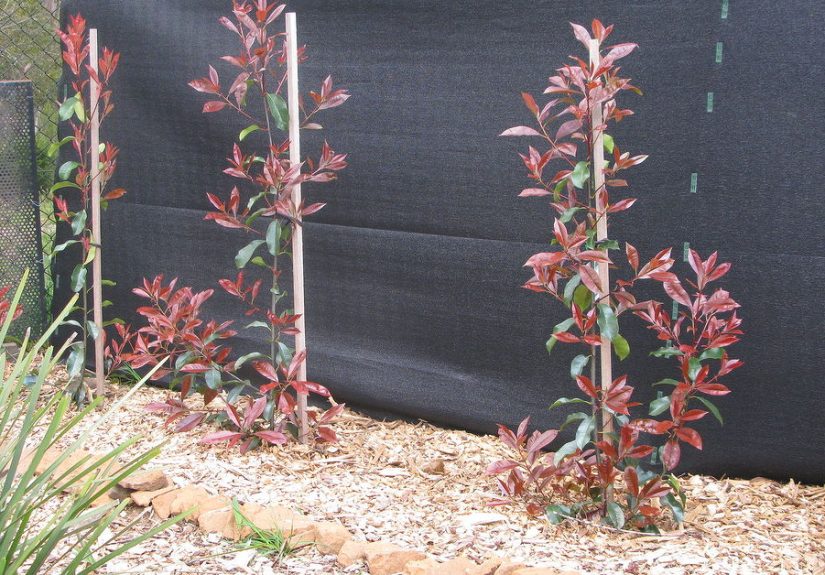
Photinia × fraseri ‘Red Robin’ is grown for one main reason: the new foliage comes out bright red, then matures to a rich glossy green. That color contrast gives the hedge movement and interest, which is more than can be said for many plain green screening plants. When spring rolls around, Red Robin does not whisper. It arrives like it has a reservation and every intention of being noticed.
It is also a practical shrub. When mature, it can form a substantial hedge for privacy, wind filtering, or simply creating a clean boundary around a yard. In favorable conditions, it grows quickly, responds well to shaping, and keeps its leaves through winter in milder regions. Some gardeners let it grow more naturally for a softer screen, while others clip it into a neat, formal hedge. Either way, it earns its keep.
There is another small footnote worth mentioning: the white spring flowers are pretty, but they are not exactly famous for smelling like a fancy candle. Think “beautiful from a respectful distance.” Most people grow Red Robin for foliage and screening, not for a flower fragrance award.
Before You Plant: Is Red Robin Right for Your Yard?
Climate matters more than people think
One of the smartest things you can do before planting is be honest about your climate. Photinia Red Robin generally performs best in milder regions, especially USDA Zones 7 to 9, with some success in protected Zone 6 locations. In drier or Mediterranean-style climates, it is often easier to grow. In hot, wet, humid areasespecially parts of the Southeastit can be much more troublesome.
Why? Because Red Robin is prone to Entomosporium leaf spot, a fungal disease that loves moist foliage, limited airflow, and repeated flushes of tender new red growth. In some humid Southern areas, extension experts have warned so strongly about this issue that they no longer recommend photinia for hedging at all. That does not mean you can never grow it. It means you should plant with open eyes and generous spacing.
Sun, soil, and airflow are non-negotiable
If you want the brightest red new growth and the healthiest hedge, plant Red Robin in full sun to part shade. Full shade is a bad bargain. You may still get a living shrub, but you are more likely to see weaker color, poorer flowering, and more disease trouble.
Soil should be well-drained. This shrub dislikes soggy feet, and wet soil is one of the quickest ways to invite stress. Once established, it can tolerate dry spells reasonably well, but during the establishment period it needs consistent moisture without becoming waterlogged. In other words, think “evenly moist,” not “mini rice paddy.”
Good air circulation is just as important as sunlight. If the site is boxed in, damp, and crowded, Red Robin may struggle. A hedge is supposed to create a wall, yesbut not one so dense and cramped that the plants cannot breathe.
How Far Apart Should You Plant a Photinia Red Robin Hedge?
This is the question that separates smart hedge planning from future regret. For many American gardens, a practical starting point is to space plants about 4 to 6 feet apart for a hedge. That range gives the shrubs enough room to knit together over time without turning the row into a crowded fungal convention.
If you live in a humid region, lean toward the wider end of that range. More space means better airflow, and better airflow means less stress and lower disease pressure. If you garden in a drier climate and want the hedge to fill in more quickly, you may be tempted to plant tighter. Resist the urge to cram them together like commuters on a delayed train. A hedge that fills in a little more slowly but stays healthier is almost always the better deal.
Also remember that Red Robin is not a tiny shrub pretending to be important. It can become a large evergreen plant, often reaching around 10 to 15 feet tall and wide over time, depending on climate and pruning. Give it room that makes sense for its future, not just its nursery pot.
How to Plant a Photinia Red Robin Hedge Step by Step
Choose the best planting season
The best times to plant are usually fall and spring, when temperatures are milder and roots can establish without the stress of peak summer heat. Fall planting is especially useful in many regions because the soil is still warm while the air is cooler, which encourages root growth before the next growing season.
Lay out the hedge line first
Before you dig a single hole, mark the hedge line with string, a hose, or landscape marking paint. Then place each plant on the ground at your chosen spacing. Step back. Look from the street. Look from the patio. Look from the neighbor’s fence line if that is where the privacy battle is being fought. It is much easier to adjust pots than it is to replant shrubs after you realize the line zigzags like a distracted squirrel drew it.
Plant properly, not deeply
- Dig each planting hole at least twice as wide as the root ball, but no deeper than the root ball itself. Wide holes encourage easier root spread. Deep holes encourage sinking, and sinking leads to trouble.
- Set the shrub so the top of the root ball sits level with the surrounding soil. Do not bury the crown too deeply. A shrub planted too low is starting life with one foot on a banana peel.
- Loosen or tease circling roots if the plant is pot-bound. You want roots to grow outward, not continue orbiting like they are stuck in a tiny botanical galaxy.
- Backfill with native soil and firm it gently. Do not pack it like concrete.
- Water thoroughly right after planting to settle the soil and remove large air pockets.
- Add mulch in a ring around the base of each plant, keeping it a few inches away from the stems. Mulch helps retain moisture and moderate soil temperature, but mulch piled against trunks is basically a fungal welcome mat.
Water with purpose
During the first growing season, keep the root zone evenly moist. Deep watering is better than constant shallow sprinkles. Try to water the soil, not the leaves. Overhead watering encourages leaf problems, and Red Robin does not need more drama.
How to Care for a Red Robin Hedge After Planting
Watering and feeding
Once established, Photinia Red Robin is more drought-tolerant than many people expect, but newly planted shrubs need regular attention. Check the soil, especially in the first year and during hot spells. If the top few inches are dry, water deeply.
Fertilizer should be light and sensible. In decent soil, Red Robin usually does not need a heavy feeding routine. A balanced slow-release fertilizer in spring may help if growth seems weak, but overfeeding can push lush, tender growth that is more vulnerable to problems. The goal is strong, steady growthnot a red-leaf fireworks show followed by regret.
Pruning for density and color
One of the pleasures of this shrub is that pruning can shape both its form and its color. Light trimming after the first red flush begins to fade can encourage fresh red growth and denser branching. Pinching young shoots also helps build a fuller hedge instead of a leggy one.
In winter, selective thinning can improve airflow through the interior of the shrub. That is especially helpful in regions where disease is a concern. If you want a more formal hedge, regular shaping is finebut do not go wild with constant clipping. Every cut stimulates new growth, and new red growth is the part most susceptible to leaf spot in problem climates.
That means timing matters. Heavy pruning in a warm, wet season can backfire. The smartest approach is usually moderate, well-timed pruning rather than endless snipping every time a branch looks ambitious.
Common Problems and How to Avoid Them
Leaf spot is the big one
If Red Robin has a reputation problem, this is why. Entomosporium leaf spot begins as small red spots on young leaves. As it worsens, those spots enlarge, develop pale or grayish centers with darker margins, and can lead to severe defoliation. A hedge that was supposed to look lush can start looking as though it lost an argument with a hole punch.
To reduce the risk:
- Plant in full sun or bright open light.
- Give shrubs generous spacing.
- Promote air circulation.
- Water at the soil line, not over the foliage.
- Remove badly infected leaves or fallen debris.
- Avoid over-pruning during high-risk periods that trigger lots of tender new growth.
Other issues
Red Robin may also struggle with wet soil, stress from deep planting, or general decline in sites that are too shady and humid. Sometimes the real problem is not the plant itself but the setup: planted too close, watered from above, hemmed in by other shrubs, and expected to behave like a flawless evergreen wall. That is asking a lot of any hedge.
If your garden is in a region where photinia is notoriously difficult, it may be wiser to choose another evergreen screen altogether. There is no shame in picking the plant that fits the place instead of trying to force a horticultural romance that never quite works out.
What Planting a Photinia Red Robin Hedge Is Really Like
On paper, planting a Red Robin hedge sounds wonderfully straightforward. You buy the shrubs, line them up, dig some holes, water them in, and wait for a polished green screen with bright red highlights to appear. In real life, the experience is more interestingand honestly, more rewardingbecause you get to watch the hedge develop a personality over time.
The first thing many gardeners notice is how small the plants can look right after planting. You stand back, squint a little, and wonder whether you accidentally ordered a future hedge in “starter pack” size. That moment is normal. Red Robin is one of those shrubs that often looks underwhelming for a short while and then suddenly decides to grow with confidence. A season later, the line starts making sense. By the second or third year, the shrubs begin leaning into their role as a proper boundary, and that is when the magic starts.
Then comes the red flush. If you have never grown one before, that first strong burst of new foliage is genuinely fun. The hedge stops looking like a plain evergreen divider and starts looking intentional, stylish, and just a little dramatic in the best possible way. Morning light catches the red leaves, and suddenly the planting looks like it cost far more than it did. It is one of those rare garden moments that makes you feel smarter than you were the day before.
But the experience also teaches patience. New gardeners often want an instant wall, so they plant too close together or prune too often in hopes of forcing quick density. Red Robin tends to teach the opposite lesson: a healthier hedge usually comes from restraint. Give it elbow room. Let air move through it. Shape it thoughtfully instead of frantically. The best Red Robin hedges rarely come from panic-pruning with hedge shears every time a branch sticks out six inches. They come from steady, calm care.
Another real-world part of the experience is learning your local climate the hard wayor, ideally, not the hard way. In dry, sunny conditions, gardeners often describe Red Robin as surprisingly easy. In sticky, humid weather, the same hedge can become a weekly inspection project. You find yourself studying leaves, looking for spots, muttering things like “Why are you like this?” and suddenly understanding why plant tags never tell the whole story. That does not mean the hedge cannot succeed. It means the experience becomes more hands-on, and success depends on site choice, spacing, and watering habits.
There is also a design lesson built into growing Red Robin. Because it is colorful, fast, and evergreen, it is tempting to use it everywhere. But a hedge looks best when it suits the scale of the property. On a roomy lot, it can feel lush and protective. In a tiny front yard, it may start acting like it pays the mortgage. The gardeners who seem happiest with Red Robin are usually the ones who use it with purpose: along a side boundary, around a sitting area, behind mixed borders, or as a privacy screen where the color can really shine.
And finally, there is the emotional reward that comes with any good hedge: the sense that your space has become its own place. A Red Robin hedge can soften a fence, frame a walkway, hide an ugly view, and make a backyard feel more finished. It adds enclosure without making the garden feel gloomy. That is why people keep trying it, even in areas where it can be picky. When it works, it looks polished without being stiff, colorful without being loud, and useful without being boring. For a row of shrubs, that is a pretty impressive résumé.
Final Thoughts
Planting a hedge with Photinia Red Robin can be a very smart move if your site offers what the plant needs: sun, drainage, airflow, and enough room to grow without being squeezed into a green traffic jam. Its red new leaves, glossy evergreen structure, and fast growth make it one of the more eye-catching privacy hedge options around.
The trick is to plant it with both style and strategy. Space it sensibly, water the roots instead of the leaves, prune with purpose, and stay realistic about your climate. Do that, and your Red Robin hedge has every chance of becoming the kind of boundary planting that makes neighbors peek over the fence and think, “Okay, that looks good.” Which is gardener gold, really.