Table of Contents >> Show >> Hide
- What the Phalanx CIWS Is (and Why “Last-Ditch” Matters)
- How Phalanx Works: The Automated “Find, Track, Engage” Loop
- The Hardware: A Radar Brain and a Very Fast 20mm “Pencil”
- From Block 0 to Block 1B: How Phalanx Evolved for Modern Threats
- Where Phalanx Fits in a Ship’s Layered Defense
- Phalanx’s “Family”: SeaRAM and Land-Based C-RAM
- A Real-World Reminder: When “Last Line” Becomes “Actual Line”
- Limitations, Tradeoffs, and the “Not a Force Field” Rule
- Why the Navy Still Keeps Phalanx in the Mix
- Experiences Around Phalanx: What People Remember (and What They Don’t Forget)
- Conclusion
If a warship is a floating fortress, the Phalanx Close-In Weapon System (CIWS) is the fortress’ very last,
very loud, “Nope.” It’s the automated gun mount you hope never has to speak upbecause if Phalanx is talking, something
fast and unfriendly has already gotten past the ship’s outer defenses. In U.S. Navy terms, Phalanx is the
inner-layer point-defense system designed to detect, track, and engage threats like anti-ship missiles and hostile
aircraft that have slipped through everything else.
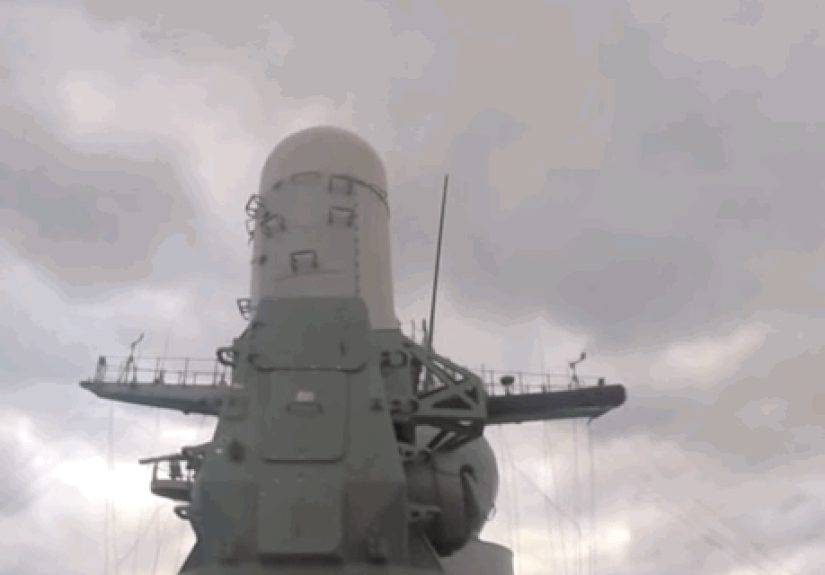
Sailors also have nicknames for itsome affectionate, some earnedbecause it’s a distinctive white dome with a
Gatling gun attached that looks a bit like a sci-fi droid. But under the cute silhouette is a deeply practical idea:
when the timeline is measured in seconds, automation beats committee meetings.
What the Phalanx CIWS Is (and Why “Last-Ditch” Matters)
The Mk 15 Phalanx CIWS is a self-contained, radar-directed weapon system built around a high-rate-of-fire
20mm M61-series Vulcan rotary cannon. “Self-contained” is key: Phalanx carries its own sensors, tracking,
fire-control computer, and gun in a single mount. That makes it valuable not only on high-end destroyers and carriers,
but also on ships that may not have the biggest combat-system suitesbecause Phalanx can still provide a terminal layer
of defense when things get sporty.
“Last-ditch” doesn’t mean “best” or “only.” It means closest. Phalanx operates in the tightest bubble around
the shipan engagement window so short that a human operator alone would be forced to make too many decisions too quickly.
So the system is designed to do what machines do well: detect patterns, compute solutions, and react instantly.
How Phalanx Works: The Automated “Find, Track, Engage” Loop
At a high level, Phalanx is built to run a simple (but brutally time-sensitive) loop: search, track,
evaluate, engage, and assess. The exact settings and permissions depend on how the ship’s
combat team configures it, but the concept is constant: if a threat is inbound and inside the CIWS bubble, Phalanx is
meant to react before the ship runs out of options.
1) Search and Detection
Phalanx uses radar to scan for contacts that behave like threatsfast, closing, and heading toward the ship.
In modern configurations, this is paired with electro-optical sensing (think stabilized cameras and infrared) that
improves tracking and identification, especially against certain “messier” scenarios near shore.
2) Tracking and Threat Evaluation
Once a contact looks suspicious, the system shifts into a more precise track, refining its understanding of the target’s
speed, direction, and closing behavior. The system’s computer continuously recalculates a firing solution, because the
target and the ship are both movingand the ocean rarely holds still just to be polite.
3) Engagement (the Part Everyone Notices)
When the ship authorizes it (based on doctrine, rules of engagement, and the tactical situation), Phalanx can fire
controlled bursts from the 20mm gun. In later variants, the system is commonly associated with a
4,500-rounds-per-minute firing rate and a magazine of roughly 1,550 rounds, meaning the system is built
for short, decisive engagements rather than long firefights. The ammunition used in shipboard configurations is designed
for lethality against airborne threatsoften described publicly as tungsten penetrator-type rounds intended to damage a
missile’s structure and disrupt its flight.
4) Kill Assessment (Because “Maybe” Isn’t a Strategy)
Phalanx doesn’t just fire and hope. It’s designed to perform a form of kill assessmentwatching the track and determining
whether the target is still a threat. If the system “sees” the target persist, it can continue engagement within its
available time and ammunition. This is why the CIWS is often described as an automated, closed-loop defensive system.
The Hardware: A Radar Brain and a Very Fast 20mm “Pencil”
Phalanx’s core is the marriage of two proven ideas: rapid-fire rotary cannon plus radar fire control.
The M61 Vulcan family has a long pedigree in U.S. service, and Phalanx repackages that mechanical reliability into a
shipboard point-defense mount.
- Gun: 20mm M61-series Vulcan rotary cannon (six barrels, Gatling-style).
- Fire control: radar search and radar track, designed for quick acquisition and precision updates.
- Modern enhancements: electro-optical/infrared sensing and improved tracking support in newer blocks.
- Magazine: a large onboard ammunition drum meant for short, intense defensive bursts.
The key concept is time. Many defensive missiles can engage at long ranges, but their effectiveness depends on
early warning, space to maneuver, and the ability to discriminate targets in clutter. Phalanx lives in the opposite
world: minimal time, maximum urgency. Its whole personality is “I can’t believe you let it get this close, but okay.”
From Block 0 to Block 1B: How Phalanx Evolved for Modern Threats
Like most long-serving military systems, Phalanx has been upgraded in “blocks” rather than replaced wholesale. That’s
not nostalgia; it’s economics and practicality. When a design is rugged and the fleet has many mounts installed, upgrades
become the smart way to keep pace with new threats.
Early Phalanx: Terminal Defense Against Missiles and Aircraft
Early variants established the core mission: defend the ship against anti-ship missiles and aircraft that have penetrated
outer layers. These versions focused on radar-based detection and tracking and emphasized reliability and automated
response in a tight defensive bubble.
Block 1B: Electro-Optical Sensing and Better “Close-In” Awareness
The U.S. Navy’s widely referenced modern configuration is Block 1B, which added a stabilized electro-optic
sensor suite (often described in public materials as including infrared capability). This matters because not every threat
looks like a classic sea-skimming cruise missile. In real life, ships can face small, fast surface craft, slow-flying
aircraft, and unmanned systems in complicated environmentsespecially in littoral regions where radar can be busy with
coastal clutter.
Public descriptions of Block 1B upgrades also highlight improvements meant to tighten dispersion and improve lethality,
supporting a better “first-hit” chancean important concept when the engagement window is painfully short.
Where Phalanx Fits in a Ship’s Layered Defense
Modern U.S. Navy ships don’t rely on one magic shield. They rely on layersdifferent sensors and weapons
optimized for different ranges and target types. In a simplified view:
- Outer layers: long-range sensors, combat-system tracking, and interceptor missiles designed to engage threats far from the ship.
- Middle layers: shorter-range interceptors, electronic warfare, decoys, and maneuver tactics that complicate the attacker’s job.
- Inner layer: point defense like CIWSwhen the threat is close enough that the ship needs an automatic response.
Phalanx is the inner layer that doesn’t ask for a PowerPoint presentation. It’s designed to keep operating even when other
systems are stressed, and its self-contained architecture is often highlighted as a virtue: fewer dependencies, fewer
opportunities for bad timing.
Phalanx’s “Family”: SeaRAM and Land-Based C-RAM
Successful platforms tend to spawn relatives. Phalanx is no exception.
SeaRAM: Phalanx Sensors + RAM Missiles
The U.S. Navy’s SeaRAM is often described as a CIWS variant that combines the Phalanx Block 1B
radar/electro-optic suite with an 11-round Rolling Airframe Missile (RAM) launcher. In plain English: it keeps
the Phalanx “eyes and brain,” but swaps the gun for missiles to extend engagement opportunities and improve performance
against certain threat profiles. It’s still point defensejust with a different throw.
Centurion / Land Phalanx: C-RAM for Rockets and Mortars
On land, versions of the system have been adapted for Counter-Rocket, Artillery, and Mortar (C-RAM) missions.
The land-based configuration is widely discussed as using similar sensors and the same basic gun concept, but with
ammunition tailored for land safety needs (including self-destruct features to reduce risks from missed rounds).
This is a reminder that the Phalanx concept is fundamentally about automated terminal defensewhether the “thing
you’re protecting” is a ship at sea or a base on land.
A Real-World Reminder: When “Last Line” Becomes “Actual Line”
It’s easy to treat ship-defense systems as abstractuntil a real incident yanks them out of the brochure and into the
headlines. In early 2024, reporting indicated a U.S. Navy destroyer used Phalanx against an incoming anti-ship cruise
missile in the Red Sea region, underscoring the system’s purpose: when a threat gets dangerously close, the ship turns to
the tool built for that exact nightmare scenario.
Events like that tend to generate two equal-and-opposite misunderstandings:
(1) “Phalanx is unstoppable,” and (2) “If it fired, everything else failed.”
Reality sits between them. A layered defense is a complex choreography of sensors, decisions, and probabilities. A CIWS
engagement can mean the system worked exactly as designedproviding one more chance in a chain of chances.
Limitations, Tradeoffs, and the “Not a Force Field” Rule
Phalanx is impressive, but it’s not magic. It has constraints that matter in modern anti-ship warfare:
-
Very short engagement window: It’s designed for terminal defense. That means it has only seconds to detect,
track, and engage once a threat is in its envelope. -
Ammunition is finite: With a magazine measured in the low thousands, Phalanx is built for short bursts and
decisive outcomesnot prolonged engagements. -
Complex environments are hard: Littorals can be cluttered with returns and traffic; mixed air/surface scenarios
can strain decision-making and target discrimination. -
Saturation is a real problem: Modern threats can be numerous, coordinated, and fast. CIWS is a critical layer,
but it’s still one layer. -
Maintenance is mission: A system designed for instant response must be meticulously maintained, tested, and
supported so it’s ready when the ship needs it most.
The most honest takeaway is this: Phalanx is one of the best “bad day” tools ever bolted onto a ship, but the goal of
every commander is to stop threats before they reach the Phalanx bubble.
Why the Navy Still Keeps Phalanx in the Mix
So why does a system with such a short range remain so widely deployed? Because it solves a stubborn problem: the
last few seconds of a missile engagement are unforgiving. And while the Navy is exploring advanced optionslike improved
electronic warfare, smarter interceptors, and directed-energy systemsPhalanx offers a combination that is hard to replace:
self-contained automation, rapid reaction, and proven integration across many ship classes.
In other words: even in an era of high-tech everything, it’s comforting to have a reliable mechanical answer that can
still function when the tactical picture is messy.
Experiences Around Phalanx: What People Remember (and What They Don’t Forget)
This section is based on commonly shared, non-classified accounts from sailors, maintainers, and observers who describe
what it’s like to live and work around CIWSbecause Phalanx isn’t just a weapon; it’s a shipboard character with a
reputation.
First, there’s the sound. Even people who have never heard it live tend to recognize it instantly in videos:
a hard, buzzing roar that seems to turn air into vibration. On a ship, that sound carries a message that doesn’t need
translation: “Something is happening right now.” In training, the noise is impressive; in combat, it’s sobering. The
emotional difference between those two contexts is huge, and sailors talk about it the way people talk about thundersame
physics, totally different feeling depending on where you’re standing.
Second, there’s the discipline of readiness. CIWS has a reputation for being both rugged and demanding.
The mount lives outdoors in salt air, under sun and storm, and it still has to work with near-instant timing.
Maintainers describe a rhythm of inspections, cleaning, system checks, and troubleshooting that can feel almost ceremonial:
verify sensors, confirm alignment, validate cooling and power, check the feed system, make sure the mount is “happy.”
The humor is usually affectionatepeople will joke that the mount is picky, or that it knows when you’re rushingbut the
underlying point is serious. A last-ditch system is only heroic if it’s actually ready.
Third, there’s the training mindset. Operators often describe the mental shift of trusting automation while
still staying responsible for the outcome. That sounds philosophical until you remember the time scale involved.
In a fast close-in engagement, the system’s speed is the advantagebut the humans are still accountable for how it’s set,
when it’s allowed to engage, and how it fits into the ship’s overall doctrine. People who’ve stood watch around ship
defense describe it as a blend of confidence and respect: confidence in the engineering, respect for the fact that
no system is perfect and no scenario is identical.
Fourth, there’s the public perception gap. On social media, Phalanx sometimes gets described like a “ship
turret that can shoot anything down.” Sailors tend to roll their eyes at that (lovingly). They point out the real truth:
Phalanx is not a force fieldit’s a tool with a defined envelope, finite ammunition, and tactical tradeoffs. What they
admire isn’t that it’s magical; it’s that it’s practical. It’s a system engineered for the worst-case moment when the
ship needs one more chance, right now.
Finally, there’s the quiet pride that comes from working with a system that has saved livesor is at least
designed to. Even when Phalanx never fires in anger, crews often talk about the comfort of knowing it’s there, ready,
watching, and capable. It’s a strange kind of reassurance: you don’t celebrate the smoke alarm every day, but you sleep
better knowing it works.
Conclusion
The Phalanx CIWS endures because it addresses a timeless naval reality: sometimes threats get close, fast, and ugly.
When that happens, a ship needs a terminal defense that can detect, track, and engage with minimal delay. Phalanx is that
systema compact, self-contained, automated guardian that exists for the moment everyone hopes never arrives. And in a
world where missiles and drones keep evolving, the Navy’s “last-ditch” layer remains one of its most reassuring.