Table of Contents >> Show >> Hide
- What Is Passive Range of Motion?
- Why Passive Range of Motion Matters
- Who May Benefit From PROM?
- Does Passive Range of Motion Really Work?
- How to Do Passive Range of Motion Safely
- Common Passive Range of Motion Exercises
- How Often Should PROM Be Done?
- PROM vs. Stretching vs. Strengthening
- Mistakes to Avoid
- What Real-World Experiences With Passive Range of Motion Often Feel Like
- Final Thoughts
Passive range of motion sounds like one of those phrases invented to make a simple idea wear a lab coat. But the concept is actually very straightforward: a joint is moved by someone else, not by the person using their own muscles. In rehab, that tiny distinction matters a lot. When a shoulder is healing after surgery, a knee is stiff after injury, or a person is too weak to move on their own after illness, passive range of motion can help keep the body from getting even more stubborn than it already is.
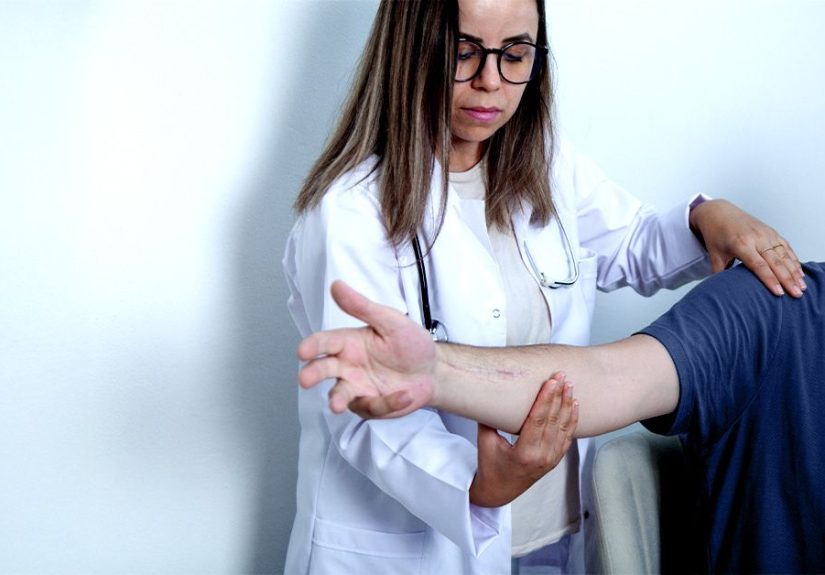
In plain English, passive range of motion, often shortened to PROM, is movement performed by a therapist, caregiver, or another assisting person while the patient relaxes as much as possible. The goal is not to build strength. It is to preserve or improve movement, reduce stiffness, and help a joint continue traveling through a safe arc while recovery catches up. Think of it as maintenance mode for mobility. It is not flashy, but neither is brushing your teeth, and both save you a lot of trouble later.
This guide explains what passive range of motion means, how it differs from other kinds of movement, when it is useful, what common PROM exercises look like, and how people often experience it in real life. The information here is educational, not a substitute for individualized medical advice. Always follow a licensed clinician’s instructions, especially after surgery, fracture, stroke, or severe pain.
What Is Passive Range of Motion?
Range of motion refers to how far a joint can move in its normal directions. Your shoulder can lift, rotate, and swing through a large arc. Your knee bends and straightens. Your ankle points and flexes. When clinicians talk about passive range of motion, they mean that the joint is being moved externally rather than by the patient’s own muscular effort.
That makes PROM different from two related terms you will hear in rehab:
Active Range of Motion
With active range of motion, the person moves the joint independently. If you lift your own arm overhead, bend your own knee, or rotate your own ankle, that is active movement. Your muscles are doing the work.
Active-Assisted Range of Motion
With active-assisted range of motion, the person starts the movement but gets help finishing it. The help might come from a therapist, a caregiver, a pulley, a cane, a towel, or the opposite arm. This is the awkward teenage phase of rehab: not fully passive, not fully active, but making progress.
Passive Range of Motion
With passive range of motion, the patient stays relaxed while someone else moves the limb. PROM is often used when active movement is not yet possible, not yet allowed, or too painful to perform safely.
Why Passive Range of Motion Matters
Joints like to move. When they do not, they can become stiff, uncomfortable, and harder to use. Muscles and surrounding soft tissues may tighten. Normal movement patterns can shrink. Everyday tasks such as reaching into a cabinet, rolling in bed, standing from a chair, or taking a full step can start feeling much bigger than they used to.
Passive range of motion is commonly used to support mobility during periods when full, independent movement is limited. A therapist may use PROM after orthopedic surgery, during early recovery from injury, after a stroke, or when weakness or paralysis makes self-directed exercise difficult. Caregivers may be taught how to perform simple PROM at home when a loved one is recovering from illness or has a neurological condition that affects movement.
The practical goals of PROM often include:
Maintaining joint mobility. If a joint is gently moved on a regular basis, it is less likely to become completely rigid from disuse.
Reducing stiffness. People often report that a limb feels less tight after controlled range-of-motion work.
Supporting early rehabilitation. PROM can allow movement to begin before full muscle strength returns.
Helping clinicians assess movement. Comparing passive movement with active movement can reveal whether a limitation is due more to weakness, pain, guarding, or joint restriction.
Preparing for later exercise. In many rehab plans, PROM comes before active motion, endurance work, and strengthening.
That said, passive range of motion is not a superhero cape. It does not magically replace strengthening, balance work, endurance training, or functional practice. It is one tool in rehab, not the whole toolbox.
Who May Benefit From PROM?
Passive range of motion can be helpful for many people, but it is especially common in situations where movement is limited for a reason beyond simple laziness on a rainy Tuesday.
After Surgery
Following some shoulder, knee, or other orthopedic procedures, a surgeon may allow passive motion before active lifting or resistance work. This protects healing tissues while still encouraging movement.
After Injury
When pain, swelling, or temporary immobilization limits motion, PROM may be used under medical guidance to gently restore movement without overloading the injured area.
After Stroke or Neurological Illness
If a person has weakness, paralysis, or poor motor control, therapists often use PROM to move affected joints and reduce the impact of immobility while more active recovery strategies are introduced.
During Prolonged Bed Rest or Severe Weakness
People recovering from serious illness, intensive care stays, or long periods of inactivity may need assistance moving their joints while strength and stamina rebuild.
For People With Significant Stiffness
Some people with painful joint conditions, postoperative restriction, or frozen shoulder may begin with gentle, guided range-of-motion work before progressing to more demanding exercise.
Does Passive Range of Motion Really Work?
Here is the honest answer: yes, it is useful, but its limits should be respected. In real clinical settings, PROM helps therapists maintain movement, reduce stiffness, and ease a person into rehabilitation. It also plays an important role when someone simply cannot move a limb on their own.
But research reviews have also found that passive movements alone may not reliably prevent or reverse contractures in every situation. That means PROM should not be treated like the one magical exercise that solves everything. The best rehab plans usually combine joint movement with positioning, gradual active motion, flexibility work, strength training, and task-specific practice when appropriate.
In other words, PROM is valuable, but it works best as part of a broader plan. It is more opening act than entire concert.
How to Do Passive Range of Motion Safely
Safety matters because a joint that is healing or inflamed does not appreciate enthusiasm without permission. PROM should be guided by a physician, physical therapist, or occupational therapist whenever there is recent surgery, fracture, neurological injury, or ongoing pain.
Basic safety principles usually include:
Move Slowly
PROM should be controlled and smooth. Jerky movements are a bad idea unless your goal is to become a cautionary tale.
Support the Limb
The joint should be supported above and below so movement stays controlled and comfortable.
Stay Within Allowed Motion
Postoperative protocols may limit how far a joint can move or which directions are safe. Follow those rules exactly.
Do Not Force Through Sharp Pain
Gentle stretching discomfort may happen, but sharp pain, sudden resistance, or increasing symptoms should not be ignored.
Pay Attention to Positioning
Good body alignment matters. A shoulder, hip, or wrist should not be twisted into a weird angle just because someone is in a hurry.
Use the Prescribed Frequency
Some programs call for short, frequent sessions. Others use fewer sessions per week. More is not always better. Better is better.
Common Passive Range of Motion Exercises
The exact exercises depend on the joint, diagnosis, stage of healing, and medical restrictions. The movements below are common examples seen in PROM or assisted ROM programs. They are descriptions, not prescriptions.
1. Shoulder Pendulum
This is a classic early shoulder motion drill. The person bends forward while the arm hangs relaxed, and the body creates small swinging or circular motions. In some rehab plans, this is used several times per day because it provides gentle motion without demanding much active shoulder muscle effort.
2. Assisted Shoulder Forward Elevation
The arm is raised upward with help from the other hand, a therapist, or a caregiver. This helps restore overhead motion in a controlled way. It is common after shoulder procedures and in stiff shoulder programs.
3. Assisted Shoulder Rotation
With the elbow supported near the side, the forearm is moved inward or outward to work on internal and external rotation. These motions are important for things like reaching behind the back or washing your hair without looking like you are wrestling a coat hanger.
4. Elbow Flexion and Extension
The helper gently bends and straightens the elbow through a comfortable range. This may be used when the arm has been immobilized or when weakness prevents full active motion.
5. Forearm Supination and Pronation
This means turning the palm up and down. It is a small movement with a big job because it affects tasks like eating, carrying objects, and dressing.
6. Wrist Flexion and Extension
The wrist is gently moved forward and backward. Finger opening and closing may be added for hand mobility, especially when stiffness is a major issue.
7. Hip and Knee Bending
A caregiver or therapist may assist with bending and straightening the hip and knee while the person lies on their back. This kind of motion is often introduced during bed-based rehabilitation and mobility retraining.
8. Ankle Pumps or Circles
The foot is moved up and down or in gentle circles. Depending on the person’s ability, these may be active, active-assisted, or passive. They are commonly used in lower-extremity rehab because the ankle stiffens quickly when ignored.
How Often Should PROM Be Done?
There is no one-size-fits-all answer. Frequency depends on the body part, condition, comfort level, healing stage, and professional guidance. Some shoulder aftercare instructions emphasize frequent daily range-of-motion work, while longer-term conditioning programs may be done several times per week. The right schedule is the one that matches the diagnosis and the rehab protocol, not the one a random stranger on the internet swears by.
In general, quality matters more than heroics. Gentle, accurate repetitions done consistently are usually more useful than forcing extra reps with poor control.
PROM vs. Stretching vs. Strengthening
These terms overlap, but they are not interchangeable.
PROM is movement performed by someone else for the patient.
Stretching focuses on lengthening soft tissues and improving flexibility.
Strengthening asks muscles to produce force against gravity, resistance bands, weights, or body weight.
Most rehabilitation programs eventually move beyond passive motion. A common progression is:
PROM, then active-assisted motion, then active motion, then strengthening and functional activity.
This progression matters because restoring movement is only part of recovery. A joint that moves better but is still weak, poorly controlled, or painful during daily tasks is not quite ready for a victory parade.
Mistakes to Avoid
Even gentle rehab can go sideways when people improvise too much. Common mistakes include moving too fast, forcing motion past medical restrictions, skipping support under the limb, assuming pain means progress, or doing passive exercises forever without progressing when appropriate.
Another common mistake is thinking all range-of-motion exercises are passive. Many home programs include a mix of passive, assisted, and active drills. Knowing the difference helps people follow the right level of effort for the right stage of recovery.
What Real-World Experiences With Passive Range of Motion Often Feel Like
One of the most useful things to know about passive range of motion is that the experience is usually more emotional and more ordinary than people expect. PROM is rarely dramatic. There is no movie soundtrack. No one throws confetti because a knee bent five degrees farther today. But in rehab, those tiny changes often matter a lot.
Many people first encounter PROM when they feel frustrated, vulnerable, or both. Someone recovering from shoulder surgery may be shocked that lifting a coffee mug feels ambitious. A person after stroke may know exactly what they want an arm to do but cannot get the muscles to cooperate. A caregiver helping a parent in bed may feel nervous about doing the movement correctly. PROM enters the picture at a moment when independence feels fragile, which is one reason it can feel mentally heavy even though the movements themselves look simple.
Patients often describe the first sessions as strange rather than painful. The limb moves, but they are not the one moving it. That can feel relieving if motion has been difficult, or unsettling if the body no longer feels predictable. Some say it creates a stretching sensation and a sense of tightness being challenged. Others say the main sensation is trust: trusting the therapist not to push too far, trusting the body not to flare up, and trusting that repetitive, almost boring movements are doing something useful.
Caregivers commonly report that PROM becomes easier once they learn rhythm and positioning. In the beginning, every motion can feel like a test. Are they holding the leg correctly? Is the shoulder too high? Should they stop if the person winces? With instruction, that anxiety often settles into a routine. Support the limb. Move slowly. Watch the face. Listen to feedback. Breathe. Repeat. It becomes less about performing a perfect technique and more about creating safe, consistent motion.
Therapists often talk about how PROM gives them information as much as intervention. They can feel where a joint starts resisting, whether the limitation seems muscular or joint-related, and how symptoms change from day to day. For the patient, that can be encouraging. Progress is not always measured by dramatic milestones. Sometimes it shows up as a smoother arc, less guarding, easier dressing, or the ability to sit up without the whole arm acting like it filed a complaint.
A common real-world pattern is that PROM works best when expectations stay realistic. People who expect instant normal motion are usually disappointed. People who understand that passive movement is a bridge often tolerate the process better. They see it as the first chapter, not the final ending. The big emotional win is often not the exercise itself, but what it leads to: reaching the top shelf again, rolling over in bed without help, washing hair with less effort, or taking a full step without stiffness dictating the day.
There is also a quiet confidence that grows when PROM transitions into active movement. The first time a person who needed help starts moving a joint independently, even a little, it can feel huge. That is why passive range of motion matters. It may look modest from the outside, but for many people it is the start of getting ownership of movement back.
Final Thoughts
Passive range of motion is simple, useful, and often underrated. It helps clinicians and caregivers keep joints moving when a person cannot safely or effectively do the job alone. It can reduce stiffness, support early rehabilitation, and prepare the body for more active recovery. At the same time, PROM is not a stand-alone cure. The best outcomes usually come from combining it with progressive exercise, smart rehab planning, and condition-specific guidance.
If you or someone you care for needs passive range-of-motion exercises, get clear instructions from a qualified professional. The right technique, the right range, and the right timing make all the difference. Mobility is one of those things people miss most when it fades. PROM helps protect it while recovery is still under construction.