Table of Contents >> Show >> Hide
- What Makes These Biscuits “Paleo,” Exactly?
- Recipe Goals: Fluffy, Not Flat (and Definitely Not Crumbly)
- Paleo Biscuits Recipe With Almond Flour (Classic Cut Biscuits)
- Key Tips for Perfect Almond Flour Biscuits
- Paleo Baking Powder: The “Cornstarch-Free” Option
- Flavor Variations (Because Biscuit Mood Swings Are Real)
- Serving Ideas That Go Beyond “Plain Biscuit, No Plans”
- Storage, Freezing, and Reheating
- Troubleshooting: When Biscuits Misbehave
- Nutrition Notes (The Honest Version)
- FAQ
- Real-World Baking Experiences and Lessons (An Extra of “Been There, Biscuit That”)
- Conclusion
If you’ve ever stared at a plate of eggs and thought, “This needs something fluffy, warm, and suspiciously biscuit-shaped,” you’re in the right place.
Classic biscuits usually rely on wheat flour and a whole lot of gluten magic. Paleo biscuits? Same cozy vibejust without the grains, and without the part
where your dough turns into a stretchy science experiment.
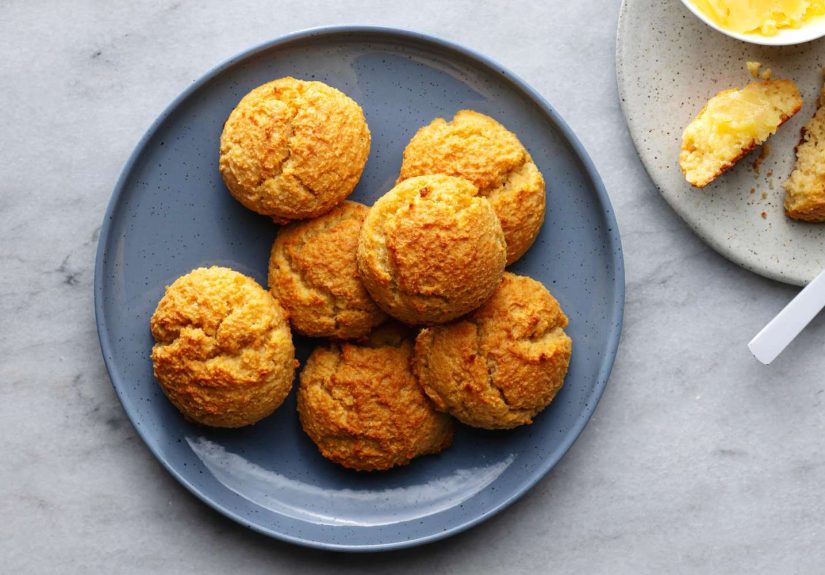
This paleo biscuits recipe with almond flour is designed to bake up tender, lightly crisp on the outside, and soft in the middleperfect for
breakfast sandwiches, soups, holiday brunches, or that moment at 9:47 p.m. when you decide you deserve a biscuit because you folded laundry once.
What Makes These Biscuits “Paleo,” Exactly?
In general, paleo baking avoids grains, legumes, and refined sugarsso traditional flour is out. Instead, we lean on
almond flour (for richness) and a starch like tapioca flour or arrowroot starch (for lift and chew).
The result is a grain-free biscuit that still feels like comfort food, not compromise food.
Almond Flour vs. Almond Meal: Choose Wisely
For the fluffiest texture, use blanched, finely ground almond flour. Almond meal is coarser and includes the skins, which can make biscuits
denser and more rustic. Rustic is cute in a cabin; less cute in a biscuit when you want a tender crumb.
Recipe Goals: Fluffy, Not Flat (and Definitely Not Crumbly)
Almond flour is high in fat and doesn’t behave like wheat flour. It won’t “trap air” the same way, so we build structure with a smart combo of:
- Almond flour for richness and body
- Tapioca or arrowroot for bounce and lightness
- Cold fat (ghee, butter, or coconut oil) for flaky pockets
- Leavening (baking powder/baking soda + acid) for lift
- Eggs to bind and prevent the dreaded biscuit crumble
Paleo Biscuits Recipe With Almond Flour (Classic Cut Biscuits)
Ingredients (Makes 8–10 biscuits)
- 2 1/4 cups blanched almond flour (fine grind)
- 3/4 to 1 cup tapioca flour or arrowroot starch (see notes)
- 1 1/2 teaspoons baking powder (paleo-friendly if needed)
- 1/2 teaspoon baking soda
- 3/4 teaspoon fine sea salt
- 2 teaspoons honey or maple syrup (optional, for a lightly “Southern” vibe)
- 5 tablespoons cold ghee or butter (or firm coconut oil for dairy-free)
- 2 large eggs
- 1 egg white (optional but helpful for extra lift)
- 1/4 cup unsweetened almond milk (or other non-dairy milk)
- 1 teaspoon apple cider vinegar (or lemon juice)
Equipment
- Baking sheet or cast-iron skillet
- Parchment paper (recommended)
- Mixing bowl
- Pastry cutter or fork
- 2 1/2-inch biscuit cutter (or a glass with a sharp rim)
Instructions
- Preheat the oven to 400°F. Line a baking sheet with parchment paper, or lightly grease a cast-iron skillet.
- Mix the dry ingredients: In a large bowl, whisk almond flour, tapioca/arrowroot, baking powder, baking soda, and salt until evenly combined.
-
Cut in the cold fat: Add cold ghee/butter (or firm coconut oil). Use a pastry cutter or fork to work it into the flour until the mixture looks
like coarse sand with a few pea-sized bits. Those little bits = future biscuit joy. - Mix the wet ingredients: In a small bowl, whisk eggs, (optional egg white), almond milk, vinegar, and honey/maple syrup if using.
-
Combine gently: Pour wet ingredients into the dry mixture. Stir until a thick dough forms. If it looks too dry to hold together,
add 1 tablespoon almond milk at a time. If it’s very sticky, dust with a little tapioca flour. -
Shape the dough: Place dough on parchment dusted with tapioca flour. Pat into a 3/4-inch thick rectangle.
Fold it in half once, pat again, and repeat one more time. This simple folding helps create layers. -
Cut biscuits: Use a biscuit cutter to press straight down (don’t twisttwisting can seal edges and reduce rise).
Re-roll scraps gently as needed. -
Bake: Arrange biscuits close together (they rise taller when they have “friends” nearby). Bake 12–16 minutes,
until puffed and lightly golden on top. - Cool briefly and serve: Let them rest 5 minutes. Then eat one immediatelystrictly for quality control.
Key Tips for Perfect Almond Flour Biscuits
1) Keep the Fat Cold
Cold fat creates steam pockets in the oven, which helps mimic the flake you’d get from wheat biscuits. If your kitchen is warm,
chill the dough for 10 minutes before baking.
2) Don’t Overmix (Yes, Even Without Gluten)
Overmixing can make grain-free dough gummy, especially with tapioca. Stir until combined and stop. Your future self will thank you.
3) Balance the Starch
Tapioca flour/arrowroot starch adds lift and chew, but too much can make biscuits slightly stretchy. If you prefer a more “cake-like” biscuit,
use 3/4 cup starch. For more structure and height, go closer to 1 cup.
4) Use Acid for Better Rise
Apple cider vinegar (or lemon juice) reacts with baking soda to create carbon dioxide bubblesaka the tiny air balloons that make biscuits
rise instead of sulk.
Paleo Baking Powder: The “Cornstarch-Free” Option
Some baking powders include cornstarch as an anti-caking agent, and some paleo eaters prefer to avoid it. The easy workaround is to make a
simple paleo baking powder blend at home using cream of tartar + baking soda + tapioca/arrowroot.
Quick Homemade Paleo Baking Powder (Small Batch)
- 2 tablespoons cream of tartar
- 1 tablespoon baking soda
- 1 tablespoon tapioca starch (or arrowroot)
Whisk well, sift if clumpy, and store airtight in a dry pantry. Use it like regular baking powder.
Flavor Variations (Because Biscuit Mood Swings Are Real)
Garlic-Herb Biscuits
- Add 1 teaspoon garlic powder + 1 tablespoon chopped chives or parsley
- Optional: a pinch of black pepper
Breakfast Biscuit Upgrade
- Add 2 tablespoons cooked, crumbled breakfast sausage (if your paleo approach allows)
- Add 1 tablespoon minced green onion
Slightly Sweet “Brunch” Biscuits
- Add 1 tablespoon honey or maple syrup (if not already using)
- Add 1/2 teaspoon cinnamon
Dairy-Free Version
Swap butter/ghee for firm coconut oil or a paleo-friendly shortening. Keep it cold, and expect a slightly different (still delicious) flavor.
Serving Ideas That Go Beyond “Plain Biscuit, No Plans”
- Soup sidekick: Serve warm with chili, chicken soup, or stew.
- Breakfast sandwich: Egg + bacon + avocado = the paleo trifecta.
- Strawberry shortcut: Split and top with berries and coconut whipped cream for a paleo-ish shortcake moment.
- Gravy-friendly: Pair with sausage gravy made using coconut milk and thickened lightly (grain-free style).
Storage, Freezing, and Reheating
Room Temperature
Store in an airtight container up to 2 days.
Refrigerator
Store up to 5 days. Reheat to bring back the fluffy texture.
Freezer
Freeze baked biscuits up to 2 months. Wrap individually for easy grab-and-go.
Reheat at 325°F until warmed through, or toast in a toaster oven.
Troubleshooting: When Biscuits Misbehave
“Mine Didn’t Rise!”
- Check freshness of baking powder and baking soda (they lose power over time).
- Make sure the oven is fully preheated to 400°F.
- Don’t flatten the dough too thinaim for 3/4 inch.
“They’re Too Crumbly.”
- Measure almond flour by spooning into the cup and leveling (don’t pack it).
- Use eggs (they’re the binder in grain-free baking).
- Add 1–2 tablespoons more milk if the dough is dry and sandy.
“They’re Gummy Inside.”
- Reduce tapioca/arrowroot slightly next time.
- Don’t overmix (tapioca gets sticky when stirred aggressively).
- Let biscuits cool 5–10 minutes so the crumb sets.
Nutrition Notes (The Honest Version)
Almond flour biscuits are typically higher in healthy fats and lower in carbs than wheat biscuitsbut they aren’t automatically “low-calorie,”
because almonds are nutrient-dense. If you use more tapioca starch, carbs go up (still grain-free, just not keto). If you want a lower-starch version,
keep the tapioca closer to 3/4 cup and skip sweetener.
FAQ
Can I make these as drop biscuits instead of rolling and cutting?
Yes. If you’re short on time (or patience), scoop dough into mounds on the baking sheet. Drop biscuits won’t have the same layered look,
but they’re still fluffy and very snackable.
Can I make them egg-free?
Egg-free grain-free biscuits are tricky because eggs provide structure. Some recipes use flax “eggs,” but results vary and can be denser.
If you try it, start with 2 flax eggs (2 tablespoons ground flax + 5 tablespoons water, gelled) and expect a more rustic crumb.
What’s the best fat: ghee, butter, or coconut oil?
Ghee and butter give the most classic flavor and browning. Coconut oil works well for dairy-free, but use refined coconut oil if you don’t want
a coconut aroma hovering over your breakfast like an uninvited tropical guest.
Real-World Baking Experiences and Lessons (An Extra of “Been There, Biscuit That”)
Here’s the part nobody tells you when you start baking paleo: the first batch is rarely the forever batch. Not because you “failed,” but because
grain-free baking has a learning curvelike riding a bike, except the bike is made of almond flour and the handlebars are tapioca starch.
Many home bakers’ first experience with almond flour biscuits goes something like this: the dough looks perfect in the bowl, but the moment
you try to roll it out, it becomes sticky. You dust with more flour, then more flour, then suddenly you’re basically sanding the dough like a DIY project.
The fix is simple: give the dough 3–5 minutes to hydrate after mixing. Almond flour and starch absorb liquid differently, and a short rest makes the dough
easier to handle without adding extra flour that can dry it out.
Another common “experience moment” is the oven surprise. Grain-free biscuits can look done on top while still setting inside.
The best clue is the bottom: if it’s lightly golden and the biscuit feels springy when tapped, you’re good. If it still feels soft and fragile,
give it another 2 minutes. And once they come out, resist the urge to tear one open immediately like you’re opening a dramatic letter from the 1800s.
Letting them cool for 5–10 minutes helps the crumb finish setting, which means fewer gummy centers and fewer “why is this sticking to my knife?” questions.
People also tend to learn quickly that not all almond flour is the same. Some brands are ultra-fine, others are slightly coarser, and that changes
how much liquid you need. If your dough is crumbly, it doesn’t mean the recipe is wrongit usually means your almond flour is thirstier than average.
Add milk a tablespoon at a time until the dough holds together when pressed. On the flip side, if the dough is wet and glossy, it might need a small
sprinkle of tapioca flour to firm up. Think “play-dough you want to eat,” not “pancake batter you definitely shouldn’t roll.”
The most satisfying experience, though, is the “this actually works” momentwhen your kitchen smells like a real bakery and your biscuits rise into
soft, golden rounds that don’t crumble into almond gravel. That’s when you start experimenting: garlic-herb biscuits with soup, mini biscuits for sliders,
or a batch baked in a cast-iron skillet for crispier bottoms. Many paleo bakers end up making a double batch and freezing half, because these reheat
beautifully and solve future-you’s breakfast problems in about 90 seconds.
Finally, the most “real life” lesson: biscuits are a vibe. They’re not meant to be stressful. If your circles aren’t perfect, congratulationsyou made
rustic biscuits. If you accidentally made drop biscuits, congratulationsyou made faster rustic biscuits. Either way, you end up with something warm,
satisfying, and very hard to eat “just one” of. That’s not a flaw. That’s a feature.
Conclusion
A great paleo biscuits recipe with almond flour should feel like comfort food first and “special diet” second. With the right balance of
almond flour and starch, cold fat for tenderness, and a little acid for lift, you’ll get biscuits that rise proudly and taste like they belong next to
anything from eggs to stew. Keep the dough gentle, bake hot, and remember: imperfect biscuits still count as biscuits.