Table of Contents >> Show >> Hide
- Table of Contents
- What “the Hästens hammock” actually is
- Why a luxury hammock hits different
- Materials and feel: what makes it “Hästens-adjacent”
- Fit, comfort, and the science of not getting taco’d
- How to hang it right (without being a menace to trees)
- Rain, bugs, and the “I thought it was summer” trap
- Warmth: the cold-butt problem and how to solve it
- Best places to use it: backyard, porch, camp, and glamping
- Buying tips: if you’re searching for one today
- Build a premium hammock setup (without the chaos)
- FAQ
- 500-word “hang time” experiences
If you know Hästens at all, you probably picture a bed so lovingly handcrafted it practically comes with a lullaby and a tiny Swedish diploma.
So when the brand dipped a toe into the great outdoors with a limited-edition hammock, it felt like the most civilized plot twist ever:
“Yes, we do luxury sleep. Also, would you like to nap between two trees like a respectful woodland aristocrat?”
This guide digs into what made the Hästens hammock special, what to look for if you’re hunting one down today, and how to build a hammock setup
that feels premium without turning your backyard into a gear yard sale. Along the way, we’ll cover comfort geometry, tree-friendly hanging,
weather protection, and the #1 surprise for new hammock campers: your butt gets cold faster than your optimism.
What “the Hästens hammock” actually is
Let’s clear up the name first: you’ll see it written as “Hastens” in some older posts, but the brand is Hästens.
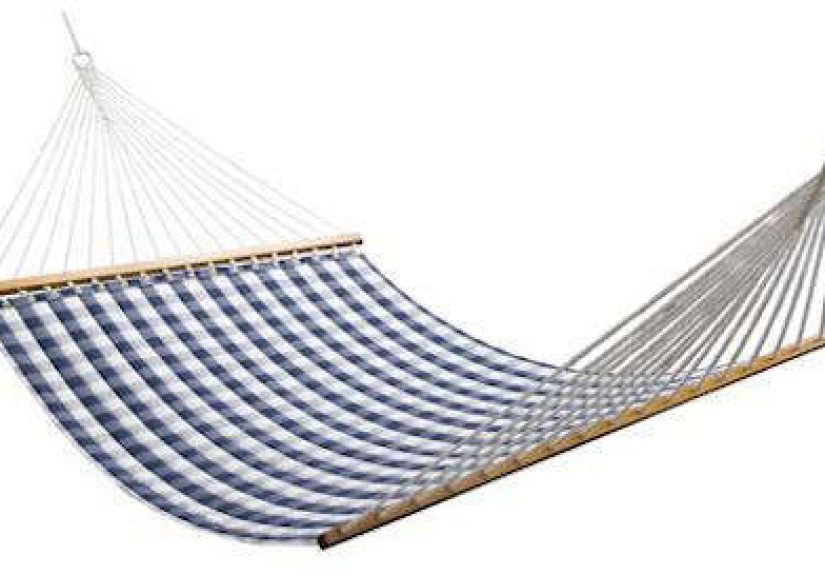
The hammock that pops up online is a classic, fabric-style hammock dressed in the company’s signature blue-and-white check.
It was described as made from natural materials and marketed as free of chemicals or toxins.
The fun part? It wasn’t priced like a “sell-one-to-buy-a-car” bed.
Reports from the early 2010s put it around $284 and sized at roughly 210 × 140 cm (about 83 × 55 inches).
In other words: wide enough to lounge like you mean it, and still plausible to carry outside without hiring a moving crew.
Today, it’s best thought of as a limited-edition design object with real-world usefulness: a hammock you can actually nap in,
but also a piece that looks like it belongs in a magazine spread where everyone owns linen and nobody owns clutter.
Why a luxury hammock hits different
Most hammocks fall into one of two vibes:
- “Adventure burrito” (ultralight nylon, stuffed into a sack the size of a grapefruit)
- “Porch novelist” (cotton or quilted fabric, designed to live outdoors and look good doing it)
The Hästens hammock is firmly in “porch novelist” territorymore “sip something cold and pretend you’re unavailable”
than “speed-run a thunderstorm at mile 14.”
A premium hammock experience is less about flexing and more about comfort consistency: fabric that feels good on skin,
hardware that doesn’t squeak, and a hang that doesn’t make you feel like a folded lawn chair.
When it’s done right, you get that floating sensation hammock fans lovewithout the awkward flop-and-regret phase.
Materials and feel: what makes it “Hästens-adjacent”
The outdoors is honest. You can’t “marketing copy” your way out of scratchy fabric, sweaty heat buildup, or straps that chew up trees.
If you want the Hästens spirit outdoors, focus on three things: natural-feeling textiles, breathable comfort, and thoughtful build quality.
Fabric choices that feel premium
Backyard hammocks often lean toward cotton or blended fabrics that feel softer than parachute nylon. Cotton tends to be breathable and cozy,
which matters when you’re lounging in shorts and your hammock becomes your entire personality for the afternoon.
Rope hammocks are the classicsairy, iconic, and great for hot weatherbut they can leave “rope imprints” that make your legs look like
you lost a fight with a basket. Fabric hammocks usually feel gentler, but they can show wear faster if left out in bad weather.
Natural materials and the “sleep brand” mentality
Hästens’ reputation is rooted in craftsmanship and natural materials in its broader product worldthink wool and cotton,
and a general obsession with comfort. That same philosophy is why a simple hammock from them got attention:
it wasn’t trying to be tactical. It was trying to be comfortable.
Stitching, edge finishing, and “quiet quality”
Here’s a buying rule that works for hammocks, jeans, and friendships: look at the seams.
Clean stitching, reinforced ends, and tidy edge finishing matter more than a dozen buzzwords.
If the hammock is meant for lounging, the build should feel sturdy without being stiff or crunchy.
Fit, comfort, and the science of not getting taco’d
Hammock comfort is mostly geometryyour body plus fabric plus angle. Get the setup wrong and you’ll feel like a human taco.
Get it right and you’ll understand why hammock people won’t shut up about hammocks. (I say that with love. And mild envy.)
Width and “the diagonal lie”
For lounging, you can sit centered and swing dramatically like you’re in a movie. For napping (or overnight sleeping),
the secret is to lie slightly diagonal across the fabric. That flattens your body position and reduces the “banana bend.”
Length: lounging vs. sleeping
If you’re buying a hammock primarily for backyard lounging, you can prioritize fabric feel and width.
If you’re thinking “I might camp in this,” length becomes more importantmany dedicated camping hammocks are longer to support flatter lay.
The Hästens hammock, as reported, sits comfortably in the lounge-and-nap category.
Comfort accessories that don’t look like a hardware aisle exploded
- A small pillow (or a compressible camp pillow if you’re traveling)
- A light throw for breezy evenings
- A ridgeline organizer (optional, but delightful if you like having your book and sunglasses within reach)
The goal is “effortless” not “I brought my entire gear closet to the park.”
How to hang it right (without being a menace to trees)
Hammocks are relaxing. Setting them up should not become an extreme sport.
A few fundamentals make your hang safer, comfier, and kinder to the place you’re enjoying.
Pick the right anchor points
Choose healthy, sturdy trees and check local rules where you’re hanging. In backcountry settings,
established guidance emphasizes camping away from water sources and minimizing site impact.
Translation: don’t set up your personal lounge right on top of fragile vegetation or next to a stream bank that’s already stressed.
Use tree-friendly straps (seriously)
Webbing straps help distribute force and reduce bark damage. A common recommendation is to use straps at least about 1 inch wide
(and wider in some areas). Avoid thin cords directly on barkyour hammock shouldn’t double as a tree girdling experiment.
Hang angle and height: comfort + safety
Many hammock setup guides point to a roughly 30-degree suspension angle as a solid starting point.
Too flat and the fabric feels tight and creasy; too steep and you sag like a sad banana.
Also, keep your hammock lowaim for chair height when you sit in it, not “emergency room highlight reel.”
A quick setup checklist
- Straps lay flat on the tree (no twisting, no thin cord digging in)
- Hardware is rated and clipped correctly (carabiners, buckles, or whoopie slings)
- Hammock hangs with a gentle sag (not guitar-string tight)
- You test it slowly before fully committing your whole existence to it
Rain, bugs, and the “I thought it was summer” trap
Backyard lounging can be blissfully simple: hammock + shade + beverage = victory.
But if you’re using a hammock for campingor even just lingering outside at dusktwo realities show up fast: weather and bugs.
Rain protection: tarp basics
For hammock camping, you’ll want a rain fly or tarp with enough coverage to protect your head and feet.
A common technique is to run a tarp ridgeline between your trees (positioned so it stays close even when the hammock sags under your weight),
then stake it out. If conditions are calm, “porch mode” (propping one side up with trekking poles) adds airflow and views.
Bug nets: optional until they aren’t
In many regions, a bug net is the difference between “peaceful nap” and “I donated a pint of blood to nature.”
If you’re mostly backyard lounging, you might skip it. If you’re camping, it’s often worth it.
Wind: the sneaky comfort killer
Wind is what turns a pleasant evening into “why are my knees cold?”
Even a light breeze can steal heat fastespecially under youso plan for insulation if you’ll be out after sunset.
Warmth: the cold-butt problem and how to solve it
Welcome to the most universal hammock camping surprise: your back and backside get cold.
It happens because insulation under your body compresses, losing loft and warmth.
Yes, this includes sleeping bags (they’re great on top; less great underneath when squished).
Underquilt vs. sleeping pad
For overnight hammock use, most people choose one of two strategies:
- Underquilt: hangs beneath the hammock and stays lofty, reducing cold spots.
- Sleeping pad: works, especially if you already own one, but can slide around and feel less “hammock-pure.”
If you’ve ever heard the phrase “cold butt syndrome,” it’s not a joke. It’s a warning label.
Solve for bottom insulation and you solve for comfort.
Best places to use it: backyard, porch, camp, and glamping
Backyard luxury lounge
This is the Hästens hammock’s natural habitat: a shaded corner, good airflow, and enough time to read 12 pages before drifting off.
Add a simple stand if you don’t have the right trees, and keep a storage spot handy so you can protect fabric from storms and harsh sun.
Front porch “soft seating” upgrade
A hammock can make a porch feel like a resortespecially if your space is narrow and you want seating that doesn’t eat the whole floor.
Think of it as a swing chair’s laid-back cousin who listens to jazz and never rushes.
Car camping and cabin trips
A premium lounge hammock shines on trips where you’re not counting ounces:
you can bring a thicker blanket, a nicer pillow, and maybe a tarp “just in case.”
It becomes your daytime relaxation station while the camp stove does its thing.
Backcountry hammock camping
If you want to sleep overnight, make sure your setup matches the mission:
tree-friendly straps, reliable suspension, weather protection, and bottom insulation.
The hammock is only one part of the shelter systemthink of it like buying a sofa without realizing you also need a living room.
Buying tips: if you’re searching for one today
Because the Hästens hammock was discussed as a limited-edition item, availability can be the biggest challenge.
If you’re determined to find the real one, you’ll likely be searching resale marketplaces, design-focused secondhand shops,
or vintage/collector circles.
What to verify before you buy
- Condition of the fabric: check for sun fading, thinning, and small tears near stress points.
- Ends and attachment points: look for reinforced stitching and no fraying at the gathered ends.
- Included suspension: many hammocks are sold “body only.” Budget for straps and hardware.
- Weight limit and intended use: lounging is one thing; overnight is another.
Spotting “inspired-by” options
If you can’t find the original, you can still recreate the vibe:
choose a wider, comfortable fabric hammock; pair it with a clean strap system; and add a simple textile touch
(a breathable throw, a crisp pillowcase, or even a classic check pattern) to echo the Hästens aesthetic without copying it.
FAQ
Is the Hästens hammock good for sleeping overnight?
It was presented more as a classic lounge hammock. Overnight comfort depends on your body, your hang, and your insulation plan.
If you want to hammock camp regularly, consider a dedicated camping hammock system with weather and bug protection.
Do I really need wide straps?
Yes. Wide straps help reduce bark damage and are required in many places. They’re also easier to adjust and generally safer.
What’s the single biggest mistake new hammock campers make?
Skipping bottom insulation. Even when air temperatures feel mild, convective cooling under you can get uncomfortable fast.
How do I make a hammock setup look “designed” instead of random?
Match your textiles (one throw, one pillow), keep hardware tidy (black straps, clean lines), and store it when weather turns.
The biggest luxury move is not leaving it to get cooked by sun and storm.
500-word “hang time” experiences
The first time you hang a “nice” hammock, you notice something surprising: your brain treats it differently.
A cheap hammock can be fun, but a well-made, comfortable one creates a tiny ritual. You don’t just flop into ityou arrive.
You straighten the fabric, set the angle, and suddenly you’re the kind of person who has opinions about shade patterns.
One of the best backyard moments is the “late afternoon reset.” The sun dips low, the air finally stops feeling like a hair dryer,
and you take a book outside fully intending to read. Ten minutes later you’re half asleep, one arm dangling dramatically,
as if you’re posing for a lifestyle catalog titled People Who Definitely Answer Emails Tomorrow.
A hammock with a soft, breathable feel makes that moment effortless: no scratchy fabric, no clammy heat trapjust quiet comfort.
Then there’s the porch hang, which feels like cheating at life. You’re not traveling. You’re not camping.
You’re simply suspended in the most relaxed posture known to humankind while still technically “at home.”
On breezy days, you learn the value of a light throwless for warmth, more for that cozy “I planned this” vibe.
You also learn a second truth: if your straps are easy to adjust, you’ll use the hammock more.
If setup feels like assembling a satellite dish, you’ll mysteriously “forget” you own it.
Take the same hammock on a car-camping trip and it becomes the social magnet. Someone is always in it.
Someone is always asking, “Is this comfortable?” as if you might be lying to protect hammock secrets.
The real joy is that a premium-feeling hammock invites longer sits: morning coffee with fog in the trees,
midday shade breaks between hikes, stargazing before you crawl into your tent.
It’s not just furnitureit’s a better way to wait for life to happen.
And yes, there’s the learning curve: the first time the temperature drops, you discover cold-butt syndrome
and realize the outdoors is a comedian with impeccable timing. You improvise with a folded blanket, then you get smarter.
You add insulation. You hang the tarp properly. You figure out that a calm, correct setup feels like floating,
but a rushed setup feels like being wrapped in a grocery bag. Eventually you find your “sweet spot”
that perfect sag, that perfect height, that perfect anglewhere the hammock disappears and you just… exhale.
That’s the experience people chase: not the product, but the feeling of being gently held by air.