Table of Contents >> Show >> Hide
- Why a Real T. Rex Skeleton Is Such a Big Deal
- How the Dinosaur Auction Market Got So Wild
- What Buyers Are Really Paying For
- The Fine Print: Real Bone, Cast Bone, and the “Hold On a Second” Problem
- Why Scientists Get Nervous When Fossils Go Private
- If You Actually Wanted to Buy One, What Would Smart Due Diligence Look Like?
- Why the Public Keeps Falling in Love With T. Rex Anyway
- The Experience: What This World Actually Feels Like
- Final Thoughts
- SEO Tags
If you have ever wandered through a museum and thought, “This is amazing, but what this room really needs is my name on the deed,” then congratulations: the fossil market has been preparing for you. Not for your wallet, necessarily. Your wallet may need a support group. But your dream? Absolutely.
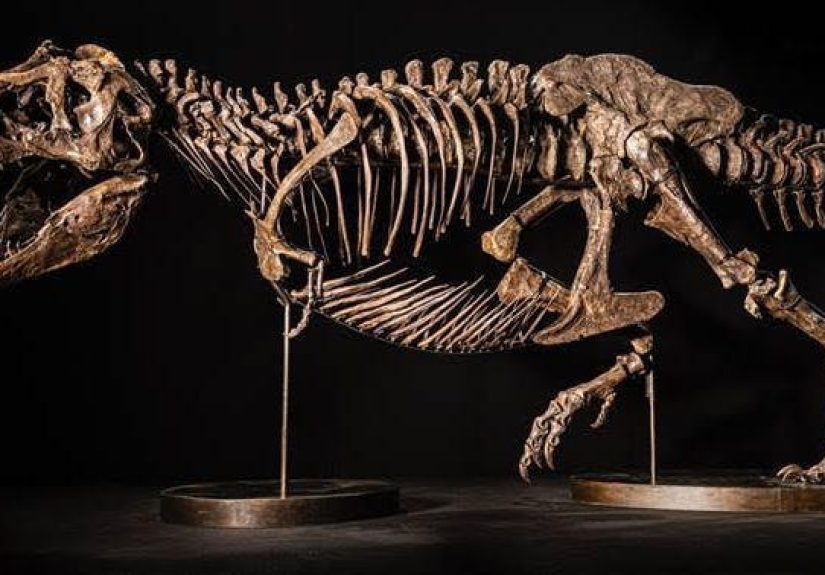
The idea of buying a real Tyrannosaurus rex skeleton used to sound like something whispered by movie villains, eccentric billionaires, or that one friend who thinks a “starter home” should include a moat. Today, however, it is a very real part of the luxury collectibles world. Dinosaur fossils have moved beyond dusty academic corners and into the bright lights of high-end auctions, where they are marketed with the same drama usually reserved for blue-chip paintings, rare jewels, and cars that cost more than small islands.
That does not mean a complete T. rex skeleton for sale pops up every weekend like yard-sale patio furniture. Quite the opposite. These specimens are rare, scientifically important, and often incomplete, restored, or assembled with casts. But when one does hit the market, the sale becomes an event. Headlines roar. Paleontologists sigh. Collectors lean forward. And everyone else suddenly remembers that dinosaurs are still the undefeated champions of public imagination.
So what does it actually mean when a real T. rex skeleton becomes available? How much does it cost? Why do scientists get nervous? And if someone did buy one, would they be getting a crown jewel of natural history or the world’s least practical conversation starter?
Let’s dig in. Very carefully. Preferably with a brush, not a shovel.
Why a Real T. Rex Skeleton Is Such a Big Deal
A Tyrannosaurus rex is not merely another dinosaur. It is the dinosaur. Even people who cannot name five birds or identify a fern will confidently recognize a T. rex. Museums have spent decades proving why: it was enormous, dramatic, and biologically bizarre in all the best ways. Based on fossil evidence, T. rex could reach about 40 feet in length and around 12 feet in height, with a body mass measured in the thousands of pounds. In other words, this was not a lizard with good branding. It was a walking demolition permit with teeth.
That combination of scientific importance and pop-culture fame helps explain why a real T. rex fossil sends collectors into orbit. The best-known specimens are practically celebrities. SUE at the Field Museum remains one of the most famous examples, measuring more than 40 feet long, standing 13 feet high at the hip, and preserving roughly 90 percent of the skeleton. That level of completeness is extraordinary. When paleontologists talk about a specimen changing what we know about growth, biology, and behavior, they are not being dramatic. Well, not just being dramatic.
Completeness matters because most dinosaur fossils are found in pieces, not as ready-made showroom centerpieces. A mounted skeleton often includes restoration work, support structures, and cast material to fill missing gaps. That is not necessarily suspicious; it is standard practice in paleontology and exhibition design. But it does mean buyers need to know exactly what they are purchasing: original fossil bone, replica elements, conservation work, and provenance records all matter.
How the Dinosaur Auction Market Got So Wild
The modern fossil market did not become headline material overnight. But several high-profile sales changed the conversation. In 2020, Christie’s offered Stan, one of the largest, most complete, and most studied T. rex skeletons ever discovered. Christie’s estimated the specimen at $6 million to $8 million. It sold for an eye-popping $31.8 million. At the time, that was the highest amount ever paid for a fossil at auction.
That sale did more than make jaws drop. It reset expectations. Suddenly, dinosaur fossils were not niche collectibles. They were trophy assets. They could headline evening sales, draw street traffic in Manhattan, and attract bidders who may have previously been shopping for Warhols, Basquiats, or yachts with helicopter pads.
Then the fossil market kept flexing. In 2024, the stegosaurus specimen Apex sold for $44.6 million, setting a new auction record for dinosaur fossils and reinforcing the idea that prehistoric bones had entered a new luxury stratosphere. That sale was not a T. rex, but it mattered enormously to the T. rex conversation, because every blockbuster fossil sale raises the perceived value of the next major specimen to reach the block.
Even partial tyrannosaur material can command astonishing numbers. In 2022, a 200-pound T. rex skull nicknamed Maximus went up for auction with expectations of $15 million or more. That tells you everything you need to know about demand: in the right room, even the head alone can become a financial earthquake.
In other words, if a real T. rex skeleton appears for sale, buyers are not entering a sleepy collector’s side street. They are stepping into a high-stakes market where rarity, spectacle, scientific prestige, and ego all have price tags.
What Buyers Are Really Paying For
1. Rarity
A real T. rex skeleton is rare by any standard, but a good one is rarer still. Buyers pay a premium for completeness, bone quality, documented excavation history, conservation quality, and whether the specimen has been studied or exhibited.
2. Provenance
This is the fossil world’s equivalent of “show me the paperwork.” Provenance includes where the specimen was found, who excavated it, whether it was legally collected, how it changed hands, and how it was prepared. A glamorous mount with shaky documentation is not a treasure. It is a headache wearing a dramatic pose.
3. Display Power
Collectors are not only buying bone. They are buying scale, theater, and instant myth. A mounted T. rex dominates a room in a way almost nothing else can. Paintings hang politely on walls. A tyrannosaur skeleton enters the room first and makes the architecture apologize.
4. Cultural Cachet
Owning a T. rex is not like owning a generic fossil fish or a nice ammonite on a bookshelf. It is closer to owning a rolling symbol of natural history, cinema nostalgia, childhood obsession, and scientific prestige all at once. It tells visitors that you have money, yes, but also that you selected your luxury item from the Late Cretaceous.
The Fine Print: Real Bone, Cast Bone, and the “Hold On a Second” Problem
Here is where things get wonderfully unromantic. A buyer cannot simply hear “real T. rex skeleton” and start measuring the foyer. They need to know how much of the mounted skeleton is original fossil material, how much is restored, and how much is replicated for display.
This became a major public issue in 2022, when Christie’s planned to auction Shen, the first T. rex skeleton ever to be offered in Asia. The specimen drew major attention and was expected to fetch between $15 million and $25 million. Then the sale was withdrawn after experts raised questions about similarities to another T. rex and the extent of cast material. In plain English: the market got a loud reminder that fossil glamour still needs scientific scrutiny.
That episode matters because it highlights the difference between market excitement and specimen confidence. A serious buyer wants a complete dossier: excavation notes, restoration records, ownership chain, scholarly input, legal compliance, and a clear breakdown of original versus replicated elements. Without that, the dinosaur may still be impressive, but the purchase becomes a lot riskier.
And yes, this is the point where the phrase “buyer beware” stomps into view wearing very small arms.
Why Scientists Get Nervous When Fossils Go Private
The controversy around buying dinosaur fossils is not really about whether rich people are allowed to have weird hobbies. Science has room for weird hobbies. Science practically runs on them. The concern is access.
Paleontologists worry that important fossils may disappear into private collections where researchers cannot study them, students cannot learn from them, and the public cannot see them. As prices rise, museums and universities often cannot compete with private buyers. That means scientifically valuable specimens can become financially unreachable just when their research potential becomes most obvious.
This is not a hypothetical problem. Researchers have warned that recent blockbuster fossil sales could drive prices higher and make it even harder for public institutions to acquire major specimens. Science communicators and paleontologists have also pointed out that when fossils become luxury assets, access to research material and even relationships around excavation sites may change for the worse.
That said, the story is not purely doom and gloom. Some private buyers loan or donate major fossils to museums. Stan, for example, ultimately found a public future in a museum context rather than vanishing into a mansion basement next to the wine cellar and suspiciously expensive lamp collection. In the best-case scenario, private money helps preserve, prepare, and publicly display specimens that might otherwise remain unseen.
The real question is not whether a private owner can buy a T. rex skeleton. Clearly, they can. The deeper question is whether they will treat that skeleton like a trophy, a scientific asset, a public trust, or some strange combination of all three.
If You Actually Wanted to Buy One, What Would Smart Due Diligence Look Like?
Ask for complete provenance documentation
A legitimate seller should provide a detailed paper trail covering discovery, excavation, preparation, ownership history, export or transfer compliance where relevant, and any previous exhibition or publication history.
Request a full conservation and restoration report
You need to know how the specimen was stabilized, reconstructed, mounted, and repaired. A mount is part science, part engineering, and part stagecraft. You want all three documented clearly.
Verify original versus cast elements
This is one of the biggest questions in the market. A mounted skeleton may look complete from ten feet away and tell a much more complicated story from ten inches away. Both versions matter.
Consult an independent paleontologist
If you are spending eight figures on a dinosaur, this is not the moment to trust vibes alone. Independent expert review is essential. Your accountant may be brilliant, but unless they can also identify a restored jugal bone at twenty paces, bring reinforcements.
Think beyond purchase price
Owning a T. rex means planning for transport, insurance, environmental controls, structural installation, ongoing conservation, and potentially public-display logistics. The skeleton is not the whole bill. It is the opening scene.
Why the Public Keeps Falling in Love With T. Rex Anyway
Part of the reason these sales become international news is simple: people never stopped caring about T. rex. Museums know it. Families know it. Hollywood definitely knows it. The species has an unbeatable mix of scientific authority and theatrical swagger. It is huge, predatory, weirdly proportioned, and somehow still majestic enough to feel almost royal.
That enduring fascination shows up everywhere, from museum halls in Chicago, Los Angeles, Washington, and New York to auction previews that draw crowds who have no intention of bidding. Many visitors are not evaluating bone authenticity percentages or pondering the ethics of fossil privatization. They are just standing there, neck craned back, thinking the same ancient human thought: “That thing is enormous.”
And maybe that is why the market works. A T. rex skeleton is not just a collectible. It compresses science, wonder, extinction, time, fear, and status into a single object. It is rare to find something that can impress a hedge fund manager, a paleontology professor, and a seven-year-old equally fast. T. rex pulls it off without breaking stride.
The Experience: What This World Actually Feels Like
Imagine walking into a preview gallery where a real tyrannosaur skeleton is mounted under theatrical lighting. Before you notice labels, auction estimates, or security staff trying to look casual around a multimillion-dollar predator, your body does the math first. The skull is higher than you expected. The teeth are thicker than movie versions usually dare. The rib cage does not read like “artifact”; it reads like “architecture.” A good skeleton does not feel small because the room is large. The room feels small because the animal is impossible.
That is the first experience people talk about: scale. Photographs flatten it. Video makes it manageable. In person, a real T. rex skeleton has presence. You are not simply seeing an object. You are confronting evidence that something this large, this muscular, and this absurdly well-equipped once walked on Earth as a normal Tuesday activity.
Then comes the second experience: detail. The skull stops being a famous outline and becomes a collection of textures, openings, scars, and engineering marvels. Teeth look less like props and more like tools. The arms, of course, trigger the usual jokes, because humanity cannot resist a tiny-arm joke when handed one on a fossilized silver platter. But even those little arms stop being punchlines when you realize the rest of the animal is built like a freight train with opinions.
There is also a strange emotional split in the room. Some people look at a skeleton like investors. Some look at it like scientists. Some look at it like children who have accidentally wandered into the best day of their lives. Often, one person cycles through all three reactions in five minutes. First comes awe. Then curiosity. Then the practical thought: “Where would this even go?” followed immediately by the less practical thought: “I would absolutely redesign the house.”
For museum visitors, the experience is a little different but just as powerful. A public display gives the skeleton context. Labels explain age, discovery, preparation, and anatomy. You get the story, not just the spectacle. You see how a mounted specimen can be both a scientific resource and a cultural magnet. Kids stare. Adults read every panel. Someone always takes a photo that does not fit the whole animal. That failure is part of the charm.
And maybe that is the most memorable experience tied to this topic: a T. rex skeleton makes people feel small in a useful way. It reminds you that Earth’s history is bigger than your calendar, your mortgage, your inbox, and your sense of importance. Whether it stands in a museum hall or an auction showroom, it carries the same message. Life was here long before us, it was stranger than we assume, and every now and then it leaves behind something so spectacular that modern humans respond with scholarship, wonder, and, occasionally, an extremely aggressive paddle raise.
Final Thoughts
So, now’s your chance to buy a real Tyrannosaurus rex skeletonat least in the grand, recurring sense that the market occasionally opens the door and invites a very small number of very wealthy people to step inside. But the headline only tells half the story. The real story is about rarity, provenance, restoration, science, access, and what happens when one of the planet’s most iconic creatures becomes a luxury object.
A real T. rex skeleton is not merely a fossil for sale. It is a test of values. Will it be treated as décor, investment, public legacy, or scientific treasure? The best outcomes happen when those categories overlap and the public still gets to stand under the jaws of deep time and feel gloriously insignificant.
Until then, most of us will continue enjoying T. rex the old-fashioned way: in museums, in books, on screens, and in daydreams where we briefly imagine buying one before remembering that groceries are expensive enough already.