Table of Contents >> Show >> Hide
- What Is the Cosmos Ebonized Oak Counter Stool?
- Why This Counter Stool Stands Out
- Will It Fit Your Kitchen Island?
- Who Should Buy the Cosmos Ebonized Oak Counter Stool?
- How It Compares to Typical Counter Stools
- Best Design Pairings for the Cosmos Ebonized Oak Counter Stool
- Comfort: The Practical Side of a Beautiful Stool
- How to Care for an Ebonized Oak Stool
- Is the Cosmos Ebonized Oak Counter Stool Worth It?
- What the Experience Is Really Like
- Final Thoughts
Some furniture whispers. The Cosmos Ebonized Oak Counter Stool does not whisper. It strolls into a kitchen, strikes a sculptural pose, and quietly lets everyone know the room has standards now. If you have been hunting for a counter stool that feels less “just pull up a seat” and more “functional art with excellent manners,” this one earns a long look.
The Cosmos stool belongs to that rare category of furniture that manages to be practical and poetic at the same time. It is rooted in craftsmanship, shaped with a strong point of view, and finished in an ebonized oak treatment that gives the wood a dark, moody richness without hiding the character of the grain. In other words, it is black oak done the smart way: dramatic, tactile, and not trying too hard. Quite a trick for a stool, honestly.
This guide breaks down what makes the Cosmos Ebonized Oak Counter Stool special, where it works best, how it compares to more ordinary kitchen island seating, and what real everyday use is likely to feel like. Whether you are styling a minimalist kitchen, refreshing a breakfast bar, or just trying to avoid buying another regrettable piece of “assembly required” optimism, here is what to know.
What Is the Cosmos Ebonized Oak Counter Stool?
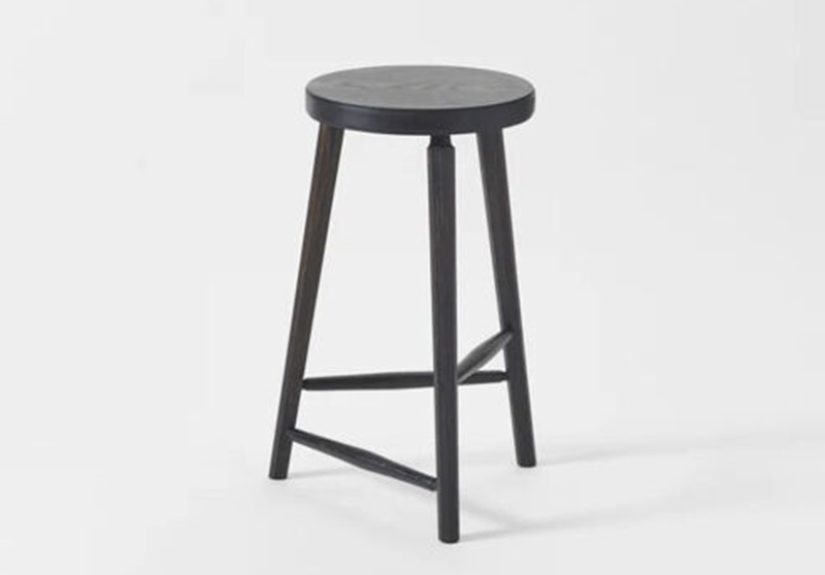
The Cosmos stool is a handcrafted design associated with The Long Confidence, the Berkeley, California studio of maker Rafi Ajl. The design has been described as drawing inspiration from tripod landing legs of spaceships and traditional milking stools, which is a surprisingly charming design mash-up. Farm utility meets cosmic geometry. Somehow, it works beautifully.
The counter-height version aligns with the standard seat height expected for a 36-inch kitchen counter or island, and the line has been offered through March in San Francisco. What sets this piece apart is not just the silhouette, but the way the form is built: solid wood construction, traditional joinery, and a hand-shaped profile that feels more artisan workshop than mass-market warehouse aisle.
The “ebonized oak” part matters too. Oak is already prized for its durability, density, and visible grain. Ebonizing darkens the wood to a near-black finish while still letting its natural texture show through. That means the stool does not read as flat or painted-over. It reads as deep, nuanced, and expensive in the best possible way.
Why This Counter Stool Stands Out
A sculptural shape with actual personality
Let’s start with the obvious: this stool has presence. The geometric leg structure gives it a grounded, tripod-like stance that feels stable and architectural. Many kitchen stools fade into the background. The Cosmos does the opposite. It acts like a design accent even when nobody is sitting on it.
That makes it especially appealing in kitchens where the island is a focal point. If your countertop is large, open, and highly visible from the living or dining space, a sculptural modern counter stool can do a lot of visual heavy lifting. The Cosmos looks intentional, not like a placeholder purchased during a late-night panic scroll.
The ebonized oak finish adds drama without losing warmth
Black furniture can go wrong in two ways: too harsh or too dull. Ebonized oak lands in the sweet spot between them. Because the treatment works with the wood rather than erasing it, you still get depth, variation, and grain movement. That softens the darkness and makes the stool easier to pair with other materials.
It looks especially good with honed marble, soapstone, warm white cabinetry, brushed brass, unlacquered bronze, plaster walls, and natural linen. In a kitchen full of white shaker cabinets, the stool adds contrast. In a moodier kitchen with darker finishes, it adds continuity and richness. Either way, it avoids looking generic.
Handcrafted construction gives it long-term appeal
There is a meaningful difference between a stool made to survive a trend cycle and one built to age well. The Cosmos leans toward the second camp. Traditional joinery and solid wood construction tend to signal a more serious level of furniture-making, and that matters if you want a piece that still looks relevant years from now.
Oak is already known for durability, and solid hardwood furniture generally outperforms thinner veneered or lower-density alternatives in everyday wear. That does not mean it is indestructible. It does mean it is far better suited to real-life use, from rushed breakfasts to laptop afternoons to those mysterious kitchen moments when somebody always ends up sitting near the snacks.
Will It Fit Your Kitchen Island?
Beauty is great. Knees smashing into the underside of the counter is less great. So before falling in love with any kitchen island stool, measure first.
Most standard kitchen counters are around 36 inches high. For that height, a 24- to 26-inch seat height is usually ideal, with about 10 to 12 inches of clearance between the seat and the underside of the countertop for comfortable legroom. That is why the Cosmos counter version makes sense in a typical kitchen setup. It fits the standard counter-stool rulebook instead of freelancing with your posture.
Spacing guidelines that save you from the crowded look
If you plan to line up multiple stools, give each person enough elbow room. A good rule is to allow at least 24 inches of width per seat, and more if the stools are wide, have backs, or swivel. If you cram too many stools into a short span, the result is less “effortless entertaining” and more “airport gate seating, but make it quartz.”
Also consider traffic flow. If the stools back into a walkway, make sure there is enough room behind them when occupied. In tighter kitchens, lower-profile stools often work better because they tuck in more easily and keep the room feeling open.
Who Should Buy the Cosmos Ebonized Oak Counter Stool?
This stool is not for everyone, and that is actually part of its charm.
You are a strong candidate if you:
- want a handcrafted wood counter stool rather than a disposable trend piece,
- care about silhouette and materials as much as basic function,
- prefer timeless design with a slightly artistic edge,
- need seating for a carefully styled kitchen rather than a rough-and-tumble game room,
- love the look of dark wood but still want visible grain and warmth.
You may want to keep shopping if you need plush upholstery, a tall supportive back, or a budget-friendly seat for a house full of constant climbing, spinning, and acrobatic breakfast behavior. The Cosmos is more refined than rowdy.
How It Compares to Typical Counter Stools
The average counter-height stool usually competes on one of three things: price, comfort features, or visual neutrality. The Cosmos takes a different path. It competes on design integrity.
A mass-market stool may offer a cushioned seat, performance fabric, or a swivel base. Those are useful features, no question. But many of those pieces rely on trend-driven shapes or materials that can start to feel dated once the room evolves. The Cosmos, by contrast, is less feature-packed and more design-forward. Its strength is that it behaves like a lasting object, not a temporary accessory.
That difference matters in open-concept homes. When your kitchen is visible from nearly everywhere, stools are not just functional add-ons. They are part of the overall architecture of the room. In that context, a stool with sculptural legs, strong material presence, and a refined finish can justify its higher-end positioning.
Best Design Pairings for the Cosmos Ebonized Oak Counter Stool
Modern organic kitchens
Pair it with creamy walls, natural stone, soft-edged lighting, and tactile materials. The dark finish adds contrast while the wood grain keeps the look from feeling cold.
Japandi-inspired interiors
The Cosmos works beautifully with restrained palettes, clean lines, and purposeful emptiness. Its shape has enough character to stand on its own without cluttering a serene room.
Transitional spaces
If your kitchen mixes classic cabinetry with contemporary details, this stool bridges the gap. It has traditional craftsmanship under the hood but a silhouette that feels fresh and modern.
Moody kitchens
Deep paint colors, dark stone, aged metals, and low-sheen finishes all play nicely with ebonized oak. The key is balance. Add lighter counters, warm textiles, or lighter walls somewhere nearby so the whole space does not drift into stylish cave territory.
Comfort: The Practical Side of a Beautiful Stool
Let’s be honest. A stool can be stunning and still become the seat no one chooses. Fortunately, the Cosmos has a lot working in its favor if your expectations match its design.
Because it is backless or visually minimal in profile, it should be easy to slide under a counter and easy to move around. That is a real advantage in busy kitchens. It also keeps the island looking clean rather than crowded.
The trade-off is obvious: a stool without a full back is usually better for shorter sits than marathon lounging. If your island is where people eat breakfast, have coffee, answer email, and then somehow remain parked for two more hours, you may prefer a stool with more support. But if you want an elegant seat for meals, conversation, and occasional work sessions, this style often feels just right.
A footrest, if integrated into the design or supported by the geometry of the frame, is another comfort win. People do not always notice that detail while shopping, but they notice it immediately once seated. Knees and ankles are very honest critics.
How to Care for an Ebonized Oak Stool
Dark wood finishes look luxurious, but they also reward basic maintenance. The good news is that care is simple.
- Dust regularly with a soft cloth so grit does not dull the finish.
- For routine cleaning, use a slightly damp cloth and dry the surface promptly.
- Avoid ammonia-based cleaners, abrasive products, and overly wet cleaning methods.
- Keep the stool out of harsh direct sunlight whenever possible to reduce drying or fading over time.
- Use felt pads or protective glides if it will move across delicate flooring.
If the finish gets scratched or worn, resist the urge to improvise with a mystery marker from the junk drawer. Dark finishes are gorgeous, but touch-ups look best when done carefully and, for valuable pieces, sometimes professionally. This is not the moment for creative chaos.
Is the Cosmos Ebonized Oak Counter Stool Worth It?
If you judge furniture only by how many features it can list on a product page, maybe not. But if you value craftsmanship, material honesty, and a design that feels collected rather than merely purchased, the answer becomes much more interesting.
The Cosmos is the kind of stool people remember. It is not trying to be everything to everyone. It is trying to be one specific thing extremely well: a beautifully made artisan counter stool with a distinct silhouette, a durable hardwood foundation, and a finish that brings drama and depth to a kitchen.
That makes it less of a casual add-to-cart item and more of a considered investment. For the right home, that is exactly the point.
What the Experience Is Really Like
Living with a stool like the Cosmos Ebonized Oak Counter Stool is less about one big dramatic reveal and more about a series of small, satisfying moments. On day one, the first thing most people notice is the shape. It has that sculptural quality that makes you pause for half a second and think, “Okay, this is not your average counter stool.” It changes the visual rhythm of the kitchen almost instantly. Even before anyone sits down, the island looks more finished, more intentional, and a little more grown-up.
Then real life starts, and that is where a piece either earns its keep or quietly becomes expensive décor. The Cosmos tends to do well here because it does not feel fussy. It may be artful, but it still functions like a hardworking stool. It slides under the counter neatly, which matters more than people think. A stool that tucks in well makes a kitchen feel calmer. It reduces visual clutter, keeps pathways cleaner, and spares everyone from hip-checking furniture during the morning rush.
There is also the tactile experience. Oak has a reassuring solidity to it, and when it is ebonized, it does not lose that natural character. The finish feels rich rather than plasticky, and the visible grain keeps the stool from looking cold or flat. In the right light, especially morning light or soft evening lamp light, the surface has depth. It is black, but not blank. That subtlety is one reason the stool keeps looking interesting over time.
In everyday use, it is the kind of seat people choose for coffee, quick lunches, a phone call, or a chat while someone else cooks. It works best for that casual, frequent kind of sitting that defines modern kitchens. It is not trying to replace a plush dining chair. It is trying to make your island more usable and more beautiful at the same time. On that front, it performs well.
Stylistically, it also has range. In some kitchens it reads sleek and contemporary. In others, especially spaces with natural stone, unlacquered brass, or warm painted cabinetry, it feels almost rustic in a refined way. That flexibility is part of the appeal. You can update pendants, repaint walls, swap cabinet hardware, or change textiles, and the stool still makes sense. It does not lock the room into one narrow trend.
Perhaps the best experience-related compliment is this: a stool like this tends to age into the home rather than age out of it. Small signs of use often add character instead of subtracting value. Over time, it starts to feel like a piece you chose carefully, not one you settled for. And in a room as busy, messy, and central as the kitchen, that kind of lasting satisfaction is worth a lot.
Final Thoughts
The Cosmos Ebonized Oak Counter Stool is not merely a place to sit. It is a design decision. It brings together the durability of oak, the drama of an ebonized finish, and the quiet confidence of handcrafted construction. It works best in kitchens where every piece matters and where seating is expected to contribute to the room, not just occupy it.
If you want a black oak counter stool that feels sculptural, timeless, and grounded in real craftsmanship, this is an excellent candidate. It offers the kind of visual discipline and material richness that can elevate an island from functional to memorable. And in a world full of forgettable furniture, memorable is a pretty nice thing to bring home.