Table of Contents >> Show >> Hide
- What the Sneak Peek Shows About Austin Stowell’s Young Gibbs
- Why Austin Stowell’s Casting Matters
- The 1991 Setting Gives ‘NCIS: Origins’ Its Own Personality
- Mark Harmon’s Presence Still Anchors the Series
- Mike Franks and the Making of Gibbs
- How ‘NCIS: Origins’ Connects to the Larger NCIS Universe
- Why Fans Are So Invested in Young Gibbs
- What Makes the Sneak Peek Effective
- Will Austin Stowell Win Over Longtime NCIS Fans?
- Experiences and Reflections: Why This Sneak Peek Feels Bigger Than a Promo Image
- Conclusion
- SEO Tags
The first look at Austin Stowell as young Leroy Jethro Gibbs in NCIS: Origins did what any good sneak peek should do: it made longtime fans lean closer to the screen, squint like they were reading a case file, and immediately start comparing posture, stare, jacket energy, and overall Gibbs-ness. No pressure, right?
For a franchise as beloved and long-running as NCIS, introducing a younger version of Gibbs is not a simple casting update. It is a television trust fall. Mark Harmon’s Gibbs is one of the most recognizable characters in modern procedural drama: calm, disciplined, emotionally guarded, allergic to nonsense, and somehow able to say more with a look than most characters say in three pages of dialogue. So when NCIS: Origins revealed Austin Stowell stepping into the role, the sneak peek became more than a promotional image. It became the first clue in a much larger mystery: can a prequel make fans believe in the man before the legend?
The answer, based on the early images, series premise, and creative direction, appears to be yes. But the smarter move is that NCIS: Origins does not seem interested in simply cloning the Gibbs fans already know. Instead, the series digs into an earlier, rawer version of Leroy Jethro Gibbs, set in 1991, when he is beginning his career at the Naval Investigative Service office at Camp Pendleton. This is Gibbs before the basement boat became mythological, before the rules became sacred texts, and before every head slap in the original series felt like workplace discipline mixed with dad energy.
What the Sneak Peek Shows About Austin Stowell’s Young Gibbs
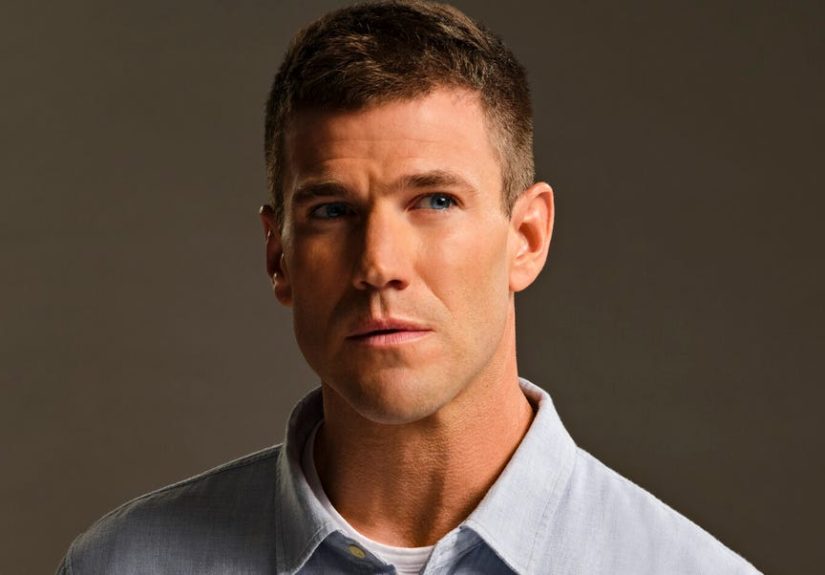
The sneak peek of Austin Stowell as young Gibbs gives fans a visual bridge between the familiar NCIS icon and the younger man still becoming him. Stowell appears in the practical, field-ready mode fans expect from the character: focused, serious, and visibly shaped by military discipline. The image does not scream, “Look, I am Mark Harmon 2.0!” Instead, it whispers something more interesting: “This is where the silence started.”
That distinction matters. A prequel can fail when it treats a younger version of a famous character like a costume party. Put on the jacket, copy the voice, add a few familiar habits, and hope nostalgia does the heavy lifting. NCIS: Origins seems to be taking a more grounded route. Stowell’s Gibbs is recognizable, but unfinished. He has the intensity, the moral center, and the quiet alertness, but he is not yet the fully formed boss who will one day lead a team with a stare sharp enough to cut through federal paperwork.
In other words, this sneak peek is not selling a tribute act. It is selling a transformation.
Why Austin Stowell’s Casting Matters
Austin Stowell was cast as young Leroy Jethro Gibbs for a role that comes with a rare mix of opportunity and danger. On one hand, he gets to lead a major CBS franchise extension built around one of television’s most popular characters. On the other hand, millions of viewers already have a version of Gibbs living rent-free in their brains, and those viewers are not shy about noticing if something feels off. Procedural fans remember details. These are people who can identify a character arc by haircut, mug placement, or whether someone says “semper fi” with sufficient emotional weight.
Stowell’s advantage is that he is not being asked to play the same Gibbs at a younger age. He is playing the person who will eventually become that Gibbs. That gives him room to build a performance from the inside out. Fans should expect hints of the familiar: the stillness, the controlled anger, the instinct for justice, the suspicion of easy answers. But the heart of the role is in the gaps. What hurt him? What shaped him? What did he learn from Mike Franks? When did silence become safer than saying what he felt?
The casting also works because Stowell brings an old-school leading-man quality without making Gibbs feel glossy. Young Gibbs cannot look like he wandered in from a fashion shoot. He needs to look like someone who has slept badly, worked hard, noticed everything, and probably considers a sandwich eaten while standing beside a government vehicle to be a full meal.
The 1991 Setting Gives ‘NCIS: Origins’ Its Own Personality
One of the smartest creative decisions behind NCIS: Origins is its early 1990s setting. The show takes place years before the events of the original NCIS, when Gibbs is starting at the fledgling NIS Camp Pendleton office. That gives the series more than a vintage filter and a chance to use pagers without irony. It changes the entire rhythm of investigation.
Modern NCIS has always balanced character drama with forensic technology, digital evidence, lab work, and fast-moving databases. In 1991, investigators cannot simply summon answers from a touchscreen. They must interview harder, observe better, make calls from phones attached to walls, and wait for information like people in the ancient days before Wi-Fi and group chats. Terrifying, frankly.
This old-school environment is perfect for Gibbs. His greatest skill has never been technology. It has always been instinct. He reads rooms. He reads suspects. He reads teammates. The 1991 setting lets the show turn investigation into a more tactile process: boots on pavement, files in hand, tension in the room, and clues that require patience instead of a progress bar.
Mark Harmon’s Presence Still Anchors the Series
Even though Austin Stowell plays young Gibbs, Mark Harmon remains essential to NCIS: Origins. Harmon serves as narrator and executive producer, giving the prequel a direct emotional connection to the original series. That matters because Gibbs is not just a character; he is the spine of the franchise. Harmon’s involvement signals that the show is not wandering into prequel territory without a map.
The narration also gives NCIS: Origins a reflective quality. This is not simply a younger man solving cases. It is an older Gibbs looking back at the years that shaped him. That framing allows the show to carry both suspense and memory. Viewers know where Gibbs ends up, but they do not know every detail of how he got there. That tension is the secret ingredient of a strong prequel.
It also helps protect the show from feeling like a replacement. Stowell is not pushing Harmon out of the Gibbs legacy. He is expanding it. Harmon’s voice, literally and creatively, gives the audience permission to accept a new interpretation while staying connected to the original.
Mike Franks and the Making of Gibbs
No Gibbs origin story would be complete without Mike Franks, played in NCIS: Origins by Kyle Schmid. In the original NCIS, Franks is a legendary figure in Gibbs’ past, a mentor whose influence helps explain Gibbs’ code, toughness, and distrust of easy answers. In the prequel, viewers get to see that relationship when it is still being built.
This mentor-student dynamic gives the show one of its richest dramatic engines. Gibbs is not a rookie in the ordinary sense. He is a former Marine carrying discipline, grief, and intensity into a new world of investigation. Franks is not the warm, gentle teacher who hands out inspirational sticky notes. He is a hard-edged leader with his own scars and methods. Put those two in a room together, and the emotional temperature rises fast.
The sneak peek of Stowell as young Gibbs becomes more meaningful in that context. His look is not just about resemblance. It is about a man entering a professional world that will refine him, test him, and probably make him question whether justice is ever as clean as people want it to be.
How ‘NCIS: Origins’ Connects to the Larger NCIS Universe
NCIS: Origins enters a franchise that has expanded across multiple cities, teams, and storytelling styles. The original NCIS became a television powerhouse because it mixed case-of-the-week structure with a strong found-family dynamic. The best episodes were never only about evidence. They were about loyalty, grief, humor, sacrifice, and the strange comfort of watching highly competent people solve awful problems while still making room for banter.
The prequel has to honor that formula while creating its own identity. It cannot rely on Abby’s lab, McGee’s tech skills, DiNozzo’s movie references, or Ducky’s storytelling charm. Instead, NCIS: Origins builds its world around a younger team, a rougher investigative era, and Gibbs at a point when his emotional armor is still being forged.
That is why the sneak peek matters. It tells fans: yes, this is Gibbs, but not the Gibbs you can predict in your sleep. This version is still learning where to place his trust. He is still absorbing the lessons that will one day become rules. He is still figuring out how much of himself to let the job consume.
Why Fans Are So Invested in Young Gibbs
Gibbs inspires unusually strong loyalty because he is not built like a traditional TV hero. He is not flashy. He is not chatty. He does not need applause, and he would probably distrust it if it arrived. His appeal comes from competence, consistency, and emotional restraint. He is the kind of character who makes viewers feel that, if everything goes wrong, at least one person in the room knows what to do.
But NCIS: Origins asks a more vulnerable question: what happens before someone becomes that steady? The young Gibbs played by Austin Stowell is still close to personal loss. He is still carrying pain that the original series later reveals as central to his life. The prequel can explore how a person turns grief into discipline, how work becomes refuge, and how loyalty can be both healing and dangerous.
That emotional depth gives the show a stronger foundation than nostalgia alone. Fans are not just watching to see whether Stowell can hold a coffee cup like Harmon or deliver a stare with proper Gibbs calibration. They are watching to understand the emotional math behind the man.
What Makes the Sneak Peek Effective
The best first-look images do not reveal too much. They create a question. The sneak peek of Austin Stowell as young Gibbs works because it captures mood before plot. It suggests grit, tension, and purpose. It gives viewers enough visual familiarity to feel connected, while leaving enough uncertainty to make them curious.
It also avoids over-explaining. There is no need for a giant neon sign reading, “This man will one day become a CBS icon.” The character’s body language does the job. The image says this Gibbs is observant, guarded, and already carrying more than he says. That is the right starting point.
For SEO-minded entertainment readers searching for NCIS: Origins Austin Stowell young Gibbs, the main appeal is simple: the sneak peek makes the prequel feel real. Until fans saw Stowell in character, the idea of another actor playing Gibbs full-time was theoretical. After the reveal, it became something viewers could debate, analyze, and maybe even get excited about between episodes of the mothership series.
Will Austin Stowell Win Over Longtime NCIS Fans?
The real test for Stowell is not whether he looks exactly like young Mark Harmon. He does not need to. The better test is whether he can make viewers believe in the emotional continuity of Gibbs. Does this younger man feel like someone who could become the older Gibbs? Does his silence feel earned? Does his anger have shape? Does his loyalty feel dangerous when pushed too far?
Early signs suggest that NCIS: Origins understands the assignment. The series is not treating Gibbs as a puzzle to be solved in one episode. It is treating him as a slow-burn character study wrapped inside a procedural drama. That is a clever approach because it gives casual viewers weekly cases while rewarding longtime fans with deeper character context.
And honestly, if any franchise can make emotional repression, military procedure, and 1990s office equipment into comfort television, it is NCIS.
Experiences and Reflections: Why This Sneak Peek Feels Bigger Than a Promo Image
For many viewers, seeing Austin Stowell as young Gibbs creates the same feeling that comes from opening an old photo album and finding a picture of someone before life changed them. You recognize the person, but you also see the distance between who they were and who they became. That is the emotional hook of NCIS: Origins. It is not just a prequel. It is an invitation to revisit a character through the years he rarely explained.
Watching a younger version of a beloved character can feel risky because fans naturally protect the original. Gibbs is not a casual television figure. He is part of people’s weekly routines, comfort-watch marathons, family viewing habits, and late-night reruns that somehow turn into three episodes even when everyone swore they were going to bed after one. A new actor stepping into that space has to deal with affection, skepticism, and the internet’s Olympic-level ability to compare eyebrows.
But that is also what makes the experience exciting. A successful prequel does not erase what came before. It adds texture. When viewers later rewatch the original NCIS, moments that once seemed merely stoic may feel heavier. A pause from Gibbs might carry new meaning. A rule might feel less like a clever character trait and more like a scar that became structure. His relationship with younger agents may look different after seeing him as the new person in the room, trying to prove himself under Franks.
The 1991 setting also creates a satisfying viewing experience because it slows everything down. There is pleasure in watching investigators work without instant digital shortcuts. It makes the cases feel more physical and human. Someone has to knock on doors. Someone has to read the room. Someone has to sit with discomfort long enough for the truth to reveal itself. For a character like Gibbs, that is ideal storytelling terrain.
There is also something relatable about seeing a legendary figure before he has all the answers. Most people know what it feels like to be early in a job, carrying private stress, trying to look more confident than they feel. Young Gibbs may be tougher than the average viewer, but the emotional experience is recognizable. He is learning. He is hurting. He is trying not to let either fact show too much. That tension makes him human.
Austin Stowell’s challenge is to make the audience stop thinking about the casting and start thinking about the character. The sneak peek is the first step in that process. It gives fans a visual promise: this will be familiar, but not frozen in amber. It will respect Mark Harmon’s Gibbs without turning Stowell into a museum exhibit. That balance is exactly what a prequel needs.
Ultimately, the excitement around NCIS: Origins comes from a simple truth: fans do not just want more Gibbs. They want more understanding. They want to see the early choices, painful lessons, unexpected bonds, and formative cases that shaped the man who later became the calm center of the NCIS universe. If the series keeps that focus, Austin Stowell’s young Gibbs may become more than a smart casting choice. He may become the missing chapter fans did not know they needed.
Conclusion
The sneak peek of Austin Stowell as young Gibbs gives NCIS: Origins exactly the kind of attention a prequel needs. It reassures longtime fans that the character’s spirit is being handled with care while also promising a fresh, more vulnerable look at Leroy Jethro Gibbs before he became the legend of the bullpen. With its 1991 Camp Pendleton setting, Mark Harmon’s guiding presence, Kyle Schmid’s Mike Franks, and Stowell’s serious commitment to the role, NCIS: Origins has the ingredients to be more than another franchise extension. It has the chance to deepen one of television’s most enduring characters.
If the sneak peek is any indication, young Gibbs is not here to replace the version fans love. He is here to show us how that version was made. And for NCIS fans, that is one case worth opening.