Table of Contents >> Show >> Hide
- Why This Comment Hurts So Much
- Is He Being Honest, or Is This a Red Flag?
- The Difference Between Attraction and Entitlement
- What To Say Back
- When This Starts Looking Like Emotional Abuse
- What A Healthy Partner Would Do Instead
- How To Decide What Happens Next
- How To Protect Your Self-Esteem Right Now
- Experiences Many People Have After Hearing a Comment Like This
- Final Thoughts
- SEO Tags
There are comments that make you laugh, comments that make you think, and comments that make you stare into the middle distance like a confused Victorian heroine. Hearing, “I want you to look the way you did when we first started dating six years ago,” definitely belongs in that third category.
On paper, it might sound like a clumsy confession of preference. In real life, though, it usually lands like a brick wrapped in a gym membership. It can trigger insecurity, resentment, grief, anger, and that deeply annoying habit of mentally comparing your current self to a past version who had fewer bills, less stress, and probably a completely different skincare routine.
This is not just about appearance. It is about respect, emotional safety, attraction, expectations, and whether your relationship has room for two actual human beings to grow older, softer, busier, wiser, and more real. Bodies change. Faces change. Energy changes. Life changes. A healthy relationship should be able to survive all of that without turning into an unsolicited before-and-after slideshow.
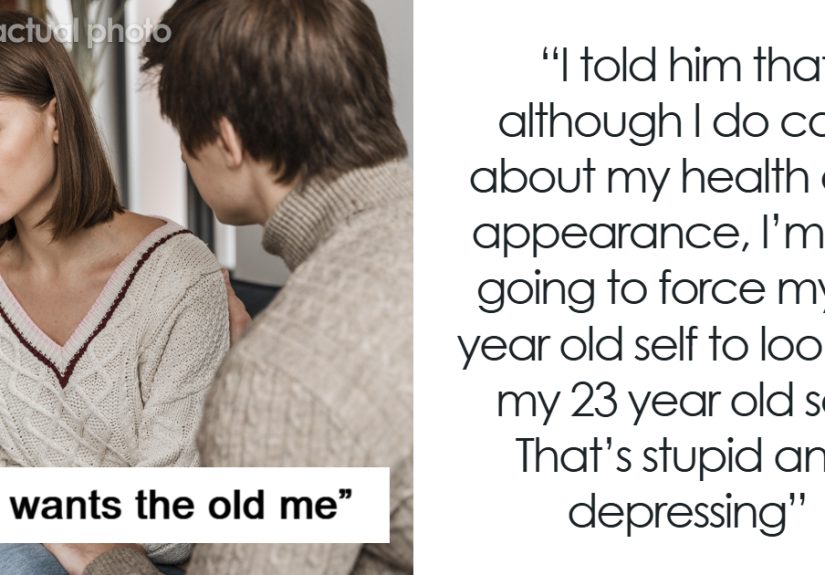
If your boyfriend said this to you, the big question is not simply, “Should I be offended?” The real question is, “What does this comment reveal about how he sees me, how he speaks to me, and what kind of love this relationship is built on?”
Why This Comment Hurts So Much
Let’s be honest: almost nobody hears that sentence and thinks, “Ah yes, what a thoughtful contribution to our emotional intimacy.” The remark stings because it suggests that your current self is somehow a downgrade. It frames love like a subscription plan tied to a former version of your body. That is painful, especially in a long-term relationship where trust is supposed to deepen, not get replaced by amateur casting decisions.
Appearance-based criticism often hits harder than people expect because body image is already fragile for many adults. Most people do not walk through life in a constant state of body-neutral Zen. They carry old insecurities, social pressure, family comments, beauty standards, stress, and the occasional horror of seeing themselves on a front-facing phone camera. So when a partner adds criticism to that pile, it can magnify shame fast.
It also ignores one very inconvenient fact: six years is a long time. In six years, people go through job changes, burnout, grief, medication changes, injuries, pregnancy, postpartum recovery, anxiety, depression, better boundaries, worse sleep, and enough takeout to support a small economy. Expecting someone to remain physically frozen at the start of a relationship is not romantic. It is unrealistic.
And beneath the surface, this kind of comment may create a more dangerous message: I liked you better when you looked easier to control, admire, compare, or idealize. Even if that is not exactly what he meant, it can absolutely be what you heard. That matters.
Is He Being Honest, or Is This a Red Flag?
This is where nuance matters. Not every badly worded comment means your relationship is doomed. Some people are tactless, emotionally undercooked, and allergic to phrasing things with kindness. But there is a huge difference between awkward honesty and repeated, appearance-focused disrespect.
It may be clumsy honesty if:
- He immediately understands why the comment hurt and takes responsibility.
- He is open to hearing your feelings without becoming defensive.
- He is not constantly monitoring your body, food, clothing, or aging.
- He speaks about attraction as one part of the relationship, not your entire value.
- He is willing to change how he communicates.
It may be a red flag if:
- He regularly criticizes your weight, shape, face, clothes, or aging.
- He compares you to your younger self, other women, or people online.
- He uses shame as “motivation.”
- He acts entitled to control your appearance.
- He mocks your feelings or says you are too sensitive.
- He withdraws affection when you do not meet his preferences.
- He turns every conversation about your body into a referendum on your worth.
That last list is where the problem stops being “a rude comment” and starts looking like a pattern of control. And control dressed up as concern is still control. A partner is allowed to have preferences. A partner is not entitled to treat your body like a renovation project.
The Difference Between Attraction and Entitlement
Long-term attraction is real. People notice changes in one another. That part is normal. The issue is how the topic is handled.
A respectful partner might say, “I miss feeling close to you,” or “I think we’ve both gotten disconnected from ourselves lately,” or even, “I want us to feel healthier and more confident together.” That is a conversation about connection, habits, and shared life.
An entitled partner says, “You should look like you used to.” That is not connection. That is performance review language. It reduces attraction to compliance and ignores the emotional cost of being evaluated by the person who is supposed to make you feel safest.
Healthy relationships are built on mutual respect, support, communication, and boundaries. Not perfection. Not pressure. Not one partner standing there like a disappointed judge on a reality show called America’s Next Girlfriend Update.
What To Say Back
If you are still replaying the comment in your head, it may help to respond clearly instead of silently marinating in hurt. You do not need a speech worthy of an awards ceremony. You need honesty with spine.
Try one of these responses:
Direct and calm: “That comment was hurtful. My body has changed over six years, and so has my life. If you want to talk about attraction or connection, do it respectfully.”
Boundary-setting: “You do not get to talk about my body like it is a problem to solve.”
Clarifying: “What exactly did you mean by that, and why did you think saying it that way would be helpful?”
Reality-based: “I am not the same person I was six years ago. I’m older, more experienced, and living a different life. If you need me to stay frozen in time, that is not a reasonable expectation.”
Values-focused: “I care about being loved with respect. If appearance criticism is going to be part of this relationship, we need to seriously talk about what kind of relationship this is.”
The goal is not to win a debate. The goal is to see what he does with your truth. A caring partner gets curious. A controlling partner gets irritated that you did not quietly accept the criticism.
When This Starts Looking Like Emotional Abuse
One cruel remark does not automatically equal emotional abuse. But repeated humiliation, body-based shaming, manipulation, and efforts to control your self-image can become emotionally abusive over time.
Pay attention to the pattern, not just the sentence. Does he insult your appearance and then claim he is “just being honest”? Does he chip away at your confidence and then act confused when you are upset? Does he make you feel that love, sex, praise, or peace depend on how well you maintain the version of yourself he prefers?
These patterns matter because emotional harm is often subtle at first. It may look like teasing. It may sound like concern. It may arrive with a smile. But if you increasingly feel ashamed, anxious, self-conscious, monitored, or never quite good enough, your nervous system is already telling you something important.
Warning signs to watch for:
- You feel like you are walking on eggshells around your appearance.
- You avoid eating, dressing, or relaxing “wrong” in front of him.
- You have started criticizing your body more since being with him.
- You hide parts of yourself to avoid comments.
- He mixes affection with insults, so you stay off-balance.
- He makes you question whether your hurt is valid.
- Your self-esteem has dropped sharply in this relationship.
If that list feels uncomfortably familiar, this is bigger than one bad conversation.
What A Healthy Partner Would Do Instead
A loving partner can absolutely talk about desire, health, or lifestyle without making your body the enemy. They would speak with care. They would check whether the conversation is welcome. They would own their feelings instead of assigning blame. Most importantly, they would never act as though your worth decreases because time passed and your body had the audacity to be alive.
A healthy partner says things like:
- “I want us both to feel good, mentally and physically.”
- “I miss feeling connected. Can we work on that together?”
- “I love you, and I want to understand how you’re feeling lately.”
- “How can I support you instead of judging you?”
Notice the difference? Respect. Curiosity. Teamwork. Zero audition energy.
How To Decide What Happens Next
You do not have to decide the future of the relationship in a single dramatic evening. But you do need to take the comment seriously enough to evaluate the bigger picture.
Ask yourself:
- Was this an isolated, regretted mistake or part of a larger pattern?
- Do I generally feel respected in this relationship?
- Can I be honest with him without being punished, mocked, or dismissed?
- Do I feel more confident with him, or smaller around him?
- Am I trying to earn basic love by becoming easier to approve of?
If he takes accountability, listens, changes, and shows genuine empathy, the relationship may have something to work with. But if he doubles down, minimizes your pain, or keeps policing your appearance, the problem is not your body. The problem is the relationship structure.
And yes, sometimes the healthiest glow-up is not losing weight, finding the perfect outfit, or recreating your 2019 jawline. Sometimes it is leaving a situation where you are being slowly convinced that love must be earned by shrinking.
How To Protect Your Self-Esteem Right Now
Whether you stay or leave, your self-worth needs backup. Comments like this can linger. They sneak into the mirror, your closet, your appetite, your sex life, and your internal monologue. So be intentional about interrupting that spiral.
- Write down exactly what he said and exactly how it made you feel. Clarity is power.
- Talk to one trusted friend who is honest and steady.
- Notice whether you are becoming harsher with yourself because of his comment.
- Reconnect with routines that make you feel like you, not “acceptable.”
- Consider therapy if this relationship has affected your body image or confidence.
- If you feel afraid, controlled, or emotionally unsafe, reach out for professional support and safety resources.
You are allowed to care about your health and appearance. You are also allowed to reject shame as a relationship strategy. Those two truths can exist together.
Experiences Many People Have After Hearing a Comment Like This
The stories below are composite experiences based on common themes people describe when a partner criticizes how they look after years together. They are here to reflect the emotional reality of the situation, not to put one person’s life on display.
Experience 1: The comment that changed the mirror. One woman said the sentence itself lasted five seconds, but the aftershock lasted months. Before that, she had a reasonably normal relationship with her reflection. Afterward, every outfit became a question. Every photo felt like evidence. Every dinner date came with a tiny courtroom in her head. She did not suddenly hate herself overnight. It was quieter than that. She just stopped feeling neutral in her own skin. That is the sneaky damage of appearance criticism from a partner: it turns your body into a project when it used to be your home.
Experience 2: The “I’m just being honest” trap. Another person tried to explain why the comment hurt, only to get the classic reply: “I’m just being honest.” Which is fascinating, because somehow “honesty” always shows up wearing steel-toe boots and never basic compassion. In her case, the issue was not only the original remark. It was that her boyfriend treated her pain like inconvenience. Once she saw that pattern, she started noticing other things too: jokes at her expense, comparisons to women online, random remarks about what she “used to” wear, and a general atmosphere of never quite measuring up. The single comment was not the whole problem. It was the trailer.
Experience 3: The body changed, and life had too. One woman had spent six years holding down a demanding job, caring for family members, managing stress, and surviving periods of anxiety. Her body changed because her life changed. When her partner suggested she should look like she did at the beginning of the relationship, what she heard was, “I loved the version of you that had fewer responsibilities and less reality.” She realized she did not want to be loved like a paused screen. She wanted to be loved as a person in motion.
Experience 4: The wake-up call. Sometimes the comment becomes the moment someone stops normalizing disrespect. One person described it as oddly clarifying. She had spent years translating rude behavior into softer language: “He’s blunt.” “He means well.” “He’s bad at communication.” But after the appearance comment, she asked herself a better question: Why am I working so hard to reinterpret behavior that already feels bad? That question changed everything. She stopped arguing with her instincts. She started setting boundaries. And once she did, the relationship either had to mature or fall apart. In her case, it fell apart. Painful, yes. But also peaceful in a way she had not felt for years.
Experience 5: Rebuilding after the comment. Not every story ends in a breakup. In some cases, the boyfriend genuinely understands the harm, apologizes clearly, and changes his behavior. One couple ended up in counseling after a cruel argument about appearance. The real issue was not weight. It was resentment, disconnection, and poor communication that had been leaking out in ugly ways. Therapy helped them stop using each other’s vulnerabilities as weapons. The relationship improved, but only because the hurtful partner stopped defending the comment and started doing the work. That is the key. Repair requires accountability, not prettier insults.
Final Thoughts
If your boyfriend told you he wants you to look the way you did when you first started dating six years ago, your hurt is valid. That comment is not shallow to care about. It goes straight to identity, desirability, safety, and whether love in your relationship is conditional in ways it should not be.
You do not owe anyone a younger body, an earlier face, or a permanent first-year version of yourself. The point of a long-term relationship is not to remain unchanged. It is to be known through change. If your partner cannot handle that with kindness, then the issue is not that you are no longer who you were. The issue is that he may not know how to love who you are now.
And honestly? The person you are now has likely survived more, learned more, and become more interesting than the version he is nostalgically referencing. That deserves respect, not renovation notes.