Table of Contents >> Show >> Hide
- Who Is Matthew James Friday?
- The Poet’s Shelf: Chapbooks, Micro-Chaps, and a Full-Length Collection
- Teacher as Storyteller: Why His Education Work Resonates
- What Readers Can Learn From His Writing Style
- If You’re New to His Work: Where to Start
- Why “Matthew James Friday” Is a Search Worth Making
- Experiences Related to Matthew James Friday (Extended Section)
Some people collect frequent-flyer miles. Matthew James Friday seems to collect something rarer: momentstiny, vivid,
human momentsthen turns them into poems and into lesson plans. He’s a British-born writer and teacher who works
in a public school in Oregon, and he’s also a professional storyteller, literacy consultant, and widely published poet.
In other words, he lives at the intersection of two worlds that don’t always talk to each other: the classroom and the
literary page.
That intersection matters. Because when you put a poet in a classroom, the room tends to get more awake. When you put a
storyteller in front of kids, language stops being a “subject” and starts being a superpower. And when you add Friday’s
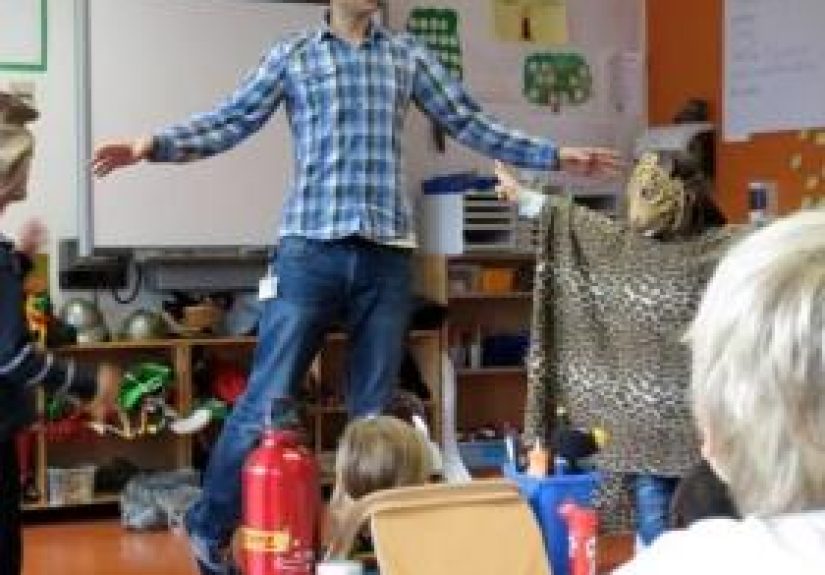
particular styleinteractive oral storytelling, audience participation, props, sound effects, and a steady belief that
everyone has a story worth tellingyou get an approach that’s both practical and, yes, occasionally hilarious (nothing
says “literacy consultant” like a box of funny hats).
Who Is Matthew James Friday?
Matthew James Friday is known for wearing multiple hatssometimes figuratively, sometimes literally, depending on the
storytelling day. Professionally, he’s been described as a classroom teacher, professional storyteller, writer, and
literacy consultant working in a public school in Oregon. His teaching experience spans elementary/primary grades across
several countries, and he’s also delivered university lectures and professional development workshops focused on literacy
and storytelling.
On the writing side, Friday has built a body of work that includes poetry published across journals and magazines, plus
chapbooks that reflect both urgency and play. His published chapbooks include The Residents (Finishing Line Press),
The Be-All and the End-All (Bottlecap Press), and Strange Beauty (Bottlecap Press). He’s also associated
with micro-chapbooks through the Origami Poems Project and is noted as a Pushcart Prize–nominated poet.
The Poet’s Shelf: Chapbooks, Micro-Chaps, and a Full-Length Collection
The Be-All and the End-All: Poetry With a Pulse (and a Weather Report)
If you’ve ever tried to write about the modern world without sounding like a headline or a panic attack, you’ll appreciate
the balancing act implied in The Be-All and the End-All. The chapbook takes a quote from Macbeth as both
a starting and ending point, then asks the question that’s basically haunting everyone’s group chat: what kind of future
are we writing together?
Bottlecap Press describes the collection as holding both wonder and worry, with environmental anxiety present throughout.
That matters because it frames Friday’s poems as more than “nature writing.” They’re closer to witness statementslyrical
notes from a world that’s beautiful, endangered, and still worth paying attention to. The collection also leans toward
accountability and redemption, pushing readers to consider whether their participation in the future will be heroic,
tragic, or (most realistically) complicated.
Strange Beauty: 50 Years, 50 Moments, and the Art of Smallness
In Strange Beauty, Friday turns toward brevity with purpose. The chapbook has been described as a celebration
connected to a 50-year milestone, assembling 50 of his best haiku and senryu. That split is important: haiku often focuses
on the natural world and fleeting moments, while senryu tends to tilt toward human naturesometimes with a comic edge.
The result is a form of close looking. In haiku and senryu, you can’t hide behind big speeches. You get one moment, a few
lines, and nowhere to stash your excuses. As described in coverage of Strange Beauty, readers can expect humor,
small revelations, and ordinary objects or familiar animals reframed as both accessible and quietly spiritualbecause life
is usually a blend of the mundane and the magical, even if your day involves spilled coffee and an existential spiral.
The Residents and the “Micro-Chap” Mindset
Friday’s earlier chapbook The Residents (published by Finishing Line Press) and his micro-chapbooks through the
Origami Poems Project point to a consistent creative habit: paying attention. Micro-chaps, by design, reward precision.
They’re small containers for big noticing, and they fit the way modern readers actually livesnatches of time, a few lines,
then back to the chaos.
The Origami Poems Project has hosted Friday’s bio and work, framing him as a writer and teacher with poems published across
U.S. and international journals and noting his micro-chapbook involvement. That ecosystem matters for emerging and working
poets because it creates access: short-form collections, downloadable pieces, and a pathway for readers who might be
“poetry curious” but not ready to adopt a 400-page anthology as a pet.
What’s Next: Wunderkammer
Several bios and arts coverage note that Friday’s first full-length poetry collection, Wunderkammer, is due to be
published by Kelsay Books (with a publication year noted as 2026). The title is telling: “wunderkammer” traditionally
refers to a cabinet of curiositiesa collection of odd, beautiful, meaningful objects gathered from the world. It’s a good
metaphor for a poet-teacher who gathers moments, images, and voices, then arranges them so readers can see something new.
Teacher as Storyteller: Why His Education Work Resonates
If Friday’s poetry is about attention, his teaching is about participation. In his writing on storytelling for
educators, he doesn’t treat stories as a cute add-on for “fun Friday.” He treats oral storytelling as foundational: a
human technology older than textbooks and more emotionally sticky than most PowerPoint decks.
Storytelling Isn’t ExtraIt’s a Learning Engine
In his Edutopia piece on storytelling in the classroom, Friday argues that storytelling is deeply tied to how humans
communicate and make meaning. He describes interactive storytelling as a practice: movement, rhythm, and inviting children
to act out the story, repeat dialogue, create sound effects, answer questions, and make suggestions. It’s not passive
listeningit’s shared construction.
He also lists classroom benefits that will sound familiar to any teacher who has watched attention evaporate the moment a
worksheet appears: storytelling can encourage purposeful speaking, boost enthusiasm for reading, initiate writing, build
community, improve listening, and motivate English-language learners. This is the part where storytelling stops being a
“performance” and becomes a literacy strategy.
How Storytelling Helps English-Language Learners
Friday’s Edutopia follow-up focused on English-language learners goes beyond inspiration and into tactics. He describes
adapting storytelling by slowing down speech, adding physical actions and sound effects to connect words with meaning,
asking students to repeat key words and actions, and leaning into physical humorbecause laughter lowers the emotional
cost of making mistakes in a new language.
In that account, he describes students moving from the “listening phase” into spontaneous writing and telling of their own
fairy talesan important shift because it suggests storytelling can create a bridge from comprehension to expression. He
also outlines why the approach works: stories are culturally universal, children naturally inhabit imaginative worlds,
narrative structure creates achievement, peer appreciation builds confidence, and storytelling can function with simpler
vocabulary while still carrying sophisticated meaning.
What Readers Can Learn From His Writing Style
Even if you never step into a classroom, Friday’s work offers a useful creative toolkitespecially if you write, teach, or
simply want your brain to stop doomscrolling long enough to notice a bird doing something weird outside your window.
1) Let the Small Moment Be the Main Character
Haiku and senryu are training grounds for attention. The “moment” becomes the unit of meaning. Instead of trying to explain
everything, you show one thing clearly. That approach scales up: it can improve essays, scripts, speeches, and even the
dreaded meeting update.
2) Hold Wonder and Worry in the Same Hand
In descriptions of The Be-All and the End-All, the tension between inspiration and anxiety isn’t treated as a flaw.
It’s treated as reality. A writer who can hold those two truths at oncebeauty and dreadoften sounds more honest than a
writer who insists everything is either “fine” or “on fire.” (It can be both. That’s the point.)
3) Make the Audience Part of the Work
Friday’s classroom storytelling is participatory: students act, respond, repeat, suggest. Poets can apply the same idea by
thinking about how readers move through a piece. Where do you invite the reader in? Where do you ask them to supply their
own memory, image, or emotion? Writing becomes less like a lecture and more like a collaboration.
If You’re New to His Work: Where to Start
-
Start with the chapbooks: Try The Be-All and the End-All if you like poetry that wrestles with
the state of the world, or Strange Beauty if you like short poems with humor, clarity, and quick emotional
turns. -
Browse micro-chaps: If you enjoy compact collections and downloadable reading, explore the ecosystem
around the Origami Poems Project where his micro-work has been hosted and shared. -
Read the teaching essays: If you teachor love someone who teacheshis Edutopia essays offer concrete
strategies for oral storytelling, classroom community, and engaging English-language learners.
Why “Matthew James Friday” Is a Search Worth Making
In a culture that rewards speed, Friday’s work rewards noticing. In a time when education often gets reduced to metrics,
his storytelling approach re-centers the human: voice, body, attention, belonging. And in a literary landscape where poetry
can sometimes feel like a private club with invisible rules, his chapbooks and micro-chaps point toward accessshort forms,
clear images, humor when appropriate, and a sense that wonder is not naïve. It’s necessary.
If you’re searching “Matthew James Friday,” you might be looking for a poet, a teacher, or the author of a specific chapbook.
The best answer is: he’s a bridge. Between countries. Between page and stage. Between a classroom circle and a poem that
lands like a small bell in your mind.
Experiences Related to Matthew James Friday (Extended Section)
The easiest way to understand Friday’s work is to imagine it in motionbecause so much of what he does lives between
telling and listening, between a line on a page and a room full of people leaning forward. Below are a few experience-based
snapshots inspired by the kinds of storytelling and poetry practices associated with his public writing and published work.
Think of these as “field notes” you can try yourself, whether you’re a teacher, a writer, or a reader who wants a more
awake relationship with language.
Experience 1: The Prop Box That Turns Into a Literacy Machine
Picture a classroom where the “materials” aren’t just pencils and paper. There’s a battered box in the cornerinside are
bits of fabric, hats, and odd objects that look like they came from a thrift store’s dream sequence. A story begins, and
suddenly the box isn’t a box anymore. It’s a portal. One student becomes a fox. Another becomes the wind. Someone gets to
be the dramatic door that creaks at exactly the right moment.
The experience here isn’t “kids being cute.” It’s kids practicing narrative structure, listening for cues, repeating lines,
building vocabulary, and taking social risks with a safety net of play. When students act out a scene, they’re rehearsing
language with their whole bodies. When they add sound effects, they’re learning timing and tone. When they suggest what
happens next, they’re practicing cause and effect. The story becomes a shared event, and shared events are stickythey
stay in memory longer than isolated drills.
If you want to try a version of this at home or in a classroom, start small: one story, three simple props, and one
repeated phrase everyone can say. You’ll notice something quickly: participation reduces fear. Once the room is laughing,
the room is learning.
Experience 2: The “Language Barrier” Moment That Turns Into a Breakthrough
Now imagine a group of learners who are new to English. They understand more than they can say. They’re carefulbecause
being wrong in a new language feels public. The story begins slowly. The teller uses gestures: running, sleeping, hiding,
searching. The class repeats key words together. Sound effects fill the gaps where vocabulary hasn’t arrived yet. Humor
shows up right on timenot sarcasm, not at anyone’s expense, just the kind of physical comedy that makes everyone exhale.
Then a surprise happens: a student who mostly listened starts writing a story. It’s short. It’s brave. It’s imperfect.
But it exists. Next, another student wants to tell one. Suddenly storytelling isn’t just input; it’s output. It’s identity.
“I’m not just learning English,” the experience suggests. “I’m using English to be myself.”
The practical takeaway is that storytelling can function like a ramp. It offers structure (beginning, middle, end) without
demanding advanced vocabulary up front. It values meaning before mechanics. And because peers can act out the story,
appreciation becomes fuel. If you’re teaching or mentoring, try letting the first drafts be messy on purpose. You can
polish later. First you need language to feel like play, not like a test.
Experience 3: Writing Haiku and Senryu Like You’re Training Your Attention
Finally, shift scenes: you’re not in a classroom now. You’re outsideor at least near a window. The assignment is tiny:
write a haiku or senryu about a single moment. Not your whole day. Not your whole life. Just one thing you noticed. A bird
making an unearned amount of noise. A familiar animal doing something strangely wise. A mug ring on a table that looks
like a planet. A joke your brain tells you when you’re stressed.
This is where Friday’s chapbook approachespecially the haiku/senryu focus described around Strange Beautybecomes
a kind of everyday practice. Haiku asks you to pay attention to the world. Senryu asks you to pay attention to yourself
(and to other humans) with a little humor and honesty. Neither form wants a TED Talk. They want a clear image. A clean
turn. A small click of recognition.
Try this as a weekly ritual: write five tiny poems, each tied to a real moment. Don’t judge them. Don’t “make them deep.”
Let the depth show up on its own, the way it does when you finally slow down enough to notice what you’ve been carrying.
Over time, you’ll start to see how small moments stack into meaninglike stones in a path.
These experiencesparticipatory storytelling, language-learning through narrative, and short-form poetic attentionare
different doorways into the same house. The house is built out of voice, curiosity, and shared human moments. And whether
you arrive as a teacher, a reader, or a writer, the invitation is similar: listen closely, speak bravely, and don’t forget
to pack the funny hats.